Health
How much water should a dog drink per day?
Roughly 50 to 60 millilitres per kilogram daily as a general guide. Consistently exceeding about 100 millilitres per kilogram is a recognised threshold worth investigating.

Quick answer
How much water should a dog drink per day?
Roughly 50 to 60 millilitres per kilogram daily as a general guide. Consistently exceeding about 100 millilitres per kilogram is a recognised threshold worth investigating.
The first thing a failing kidney loses is not the ability to filter. It is the ability to concentrate urine, and the visible result is a water bowl that empties faster.
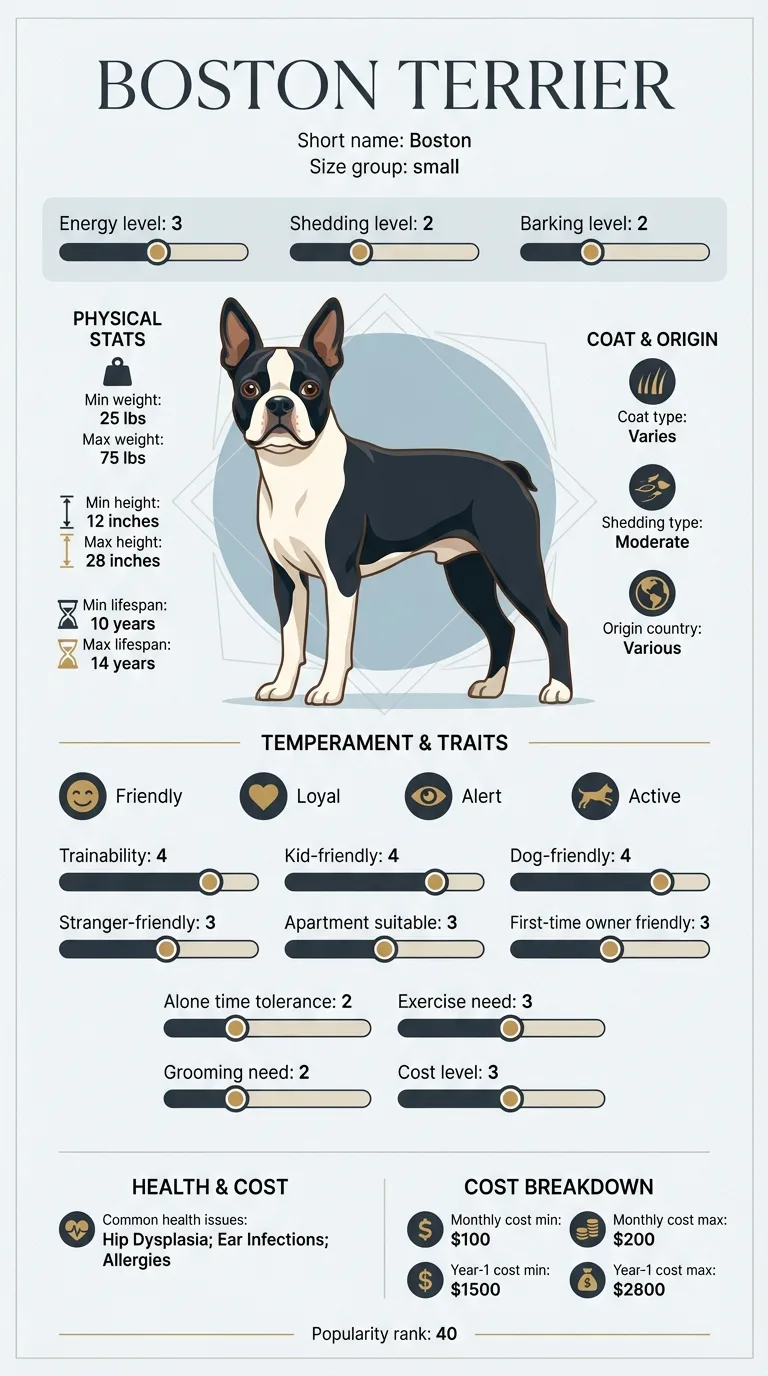
Owners of Bostons past eight who have noticed more drinking and more trips to the garden, and owners who have just been given a stage number and a prescription diet with very little explanation.
This guide is not medical advice. If your dog shows pain, sudden behavior change, or worsening symptoms, consult a licensed veterinarian.
Some links may be affiliate links. We may earn a commission at no extra cost to you. We only suggest products we believe are helpful for dog owners.
We research and check what we publish, but we do not warrant that any figure, date, price, or statement is accurate, complete, or current, and we accept no liability for any loss, cost, injury, or other harm arising from the use of this site. Use it as one reference among several. You remain responsible for your own decisions and for your dog's care - confirm anything that matters with a licensed veterinarian or another qualified professional before you act on it. Full disclaimer.
Chronic kidney disease is the progressive, irreversible loss of functional kidney tissue. It develops over months to years and is silent for most of that time because the organ has so much reserve. When signs appear they are non-specific, which is why the condition is usually found through bloodwork and urine testing rather than through anything the dog does.
Chronic kidney disease is among the more common serious diagnoses in older dogs across all breeds. It is not a Boston Terrier signature condition, and nothing in the breed's documented health profile points toward the kidney specifically. Its relevance here is simply that Bostons frequently reach the ages at which it appears.
There is no established breed predisposition in Boston Terriers, and this page does not claim one. Two general breed features shape management rather than risk. The compact 12 to 25 pound frame means dehydration develops quickly, so a day of poor drinking matters more than it would in a large dog. And the breed's airway means any procedure requiring sedation, including fluid therapy admissions, needs a plan that accounts for both problems at once.
Dehydration is the main environmental accelerator, and in a heat-sensitive breed a hot summer week can push a stable dog into a crisis. Nephrotoxic exposures are the other major factor: antifreeze, grapes and raisins, and human anti-inflammatory medication all cause direct damage. Untreated dental disease, high blood pressure and chronic urinary infection each contribute over time.
Book within days for increased drinking, increased urination, unexplained weight loss, a new overnight accident, or reduced appetite in a dog over seven. Seek emergency care for vomiting that will not stop, complete refusal of food and water, marked lethargy or collapse, seizures, or any suspicion of antifreeze or grape ingestion. A dog straining to urinate and producing nothing is a different emergency again and needs immediate assessment. Ask for a urine sample to be run alongside any blood panel.
See all Boston Terrier health problems, which breeds are prone to kidney disease, or the full Boston Terrier breed guide for temperament, exercise needs and ownership costs.
Early-stage dogs are often restaged every three to six months and can remain stable for a long period. Once appetite and weight begin to fall, review intervals shorten to weeks. Dietary change should be introduced gradually over one to two weeks, since abrupt switching in a nauseous dog usually results in refusal.
A dog that eats willingly, maintains weight, drinks freely, and stays at the same stage across successive rechecks. Success is a flattened decline curve and good quality of life, not normal blood values. Kidney tissue does not regenerate, and any claim otherwise should be treated with suspicion.
A healthy kidney pulls water back out of the filtrate before it becomes urine, producing a small volume of concentrated fluid. This costs energy and requires intact structure.
As functional units are lost, the remaining ones cannot concentrate as effectively. More water leaves in the urine, the dog becomes mildly dehydrated, and thirst rises to compensate. The dog is not thirsty because something has gone wrong with drinking; it is drinking because it is losing water it cannot afford.
This is why the sequence owners report is so consistent. First the water bowl needs refilling more often. Then there are more toilet trips, sometimes including an accident overnight from a previously reliable dog. Only later come the signs people associate with illness: appetite dropping off, weight loss, nausea, bad breath with an unusual smell, and lethargy.
Quantifying the water is genuinely useful, and it is something an owner can do better than a clinic can. Measure what goes into the bowl and what is left after twenty-four hours, for three days, with no other dogs drinking from it. A number is worth far more to your vet than an impression.
One caveat for this breed. A Boston Terrier that has been panting hard in warm weather will drink more for entirely normal reasons. Measure across cool days, and mention the weather when you report the figure.

Chronic kidney disease is not cured or reversed. It is slowed, and the interventions that slow it are unglamorous and mostly dietary.
If you think your Boston has kidney disease, the plan is three steps: write down what you have seen and when it started, book a veterinary appointment rather than waiting for the next flare, and take video of the behaviour or symptom before you go — the thing you are worried about rarely happens in the consulting room. Screening in the parents covers brachycephalic airway syndrome (boas), patellar luxation, cataracts.
What the vet visit should produce is a diagnosis and a written plan, not just reassurance: what is being ruled out, what the monitoring interval is, and which signs mean you come back sooner. Ask what the treatment costs across a year rather than per visit, because that is the number that decides whether you are managing this condition or reacting to it.
Between appointments, keep a short log — dates, what you saw, what changed. It is the single most useful thing an owner brings to a follow-up, and for kidney disease it is often what separates a clear pattern from a guess.
Ivy was nine and, according to her owner Marcus, drinking a bit more. He mentioned it at her annual check and the vet asked him to measure it properly rather than estimate. He filled her bowl from a jug for three days and recorded what was left each morning. Ivy weighed 8.5 kilograms and was drinking just over a litre a day, roughly double what would be expected. That number turned a vague concern into a specific investigation. Bloodwork and a urine sample put her in an early stage of chronic kidney disease with mildly raised blood pressure. She moved onto a renal diet over ten days, started treatment for the blood pressure, and had a second bowl added in the kitchen. Ivy was restaged every four months for two years and did not progress. She died at twelve and a half of an unrelated problem, still eating well.
Key takeaway: The clinically useful version of drinking a bit more is a number in millilitres. Three days with a measuring jug turned a shrug into an early diagnosis.
Not distinctively. The breed's documented health issues are brachycephalic airway syndrome, patellar luxation, cataracts, corneal ulcers and deafness. Chronic kidney disease is primarily a condition of ageing that affects dogs of all breeds, and a Boston living to its typical eleven to thirteen years is in the age band where it appears.
By combining blood values with a urine sample. Urine concentration is the part owners often do not realise matters; a blood result without a urine specific gravity is much harder to interpret. Blood pressure and urine protein measurement usually follow to complete the staging picture.
Do not do this yourself. Modern renal diets are formulated around phosphorus control and high quality protein rather than blunt restriction, and underfeeding protein in an older dog causes muscle loss that makes everything worse. This is a decision for your vet at a specific stage.
It varies by stage more than by anything else. Dogs diagnosed early on routine senior bloodwork can live for years with dietary management. Dogs diagnosed when already vomiting and off their food have a shorter and more variable course. This is a genuine reason to run senior screening panels.
Chronic disease, no. Sudden acute injury from a toxin, an infection or an obstruction is a different situation and can sometimes be substantially reversed with prompt intensive treatment, which is one reason a sudden change deserves emergency assessment rather than a wait.
Antifreeze is the classic and is rapidly fatal in small amounts. Grapes and raisins, some human anti-inflammatory medications, and certain lilies are also implicated. In a 12 to 25 pound dog the toxic quantity of any of these is small, so treat all of them as emergencies rather than wait-and-see situations.
Roughly 50 to 60 millilitres per kilogram daily as a general guide. Consistently exceeding about 100 millilitres per kilogram is a recognised threshold worth investigating.
Increased drinking and urinating, sometimes with a new overnight accident. Appetite loss, weight loss and nausea come later.
Chronic disease is not usually painful in itself, but nausea, mouth ulceration and dehydration make dogs feel genuinely unwell, and those are treatable.
Mainly prescription diet plus periodic bloodwork, urine testing and blood pressure checks, typically a moderate ongoing monthly cost that rises if hospitalisation is needed.
A one-page prep sheet for this condition: the signs, the questions to ask, what to get priced. Unlocks here.
You get: Vet visit prep sheet
No spam. One-click unsubscribe. See our privacy policy.
Preview page 1 before you decide.