Behavior
Boston Terrier or Havanese for low-maintenance grooming?
Boston Terrier, rated 1/5 grooming need versus the Havanese's 4/5.

Quick answer
Boston Terrier or Havanese for low-maintenance grooming?
Boston Terrier, rated 1/5 grooming need versus the Havanese's 4/5.
Boston Terrier or Havanese? On paper they differ most on grooming need, and on the scales Boston Terrier is the heavier at 12–25 lbs. Here is how the two compare on everything that shapes an ordinary week.
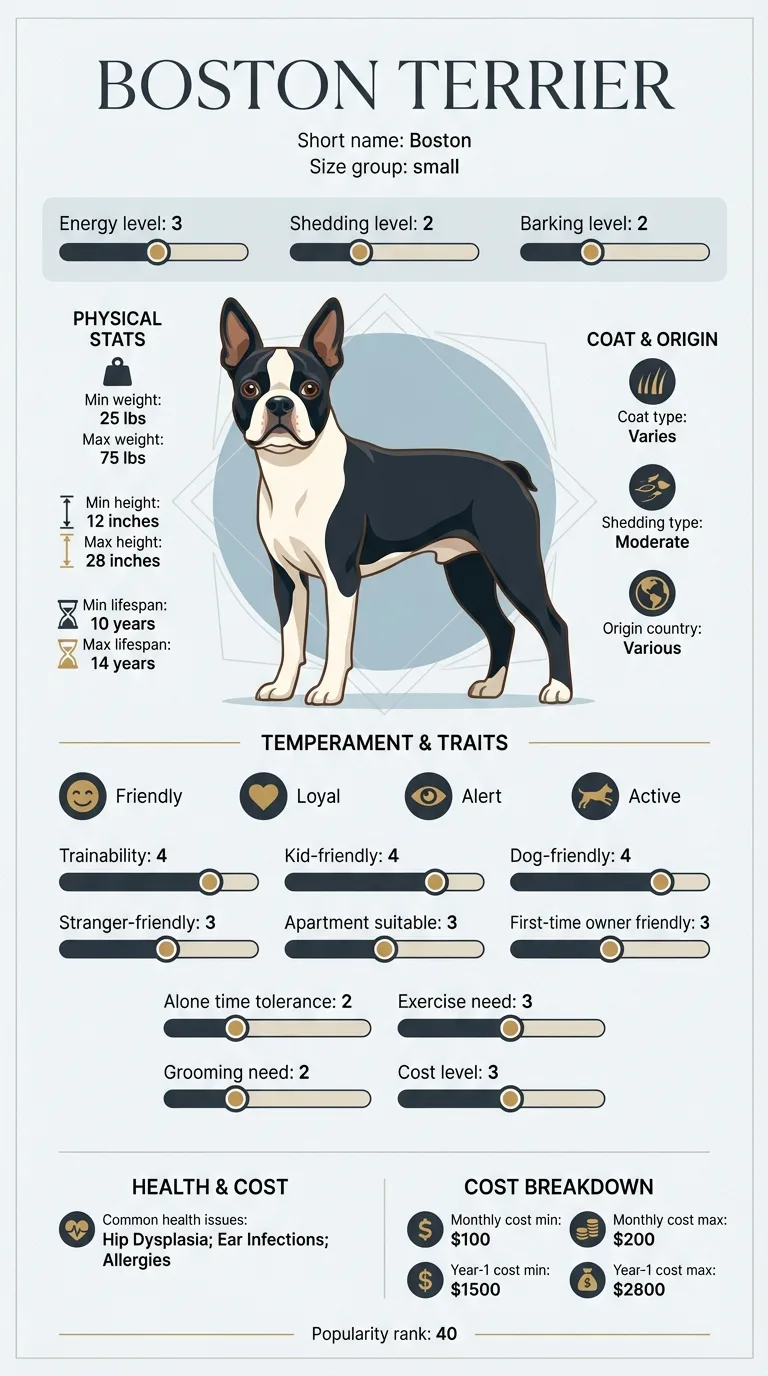
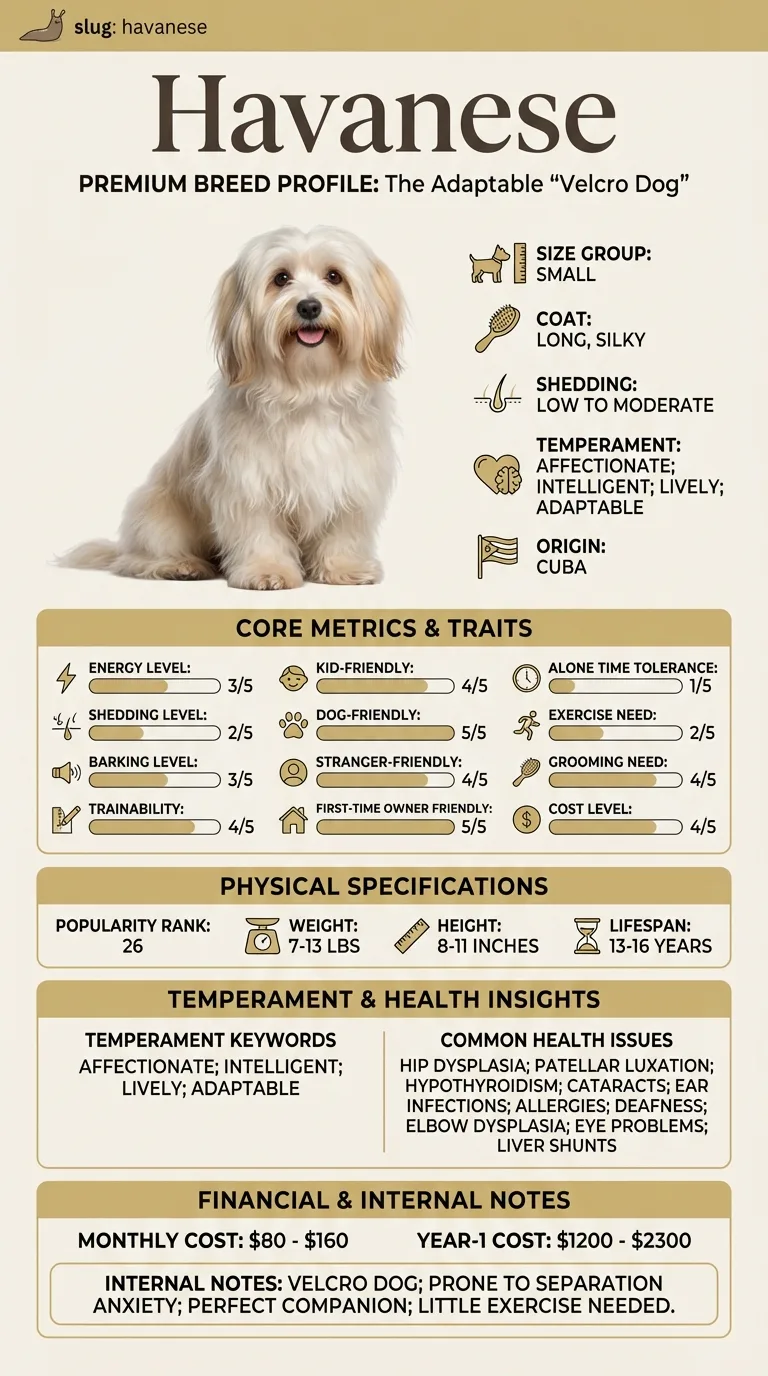
This is for someone already down to Boston Terrier and Havanese and deciding between them. For this pair the decision usually turns on grooming need and tolerates being alone, so those are covered first and in most detail. Both rate 5/5 for flats, so housing does not settle this one. There is no origin story here — only what changes about your week.
Between Boston Terrier and Havanese, grooming need is what separates them, and Boston Terrier is the lower-effort dog of the two to keep.
Choose Boston Terrier if you do not want a standing grooming appointment, the dog will be alone during the working day and there are young children at home.
Choose Havanese if you already have another dog and a smaller dog suits your car, your home or your back.
| Feature | boston terrier | havanese | Winner |
|---|---|---|---|
| Size class | small | small | Equal |
| Weight | 12–25 lbs | 7–13 lbs | Equal |
| Height | 15–17 in | 8–11 in | Equal |
| Lifespan | 11–13 years | 13–16 years | havanese |
| Exercise need | Low (2/5) | Low (2/5) | Equal |
| Grooming need | Very low (1/5) | High (4/5) | boston terrier |
| Shedding | Low (2/5) | Low (2/5) | Equal |
| Energy level | Moderate (3/5) | Moderate (3/5) | Equal |
| Barking | Low (2/5) | Moderate (3/5) | boston terrier |
| Apartment suitability | Very high (5/5) | Very high (5/5) | Equal |
| Good for first-time owners | Very high (5/5) | Very high (5/5) | Equal |
| Tolerates being alone | Moderate (3/5) | Very low (1/5) | boston terrier |
| Trainability | High (4/5) | High (4/5) | Equal |
| Good with kids | Very high (5/5) | High (4/5) | boston terrier |
| Good with other dogs | High (4/5) | Very high (5/5) | havanese |
| Friendly to strangers | High (4/5) | High (4/5) | Equal |
| Cost level | Moderate (3/5) | High (4/5) | boston terrier |
| Coat | Short and smooth | Long, silky | Equal |
| Origin | Various | Cuba | Equal |
| Typical monthly cost | $80–$150 | $80–$160 | Equal |
| Typical first-year cost | $1,100–$2,300 | $1,200–$2,300 | Equal |
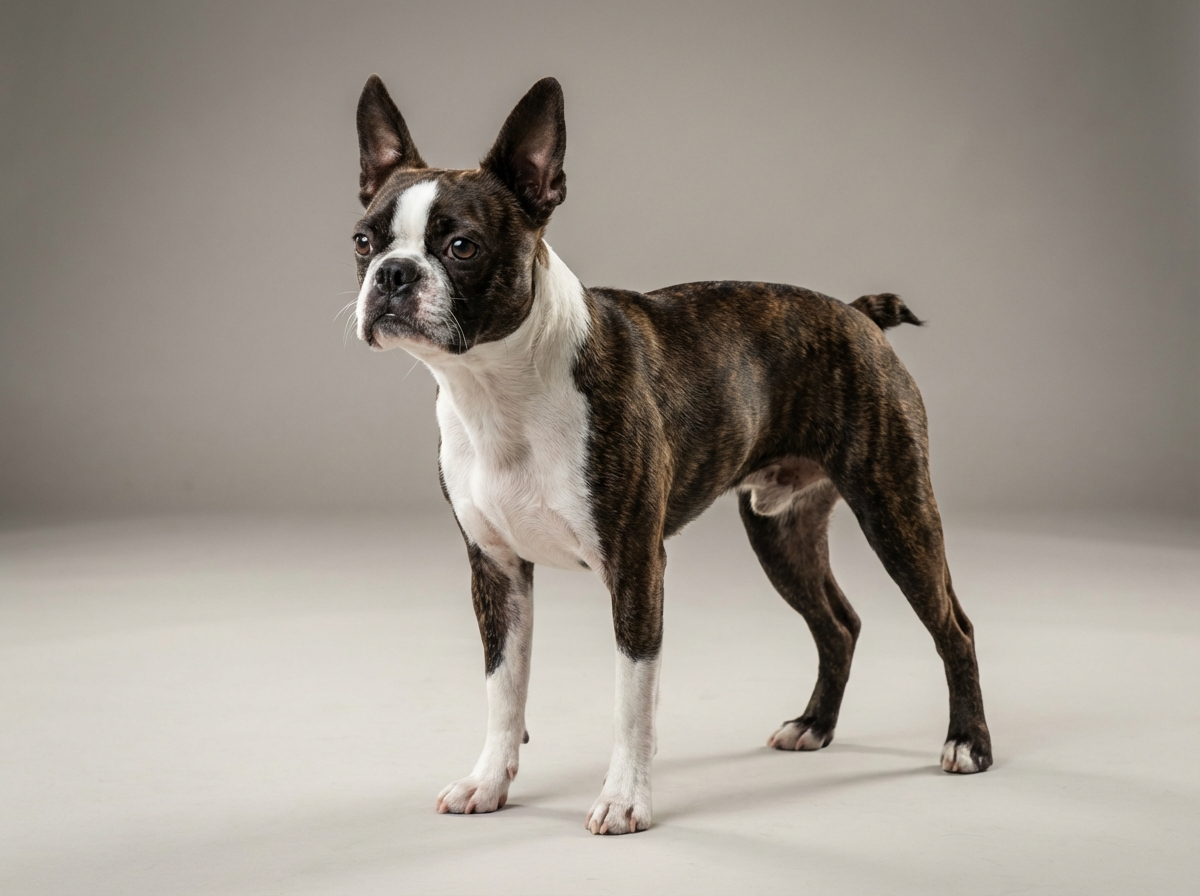
Both breeds sit in the small class, but a 12-25 lb Boston Terrier can weigh nearly twice as much as a 7-13 lb Havanese, while standing taller too, 15-17 inches against 8-11. The Boston Terrier's short, smooth, tuxedo-marked coat gives it an athletic, compact build, while the Havanese's long, silky coat and Cuban origins give it a softer, more delicate silhouette. Anyone picturing a true lap dog will find the Havanese closer to the mark, while the sturdier, more solidly built Boston Terrier can handle slightly more boisterous handling.
Exercise need ties at low (2/5) and energy level ties at moderate (3/5), making these two breeds unusually well matched on activity requirements. Both are content with short walks and indoor play rather than long outings, fitting their shared role as companion breeds bred primarily for affection rather than work. The temperament lists back this up: the Boston Terrier is friendly, lively and comical, while the Havanese is affectionate, intelligent and lively, both pointing toward playful indoor energy rather than a need for serious daily exertion.
Grooming is the sharpest contrast on the entire table: the Boston Terrier rates very low (1/5) thanks to its short, smooth coat, while the Havanese rates high (4/5) because its long, silky coat mats without regular brushing and periodic trims. Shedding, by contrast, ties at low (2/5) for both. A household that wants a wash-and-go dog should lean firmly toward the Boston Terrier, while one that's drawn to the Havanese's plush coat should budget real time, or a grooming service, for keeping it tangle-free.
Apartment suitability ties at very high (5/5) for both breeds, so either fits comfortably into a small home. Barking tips slightly toward the Boston Terrier being quieter, low (2/5) against the Havanese's moderate (3/5). The bigger gap is tolerating being alone: the Boston Terrier rates moderate (3/5) while the Havanese drops to very low (1/5), the lowest score on this comparison and a real warning sign for anyone who works long hours away from home, since Havanese are known to bond intensely with their people.
Trainability ties at high (4/5) for both breeds, and first-time-owner suitability ties too, at very high (5/5), making this one of the more evenly matched pairings for a novice owner on this site. Both breeds are intelligent and eager to please, the Boston Terrier's adaptable nature and the Havanese's quick intelligence both lending themselves to reward-based training. The real differentiator for a first-time owner isn't training difficulty here, it's the Havanese's low tolerance for solitude, which demands a different kind of daily commitment than skill-building alone.
The Boston Terrier rates very high (5/5) with kids against the Havanese's still-solid high (4/5), while the Havanese pulls ahead with other dogs, very high (5/5) against the Boston Terrier's high (4/5). Both tie at high (4/5) friendly to strangers, so social ease with visitors isn't a differentiator. Families with boisterous young children may lean toward the sturdier Boston Terrier, while households adding a second or third dog to the pack may find the Havanese's near-perfect compatibility rating the more reassuring number.
The Havanese lives longer, 13-16 years against the Boston Terrier's 11-13, a meaningful gap for two small breeds. Health profiles differ sharply in scope: the Boston Terrier's five-item list is dominated by brachycephalic airway syndrome (BOAS), a direct consequence of its flat face, alongside patellar luxation and cataracts. The Havanese's ten-item list is broader, including hip dysplasia, liver shunts and elbow dysplasia alongside patellar luxation and cataracts, conditions shared with the Boston Terrier. The flat-faced Boston Terrier's breathing risk is arguably the single most important health factor to weigh here.
The Havanese costs more overall, rated high (4/5) cost level against the Boston Terrier's moderate (3/5), though monthly figures land close, $80-160 versus $80-150, and first-year costs are nearly identical, $1,200-2,300 against $1,100-2,300. The Havanese's higher cost rating likely reflects its demanding coat care, regular grooming appointments add up over a 13-16 year lifespan, while the Boston Terrier's costs concentrate more around monitoring its brachycephalic airway risk, particularly around anesthesia and hot-weather exercise.
Boston Terrier weighs 12–25 lbs and lives 11–13 years; Havanese weighs 7–13 lbs and lives 13–16 years. The two diverge most on grooming need and tolerates being alone. They are level on apartment suitability, energy level and exercise need, so those cannot decide it. Where the table declares a winner it means less work for the owner, nothing more; descriptive rows are left as ties on purpose. The value here is in the differences between the two columns; treat any single score as approximate.

The Havanese by a wide margin, rated high (4/5) grooming need against the Boston Terrier's very low (1/5), due to its long, silky coat.
Not well; it rates very low (1/5) for tolerating being alone, the lowest score in this comparison, and it's known to bond intensely with its people.
Both breeds tie at very high (5/5) for first-time-owner suitability, so the Havanese is just as strong a choice as the Boston Terrier, though its low tolerance for solitude is worth considering for owners who work long hours.
Yes, brachycephalic airway syndrome (BOAS) is on their health list due to their flat face, a risk factor especially during exercise or in hot weather.
The Havanese, averaging 13-16 years compared to the Boston Terrier's 11-13 years.
Very well; it's rated very high (5/5) good with other dogs, against the Boston Terrier's still-strong high (4/5).
Neither; both tie at low (2/5) shedding.
Boston Terrier, rated 1/5 grooming need versus the Havanese's 4/5.
The Boston Terrier, rated moderate (3/5) versus the Havanese's very low (1/5).
About two to three years on average: 13-16 years for the Havanese versus 11-13 for the Boston Terrier.
The Havanese, rated very high (5/5) good with other dogs versus the Boston Terrier's high (4/5).
Secure checkout on Stripe. We never see your card.
7-day money-back guarantee. Instant access.
Health information here is general and is not veterinary advice. If your dog shows pain, sudden behaviour change, or worsening symptoms, consult a licensed veterinarian.
Some links on this site are affiliate links. We may earn a commission at no extra cost to you, and we only suggest products we believe are helpful for dog owners.
We research and check what we publish, but we do not warrant that any figure, date, price, or statement is accurate, complete, or current, and we accept no liability for any loss, cost, injury, or other harm arising from the use of this site. Use it as one reference among several. You remain responsible for your own decisions and for your dog's care - confirm anything that matters with a licensed veterinarian or another qualified professional before you act on it. Full disclaimer.
Match your lifestyle to the right dog.
Take quizNot sure which breed is right for you? Take our 2-minute quiz to find out.
Take the quiz