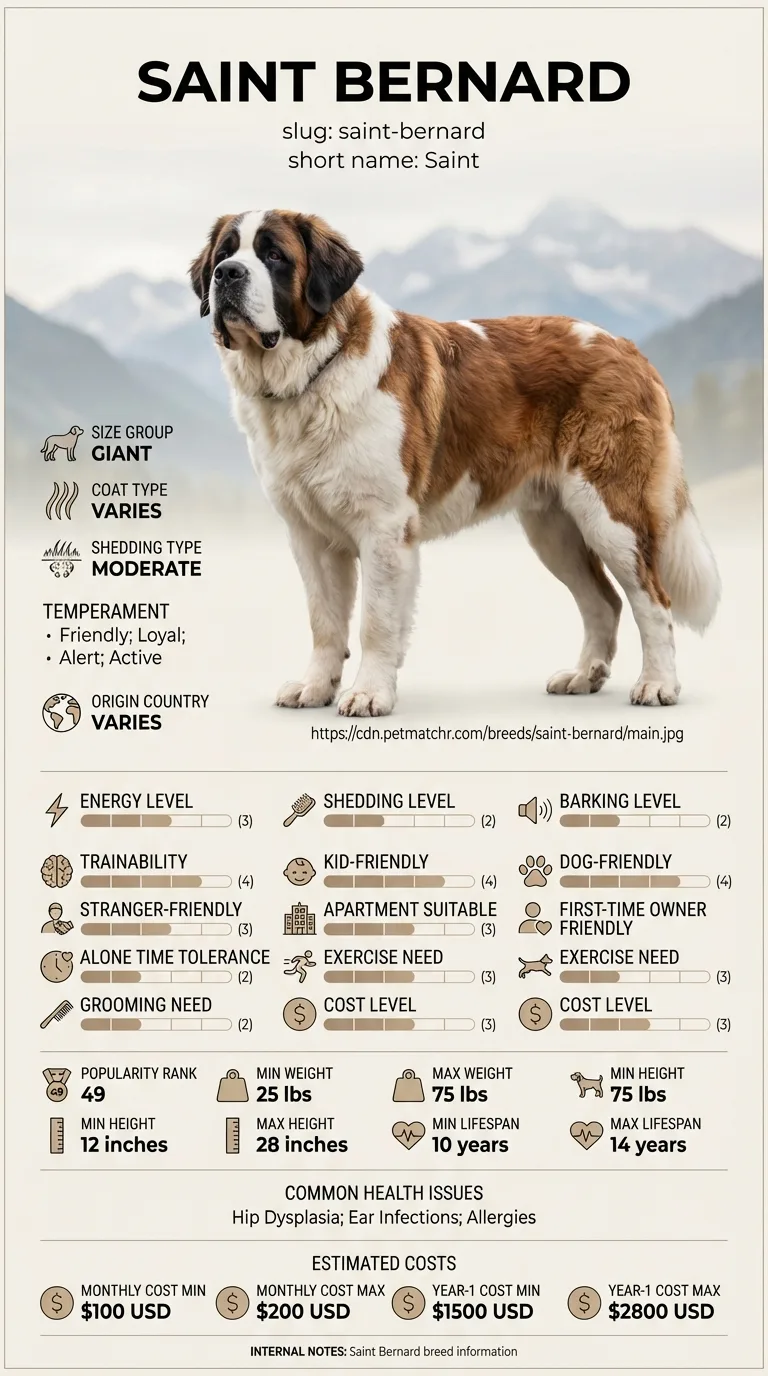
The Saint Bernard's list is brief — hip dysplasia, elbow dysplasia, dilated cardiomyopathy, entropion and bloat — and four of those five follow directly from being very large.
Dilated cardiomyopathy is the one that most often shortens a giant-breed life. The heart muscle weakens and the chambers enlarge, and because dogs compensate for a long time the first visible sign can be sudden: exercise intolerance, a cough, fainting, or collapse. It is detectable earlier by cardiac examination and echocardiography, which is why a breeder who has their stock screened by a cardiologist is worth paying more for.
Bloat is the acute emergency. A deep-chested giant that becomes restless, tries repeatedly to vomit without producing anything and develops a tight, swelling abdomen needs a surgery within hours. Split meals, quiet time around eating, a slow-feeder bowl for a fast eater, and knowing the out-of-hours route in advance are the practical measures, and prophylactic gastropexy is a legitimate conversation with a vet for any giant breed.
Hip and elbow dysplasia are the orthopaedic pair, screenable in both parents and strongly influenced by growth-stage feeding and exercise.
Entropion is the odd one out and is a conformation issue rather than a size one: the eyelid rolls inward so lashes contact the cornea, producing squinting, weeping and eventual corneal damage. It usually shows in the first year or two, it is surgically corrected, and it is a fair question to ask a breeder about because it recurs in lines with loose facial skin.
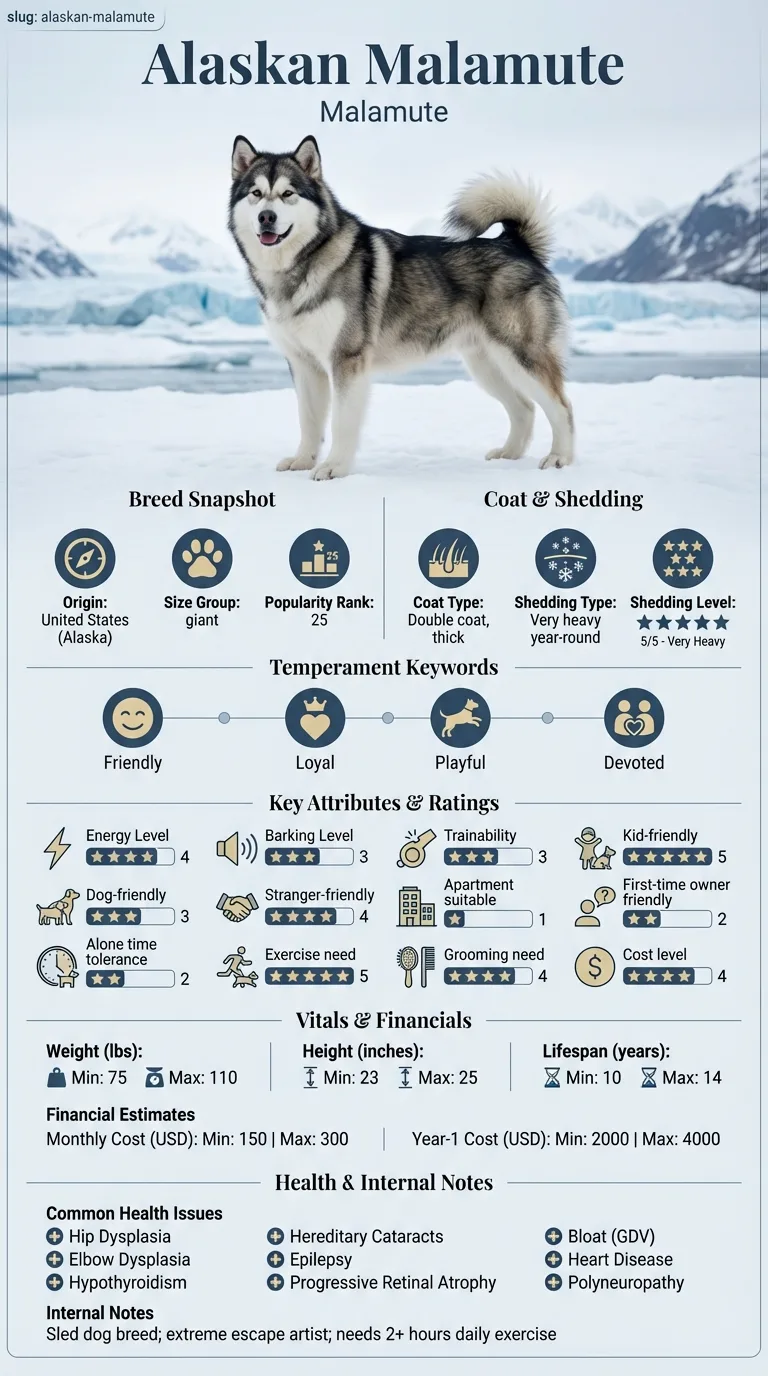
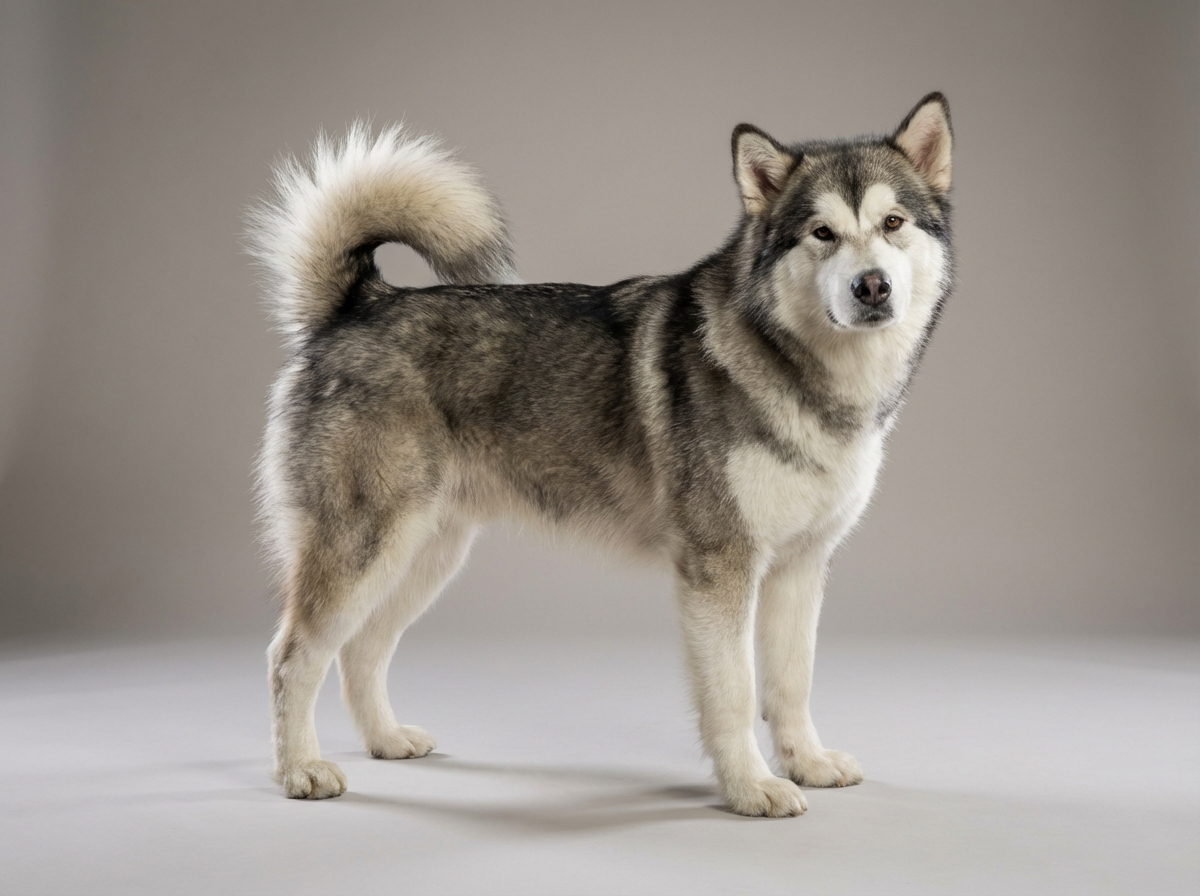
The Malamute's list is longer but lighter at the top: hip and elbow dysplasia, bloat, hypothyroidism, epilepsy, progressive retinal atrophy, hereditary cataracts, zinc-responsive dermatosis and inherited polyneuropathy — and no dominant cardiac or cancer burden, which is why it lives 10 to 14 years against 8 to 10.