Akita or Weimaraner: Identical Budgets, Incompatible Weeks
Quick answer
Akita vs Weimaraner: which should I choose?
The Weimaraner if you are athletic, mostly at home, and want a capable hunting companion. The Akita if the house is empty during the day or you cannot commit two hours — the money is identical, the time is not.
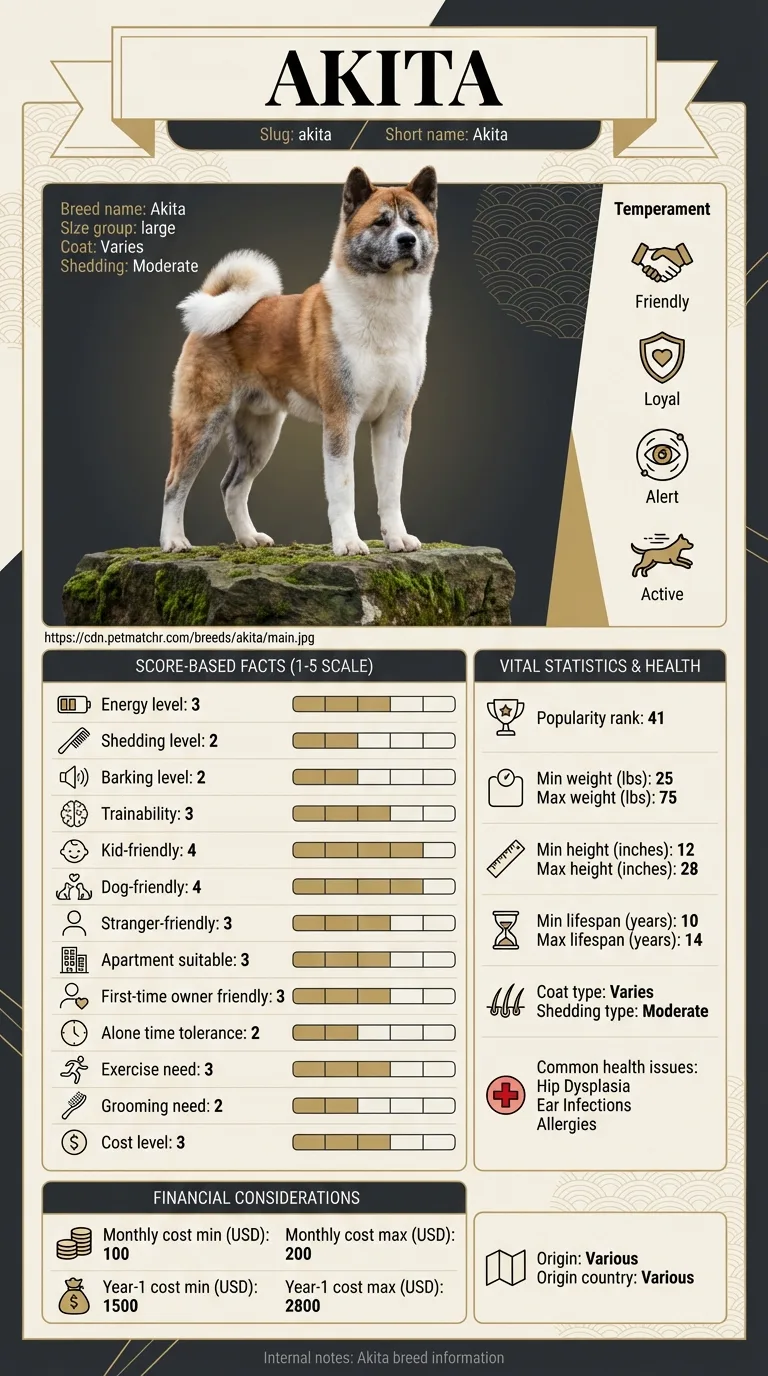
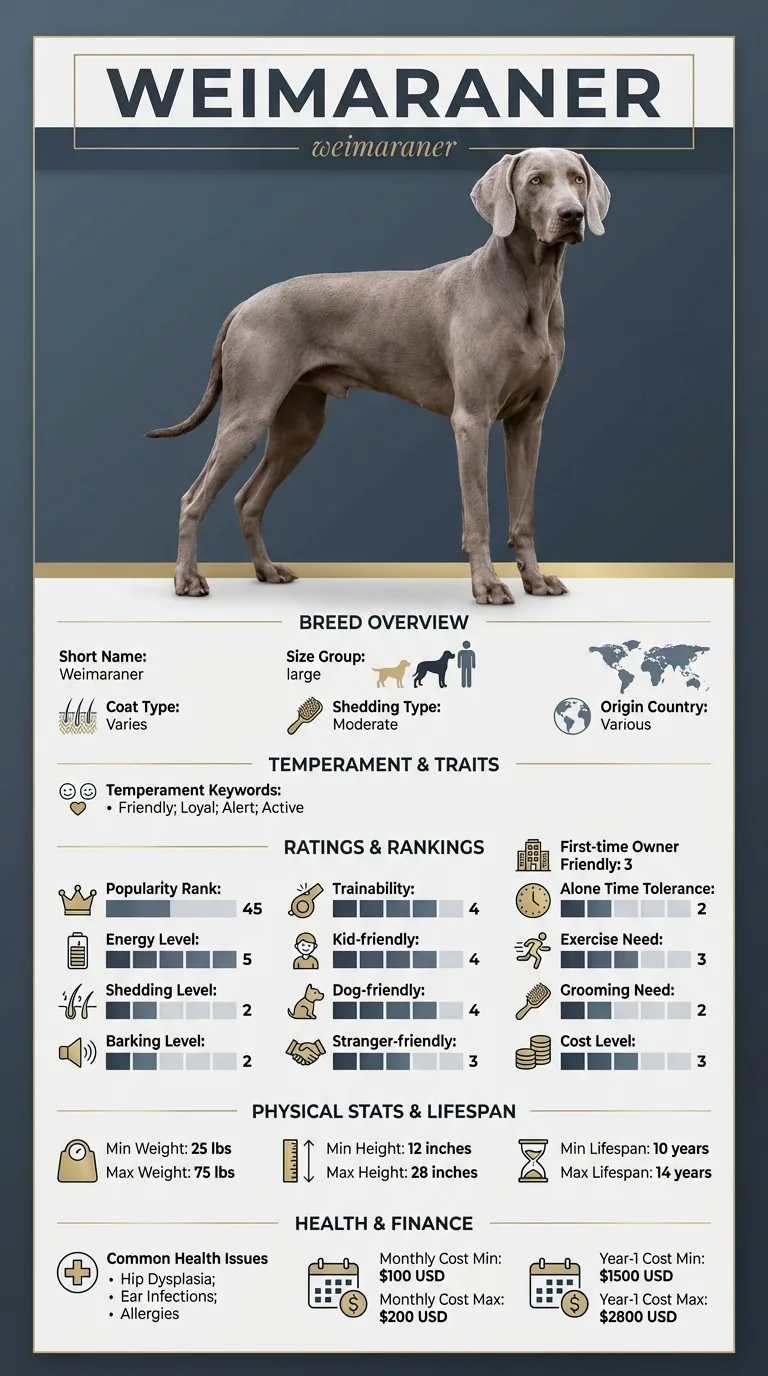
These two cost exactly the same to keep — $110 to $240 a month, $1,700 to $3,200 in the first year — and there the resemblance stops. The Weimaraner rates 5/5 for exercise and 1/5 for tolerating time alone. The Akita rates 3/5 and 3/5. One of these dogs needs your whole day; the other needs a walk.
This page is for someone weighing a high-drive, highly attached gundog against a self-contained guardian, with the budget already fixed. It covers the exercise and companionship gap, a serious bloat risk, two inherited conditions worth testing for, and grooming.
Quick verdict
For the same money you can have a dog that needs two hours of work and constant company, or one that needs forty-five minutes and would rather be left alone.
Choose akita if...
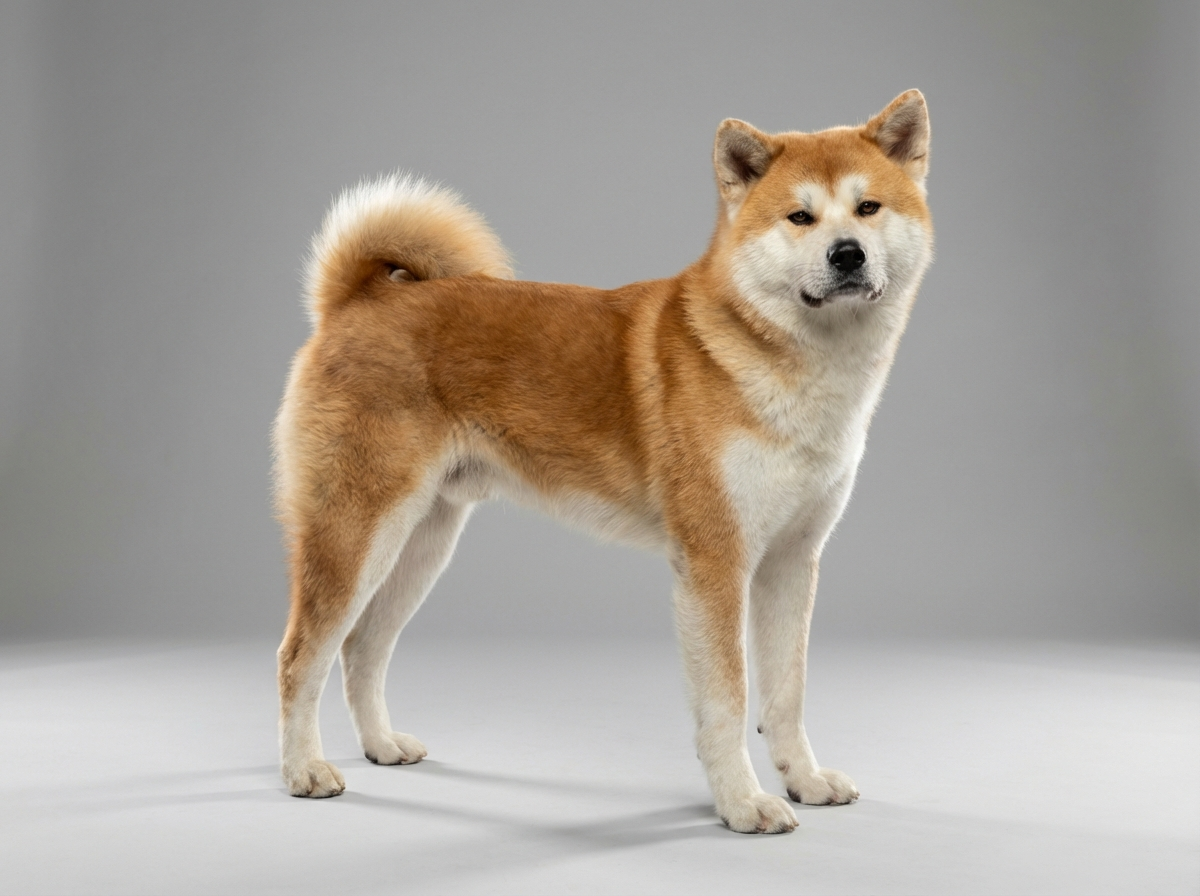
Choose the Akita if the house is empty during the day or you cannot commit two hours of exercise. It tolerates being alone at 3/5 against the Weimaraner's 1/5, needs 3/5 exercise against 5/5, and rates 2/5 for apartments against 1/5. You are accepting 5/5 shedding against 2/5 and 3/5 grooming against 1/5.
Choose weimaraner if...
Choose the Weimaraner if you are athletic, mostly at home, and want a capable hunting companion. It rates 4/5 for trainability and with children, grooms at 1/5 and sheds at 2/5. You are accepting 5/5 exercise, a 1/5 apartment rating, separation anxiety listed as a breed condition, and one of the highest bloat risks in dogs.
Head-to-head comparison
Feature
akita
weimaraner
Winner
Weight
70–130 lbs
55–90 lbs
Equal
Height
24–28 in
23–27 in
Equal
Lifespan
10–13 years
10–13 years
Equal
Coat
Dense double coat
Short and sleek
Equal
Grooming need
Moderate (3/5)
Very low (1/5)
weimaraner
Shedding
Very high (5/5)
Low (2/5)
weimaraner
Energy level
Moderate (3/5)
Very high (5/5)
Equal
Exercise need
Moderate (3/5)
Very high (5/5)
akita
Trainability
Moderate (3/5)
High (4/5)
weimaraner
Barking
Low (2/5)
Moderate (3/5)
akita
Good with kids
Moderate (3/5)
High (4/5)
weimaraner
Good with other dogs
Low (2/5)
Moderate (3/5)
weimaraner
Friendly to strangers
Low (2/5)
Moderate (3/5)
weimaraner
Apartment suitability
Low (2/5)
Very low (1/5)
akita
Good for first-time owners
Very low (1/5)
Low (2/5)
weimaraner
Tolerates being alone
Moderate (3/5)
Very low (1/5)
akita
Typical monthly cost
$110–$240
$110–$240
Equal
Typical first-year cost
$1,700–$3,200
$1,700–$3,200
Equal
Deep dive
What a 5/5 all-round hunting dog needs
A Weimaraner wants around two hours a day of genuine activity, and like every pointing breed it wants to search rather than simply travel. Quartering ground, tracking, retrieving and directional work satisfy it in a way distance never does.
The breed was built for endurance on large game — it will keep going long after the owner has stopped enjoying it — and its 1/5 apartment rating follows directly from that output rather than from its size.
An under-exercised Weimaraner is one of the more destructive dogs in this batch. Counter-surfing, door-frame chewing, digging and relentless restlessness are the usual outcomes, and because the breed is 4/5 trainable it learns those habits thoroughly.
A short sleek coat also means it feels the cold. Weimaraners need a coat in winter and have little tolerance for being left outside.
The Akita at 3/5 wants forty-five to sixty minutes of walking, has no requirement for a job, and does not deteriorate without one — the single biggest difference between these two dogs in an ordinary week.
Separation anxiety as a listed breed condition
Separation anxiety appears on the Weimaraner's condition list alongside its medical problems, which is unusual and deliberate. In this breed it is common enough to be treated as a characteristic rather than an individual quirk.
The cause is the same as the drive: a dog bred to work all day beside one person does not experience an empty house as neutral. The behaviour is severe when it occurs — sustained howling, destruction focused on doors and windows, self-injury in bad cases, and refusal to eat while alone.
Prevention has to start in week one, before any problem exists. Graduated absences beginning at seconds rather than minutes, never pushed past the point where the dog becomes worried. A genuinely tired dog before you leave. A settled place the dog is rewarded for using. For a household out all day, a walker or day care is not optional.
A Weimaraner is often called a grey ghost, and owners mean it literally — it follows people between rooms and leans on legs.
The Akita at 3/5 is self-contained. It sleeps through an empty afternoon and does not read it as a loss.
Bloat sits at the top of this breed's list for a reason
Gastric dilatation-volvulus heads the Weimaraner's condition list, ahead of hip dysplasia and everything else. The breed carries one of the highest GDV risks in dogs, and the conformation explains it: a deep, narrow chest on a lean athletic frame.
In GDV the stomach distends with gas and then rotates, cutting off its own blood supply. Without surgery it is fatal, usually within hours.
The signs need to be known before they are needed: unproductive retching, a swelling or drum-tight abdomen, restlessness and an inability to settle, drooling, and pale gums. Any of them is an immediate emergency, not a wait-and-see.
Because the risk is so high, a preventive gastropexy — tacking the stomach to the abdominal wall during neutering — is a genuine conversation to have with a vet before the dog is a year old. It does not prevent distension but it prevents the rotation that kills.
The Akita is also deep-chested and carries a real bloat risk, though a lower one, so both households should know the signs and know where the nearest out-of-hours surgery is.
Bleeding, bone growth and an easy coat
Von Willebrand disease is the second Weimaraner item worth naming. It is an inherited clotting disorder with a DNA test, and the usual way owners discover it is during surgery. Test before any elective procedure, including neutering — and particularly before a gastropexy.
Hypertrophic osteodystrophy is the third. It affects fast-growing large breed puppies, typically between three and six months, producing painful swelling above the wrists and hocks, fever and reluctance to move. It is managed with pain relief and rest, and the risk is raised by over-feeding and calcium supplementation — so a controlled large-breed puppy diet and a visibly lean puppy matter here more than most places.
Hip dysplasia completes the list, with scores to be seen as numbers from both parents.
On coat the Weimaraner is one of the easiest dogs alive: 1/5 grooming, 2/5 shedding, a rubber curry once a week. The Akita's 3/5 and 5/5 mean a weekly brush for ten months and then two or three weeks of raking a dense undercoat, twice a year, and its coat should never be clipped.
Akita vs Weimaraner: the budget matches and nothing else does
Lifespan ties at 10 to 13 years and both cost figures are identical. Two large dogs of similar weight, similar longevity, and the same monthly bill.
Then the demand rows arrive. 5/5 exercise against 3/5. 1/5 solitude against 3/5. 1/5 apartment suitability against 2/5. The Weimaraner asks for roughly four times the time investment for exactly the same money.
What it gives back is a much easier coat — 1/5 grooming and 2/5 shedding against 3/5 and 5/5 — and better social ratings across the board: 4/5 with children, 3/5 with other dogs and strangers, against 3/5, 2/5 and 2/5.
The honest way to read this page is that the financial comparison is a red herring. The real currency is hours, and on that measure these two dogs are not in the same category at all.
Akita or Weimaraner: Identical Budgets, Incompatible Weeks - Akita vs Weimaraner: the budget matches and nothing else does
Frequently asked questions
Do these two breeds really cost the same?
On food and routine care, yes — both run $110–$240 a month and $1,700–$3,200 in the first year, and both live 10 to 13 years. The financial comparison is misleading though: the Weimaraner asks for roughly four times the daily time investment, plus likely day cover, for the same money.
How much exercise does a Weimaraner need?
Around two hours a day of genuine activity, and it should involve searching and tracking rather than only walking. It was bred as an all-round hunting dog for endurance on large game. An under-exercised Weimaraner counter-surfs, chews door frames and digs, and it learns those habits thoroughly at 4/5 trainability.
Why is separation anxiety listed as a Weimaraner health condition?
Because it is common enough in the breed to be a characteristic rather than an individual quirk. A dog bred to work all day beside one person finds an empty house genuinely distressing — sustained howling, destruction at doors, and refusal to eat. Graduated absence training from week one is the prevention.
How serious is bloat in a Weimaraner?
It heads the breed's condition list, ahead of everything else, and the Weimaraner carries one of the highest gastric dilatation-volvulus risks in dogs. It is fatal within hours without surgery. Learn the signs, and discuss a preventive gastropexy at neutering with your vet before the dog is a year old.
What is hypertrophic osteodystrophy?
A painful growth disorder affecting fast-growing large breed puppies between roughly three and six months, producing swelling above the wrists and hocks, fever and reluctance to move. Over-feeding and calcium supplementation raise the risk, so a controlled large-breed puppy diet and a visibly lean puppy matter.
Which is easier to groom?
The Weimaraner, by a wide margin — 1/5 grooming and 2/5 shedding against the Akita's 3/5 and 5/5. A rubber curry once a week covers it. The trade is insulation: a sleek coat gives almost none, so a Weimaraner needs a coat in winter where an Akita is entirely comfortable.
Which copes better with a working day?
The Akita at 3/5 against the Weimaraner's 1/5, which is the lowest rating on the scale. If the house is empty five days a week and there is no walker or day care in the budget, that single row decides this comparison regardless of everything else on the page.
The Weimaraner if you are athletic, mostly at home, and want a capable hunting companion. The Akita if the house is empty during the day or you cannot commit two hours — the money is identical, the time is not.
Costs
How much does each cost per month?
Both run $110–$240 a month with first-year totals of $1,700–$3,200. Add day cover for the Weimaraner if the household works full time, which is a recurring cost the Akita does not need.
Health
What should I test for before Weimaraner surgery?
Von Willebrand disease, an inherited clotting disorder with a DNA test. Most owners find out during an operation, so test before any elective procedure — especially before a preventive gastropexy.
Living
Which handles cold better?
The Akita, easily. Its dense double coat handles temperatures that keep most breeds indoors. The Weimaraner's sleek coat gives almost no insulation and it needs a coat in winter.
Related DogBreedCompass guides
Akita breed guide – The Akita profile covers guardian temperament and the long socialisation window the breed needs.
Weimaraner breed guide – The Weimaraner profile covers exercise, companionship needs and bloat prevention.
Akita vs Vizsla – The Vizsla is the other lean continental gundog with comparable attachment needs.
Akita vs German Shorthaired Pointer – The German Shorthaired Pointer is the closest working alternative on drive and bloat risk.
Weimaraner genetic disorders – The inherited conditions worth screening for before buying a Weimaraner puppy.
Akita autoimmune diseases – Autoimmune disease is the Akita's most distinctive burden and the first question for a breeder.
Health information here is general and is not veterinary advice. If your dog shows pain, sudden behaviour change, or worsening symptoms, consult a licensed veterinarian.
Some links on this site are affiliate links. We may earn a commission at no extra cost to you, and we only suggest products we believe are helpful for dog owners.
We research and check what we publish, but we do not warrant that any figure, date, price, or statement is accurate, complete, or current, and we accept no liability for any loss, cost, injury, or other harm arising from the use of this site. Use it as one reference among several. You remain responsible for your own decisions and for your dog's care - confirm anything that matters with a licensed veterinarian or another qualified professional before you act on it. Full disclaimer.