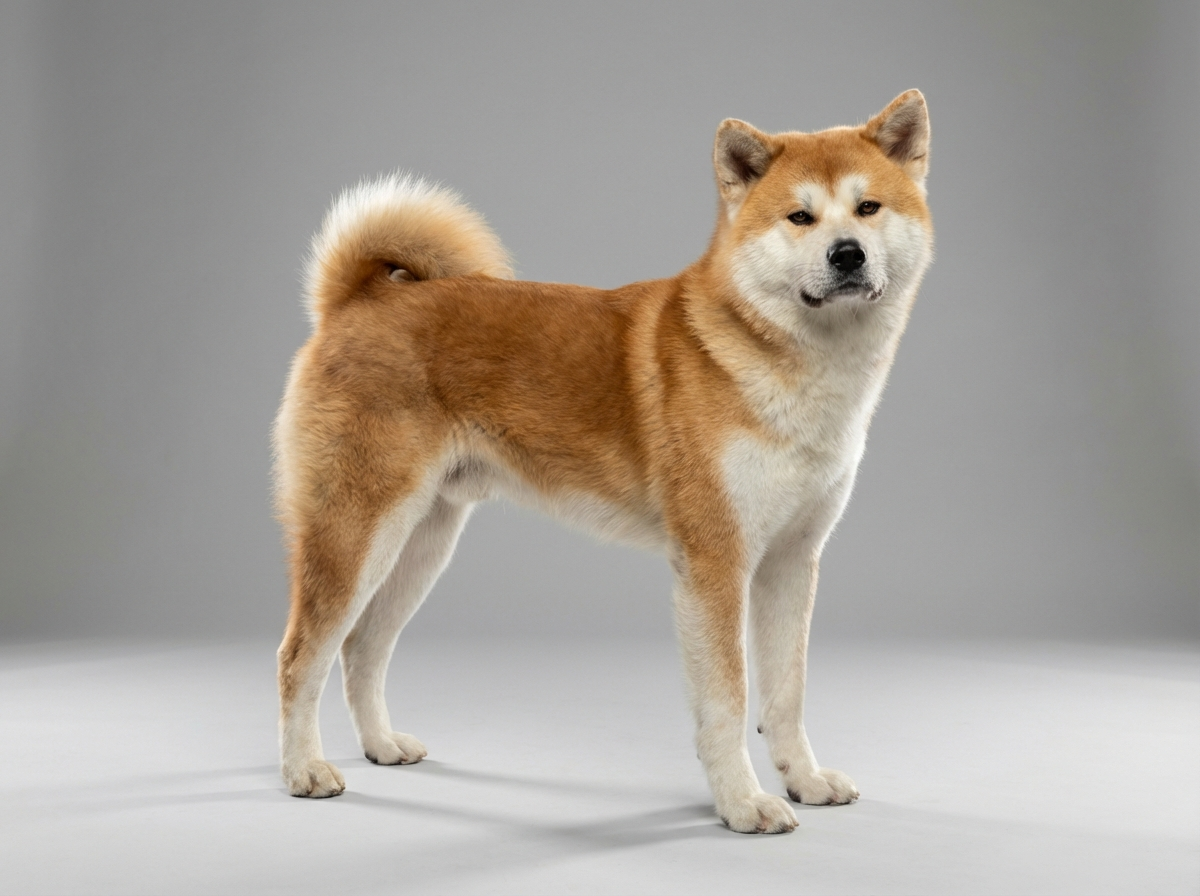
Costs
Akita cost in Jacksonville
About $110–$210/month, $1,650–$2,900 for year one — pushed up mainly by year-round parasite prevention.

See Akita price across all cities →
Quick answer
Akita cost in Jacksonville
About $110–$210/month, $1,650–$2,900 for year one — pushed up mainly by year-round parasite prevention.
An Akita in Jacksonville costs about $110–$210 a month, with the first year around $1,650–$2,900 — a moderate Florida budget defined mainly by the climate.
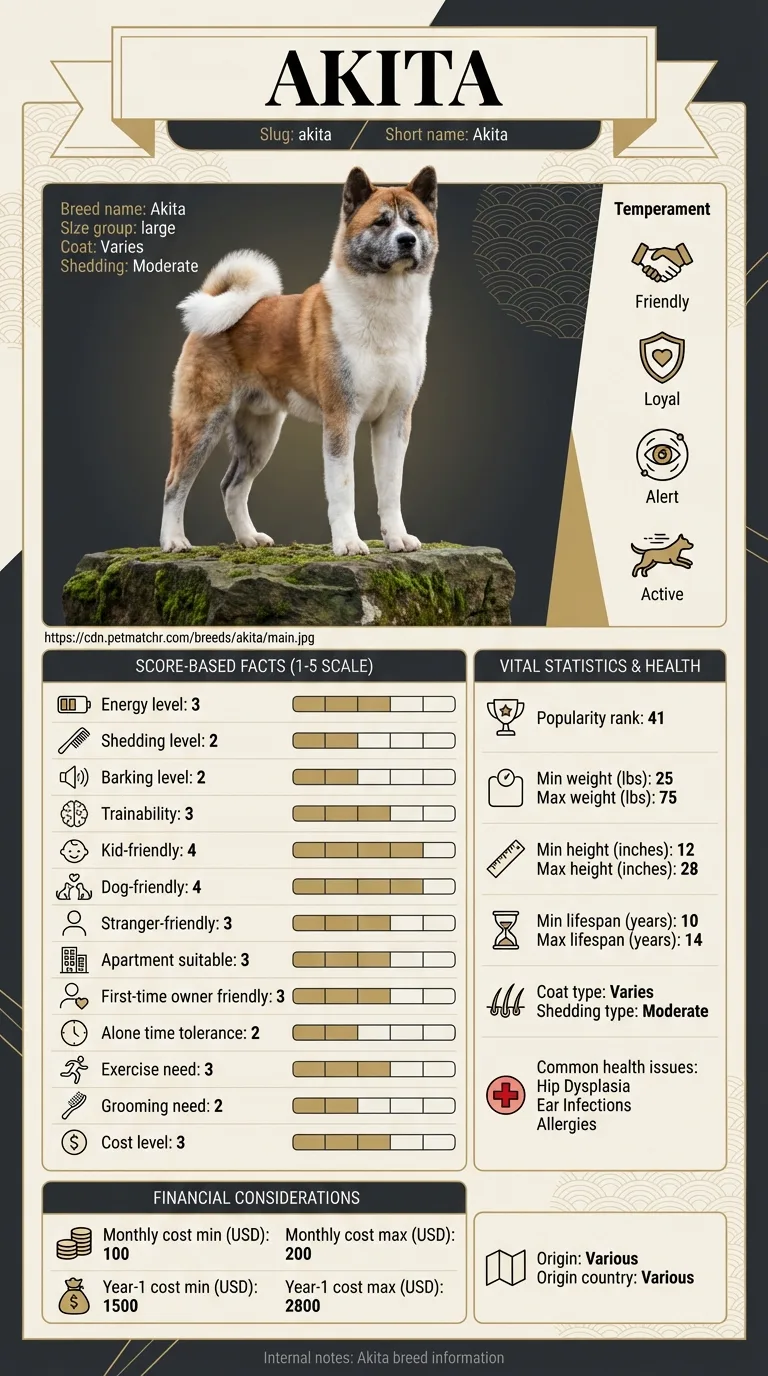
The breed's own risks apply here as anywhere — hip dysplasia and the Akita's tendency toward ear infections are the likeliest sources of an unplanned bill, and Florida's humidity specifically compounds the ear-infection risk given the breed's ear shape.
Jacksonville's numbers apply the Akita's typical national cost range to a market close to the national average generally, with Florida's year-round warm, humid climate pushing parasite prevention to a genuine twelve-month cost rather than a seasonal one.
Estimate · source: estimation · confidence: medium · updated 2026-09-05 · not a quote
| Item | Cost range |
|---|---|
One-time setup (initial vet visit, spay/neuter, large-breed gear) Covers the first exam, vaccinations, spay/neuter if needed, and gear sized for the breed's adult weight. | $400 - $700 |
| Item | Cost range |
|---|---|
Food Sized for the breed's large adult frame; a quality AAFCO-compliant food matters more than brand name. | $50 - $82 |
Grooming Akitas mostly self-groom; at-home brushing through the coat-blow seasons covers most needs without frequent professional visits. | $12 - $26 |
Flea, tick & heartworm prevention A genuine year-round cost given Florida's climate — one of the few cities on this site where this line item runs a full twelve months without a real off-season. | $22 - $38 |
Ear care A small recurring cost specific to this breed and climate — the Akita's ear shape plus Florida's humidity make routine cleaning worth budgeting for before any problem shows up. | $5 - $15 |
Each range starts from a national baseline for this breed's size class and is then adjusted for local cost of living and veterinary pricing. The baselines, and the source each one came from, are listed on our sources page (dataset 2026.09). Two inputs, the purchase price and the emergency reserve, have no published national figure we could verify, so we leave them to you rather than invent them.
These are planning estimates, not quotes. Your own numbers will move with the individual dog, your vet and your insurer. Build a budget with your own figures.
For an Akita in Jacksonville, insurance is mainly about the breed's hip dysplasia risk, since the local vet market itself prices close to the national average.
A surgical hip procedure still runs into real money even at Jacksonville's moderate rates, so buying a policy while the dog is young — before anything is on record — is worth pricing out given the breed's documented risk.
Owners who've set aside $2,000 or more specifically for a vet emergency, and who are comfortable managing that bill themselves, can reasonably self-insure instead of paying a recurring premium.
Jacksonville's general costs run moderate; the realistic savings come from managing the genuine year-round parasite cost efficiently.
Jacksonville's general cost of living runs close to the national average, helped by Florida's lack of a state income tax, and sits well below the pricing of South Florida markets like Miami. For most line items in an Akita's budget — food, routine vet care, grooming — that means a fairly typical, unremarkable cost picture.
Where Jacksonville stands apart is climate. Florida's warm, humid conditions persist essentially all year, and flea, tick and heartworm activity here doesn't meaningfully slow down even in winter. That makes parasite prevention one of the few genuinely twelve-month costs on this site rather than the seasonal purchase most colder or drier cities allow, and it's the single biggest reason a Jacksonville Akita budget runs a bit above what the city's otherwise moderate general prices would suggest.
The same year-round humidity affects the breed's ear health specifically. The Akita's ear shape already traps moisture more than some breeds, and Florida's climate compounds that risk in a way a drier state wouldn't. Regular at-home ear cleaning is a cheap, simple habit that heads off a more expensive infection-treatment visit, and it's worth building into the routine from the start rather than waiting for symptoms to appear.

A Jacksonville Akita owner who had previously lived in a colder state assumed, out of habit, that winter meant a break from flea and tick prevention and skipped a couple of months of dosing during what felt like the off-season. The dog picked up a tick during that window, discovered during a routine grooming session, which led to an unplanned vet visit to check for tick-borne illness. After that, the owner kept prevention going year-round without exception, which turned out to be both the safer and, once the unplanned vet visit was factored in, the cheaper choice.
Key takeaway: A habit formed in a colder climate doesn't transfer to Florida — assuming a winter break from parasite prevention here risks an unplanned vet visit that costs far more than the months of prevention it was meant to save.
Around $110–$210, covering food, routine vet care, grooming and parasite prevention. Jacksonville's general costs run close to the national average; parasite prevention runs higher than most cities because Florida's climate keeps it active essentially year-round.
Roughly $1,650–$2,900, including the initial vet exam, spay/neuter if needed, and large-breed gear on top of ongoing monthly costs.
Yes — Florida's warm, humid climate keeps flea, tick and heartworm activity going essentially all year, with no real off-season the way a colder or drier state would have. This is the single biggest reason Jacksonville's budget runs above a purely general cost-of-living comparison would suggest.
The breed's ear shape already traps moisture more than some breeds, and Florida's year-round humidity adds to that risk. A weekly at-home ear-cleaning habit is a low-cost way to reduce how often a more expensive infection-treatment visit is needed.
Worth pricing out given the breed's hip dysplasia risk — even in a moderately priced market like Jacksonville, a surgical procedure can run into real money, and insurance is cheapest bought before the dog has anything on a vet record.
Around $700 covers a typical significant vet visit in this market. If hip dysplasia becomes a specific concern, building toward $2,200 gets closer to what a surgical procedure would actually cost here.
About $110–$210/month, $1,650–$2,900 for year one — pushed up mainly by year-round parasite prevention.
This guide is not medical advice. If your dog shows pain, sudden behavior change, or worsening symptoms, consult a licensed veterinarian.
Some links may be affiliate links. We may earn a commission at no extra cost to you. We only suggest products we believe are helpful for dog owners.
We research and check what we publish, but we do not warrant that any figure, date, price, or statement is accurate, complete, or current, and we accept no liability for any loss, cost, injury, or other harm arising from the use of this site. Use it as one reference among several. You remain responsible for your own decisions and for your dog's care - confirm anything that matters with a licensed veterinarian or another qualified professional before you act on it. Full disclaimer.
One sheet with every line item, the emergency fund and when insurance pays off - unlocks on this page.
You get: 12-month budget sheet
No spam. One-click unsubscribe. See our privacy policy.
Preview page 1 before you decide.