Behavior
Which sheds more?
The Husky, rated Very high (5/5) versus the Springer's Moderate (3/5).

Quick answer
Which sheds more?
The Husky, rated Very high (5/5) versus the Springer's Moderate (3/5).
Siberian Husky or Welsh Springer Spaniel? On paper they differ most on shedding, and on the scales Siberian Husky is the heavier at 45–60 lbs. Here is how the two compare on everything that shapes an ordinary week.
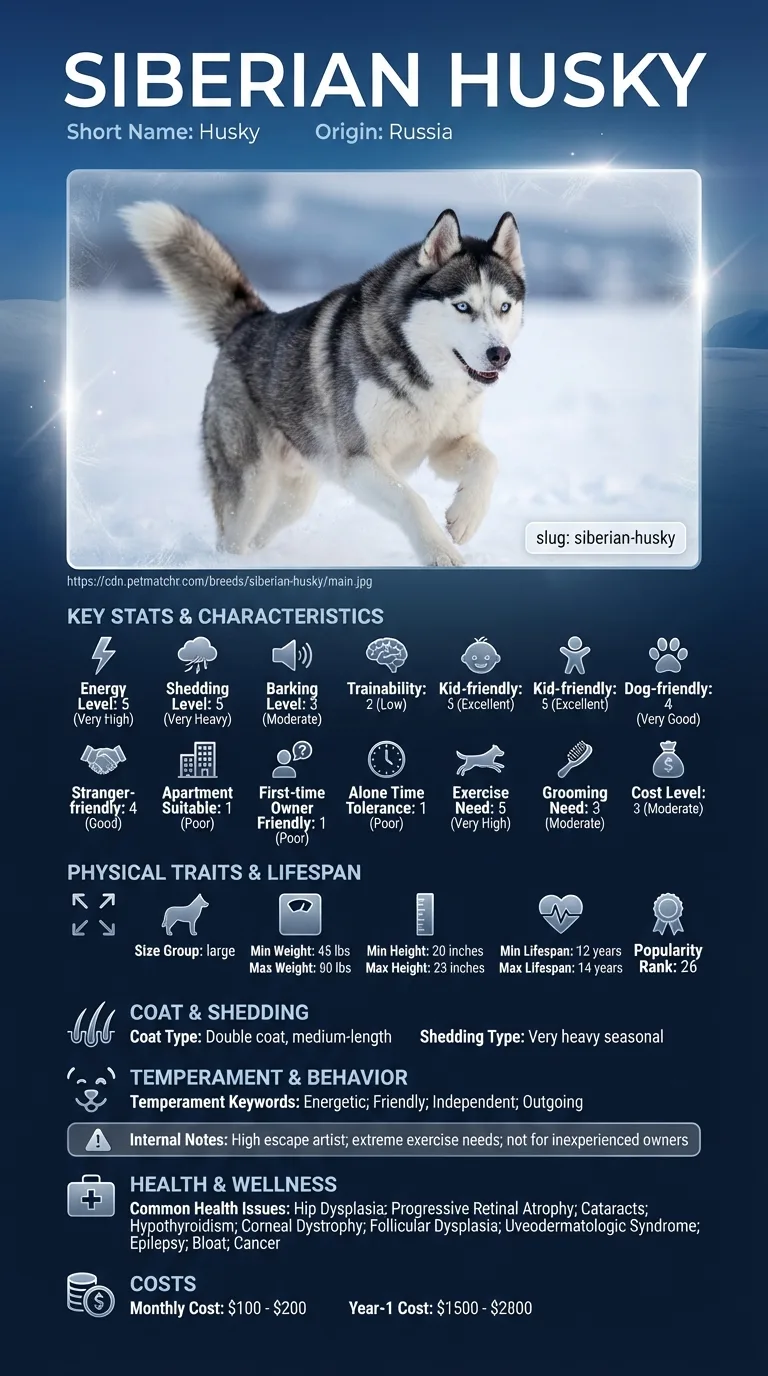
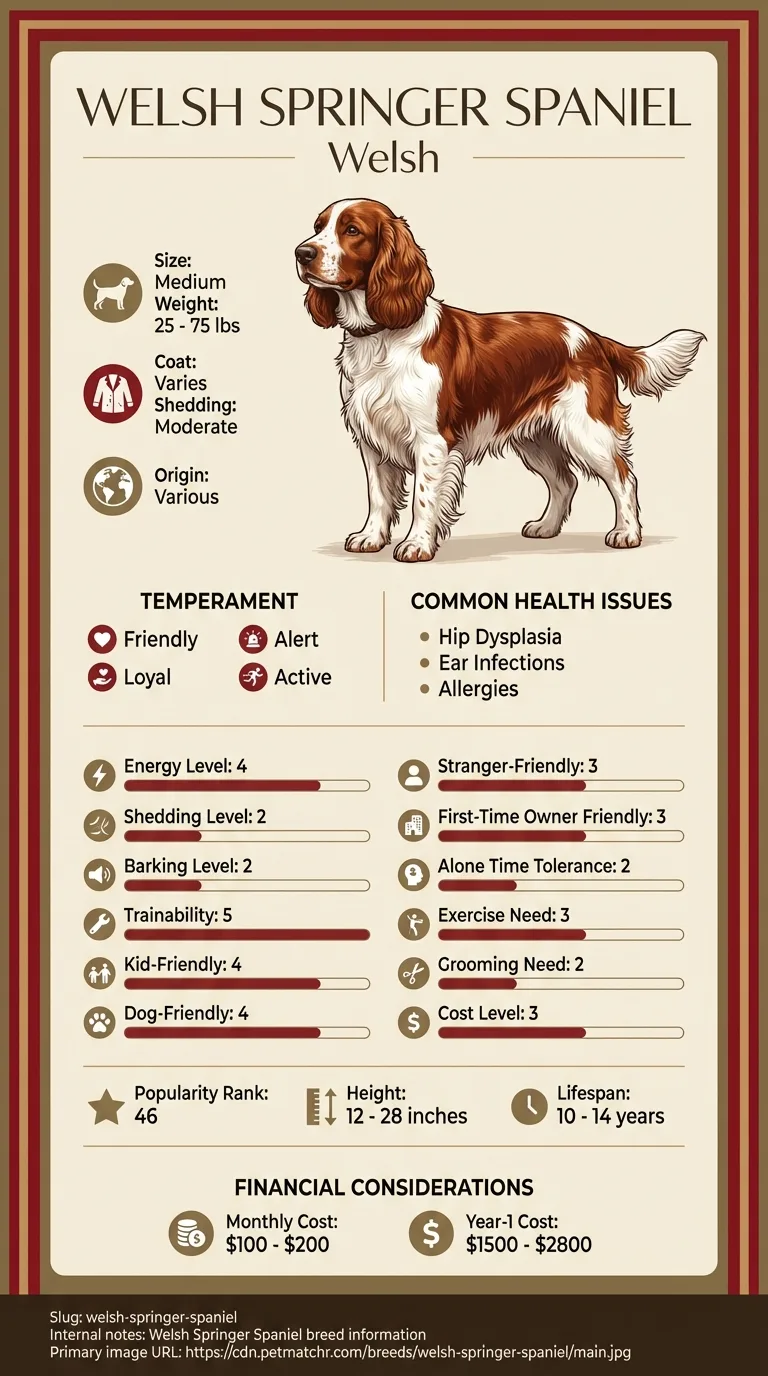
This is for someone already down to Siberian Husky and Welsh Springer Spaniel and deciding between them. For this pair the decision usually turns on shedding and good for first-time owners, so those are covered first and in most detail. Anyone choosing from a flat has a clear answer here: Welsh Springer Spaniel rates 2/5 against 1/5. It is written for the decision rather than the breed history.
Between Siberian Husky and Welsh Springer Spaniel, shedding is what separates them, and Welsh Springer Spaniel is the lower-effort dog of the two to keep.
Choose Siberian Husky if there are young children at home and you want a dog that can keep up with an active routine.
Choose Welsh Springer Spaniel if this is your first dog, shedding is a problem in your house and your walking routine is modest.
| Feature | siberian husky | welsh springer spaniel | Winner |
|---|---|---|---|
| Size class | large | medium | Equal |
| Weight | 45–60 lbs | 35–55 lbs | Equal |
| Height | 20–23 in | 17–19 in | Equal |
| Lifespan | 12–14 years | 12–15 years | welsh springer spaniel |
| Exercise need | Very high (5/5) | High (4/5) | welsh springer spaniel |
| Grooming need | Moderate (3/5) | Moderate (3/5) | Equal |
| Shedding | Very high (5/5) | Moderate (3/5) | welsh springer spaniel |
| Energy level | Very high (5/5) | High (4/5) | Equal |
| Barking | Moderate (3/5) | Moderate (3/5) | Equal |
| Apartment suitability | Very low (1/5) | Low (2/5) | welsh springer spaniel |
| Good for first-time owners | Very low (1/5) | Moderate (3/5) | welsh springer spaniel |
| Tolerates being alone | Very low (1/5) | Low (2/5) | welsh springer spaniel |
| Trainability | Low (2/5) | High (4/5) | welsh springer spaniel |
| Good with kids | Very high (5/5) | High (4/5) | siberian husky |
| Good with other dogs | High (4/5) | High (4/5) | Equal |
| Friendly to strangers | High (4/5) | Moderate (3/5) | siberian husky |
| Cost level | Moderate (3/5) | Moderate (3/5) | Equal |
| Coat | Double coat, medium-length | Medium, straight and water-resistant | Equal |
| Origin | Russia | Various | Equal |
| Typical monthly cost | $100–$200 | $100–$200 | Equal |
| Typical first-year cost | $1,500–$2,800 | $1,400–$2,900 | Equal |
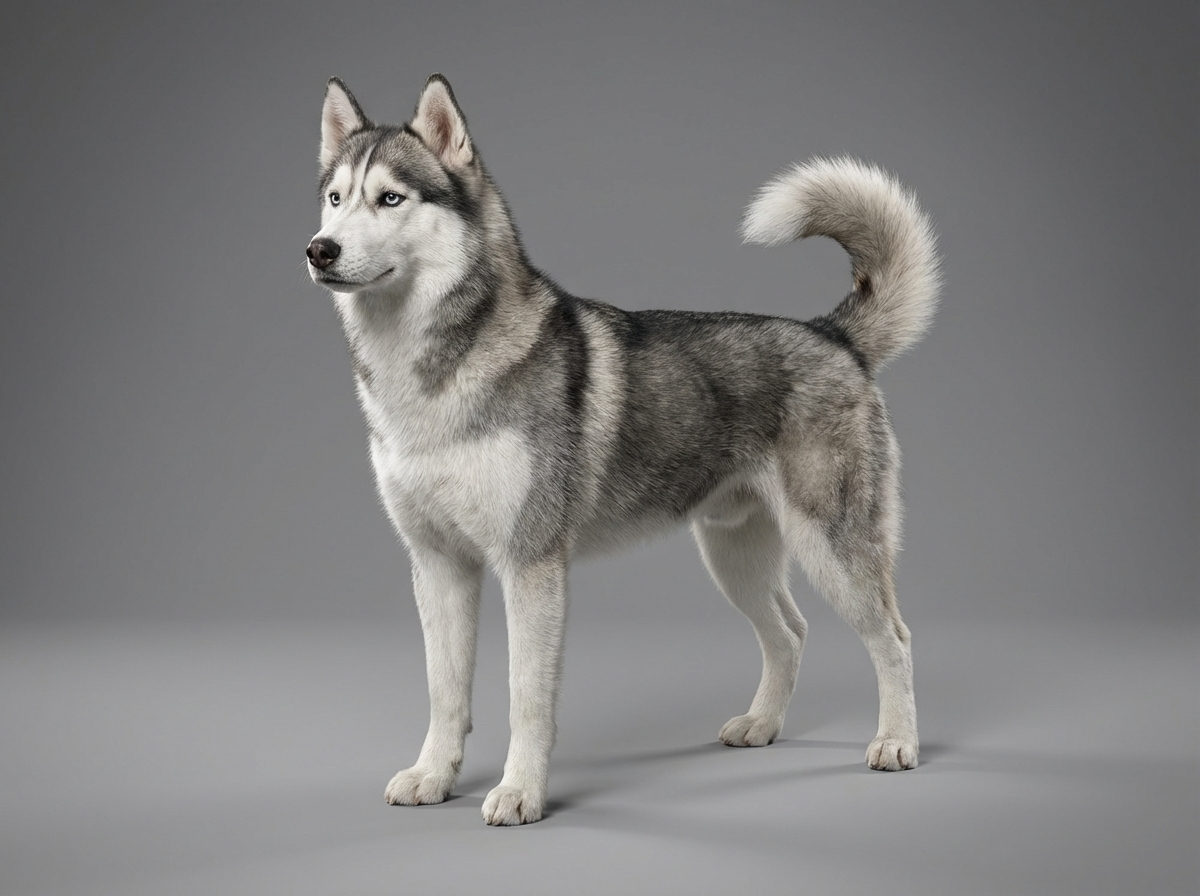
The Siberian Husky (45-60 lbs, 20-23 in) outsizes the Welsh Springer Spaniel (35-55 lbs, 17-19 in) by a modest but noticeable margin, roughly the difference between a large and a solidly built medium dog. Both carry weather-ready coats, but the Husky's dense double coat evolved for arctic sled work, while the Welsh Springer's medium, straight, water-resistant coat was built for wading through wet cover while flushing birds. Neither is a small dog, but the Husky's frame and thicker coat give it a bulkier presence, while the Springer retains a leaner, more classic sporting-dog silhouette despite the overlapping weight ranges.
Both breeds are genuinely high-energy, but the Husky edges out the Springer at Very high (5/5) exercise need versus the Springer's still-substantial High (4/5). Both share the Energetic temperament tag, though the Husky pairs it with Independent, meaning it's more likely to want distance and roaming room, while the Springer's energy is more collaborative, it wants to work with a person, whether flushing game or playing fetch. Neither is a low-key breed by any measure, but a Springer owner willing to do structured retrieving games may find it easier to satisfy than a Husky's drive to simply run and explore on its own terms.
Grooming need ties at Moderate (3/5) for both breeds, but shedding tells a different story, the Husky rates Very high (5/5) against the Springer's Moderate (3/5). Huskies famously blow coat twice a year, releasing dense undercoat in clumps that require daily brushing during those weeks, while the Springer's shedding is steadier and less dramatic across the seasons. Both coats are functional and weather-resistant rather than purely decorative, so neither breed needs the trims a coated toy breed would, but a Husky owner should plan for a much heavier seasonal cleanup than a Springer owner ever will.
Apartment suitability is Very low (1/5) for the Husky and only slightly better at Low (2/5) for the Welsh Springer Spaniel, neither is a strong candidate for small-space living. Alone-time tolerance follows the same pattern, Very low (1/5) versus Low (2/5), and both share Moderate (3/5) barking, though the Husky's tendency to howl and vocalize can carry further through shared walls than a Springer's bark. The Springer's Reserved with strangers nature may actually help in apartment hallways and elevators, where a less outgoing dog reacts less to passersby than the Husky's famously Friendly, Outgoing temperament would.
Trainability strongly favors the Welsh Springer Spaniel, High (4/5) against the Husky's Low (2/5), and that gap carries straight through to first-time-owner suitability: Moderate (3/5) for the Springer versus Very low (1/5) for the Husky. The Husky's Independent streak is a defining trait, it was bred to problem-solve on its own across long distances, which doesn't translate to eager obedience. The Springer, descended from working gundogs bred to take direction closely, is simply more responsive by nature. A first-time owner set on one of these two breeds will have a considerably easier road with the Welsh Springer Spaniel.
The Husky rates higher with kids, Very high (5/5) versus the Springer's High (4/5), and higher with strangers, High (4/5) versus Moderate (3/5), both consistent with its outgoing, crowd-friendly reputation. With other dogs, the two tie at High (4/5). The temperament lists sharpen the contrast: the Husky is Friendly, Outgoing, happy to greet nearly anyone, while the Springer is explicitly Reserved with strangers despite being Loyal and Even-tempered with its own family. A household that entertains often may prefer the Husky's easy sociability, while one that values a calmer, more discerning presence around visitors may lean toward the Springer.
Lifespan slightly favors the Welsh Springer Spaniel, 12-15 years versus the Husky's 12-14, close, but with a higher ceiling for the Springer. Health profiles diverge sharply in scope: the Husky's list runs long, dominated by eye conditions (Progressive Retinal Atrophy, Cataracts, Corneal Dystrophy, Uveodermatologic Syndrome) plus Hip Dysplasia, Epilepsy, Bloat, and Cancer. The Springer's shorter list, Hip Dysplasia, Ear Infections, Epilepsy, Glaucoma, and Hypothyroidism, still includes an eye condition (Glaucoma) and shares both Hip Dysplasia and Epilepsy with the Husky. Owners of either breed should budget for regular eye exams given how often vision issues appear across both lists.
Cost level ties at Moderate (3/5), and monthly costs land in the same $100-$200 band for both breeds. First-year costs are close too, $1,500-$2,800 for the Husky versus $1,400-$2,900 for the Springer, meaning budget is unlikely to be the deciding factor between these two. Neither breed carries the heavy grooming bills of a coated toy breed, though the Husky's Very high (5/5) shedding may push up costs indirectly through more frequent professional de-shedding treatments or replacement furniture and rugs, a cost that doesn't show up in the standard monthly estimate but is worth factoring in.
Siberian Husky weighs 45–60 lbs and lives 12–14 years; Welsh Springer Spaniel weighs 35–55 lbs and lives 12–15 years. The two diverge most on shedding, good for first-time owners and trainability. They are level on barking, cost level and good with other dogs, so those cannot decide it. In the table, a "winner" means easier for an ordinary household — not better. Size, coat and origin are recorded without a verdict. Because both breeds are scored the same way, the gaps are reliable even where the absolute numbers are rough.

The Welsh Springer Spaniel by a wide margin, High (4/5) trainability against the Husky's Low (2/5), thanks to its gundog heritage of working closely with handlers.
Yes, considerably, the Husky rates Very high (5/5) for shedding versus the Springer's Moderate (3/5), especially during the Husky's twice-yearly coat blow.
The Welsh Springer Spaniel is, it's explicitly described as Reserved with strangers, while the Husky is Friendly, Outgoing and typically warms to new people quickly.
The Welsh Springer Spaniel, rated Moderate (3/5) for first-time owners versus the Husky's Very low (1/5); the Husky's independence makes it a genuinely harder first dog.
The Husky, rated Very high (5/5) exercise need versus the Springer's still-substantial High (4/5); both need real daily exercise, but the Husky needs slightly more.
Eye conditions dominate the Husky's list, Progressive Retinal Atrophy, Cataracts, Corneal Dystrophy, and Uveodermatologic Syndrome, alongside Hip Dysplasia, Epilepsy, Bloat, and Cancer.
The Welsh Springer Spaniel, with a range of 12-15 years compared to the Husky's 12-14 years.
The Husky, rated Very high (5/5) versus the Springer's Moderate (3/5).
The Welsh Springer Spaniel, rated High (4/5) versus the Husky's Low (2/5).
The Husky, rated High (4/5) versus the Springer's Moderate (3/5).
The Welsh Springer Spaniel, topping out around 55 lbs versus the Husky's 60 lbs and taller frame.
Secure checkout on Stripe. We never see your card.
7-day money-back guarantee. Instant access.
Health information here is general and is not veterinary advice. If your dog shows pain, sudden behaviour change, or worsening symptoms, consult a licensed veterinarian.
Some links on this site are affiliate links. We may earn a commission at no extra cost to you, and we only suggest products we believe are helpful for dog owners.
We research and check what we publish, but we do not warrant that any figure, date, price, or statement is accurate, complete, or current, and we accept no liability for any loss, cost, injury, or other harm arising from the use of this site. Use it as one reference among several. You remain responsible for your own decisions and for your dog's care - confirm anything that matters with a licensed veterinarian or another qualified professional before you act on it. Full disclaimer.
Match your lifestyle to the right dog.
Take quizNot sure which breed is right for you? Take our 2-minute quiz to find out.
Take the quiz