Health
How do I check my Sheltie's thigh muscle at home?
Run a hand firmly down each thigh and compare sides. Coat hides wastage entirely, so this has to be done by feel, not by looking.

Quick answer
How do I check my Sheltie's thigh muscle at home?
Run a hand firmly down each thigh and compare sides. Coat hides wastage entirely, so this has to be done by feel, not by looking.
A Sheltie can be dysplastic. It just rarely looks the way owners expect, because a twenty pound dog compensates far better than an eighty pound one.
Owners who have noticed a Sheltie refusing to jump onto the sofa, sitting with one leg kicked sideways, or bunny-hopping up stairs, and who have gone looking for an explanation.
This guide is not medical advice. If your dog shows pain, sudden behavior change, or worsening symptoms, consult a licensed veterinarian.
Some links may be affiliate links. We may earn a commission at no extra cost to you. We only suggest products we believe are helpful for dog owners.
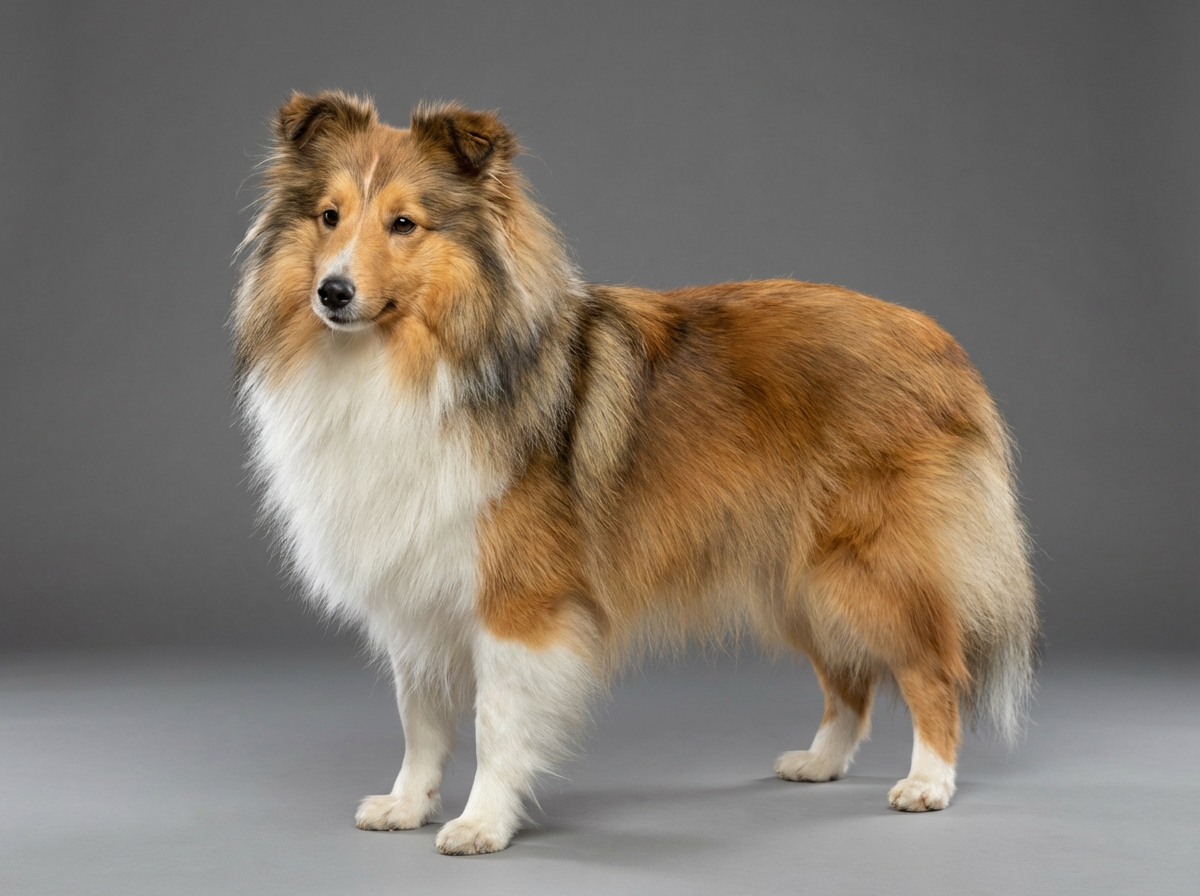
Hip dysplasia in a Shetland Sheepdog is a poorly formed hip joint that wears abnormally and eventually becomes arthritic. At this breed's size the presentation is muted, so instead of a limp owners usually notice a set of quiet refusals: no more jumping into the car, bunny-hopping up stairs, a splayed sit, and hind end muscle that has quietly wasted under the coat. It is uncommon in the breed but not absent.
Uncommon in Shetland Sheepdogs relative to large breeds, and much less common than the stifle problems this breed is actually known for. Where it does occur it tends to be mild to moderate and manageable without surgery, largely because the joint is carrying so little weight.
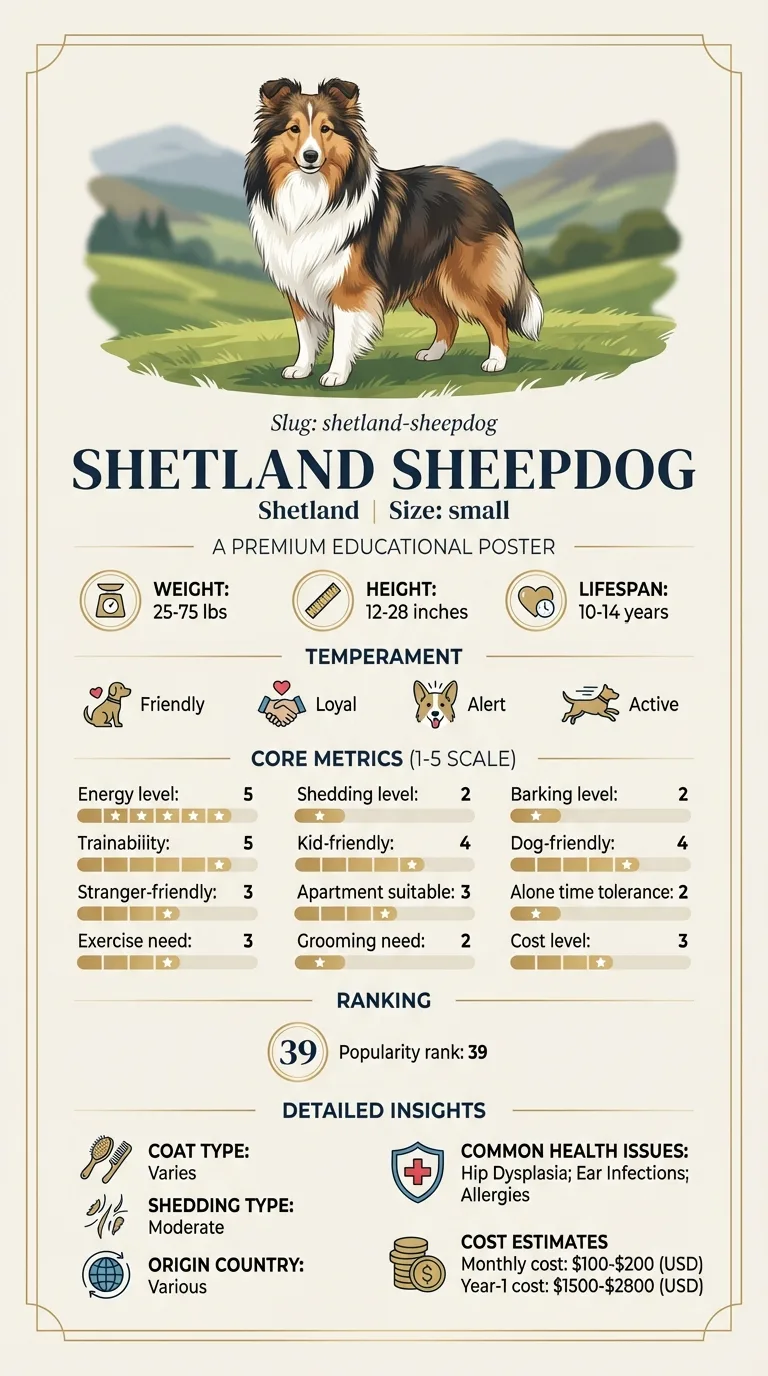
The Sheltie's small frame is protective rather than causative here. At thirteen to sixteen inches and fifteen to twenty five pounds the hip carries a fraction of the load a large breed's does, which is why dysplastic Shelties often live comfortably for years. The genuine breed factors are indirect: patellar luxation on the documented health list means hind limb signs have a competing explanation, and MDR1 drug sensitivity means the anaesthetic needed to image the hips has to be planned around a known genotype.
Body condition and activity pattern do most of the shaping. A dog carrying three extra pounds on a twenty pound frame adds fifteen percent to every step, and a double coat means the owner cannot see it happening. Slippery hard flooring makes a dog with an unstable hip splay and brace, which accelerates wear. Long inactive periods punctuated by bursts of intense weekend exercise are harder on a compromised joint than steady daily work.
Urgent, same day: a sudden inability to bear weight on a hind leg, a leg held completely off the ground, obvious pain on being touched near the hip, or a dog that cannot rise at all. Acute presentations in a small dog often mean something other than dysplasia, including a fracture or a slipped disc, and they need looking at now. Within a week or two: any persistent change in how the dog sits, climbs or jumps, a new reluctance to be handled around the back end, or thigh muscle that feels smaller on one side. Ask for the MDR1 test result to be on file before any imaging is scheduled, and ask whether stifles and spine can be imaged in the same anaesthetic.
See all Shetland Sheepdog health problems, which breeds are prone to hip dysplasia, or the full Shetland Sheepdog breed guide for temperament, exercise needs and ownership costs.
Conservative management shows meaningful change over eight to twelve weeks, because you are rebuilding muscle and that takes as long in dogs as it does in people. Weight loss on a small dog should be slow and deliberate, measured over months. If surgery is chosen, expect a recovery programme of two to four months with strictly controlled activity. Dysplasia itself does not go away; what changes is how much of the dog's life it dictates.
Success is a Sheltie that still chooses to come on the walk, sits square more often than not, has thigh muscle you can feel on both sides, and needs less pain relief this year than last. Radiographs will look the same. The dog will not, and the dog is the thing being treated.
In a large breed, a dysplastic hip produces obvious lameness fairly early because the joint carries a lot of load and the muscles cannot mask it. A Sheltie weighs fifteen to twenty five pounds. That same joint geometry produces far less force, so the dog compensates with muscle and posture for a long time and the signs stay subtle.
What you tend to see instead is a set of small refusals. The dog stops jumping into the car. It takes stairs two at a time with both back legs together rather than alternating. It sits sloppily with one hind leg swung out to the side instead of tucked. It shifts weight forward, so the shoulders build muscle while the thighs quietly lose it.
None of that is dramatic and all of it is meaningful. The muscle asymmetry in particular is worth checking by hand, because a heavy coat hides thigh wastage completely.
The other reason small-dog presentation matters is that a Sheltie has several closer suspects. Patellar luxation is on this breed's documented health list and produces a very similar reluctance to jump. So does a painful lower back. The hips deserve investigation, but not first place in the queue by default.
Hip dysplasia is diagnosed on radiographs, not on gait. A vet will manipulate the hips awake to check for pain and range, but the picture comes from imaging, and imaging means the dog has to lie perfectly still and correctly positioned, which means sedation or general anaesthesia.
That is the point at which being a Shetland Sheepdog matters. MDR1 drug sensitivity is documented in this breed, and it changes which sedative and anaesthetic agents are appropriate. Have the DNA test done before you book the radiographs, not after. It is a cheek swab, it is inexpensive, and it belongs on the front of the file.
While the dog is under, it is worth asking whether the stifles and lower spine can be imaged in the same session. Doing so avoids a second anaesthetic later, which in an MDR1 breed is a real saving in risk as well as money.
Formal hip scoring schemes exist for breeding stock and are worth asking a breeder about, though most Sheltie breeders will lead with eye certification and MDR1 status because those are the breed's actual priorities.

If you think your Shetland has hip dysplasia, the plan is three steps: write down what you have seen and when it started, book a veterinary appointment rather than waiting for the next flare, and take video of the behaviour or symptom before you go — the thing you are worried about rarely happens in the consulting room. Screening in the parents covers collie eye anomaly, mdr1 drug sensitivity, dermatomyositis.
What the vet visit should produce is a diagnosis and a written plan, not just reassurance: what is being ruled out, what the monitoring interval is, and which signs mean you come back sooner. Ask what the treatment costs across a year rather than per visit, because that is the number that decides whether you are managing this condition or reacting to it.
Between appointments, keep a short log — dates, what you saw, what changed. It is the single most useful thing an owner brings to a follow-up, and for hip dysplasia it is often what separates a clear pattern from a guess.
Wren was six when she stopped getting onto the sofa. Her owner, Tom, put a folded blanket on the floor and thought no more about it. Over the next year she also stopped taking the stairs properly and began hopping up them with both back feet together. His vet examined her awake, found her hips a little tight and her left thigh distinctly smaller than the right, and booked radiographs. Because Wren was a Sheltie, the practice ran an MDR1 swab first, which came back carrier, and the anaesthetist chose accordingly. They imaged hips, stifles and lumbar spine in one session. The hips were mildly dysplastic with early arthritic change. The stifles were fine, which mattered because Tom had assumed kneecaps. Wren went onto a physiotherapy programme, lost a pound and a half, and got carpet runners across the kitchen. Nine months later she was using a ramp onto the sofa by choice and walking further than she had at seven.
Key takeaway: In a small dog, hip dysplasia hides behind ordinary-looking refusals. Feel for muscle asymmetry, get the MDR1 status sorted before imaging, and image everything relevant in one anaesthetic.
Not particularly. The breed's documented conditions are Collie Eye Anomaly, MDR1 drug sensitivity, dermatomyositis, hypothyroidism and patellar luxation. Hip dysplasia occurs in the breed but is not one of its characteristic problems, and it is much less common here than in the large herding and working breeds.
Usually a change in what the dog chooses to do rather than a limp. Refusing a jump it used to make, hopping with both back legs together on stairs, sitting with a leg splayed out, or slowing on the second half of a walk. Overt lameness tends to come later at this size.
Very possibly, and it is the first thing to rule out in this breed. Patellar luxation is a documented Sheltie problem and it causes the same reluctance to jump. The classic difference is the intermittent skip, where the dog hops for a stride or two mid-run and then carries on as if nothing happened.
Most small dysplastic dogs are managed without it. Weight control, muscle building, controlled exercise and pain management carried by a vet handle a large share of cases. Surgery becomes a serious question when pain persists despite genuine conservative management, and that decision belongs to an orthopaedic surgeon.
You cannot change the genetics, but you can avoid making it worse. Keep a growing Sheltie lean, avoid repetitive high-impact jumping and forced running on hard surfaces before the growth plates close, and feed for steady rather than rapid growth. Ask the breeder what screening the parents had.
Because positioning a dog for diagnostic hip radiographs requires sedation, and MDR1 status determines which agents are safe. In an affected Sheltie a routine dose of certain drugs produces a serious neurological reaction. Testing beforehand converts an avoidable risk into a non-issue.
Run a hand firmly down each thigh and compare sides. Coat hides wastage entirely, so this has to be done by feel, not by looking.
Yes, in shorter and more frequent sessions on soft, level ground. Muscle supports the joint, and rest alone lets it waste.
Sedation plus radiographs commonly runs a few hundred dollars. Bundling stifle and spine views into the same anaesthetic is usually cheaper than returning.
Repeated hard landings are worth reducing, especially in a growing pup or a diagnosed dog. A ramp or a step to the sofa is a cheap and effective change.
Discuss it with the vet who saw the images. Lowered jump heights and reduced course volume often keep a mildly affected Sheltie in the sport for years.
A one-page prep sheet for this condition: the signs, the questions to ask, what to get priced. Unlocks here.
You get: Vet visit prep sheet
No spam. One-click unsubscribe. See our privacy policy.
Preview page 1 before you decide.