Living
Which is smaller?
The Shetland Sheepdog, at 15–25 lbs versus the Rottweiler's 80–135 lbs.

Quick answer
Which is smaller?
The Shetland Sheepdog, at 15–25 lbs versus the Rottweiler's 80–135 lbs.
Rottweiler or Shetland Sheepdog? On paper they differ most on grooming need, and on the scales Rottweiler is the heavier at 80–135 lbs. Here is how the two compare on everything that shapes an ordinary week.
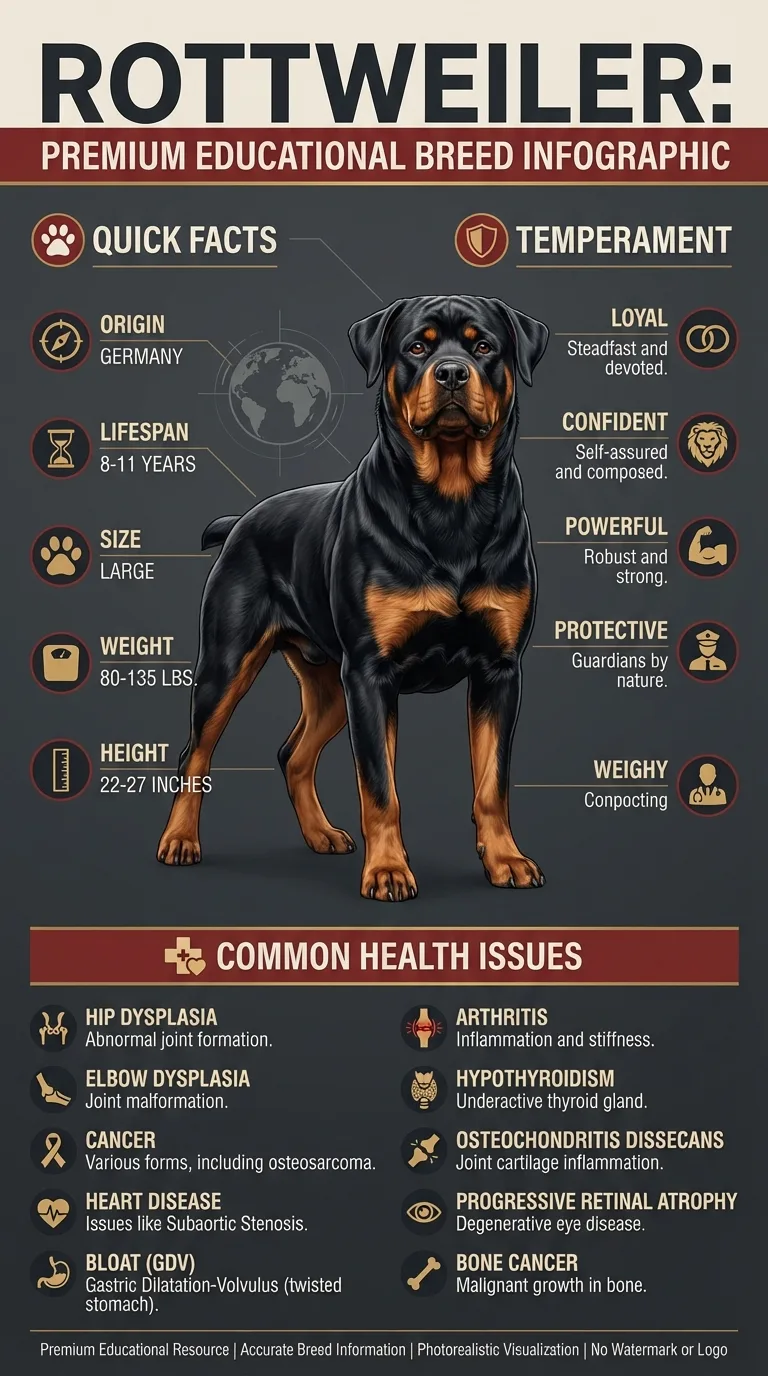
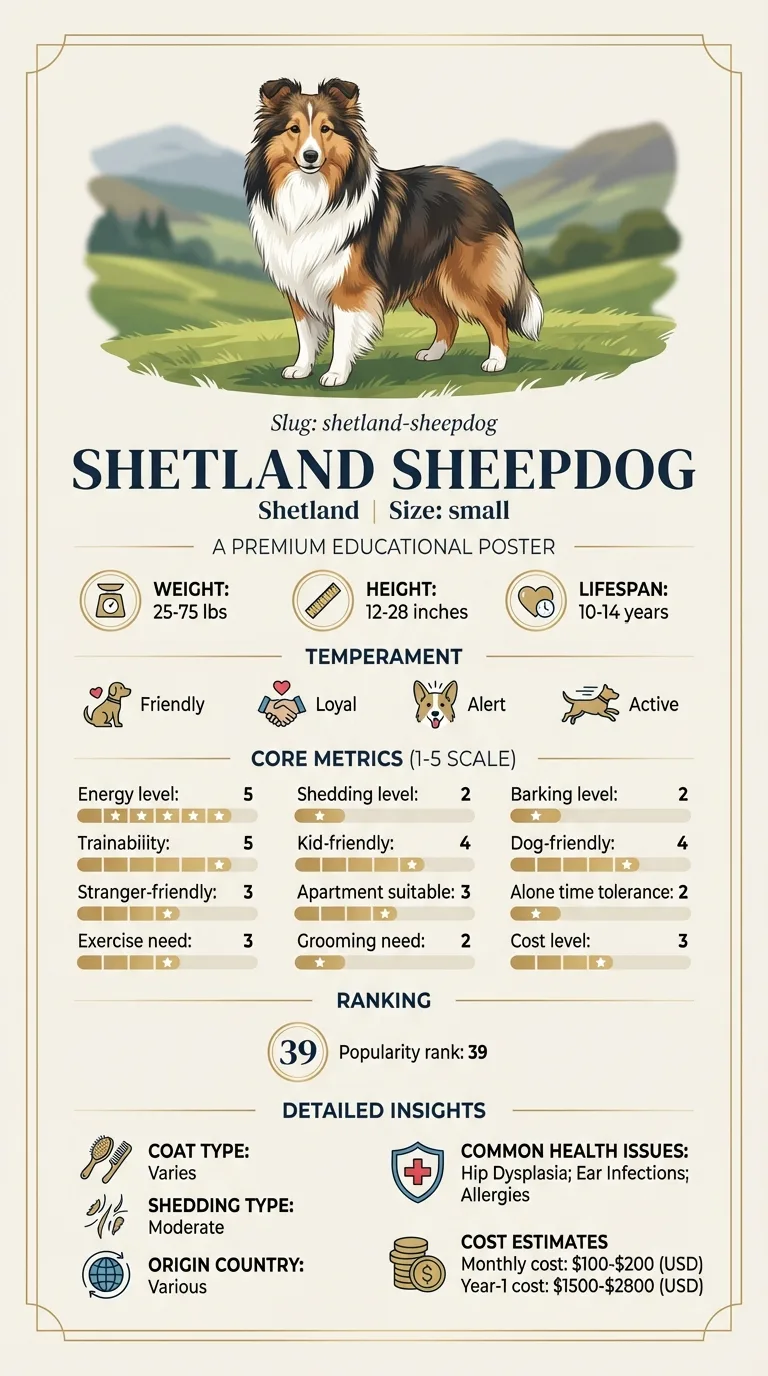
This is for someone already down to Rottweiler and Shetland Sheepdog and deciding between them. For this pair the decision usually turns on grooming need and good for first-time owners, so those are covered first and in most detail. Anyone choosing from a flat has a clear answer here: Shetland Sheepdog rates 3/5 against 2/5. There is no origin story here — only what changes about your week.
Between Rottweiler and Shetland Sheepdog, grooming need is what separates them, and Shetland Sheepdog is the lower-effort dog of the two to keep.
Choose Rottweiler if you do not want a standing grooming appointment.
Choose Shetland Sheepdog if you are in a flat or a smaller home, this is your first dog and you already have another dog.
| Feature | rottweiler | shetland sheepdog | Winner |
|---|---|---|---|
| Size class | large | small | Equal |
| Weight | 80–135 lbs | 15–25 lbs | Equal |
| Height | 22–27 in | 13–16 in | Equal |
| Lifespan | 8–11 years | 12–14 years | shetland sheepdog |
| Exercise need | High (4/5) | High (4/5) | Equal |
| Grooming need | Low (2/5) | High (4/5) | rottweiler |
| Shedding | High (4/5) | High (4/5) | Equal |
| Energy level | High (4/5) | High (4/5) | Equal |
| Barking | Moderate (3/5) | Very high (5/5) | rottweiler |
| Apartment suitability | Low (2/5) | Moderate (3/5) | shetland sheepdog |
| Good for first-time owners | Low (2/5) | High (4/5) | shetland sheepdog |
| Tolerates being alone | Low (2/5) | Low (2/5) | Equal |
| Trainability | High (4/5) | Very high (5/5) | shetland sheepdog |
| Good with kids | High (4/5) | High (4/5) | Equal |
| Good with other dogs | Moderate (3/5) | High (4/5) | shetland sheepdog |
| Friendly to strangers | Low (2/5) | Low (2/5) | Equal |
| Cost level | High (4/5) | Moderate (3/5) | shetland sheepdog |
| Coat | Double coat, short | Long, dense double coat | Equal |
| Origin | Germany | Various | Equal |
| Typical monthly cost | $125–$250 | $80–$150 | Equal |
| Typical first-year cost | $2,000–$3,500 | $1,100–$2,300 | Equal |
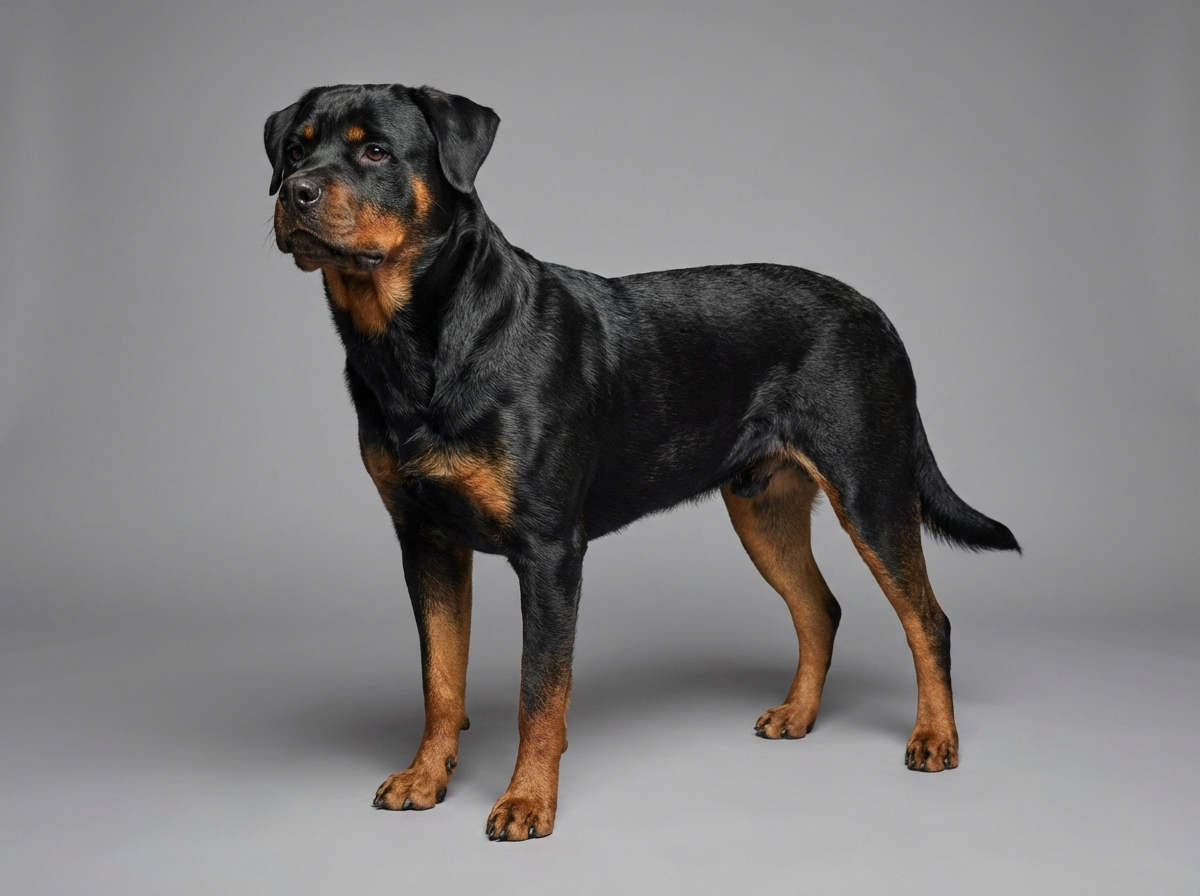
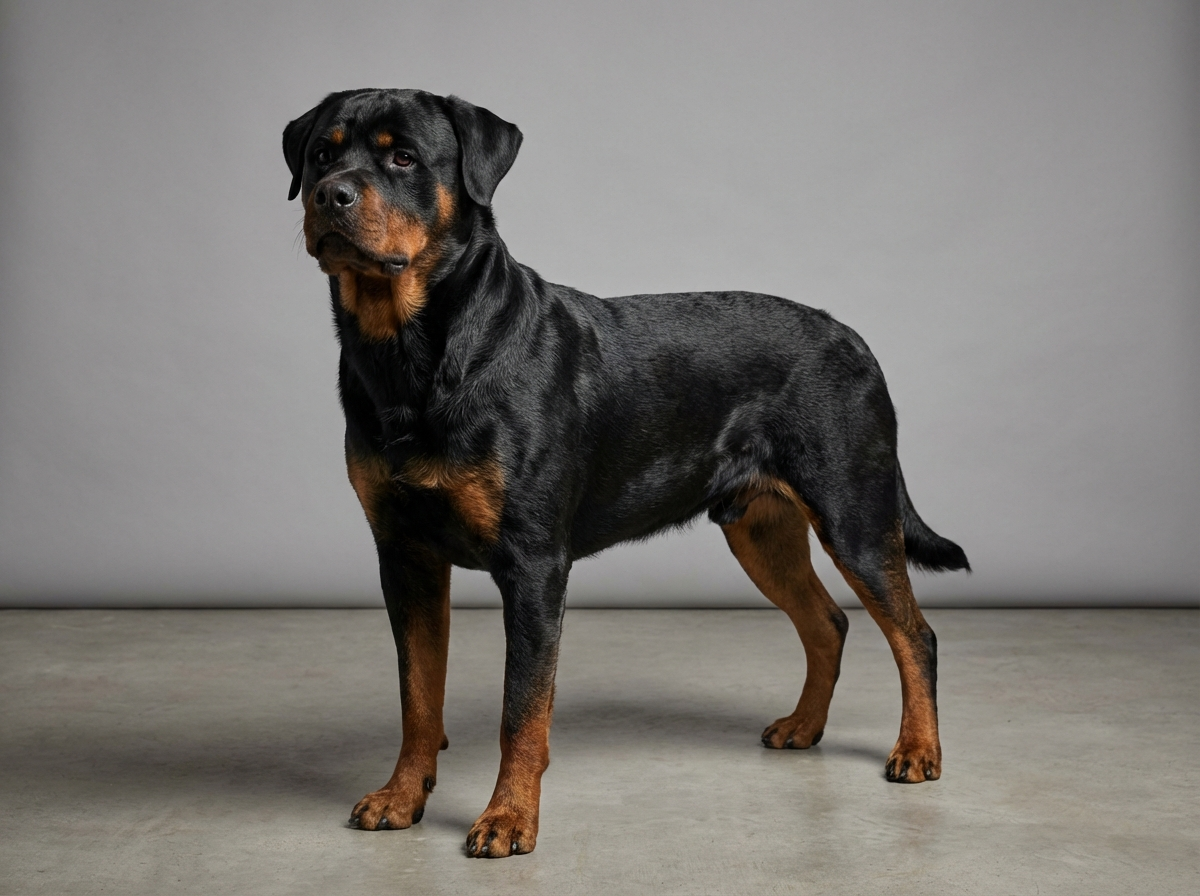
The size gap here is the largest single differentiator — the Rottweiler at 80–135 lbs and 22–27 in sits in the large class, while the Shetland Sheepdog is a small breed at just 15–25 lbs and 13–16 in, roughly a fifth of the Rottweiler's upper weight. This isn't a comparison between two similar-sized working dogs; it's a large guardian breed against a small herding breed, and that distinction should drive most of the practical decision-making around space, handling, and even furniture. That size gap also means very different equipment needs — a Sheltie fits comfortably in a standard car crate, while the Rottweiler typically requires a reinforced, oversized one.
Despite the size gap, exercise need ties at High (4/5) and energy level also ties at High (4/5) — the Sheltie's herding heritage means it needs just as much daily structured activity as the much larger Rottweiler, just delivered differently, through agility, fetch, and mental games rather than raw physical bulk work. Owners assuming a small dog means a low-effort dog will be surprised by how much a Sheltie wants to do. Sheltie owners often channel that high energy into herding trials or agility classes, activities that also suit a Rottweiler's need for structured mental engagement.
Grooming need favors the Rottweiler, Low (2/5) versus High (4/5) for the Shetland Sheepdog, whose long, dense double coat needs regular brushing to prevent matting. Shedding, though, ties at High (4/5) for both — that long Sheltie coat blows out seasonally just as heavily as the Rottweiler's shorter one, so neither breed suits a strictly hair-free household. Regular brushing sessions for the Sheltie's long coat also double as a bonding routine, something the Rottweiler's low-maintenance coat doesn't require in the same way.
The Sheltie is the better small-space option, Moderate (3/5) apartment suitability versus Low (2/5) for the Rottweiler, but it is also notably more vocal — Very high (5/5) barking against the Rottweiler's Moderate (3/5), reflecting its herding instinct to vocalize at movement. Both tie at Low (2/5) for tolerating time alone, so neither is suited to long solo days regardless of size. A Sheltie's barking can often be managed with early training focused on its herding-driven triggers, while the Rottweiler's Moderate barking tends to be more situational.
The Shetland Sheepdog outperforms on both counts that matter most to new owners — trainability at Very high (5/5) versus High (4/5) for the Rottweiler, and first-time-owner suitability at High (4/5) against a much lower Low (2/5). Temperament reflects that gap too: the Sheltie is described as Bright, Sensitive, Vocal, and Devoted, a profile suited to positive-reinforcement training, while the Rottweiler's Loyal, Confident, Powerful, Protective description calls for a more experienced, consistent handler. The Sheltie's Sensitive temperament word means harsh correction can backfire, favoring the same positive-reinforcement approach that works well with most herding breeds.
The two tie with kids at High (4/5) each, but the Sheltie edges ahead with other dogs, High (4/5) versus Moderate (3/5) for the Rottweiler. Both score Low (2/5) for friendliness to strangers — the Sheltie's watchfulness toward unfamiliar people is a herding-breed trait that mirrors the Rottweiler's guardian instinct, just expressed through barking rather than physical presence. That shared Low score is a useful reminder that early, consistent socialization matters for any dog expected to greet visitors calmly.
The Shetland Sheepdog lives notably longer, 12–14 years against 8–11 for the Rottweiler. Its five-condition health list — Collie Eye Anomaly, MDR1 Drug Sensitivity, Dermatomyositis, Hypothyroidism, and Patellar Luxation — is shorter and reflects herding-breed-specific concerns rather than the joint and cancer risks that dominate the Rottweiler's ten-condition list, which includes Bloat (GDV), Osteochondritis Dissecans, and Bone Cancer. MDR1 sensitivity in particular means Sheltie owners need to flag certain medications with their vet. Eye health is worth monitoring closely in the Sheltie given Collie Eye Anomaly, just as joint health deserves ongoing attention in the Rottweiler given Hip and Elbow Dysplasia.
The Sheltie is meaningfully cheaper to keep — Moderate (3/5) cost level against High (4/5) for the Rottweiler, with monthly costs of $80–$150 versus $125–$250 and first-year costs of $1,100–$2,300 against $2,000–$3,500. Smaller food portions and generally lower medication dosing account for much of that gap. Pet insurance for the smaller Sheltie also tends to run cheaper than for the much larger Rottweiler, compounding the savings beyond food and medication alone.
Rottweiler weighs 80–135 lbs and lives 8–11 years; Shetland Sheepdog weighs 15–25 lbs and lives 12–14 years. The two diverge most on grooming need, good for first-time owners and barking. They are level on tolerates being alone, energy level and exercise need, so those cannot decide it. Where the table declares a winner it means less work for the owner, nothing more; descriptive rows are left as ties on purpose. The value here is in the differences between the two columns; treat any single score as approximate.

In terms of apartment suitability, yes — Moderate (3/5) versus Low (2/5) — but be ready for Very high (5/5) barking, which can be a bigger issue for neighbors than the Rottweiler's Moderate barking.
No — both breeds tie at High (4/5) for exercise need and energy level despite the huge size difference.
The Shetland Sheepdog, scoring Very high (5/5) against High (4/5) for the Rottweiler, and it's also rated much higher for first-time owners (High vs Low).
The Shetland Sheepdog, 12–14 years compared to 8–11 for the Rottweiler.
They're tied at High (4/5) — the Sheltie's long double coat sheds just as heavily as the Rottweiler's short one.
No — both score Low (2/5) for friendliness to strangers, though the Sheltie tends to express wariness through barking rather than physical presence.
The Shetland Sheepdog, at $80–$150 a month versus $125–$250 for the Rottweiler.
The Shetland Sheepdog, at 15–25 lbs versus the Rottweiler's 80–135 lbs.
The Shetland Sheepdog, Very high (5/5) versus Moderate (3/5) for the Rottweiler.
The Shetland Sheepdog, rated High (4/5) versus Low (2/5) for the Rottweiler.
The Shetland Sheepdog, High (4/5) versus Low (2/5) for the Rottweiler.
Secure checkout on Stripe. We never see your card.
7-day money-back guarantee. Instant access.
Health information here is general and is not veterinary advice. If your dog shows pain, sudden behaviour change, or worsening symptoms, consult a licensed veterinarian.
Some links on this site are affiliate links. We may earn a commission at no extra cost to you, and we only suggest products we believe are helpful for dog owners.
We research and check what we publish, but we do not warrant that any figure, date, price, or statement is accurate, complete, or current, and we accept no liability for any loss, cost, injury, or other harm arising from the use of this site. Use it as one reference among several. You remain responsible for your own decisions and for your dog's care - confirm anything that matters with a licensed veterinarian or another qualified professional before you act on it. Full disclaimer.
Match your lifestyle to the right dog.
Take quizNot sure which breed is right for you? Take our 2-minute quiz to find out.
Take the quiz