Problem

Dealing with English Cocker Spaniel Hip Dysplasia

English Cocker Spaniel hip dysplasia is a serious condition that affects their mobility and quality of life.

What you can try

Mistakes that make this worse

When dealing with English Cocker Spaniel hip dysplasia, certain common mistakes can inadvertently worsen the condition or delay improvement. Here are some pitfalls to avoid.

When English Cocker Spaniel Hip Dysplasia is an Emergency

When dealing with English Cocker Spaniel hip dysplasia, it's critical to recognize when it becomes an emergency. Emergency signs often indicate severe pain or immediate health risks that require quick veterinary intervention. These include sudden inability to walk, severe limping, or significant swelling around the hip joint. If your dog shows signs of extreme distress, such as vocalizing in pain or refusing to move, it’s time to call your vet right away.

On the other hand, mild cases can often be managed at home with a watch-and-wait approach. If your English Cocker Spaniel is showing slight discomfort, such as occasional limping after exercise or stiffness after resting, this can usually be monitored. You should consider implementing a gradual exercise routine and consult your vet for a management plan. Regular check-ins with your vet can also help track the progression of the condition and adjust treatment as necessary.

In summary, look out for these red flags that indicate an emergency: increased pain, inability to bear weight, or sudden behavioral changes. If your dog has a mild case, keep an eye on it and be proactive about their care to maintain their comfort and mobility.

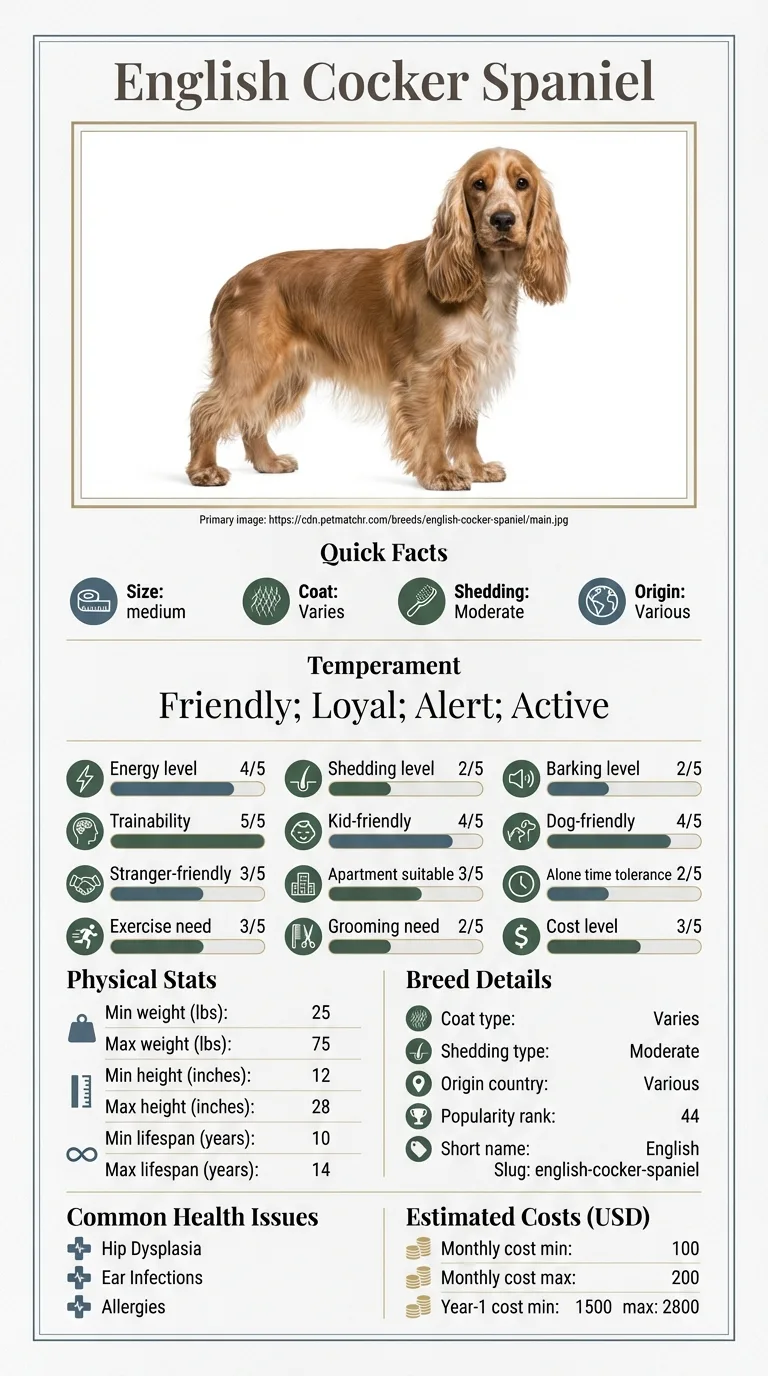
Frequently asked questions

Why does my English Cocker Spaniel have hip dysplasia?

Hip dysplasia in English Cocker Spaniels can be caused by genetic factors, improper nutrition, and excessive weight. It often develops during growth when the hip joints don't fit properly. Early diagnosis and management are essential for better outcomes.

How can I stop my English Cocker Spaniel from developing hip dysplasia?

To help prevent hip dysplasia, ensure your dog maintains a healthy weight and receives a balanced diet. Regular, moderate exercise can strengthen their joints without causing strain. Consult your vet for tailored guidance on nutrition and activity.

What are the signs of hip dysplasia in my English Cocker Spaniel?

Signs of hip dysplasia include limping, difficulty standing or jumping, and reluctance to exercise. You may also notice your dog favoring one leg. If you observe these symptoms, consult your vet for an evaluation.

What treatments are available for English Cocker Spaniel hip dysplasia?

Treatment options for hip dysplasia range from weight management and physical therapy to medications for pain relief. In severe cases, surgery may be recommended. Your veterinarian will help determine the best approach for your dog's specific situation.

Can training help with my English Cocker Spaniel's hip dysplasia?

While training can't cure hip dysplasia, it can help manage the condition. Positive reinforcement training can encourage gentle exercise and improve mobility without causing further strain. Always consult with a trainer experienced in working with dogs with health issues.

What are the signs that my English Cocker Spaniel might have hip dysplasia?

Common signs include limping, difficulty getting up, and reluctance to jump or run. If your dog seems to be in pain or has a noticeable change in behavior, it’s time to consult your vet.

Can hip dysplasia in English Cocker Spaniels be managed without surgery?

Yes, many dogs benefit from weight management, physical therapy, and medications to relieve pain and improve mobility. Consult your vet for a tailored plan that suits your dog's needs.

How can I prevent hip dysplasia in my English Cocker Spaniel?

While genetics plays a role, maintaining a healthy weight, providing regular exercise, and avoiding excessive jumping can help. Early socialization and training can also contribute to overall joint health.

Is hip dysplasia more common in older English Cocker Spaniels?

Hip dysplasia can occur at any age, but symptoms often become more apparent in older dogs as arthritis develops. Regular vet check-ups can help catch these issues early.

What should I do if my English Cocker Spaniel has been diagnosed with hip dysplasia?

Follow your vet’s recommendations for treatment and management. Consider lifestyle changes, including joint supplements, modified exercise routines, and weight control, to improve your dog's quality of life.

Related guides