Health
What are the first signs of heatstroke in a Sheltie?
Frantic panting that will not settle in shade, thick ropey drool, bright red gums, and a dog that seems unsteady or unfocused. Act at that point, not later.

Quick answer
What are the first signs of heatstroke in a Sheltie?
Frantic panting that will not settle in shade, thick ropey drool, bright red gums, and a dog that seems unsteady or unfocused. Act at that point, not later.
Heatstroke is not a worse version of being hot. It is a different event, with a different clock, and it does not reverse on its own.
Anyone who has watched their Sheltie pant hard after a hot afternoon and not known whether that was normal or the start of something. Also handlers at summer trials, and owners of older or overweight dogs who are less able to compensate.
This guide is not medical advice. If your dog shows pain, sudden behavior change, or worsening symptoms, consult a licensed veterinarian.
Some links may be affiliate links. We may earn a commission at no extra cost to you. We only suggest products we believe are helpful for dog owners.
Hyperthermia is the point at which a Shetland Sheepdog's cooling system is overwhelmed and core temperature climbs beyond what the body can correct. It is a true emergency. The visible picture is frantic panting, thick drool, red gums, unsteadiness and eventually collapse, and the internal picture is organ and clotting damage that continues after the dog has been cooled. Owners meet it as a sudden crisis, usually in a confined space or during exertion in humid conditions.
Uncommon, but disproportionately serious when it happens. Most Shelties never have a heat emergency. Those that do are usually either confined somewhere with no escape or worked through the middle of a hot day, and a meaningful proportion of severe cases do not survive despite treatment, which is what justifies treating early signs as urgent.
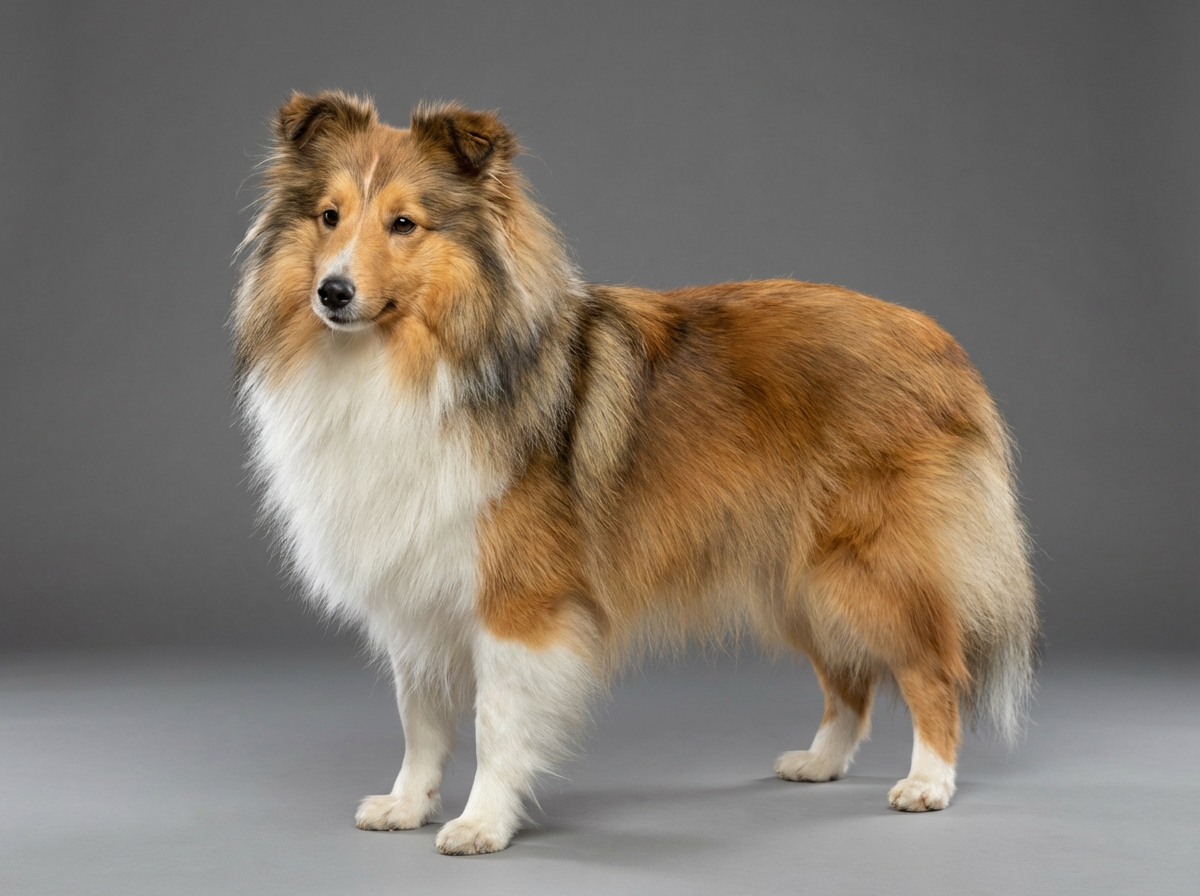
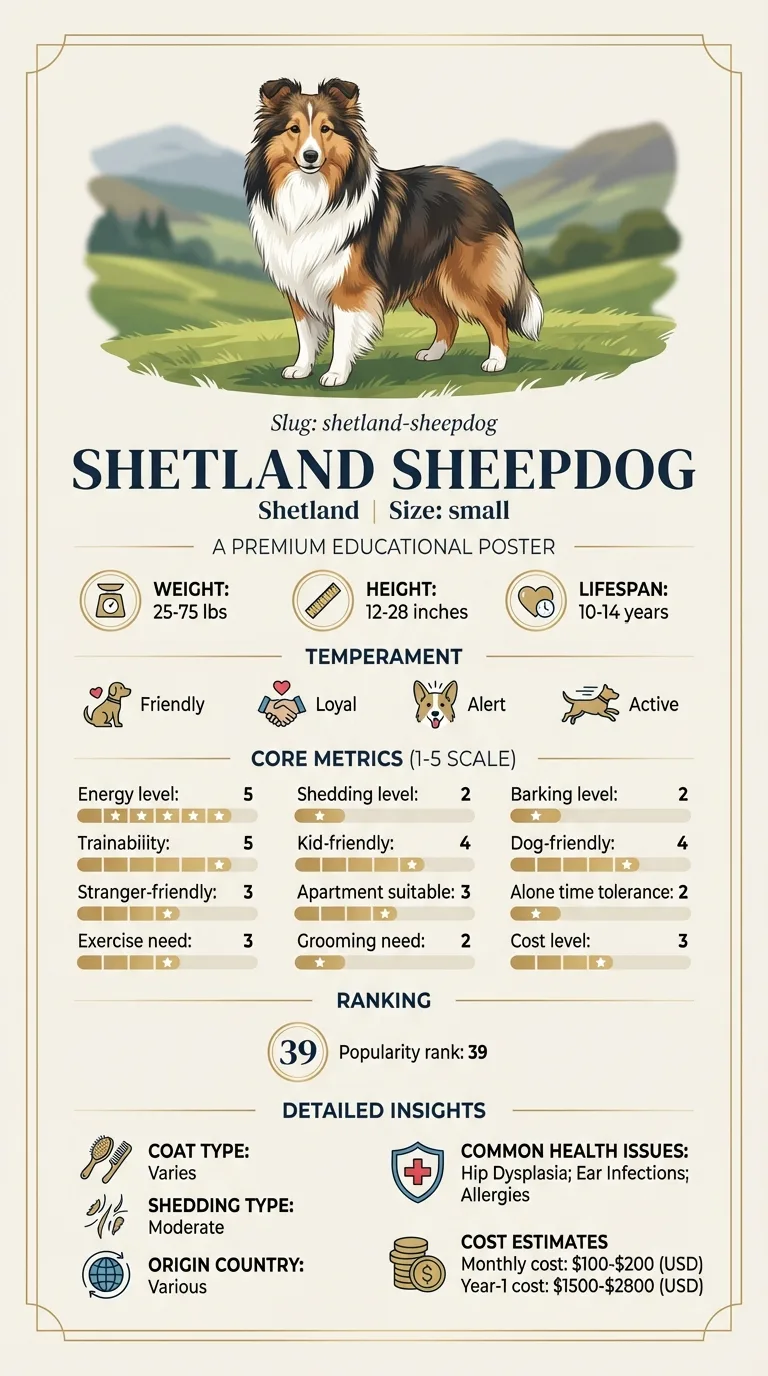
A Shetland Sheepdog has a long, dense double coat with heavy seasonal shedding, sitting on a body of only fifteen to twenty five pounds. That combination means a large insulating layer over a small heat sink, so the dog gains heat quickly and sheds it slowly. Its high energy and exercise need push it into exactly the conditions that cause trouble, and its devoted, biddable temperament means it will keep going for a handler well past the point of safety. Hypothyroidism, on the breed's documented health list, further impairs thermoregulation when present.
Humidity, airflow and confinement are the three factors that turn heat into hyperthermia. Panting depends on evaporation, which humid air suppresses. Still air removes the second cooling route. Confinement removes the dog's ability to choose shade or a cool floor, which is the behaviour that normally saves it. Hot ground surfaces add radiant load from below, and a car interior can exceed lethal temperatures in minutes regardless of the outside reading.
This is one of the conditions where the answer is go now. Treat as an immediate emergency and cool en route: panting that will not settle after several minutes in shade, gums that are brick red, very pale or bluish, thick ropey saliva, vomiting or bloody diarrhoea after heat exposure, wobbling, disorientation, seizure or collapse. Do not wait to see whether it improves. Also go, the same day, if the dog appeared to recover from a heat episode on its own, because the internal injury from hyperthermia declares itself over the following one to three days and needs bloodwork. Tell the clinic on the phone that the dog is a Shetland Sheepdog and may be MDR1 affected.
See all Shetland Sheepdog health problems, which breeds are prone to heat sensitivity hyperthermia, or the full Shetland Sheepdog breed guide for temperament, exercise needs and ownership costs.
Cooling should begin within the first minute of suspicion and continue until the dog is in veterinary hands. Hospital care for a genuine case typically runs twenty four to seventy two hours because that is the window in which kidney, liver and clotting complications appear. Dogs that survive the first three days usually recover, though some are left permanently less heat tolerant. Recovery of confidence and normal routine takes a couple of weeks.
The honest definition of success is that this page never becomes relevant to your dog. Failing that, it is an owner who recognised frantic panting and red gums as an emergency rather than a hot afternoon, started cooling in the garden instead of in the car park, and had the dog assessed even after it looked fine. Heatstroke is not managed well by dogs, only by the person watching them.
Dogs have almost no functional sweating. A Sheltie sheds heat by moving air over the wet surfaces of its mouth, tongue and upper airway, and by radiating heat from lightly furred areas such as the belly and inner thighs. That is a small system, and it is the only one available.
Under load, the dog pants harder. Panting is itself muscular work and generates heat, so above a certain point the cooling effort adds to the problem it is solving. In humid air, evaporation slows and the return on that effort collapses further.
The dangerous part is what happens once core temperature passes roughly forty one degrees Celsius, about a hundred and six Fahrenheit. Cells begin to fail, the gut lining leaks, clotting goes wrong, and the kidneys and liver take damage. Crucially, that damage continues after the dog has been cooled, which is why a dog that looks recovered still needs a vet. The visible crisis and the actual injury are on different timelines.
This is also why hyperthermia is not fever. A fever is the body deliberately raising its own set point and it responds to entirely different measures. Hyperthermia is the set point being overwhelmed. Treating one as the other wastes the window.
If you suspect heatstroke in a Sheltie, act in this order. Cooling starts where you are; it does not wait for the car journey.

If you think your Shetland has heat sensitivity & hyperthermia, the plan is three steps: write down what you have seen and when it started, book a veterinary appointment rather than waiting for the next flare, and take video of the behaviour or symptom before you go — the thing you are worried about rarely happens in the consulting room. Screening in the parents covers collie eye anomaly, mdr1 drug sensitivity, dermatomyositis.
What the vet visit should produce is a diagnosis and a written plan, not just reassurance: what is being ruled out, what the monitoring interval is, and which signs mean you come back sooner. Ask what the treatment costs across a year rather than per visit, because that is the number that decides whether you are managing this condition or reacting to it.
Between appointments, keep a short log — dates, what you saw, what changed. It is the single most useful thing an owner brings to a follow-up, and for heat sensitivity & hyperthermia it is often what separates a clear pattern from a guess.
Nell's Sheltie, Ozzy, was seven and had run agility in summer for years without incident. At one August show she left him in the van with the side door open and a fan running while she walked a course, which she had done a hundred times before. The wind dropped and the sun came round. She found him twenty minutes later panting in a way she had never heard, drooling thick strings, gums the colour of raw meat. She carried him to the water point, poured cool water over his belly and inner thighs, and had a clubmate fan him with a course map while she phoned ahead. He was cooled and stable by the time they reached the emergency clinic fifteen minutes away, and Nell nearly took him home from the car park because he looked so much better. The vet kept him for two nights. His clotting values went abnormal on the second morning and came back only with treatment. Ozzy recovered fully. He no longer travels to summer shows.
Key takeaway: A dog that looks recovered from heatstroke has not finished being ill. Cool immediately, transport anyway, and accept that the damage from hyperthermia declares itself over days rather than minutes.
Normal canine temperature sits around thirty eight to thirty nine degrees Celsius, roughly a hundred and one to a hundred and two Fahrenheit. Above about forty point five, a dog is in trouble; above forty one, cell damage begins. You do not need a thermometer to act, but a rectal reading is useful information to hand the vet.
Yes. Organ injury from hyperthermia unfolds over the following twenty four to seventy two hours, and clotting problems in particular can appear well after the dog looks normal. A dog that had a genuine heat episode needs bloodwork and observation, not just a cold drink and a lie down.
That covers routine management: coat, timing, grooming, keeping a coated dog comfortable through summer. This covers the failure of that management, where core temperature has already exceeded what the dog can correct and the response is medical rather than practical.
Older dogs, overweight dogs, dogs with a matted coat, dogs with an undiagnosed heart or airway problem, and dogs with hypothyroidism, which is documented in this breed and blunts temperature regulation. Puppies are also poor regulators. A lean, fit, well-groomed adult has the widest margin.
Easily. Confinement is the classic non-exertional cause: a car, a conservatory, a crate in a warm room, a grooming dryer left running, or a garden with no shade at midday. A Sheltie does not need to be running to overheat, it only needs to be somewhere it cannot cool.
It helps while it is evaporating and hurts once it is just sitting there. A double coat holds a lot of water, so cooling water needs to be kept flowing and paired with airflow. A dog left damp in still humid air is insulated by its own wet undercoat.
Yes, and the difference is worth respecting rather than training against. Coat density, body condition, age and any background disease all shift the threshold. Know your own dog's limit from observation and set summer plans below it rather than at it.
Frantic panting that will not settle in shade, thick ropey drool, bright red gums, and a dog that seems unsteady or unfocused. Act at that point, not later.
No. Cool tap water plus moving air cools faster. Ice water constricts surface vessels and can slow the transfer of heat out of the body.
In a confined space it can happen in ten to fifteen minutes. With exertion in humid conditions, a coated dog can get there inside half an hour.
Hospitalisation with fluids, monitoring and bloodwork typically runs into the high hundreds or low thousands, far above this breed's usual monthly running cost.
For a coated breed in a hot climate, yes. A number you can quote to the vet is more useful than a description of how hot the dog seemed.
A one-page prep sheet for this condition: the signs, the questions to ask, what to get priced. Unlocks here.
You get: Vet visit prep sheet
No spam. One-click unsubscribe. See our privacy policy.
Preview page 1 before you decide.