DogBreedCompass
← Back to breed profile

Understanding German Wirehaired Pointer Heat Sensitivity & Hyperthermia

Heat sensitivity and hyperthermia are serious concerns for German Wirehaired Pointers, especially in warm weather. (German Wirehaired Pointer heat sensitivity & hyperthermia)

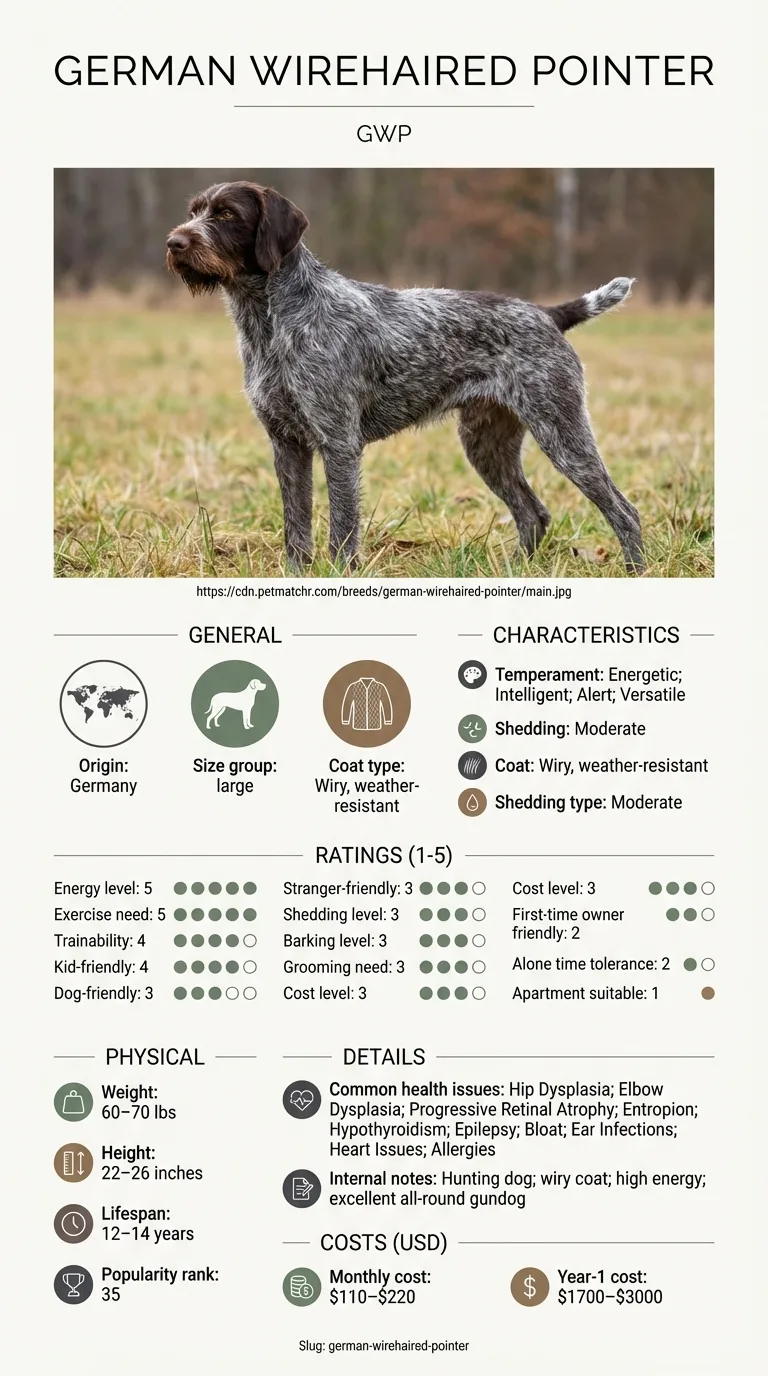
Understanding German Wirehaired Pointer Heat Sensitivity & Hyperthermia infographic

Typically, owners of German Wirehaired Pointers who live in warm climates or who are active outdoors face challenges with their dog's heat sensitivity. Busy families or first-time dog owners may find it particularly difficult to recognize the signs of overheating in their energetic pets.

Important reminder

This guide is not medical advice. If your dog shows pain, sudden behavior change, or worsening symptoms, consult a licensed veterinarian.

Some links may be affiliate links. We may earn a commission at no extra cost to you. We only suggest products we believe are helpful for dog owners.

What this problem looks like

German Wirehaired Pointers (GWPs) are energetic, large dogs that can struggle with heat sensitivity and hyperthermia. This issue often manifests as excessive panting, lethargy, or disorientation during hot weather. Since they have a wiry coat, they can overheat quickly, especially during strenuous activities.

Common triggers

  • High temperatures and humidity levels
  • Strenuous exercise on warm days
  • Being left in a hot car or unventilated area

Heat sensitivity and hyperthermia are significant concerns for German Wirehaired Pointers. They are reported to have a 533% higher risk of heat-related issues compared to some other breeds. It's crucial for GWP owners to be aware of these risks, especially during summer months.

Why this happens

Breed factors

German Wirehaired Pointers (GWPs) are large, active dogs that can struggle with heat sensitivity due to their wiry, weather-resistant coat. Their high energy levels and size can make them more prone to overheating, especially in warmer weather. Additionally, some GWPs may have a genetic predisposition to heat sensitivity.

Environment factors

Environmental factors, such as high temperatures and humidity, can significantly contribute to a GWP's risk of hyperthermia. If they are exercised too vigorously or left in a hot environment without proper ventilation, they can quickly overheat. Lack of access to shade and water further increases this risk.

What you can try

At-home strategies

  • Provide plenty of fresh water and shade when exercising your GWP outdoors.
  • Limit outdoor activities to cooler times of the day, such as early morning or late evening.
  • Ensure your dog has a cool place to rest, like a well-ventilated room with a fan.
  • Use cooling mats or vests designed for dogs to help regulate their body temperature.
  • Monitor your GWP closely for signs of overheating, such as excessive panting, drooling, or lethargy.

When to consider a trainer

If your GWP struggles with controlling their energy levels during hot weather, consider working with a trainer who specializes in heat sensitivity. They can help develop a training plan that includes safe exercise routines and techniques to keep your dog calm and comfortable.

When to talk to your vet

If you notice persistent signs of heat sensitivity or hyperthermia, such as vomiting, weakness, or excessive panting, it's important to speak with your vet. They can rule out any underlying health issues and provide specific advice tailored to your dog's needs.

Realistic expectations

You should start seeing improvements in your German Wirehaired Pointer's heat sensitivity within a few weeks of implementing changes. Consistent training and environmental adjustments can take 1-3 months to fully establish.

Success means your dog can comfortably play outside in warm weather, responds well to training cues, and shows fewer signs of stress or overheating.

Mistakes that make this worse

Avoiding common mistakes can help manage your German Wirehaired Pointer's heat sensitivity and reduce the risk of hyperthermia. Here are some behaviors to steer clear of:

  • Exercising during peak heat: Taking your GWP out for walks during the hottest parts of the day can lead to heat exhaustion. Instead, aim for early morning or late evening strolls.
  • Ignoring signs of discomfort: If your dog is panting excessively or seems lethargic, it’s crucial to take a break. Always offer water and find a cool spot to rest.
  • Using inadequate cooling methods: Failing to provide shade or water during outdoor play can worsen heat sensitivity. Use fans or cooling mats if you’re at home.
  • Not acclimating to heat: Sudden exposure to high temperatures without gradual acclimation can be dangerous. Gradually increase their outdoor time in warmer weather.
  • Overdressing for the weather: Putting a coat on your GWP in warm weather can trap heat. Choose breathable fabrics or skip the coat altogether when it’s hot.
  • Neglecting hydration: Forgetting to offer water can lead to dehydration. Always have fresh water available, especially during hot days.
  • Underestimating the risk of heatstroke: Dismissing heat sensitivity as a minor issue can be risky. Be proactive about monitoring your dog's health during hot weather.

When German Wirehaired Pointer Heat Sensitivity & Hyperthermia is an Emergency

Understanding when heat sensitivity and hyperthermia in your German Wirehaired Pointer (GWP) is an emergency can save your dog's life. There are clear signs that mean you should call your vet immediately. If your GWP shows severe symptoms like excessive panting, drooling, vomiting, or lethargy, it's time to react. Other red flags include a body temperature over 104°F, confusion, or seizures. These symptoms indicate that your dog is in distress and needs urgent care.

On the other hand, if your GWP is experiencing mild heat sensitivity, you may not need to rush to the vet. Signs like slight panting, mild drooling, or a bit of restlessness can often be managed at home. In these cases, ensure your dog is in a cool environment, has access to fresh water, and observe them closely. If symptoms worsen or don't improve within a short time, seek veterinary advice. Having a plan for both scenarios can help you react appropriately and keep your furry friend safe.

Understanding German Wirehaired Pointer Heat Sensitivity & Hyperthermia - When German Wirehaired Pointer Heat Sensitivity & Hyperthermia is an Emergency

Navigating Heat Sensitivity with Max the GWP

Jessica, a busy nurse in Texas, adopted Max, a German Wirehaired Pointer. She quickly noticed he struggled during hot summer days, panting heavily and becoming lethargic. Worried about heat sensitivity and possible hyperthermia, she started keeping Max indoors during peak heat hours and gradually introduced him to shade and cool water breaks during walks. After some training sessions focused on recognizing his signs of discomfort, Max learned to seek cooler areas without prompting. Now, they enjoy their outdoor adventures all summer long.

Key takeaway: Understanding your German Wirehaired Pointer's heat sensitivity is crucial. With proper training and environmental adjustments, you can ensure your dog stays safe and happy in warmer weather.

Frequently asked questions

Why does my German Wirehaired Pointer have heat sensitivity & hyperthermia?

German Wirehaired Pointers are at a higher risk for heat sensitivity and hyperthermia due to their wiry coat and high energy levels. These dogs can overheat quickly, especially during intense exercise in warm weather. It's important to monitor their behavior and take precautions during hot days. This answer relates to German Wirehaired Pointer heat sensitivity & hyperthermia.

How can I prevent heat sensitivity & hyperthermia in my German Wirehaired Pointer?

To prevent heat sensitivity and hyperthermia, ensure your German Wirehaired Pointer has plenty of water and shade when outside. Limit exercise during peak heat hours and try to keep indoor temperatures cool. Regular breaks during outdoor activities can also help prevent overheating.

What are the signs of heat sensitivity & hyperthermia in German Wirehaired Pointers?

Signs of heat sensitivity and hyperthermia include excessive panting, drooling, lethargy, and a rapid heart rate. If you notice these symptoms, move your dog to a shaded or cool area immediately and provide water. In severe cases, seek veterinary assistance.

What should I do if my German Wirehaired Pointer shows signs of overheating?

If your German Wirehaired Pointer shows signs of overheating, take them to a cool place right away. Offer water and use cool, wet cloths on their body to help lower their temperature. If symptoms persist, contact your vet for further advice.

How can training help with heat sensitivity in German Wirehaired Pointers?

Training can help by teaching your German Wirehaired Pointer to recognize their limits in hot weather. Reinforcing commands like 'sit' or 'stay' can ensure they take breaks and cool down when needed. Gradual exposure to heat during training can also help build their tolerance.

What are the signs of heat sensitivity in a German Wirehaired Pointer?

Signs of heat sensitivity in a German Wirehaired Pointer include excessive panting, drooling, lethargy, and disorientation. If your dog seems to struggle with these symptoms, it's essential to move them to a cooler environment immediately.

How can I help my German Wirehaired Pointer stay cool during hot weather?

To keep your German Wirehaired Pointer cool, provide plenty of fresh water and shade. Consider using cooling mats or vests, and try to limit exercise during the hottest parts of the day.

When should I take my German Wirehaired Pointer to the vet for heat-related issues?

If your German Wirehaired Pointer shows severe signs like vomiting, difficulty breathing, or collapse, seek veterinary care immediately. It's better to be safe and get professional advice sooner rather than later.

Can older German Wirehaired Pointers be more susceptible to heat sensitivity?

Yes, older German Wirehaired Pointers may have a harder time regulating their body temperature. As they age, their tolerance for heat can decrease, making it crucial to monitor them closely in warm weather.

What training can help my German Wirehaired Pointer adjust to heat sensitivity?

Training your German Wirehaired Pointer to recognize and respond to heat stress can be beneficial. Teaching commands like 'cool down' or 'water break' can help you manage their activity levels in hot conditions.

Quick answers

View more answers
Behavior

What are quick tips for managing heat sensitivity in German Wirehaired Pointers?

Ensure your German Wirehaired Pointer has access to water and shade, especially during hot days. Limit outdoor activities to early morning or late evening. Always watch for signs of overheating during exercise.

Living

How can I keep my German Wirehaired Pointer cool indoors?

Use fans and air conditioning to keep your home cool. Provide a cool, comfortable spot for your dog to relax. You can also use cooling mats or wet towels for added comfort.

Living

Are there any special products for heat sensitivity in dogs?

Look for cooling vests or bandanas designed for dogs. These products can help regulate your German Wirehaired Pointer's temperature during outdoor activities.

Costs

What are the costs associated with managing heat sensitivity in dogs?

Monthly costs for managing heat sensitivity, like cooling products and vet check-ups, can range from $110 to $220. Be prepared for potential emergency vet visits if heat sensitivity leads to serious issues.

Related DogBreedCompass guides

Related guides