Health
What is Type 1 von Willebrand's disease?
A partial quantitative deficiency of clotting factor, generally the mildest of the three known subtypes.

Quick answer
What is Type 1 von Willebrand's disease?
A partial quantitative deficiency of clotting factor, generally the mildest of the three known subtypes.
Knowing a dog has Type 1 specifically, rather than just a general von Willebrand's diagnosis, actually changes the conversation with a vet, since Type 1's bleeding risk profile and management differ from the rarer, more severe Type 2 and Type 3 forms.
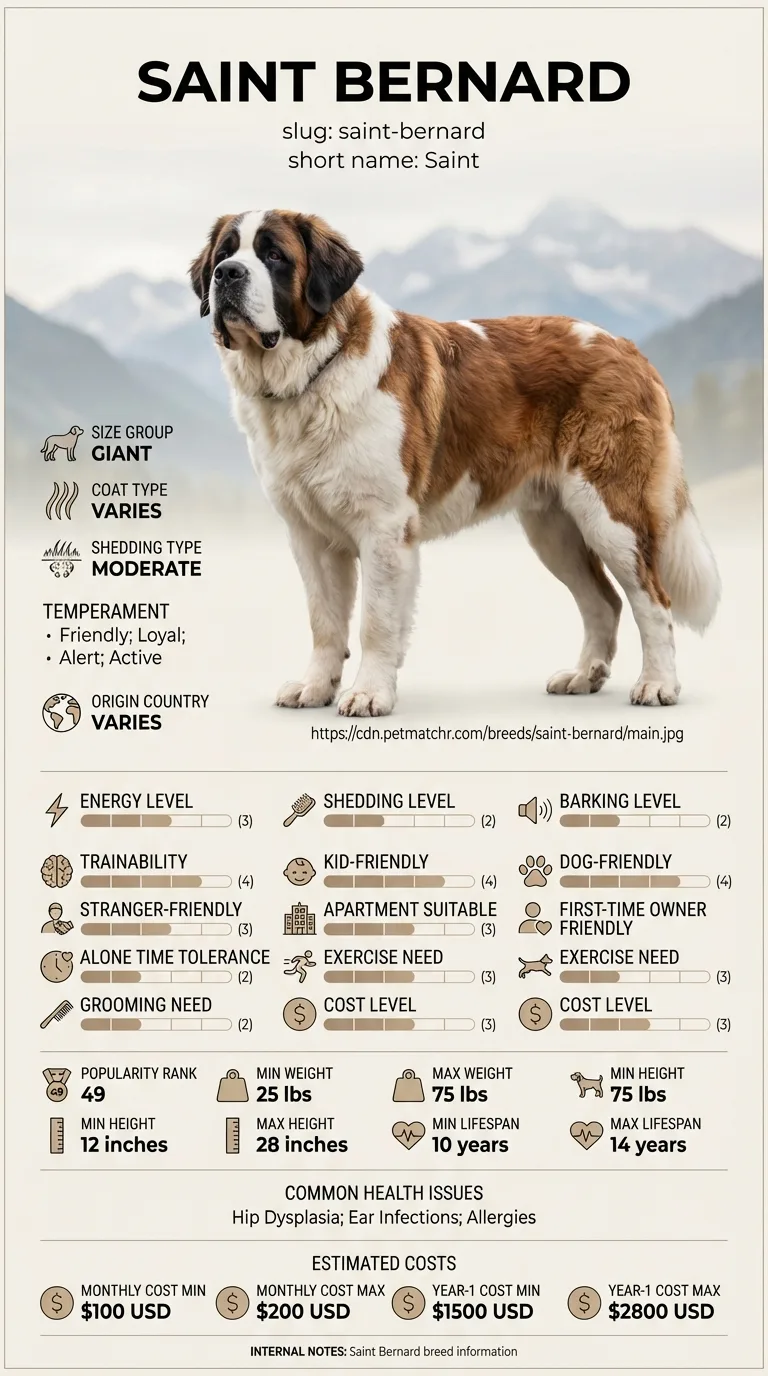
This is most relevant to owners and breeders trying to understand test results in detail, since a Type 1 result carries meaningfully different implications for surgical planning and breeding decisions than a Type 2 or Type 3 diagnosis would.
This guide is not medical advice. If your dog shows pain, sudden behavior change, or worsening symptoms, consult a licensed veterinarian.
Some links may be affiliate links. We may earn a commission at no extra cost to you. We only suggest products we believe are helpful for dog owners.
We research and check what we publish, but we do not warrant that any figure, date, price, or statement is accurate, complete, or current, and we accept no liability for any loss, cost, injury, or other harm arising from the use of this site. Use it as one reference among several. You remain responsible for your own decisions and for your dog's care - confirm anything that matters with a licensed veterinarian or another qualified professional before you act on it. Full disclaimer.
Check this first
Even with the milder Type 1 subtype, excessive or hard-to-stop bleeding from an injury, prolonged bleeding after a nail trim, or unusual bruising should prompt an urgent vet visit, since 'mild' refers to the typical bleeding risk relative to other subtypes, not a guarantee that bleeding can never become significant under the right circumstances.
A known Type 1 diagnosis without any active bleeding is not an emergency, but it remains important standing information to share with any vet performing surgery, particularly a more invasive or lengthy procedure where even a partial clotting deficiency could matter more.
The practical distinction for Type 1 specifically is that its generally milder bleeding tendency means many affected dogs go through minor procedures, like a nail trim gone slightly too short, without any issue, but that same mildness shouldn't translate into skipping precautions before major surgery, where even a partial deficiency can become clinically relevant.
If any of these apply, call your vet or an emergency clinic now. The rest of this page is for the cases that are not an emergency.
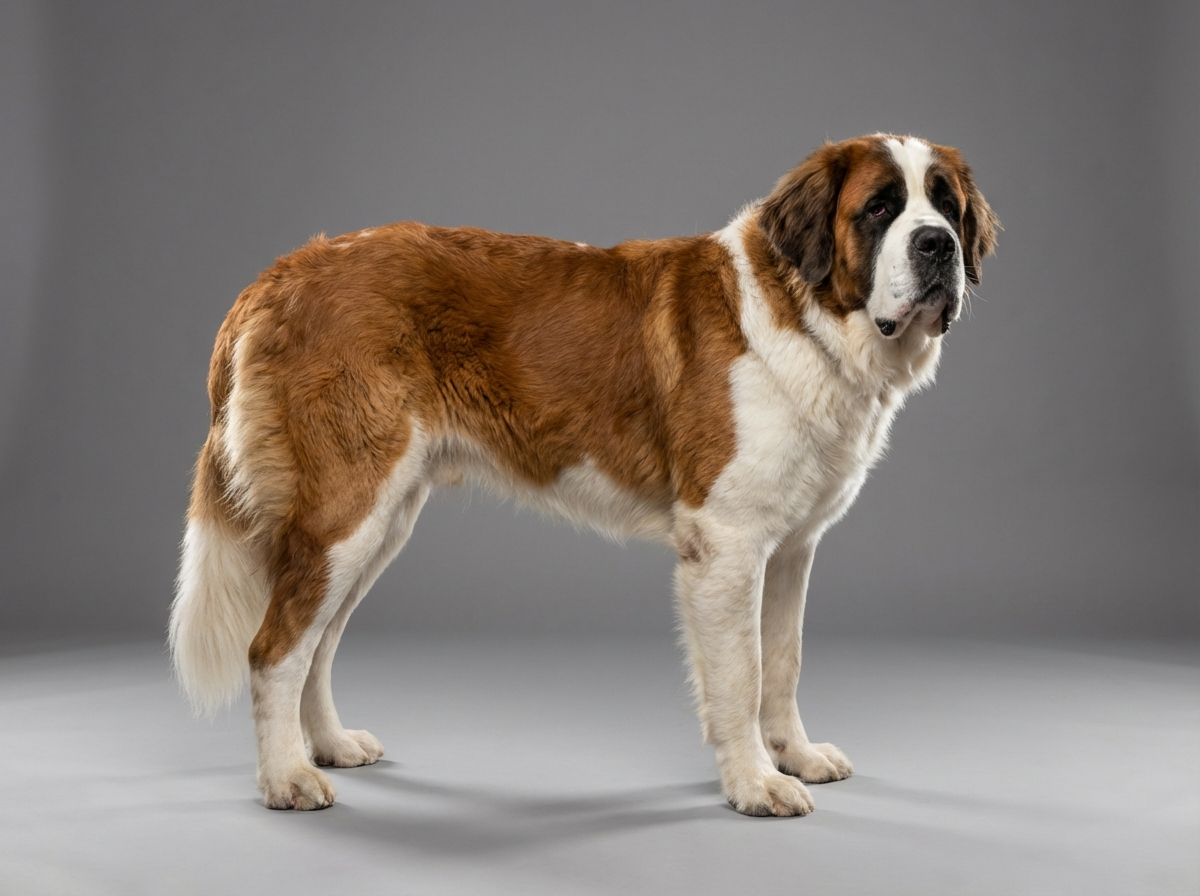
Type 1 von Willebrand's disease is a partial, quantitative deficiency of clotting factor, the most commonly diagnosed and generally mildest of the three known subtypes. Understanding a dog's specific subtype, rather than just a general von Willebrand's diagnosis, gives a more accurate picture of actual bleeding risk and appropriate precautions, particularly relevant for surgical planning and breeding decisions in a Saint Bernard.
Type 1 is the most commonly diagnosed subtype of von Willebrand's disease across dog breeds broadly, making it the most likely form to be identified if screening reveals a clotting factor deficiency in a Saint Bernard.
Type 1 results from an inherited genetic mutation causing reduced production of otherwise normally functioning von Willebrand factor, and like the condition broadly, its presence in any specific Saint Bernard bloodline depends on that line's genetic history rather than applying uniformly across the entire breed.
This is a purely genetic condition with no environmental cause, but the practical significance of even a mild, Type 1 level deficiency is shaped by situational factors, specifically whether a dog undergoes major surgery, sustains significant trauma, or takes medications that further affect clotting.
Talk to your vet about subtype-specific testing if a general von Willebrand's diagnosis is suspected or confirmed, and before any planned surgery. Excessive or hard-to-stop bleeding from an injury, or unusual bruising, need an urgent vet visit regardless of known subtype.
Because Type 1 is generally milder, it's easy to either dismiss it entirely or, less commonly, treat it with the same level of concern as the more severe subtypes.
See all Saint Bernard health problems, which breeds are prone to von willebrands disease vwd1, or the full Saint Bernard breed guide for temperament, exercise needs and ownership costs.
Subtype-specific testing typically takes days to a couple of weeks for results, and because Type 1 is a lifelong genetic condition, its practical relevance is ongoing, most notably resurfacing before any future surgery or significant medical procedure.
Success means understanding the specific subtype well enough to make informed surgical and breeding decisions, rather than treating a general von Willebrand's diagnosis as a single, undifferentiated risk level.
As a breeder, Michelle had her Saint Bernard, Nala, tested for von Willebrand's disease before a planned litter and learned Nala had Type 1, the milder, partial deficiency form. Rather than treating this as either a non-issue or a serious red flag, Michelle discussed the specific subtype with her vet to understand actual implications for breeding and for Nala's own future care. Her vet explained that Type 1's generally milder bleeding tendency still warranted standard surgical precautions and careful pairing decisions for breeding, but didn't carry the more serious risk profile of Type 2 or Type 3. Michelle used this specific information to select a clear-tested sire for Nala's litter.
Key takeaway: Knowing the exact subtype, not just a general diagnosis, gave Michelle the accurate information she needed to make an informed breeding decision rather than either overreacting or underestimating Nala's actual risk profile.
It's a partial, quantitative deficiency of von Willebrand factor, meaning the dog produces some functional clotting factor but not enough, generally resulting in a milder bleeding tendency than the more severe Type 2 or Type 3 subtypes.
Type 1 involves reduced quantity of otherwise normal clotting factor, Type 2 involves a qualitative defect where the factor doesn't function properly even at adequate levels, and Type 3 involves a near-complete absence of the factor, generally causing the most severe bleeding risk.
It's generally the mildest form, but 'mild' is relative; affected dogs can still experience significant bleeding during major surgery or severe trauma, so precautions are still warranted even with a Type 1 diagnosis.
A blood test measuring von Willebrand factor levels can identify reduced quantity consistent with Type 1, and genetic testing for the specific known mutation provides additional confirmation in breeds where that mutation has been identified.
This requires careful consideration and, ideally, genetic testing of both parents to understand and manage the risk of producing puppies with a more clinically significant deficiency, rather than assuming Type 1's general mildness applies to all potential offspring.
Yes, though generally less intensive than for Type 2 or Type 3, informing the surgical team and considering standard precautions for any procedure remains a reasonable, recommended approach.
Yes, knowing the specific subtype gives a more accurate picture of actual bleeding risk and appropriate precautions than a general von Willebrand's diagnosis alone.
A partial quantitative deficiency of clotting factor, generally the mildest of the three known subtypes.
Yes, it's the most frequently diagnosed form across dog breeds generally.
No, affected dogs can still bleed excessively during major surgery or severe trauma.
Yes, informing the surgical team remains a reasonable precaution even with the milder subtype.
It requires careful genetic testing and planning to avoid producing puppies with more severe deficiency.
A one-page prep sheet for this condition: the signs, the questions to ask, what to get priced. Unlocks here.
You get: Vet visit prep sheet
No spam. One-click unsubscribe. See our privacy policy.
Preview page 1 before you decide.