Health
Why are facial folds prone to infection in this breed?
Heavy jowls and near-constant drooling trap moisture, creating conditions where bacteria and yeast thrive.

Quick answer
Why are facial folds prone to infection in this breed?
Heavy jowls and near-constant drooling trap moisture, creating conditions where bacteria and yeast thrive.
This isn't a occasional risk, it's a structural, ongoing one: the same loose facial skin that gives the breed its recognizable look also traps moisture against the skin in the same spots, day after day.
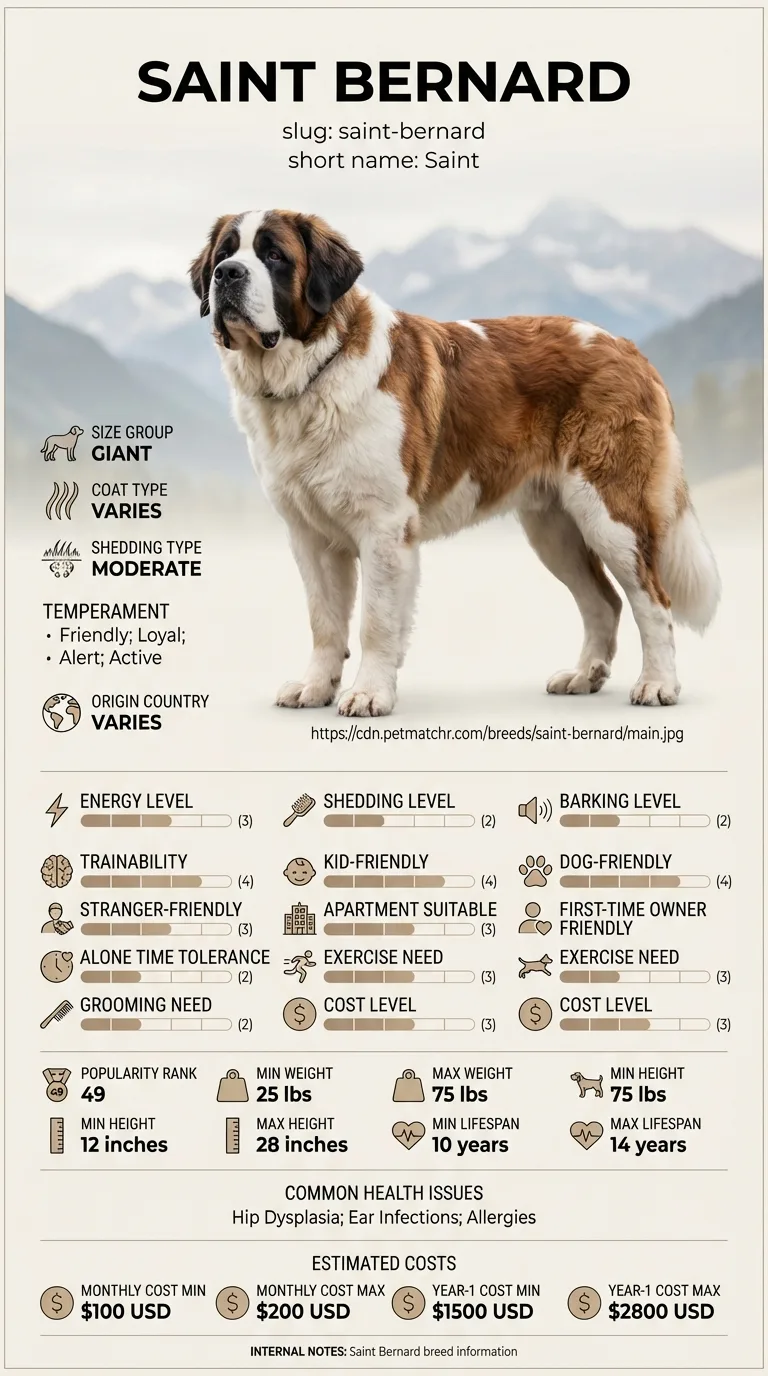
This affects nearly every Saint Bernard owner at some point, since the combination of heavy drooling and deep facial folds makes this one of the more consistently recurring maintenance issues in the breed rather than a rare complication.
This guide is not medical advice. If your dog shows pain, sudden behavior change, or worsening symptoms, consult a licensed veterinarian.
Some links may be affiliate links. We may earn a commission at no extra cost to you. We only suggest products we believe are helpful for dog owners.
Check this first
Facial fold infections are rarely a true emergency, but a dog that seems to be in significant pain, has facial swelling extending beyond the folds themselves, develops a fever, or stops eating due to facial discomfort should be seen promptly, since these suggest the infection may be spreading beyond a simple localized skin issue.
The more typical presentation, redness, odor, and mild discomfort localized to the fold itself, is appointment-worthy rather than emergency-worthy, and generally responds well to cleaning and appropriate topical or oral treatment once diagnosed.
Because this tends to be a recurring rather than one-time issue in this breed, the practical emergency-avoidance strategy is really about consistent daily prevention: a facial fold infection caught and treated early rarely escalates, while one left unnoticed for weeks under a busy owner's radar has more room to worsen before it's addressed.
If any of these apply, call your vet or an emergency clinic now. The rest of this page is for the cases that are not an emergency.
Skin infections in facial folds develop when bacteria or yeast overgrow in the warm, moist, low-airflow environment created by deep skin folds, and in Saint Bernards, heavy jowls combined with near-constant drooling make this a structural, recurring risk rather than an occasional complication. Unlike some of the breed's other documented health issues, this one is largely preventable through consistent daily hygiene, though it tends to recur quickly if that routine lapses.
Facial fold infections are one of the more consistently recurring, practically significant skin issues in Saint Bernards, directly tied to the same jowly, loose-skinned facial structure that defines the breed's look.
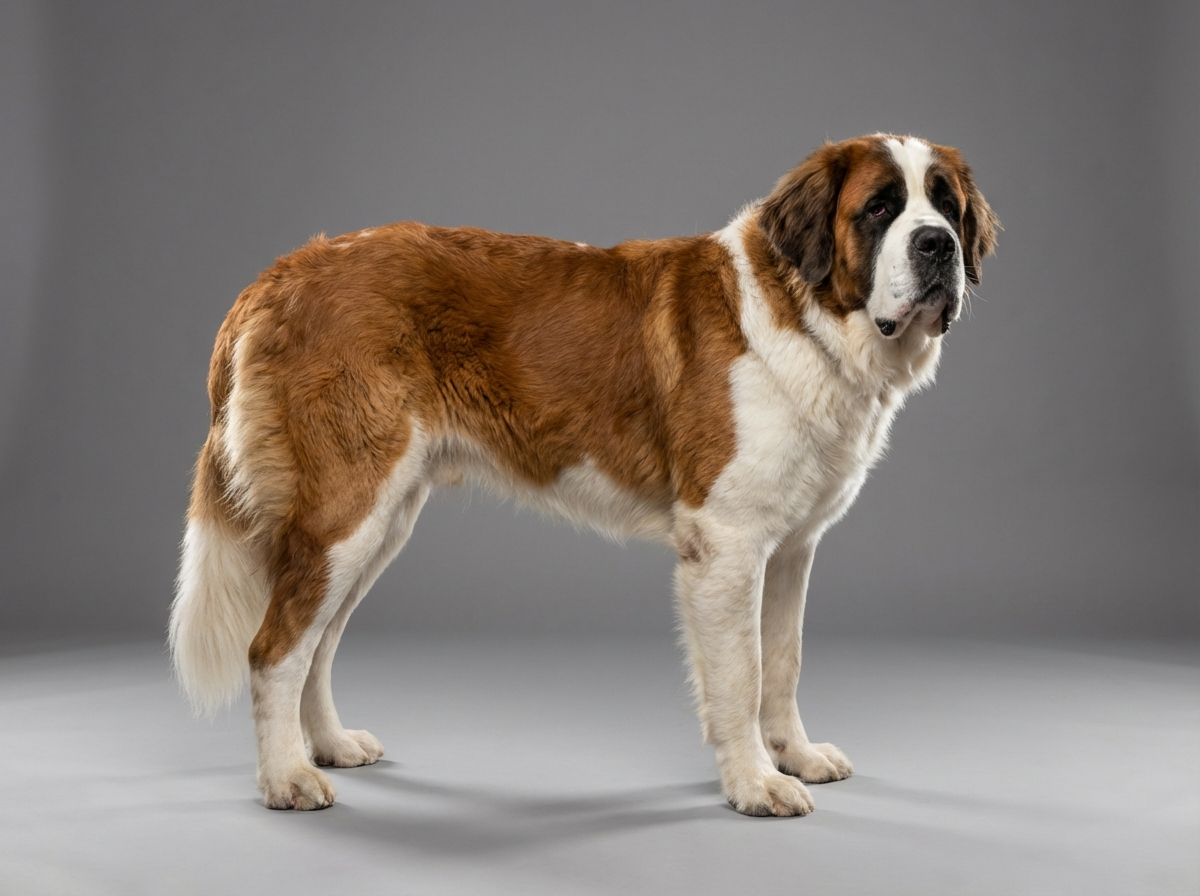
The Saint Bernard's heavy jowls and deep facial skin folds, a defining feature of the breed's appearance, create pockets where moisture from constant drooling has limited airflow to evaporate, and that warm, damp environment is close to ideal for bacterial and yeast overgrowth compared to flatter, drier facial skin in other breeds.
Inconsistent cleaning routines, humid climates that slow drying further, and any underlying allergic skin condition that increases general skin vulnerability all compound the breed's already elevated structural risk for facial fold infections.
Talk to your vet about redness, odor, or discomfort in facial folds so appropriate treatment can start promptly. Significant swelling extending beyond the folds, fever, or a dog refusing to eat due to facial pain warrant a same-day visit.
Facial fold infections tend to recur specifically because certain everyday habits let moisture and bacteria build back up.
See all Saint Bernard health problems, which breeds are prone to skin infections, or the full Saint Bernard breed guide for temperament, exercise needs and ownership costs.
An individual infection episode typically improves within one to two weeks of appropriate treatment, but given the structural risk factors in this breed, recurrence without consistent preventive care is common rather than unusual.
Success means keeping facial folds clean and dry enough, through a consistent daily routine, to significantly reduce how often infections occur, rather than expecting to eliminate the underlying structural risk entirely in a breed built this way.
If you think your Saint has skin infections, the plan is three steps: write down what you have seen and when it started, book a veterinary appointment rather than waiting for the next flare, and take video of the behaviour or symptom before you go — the thing you are worried about rarely happens in the consulting room. Screening in the parents covers hip dysplasia, elbow dysplasia, dilated cardiomyopathy.
What the vet visit should produce is a diagnosis and a written plan, not just reassurance: what is being ruled out, what the monitoring interval is, and which signs mean you come back sooner. Ask what the treatment costs across a year rather than per visit, because that is the number that decides whether you are managing this condition or reacting to it.
Between appointments, keep a short log — dates, what you saw, what changed. It is the single most useful thing an owner brings to a follow-up, and for skin infections it is often what separates a clear pattern from a guess.
Craig's Saint Bernard, Bronson, had his third facial fold infection in a year when his vet suggested the issue wasn't bad luck, it was an inconsistent cleaning routine letting the underlying moisture problem rebuild each time. Craig had been cleaning Bronson's face only when he noticed odor or redness. He switched to cleaning and thoroughly drying Bronson's facial folds every evening as a fixed daily habit rather than a reactive measure. Over the following year, Bronson had no further infections, a clear change from the recurring pattern before.
Key takeaway: The infections kept coming back because the underlying moisture problem was never actually addressed between episodes, and it was consistent daily prevention, not better treatment during flare-ups, that finally broke the cycle.
Their heavy jowls and deep facial skin folds trap moisture from near-constant drooling, creating a warm, low-airflow environment where bacteria and yeast can overgrow more easily than on flatter, drier skin.
Redness, a foul odor, sometimes visible discharge, and mild discomfort when the area is touched are common signs, typically localized to the deepest parts of the lip or facial folds.
Treatment usually involves cleaning the affected area, a prescribed topical or oral antimicrobial medication depending on whether bacteria or yeast (or both) are involved, and thorough drying to prevent quick recurrence.
Daily cleaning and thorough drying of facial folds is the most effective preventive habit, since it directly addresses the moisture buildup that allows infections to develop in the first place.
Usually not, but significant swelling, fever, or pain severe enough to stop a dog from eating should prompt a same-day vet visit rather than waiting.
Not every individual dog develops recurrent infections, but the breed's facial structure and drooling tendency mean the underlying risk factor is present in essentially every dog, making prevention relevant even without an active infection.
A single episode is typically a modest cost for a vet visit and medication, though dogs prone to frequent recurrence may accumulate a more meaningful cost over time from repeated treatment.
Heavy jowls and near-constant drooling trap moisture, creating conditions where bacteria and yeast thrive.
A foul odor, redness, or discharge in the deepest parts of the facial folds are common signs.
Daily cleaning and thorough drying of the facial folds is the most effective prevention.
It tends to recur without consistent preventive care, given the ongoing structural risk factors in this breed.
A single episode is a modest cost, though frequent recurrence can add up over time.
A one-page prep sheet for this condition: the signs, the questions to ask, what to get priced. Unlocks here.
You get: Vet visit prep sheet
No spam. One-click unsubscribe. See our privacy policy.
Preview page 1 before you decide.