Health
Why are skin allergies harder to manage in this breed?
The thick double coat and loose skin trap allergens and moisture against the skin longer than in shorter-coated breeds.

Quick answer
Why are skin allergies harder to manage in this breed?
The thick double coat and loose skin trap allergens and moisture against the skin longer than in shorter-coated breeds.
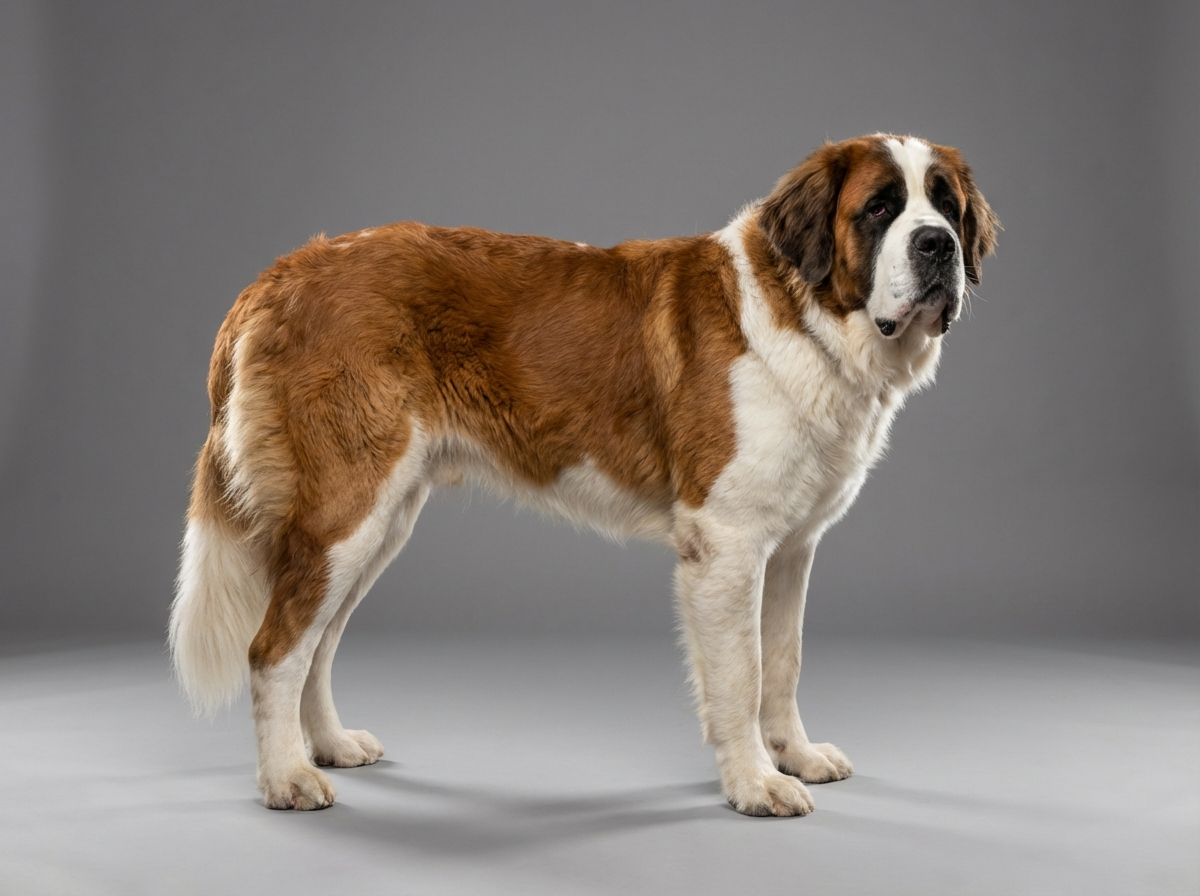
A Saint Bernard with allergies doesn't just deal with itching, the same thick coat that traps allergens against the skin also makes it easy to miss early redness or irritation until a secondary infection has already set in.
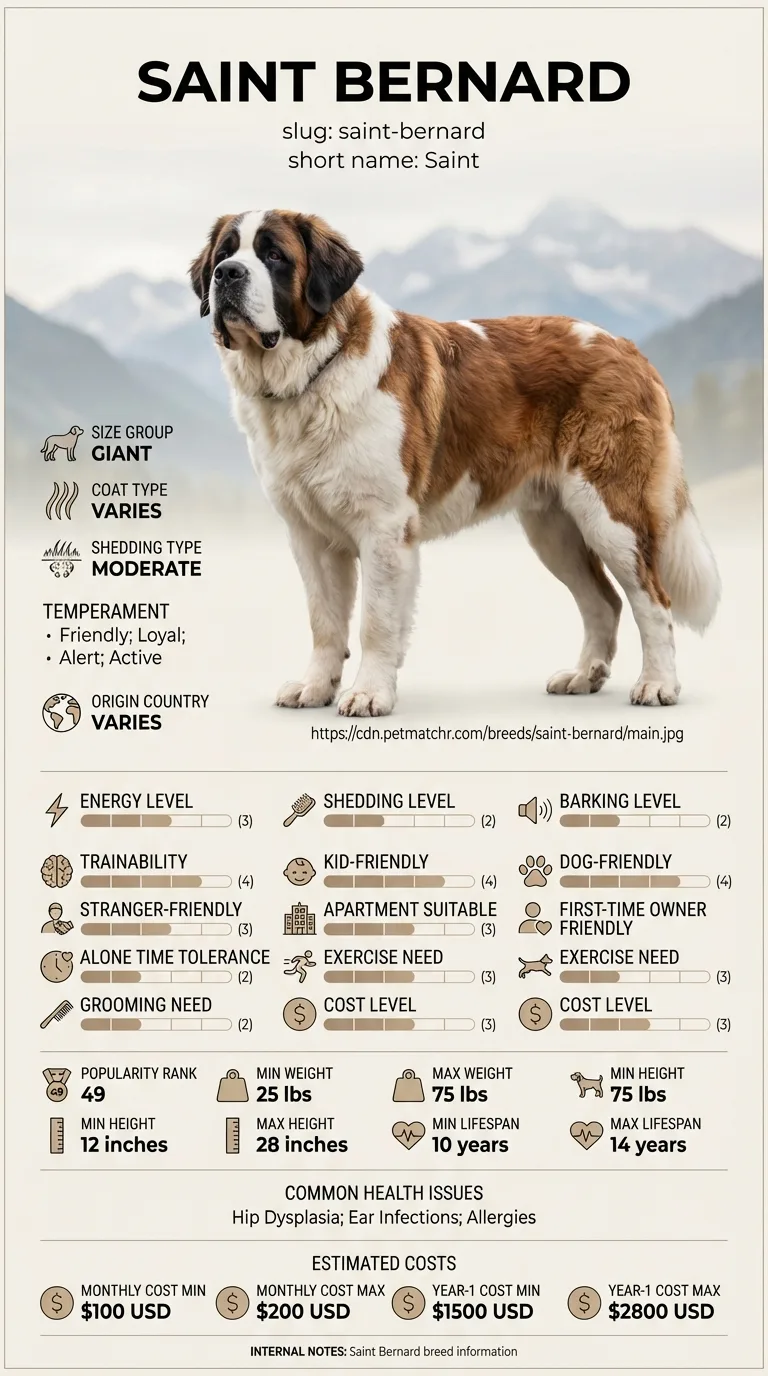
This affects a large share of Saint Bernard owners at some point, since allergic skin disease is broadly common in dogs and this breed's coat and skin structure add extra practical challenges to managing it well.
This guide is not medical advice. If your dog shows pain, sudden behavior change, or worsening symptoms, consult a licensed veterinarian.
Some links may be affiliate links. We may earn a commission at no extra cost to you. We only suggest products we believe are helpful for dog owners.
We research and check what we publish, but we do not warrant that any figure, date, price, or statement is accurate, complete, or current, and we accept no liability for any loss, cost, injury, or other harm arising from the use of this site. Use it as one reference among several. You remain responsible for your own decisions and for your dog's care - confirm anything that matters with a licensed veterinarian or another qualified professional before you act on it. Full disclaimer.
Check this first
Sudden facial swelling, hives, difficulty breathing, or repeated vomiting shortly after exposure to a new food or substance are signs of a severe allergic reaction and need emergency veterinary care immediately, since this can indicate anaphylaxis.
More typical allergic skin disease develops gradually: itching, redness, recurring ear infections, and paw licking that build over days to weeks rather than appearing suddenly. These are appointment-worthy rather than emergency-worthy, though earlier treatment generally means less secondary infection to manage.
Given this breed's thick coat, a genuinely useful habit is a regular hands-on skin check, parting the coat in a few spots to look directly at the skin rather than relying on visual inspection alone, since redness or irritation can be well underway before it's visible without parting the fur.
If any of these apply, call your vet or an emergency clinic now. The rest of this page is for the cases that are not an emergency.
Allergic skin disease develops when a dog's immune system overreacts to environmental or food triggers, causing itching, redness, and inflammation. In a Saint Bernard, the breed's dense double coat and loose skin add a practical complication on top of the underlying allergy itself, trapping allergens and moisture against the skin longer than a shorter-coated breed would experience, which makes both early detection and effective management more challenging.
Allergic skin disease is broadly common in dogs, and while it isn't a uniquely Saint Bernard-specific condition, the breed's coat and skin structure make it a particularly relevant, practically challenging concern for owners to manage well.
The Saint Bernard's dense double coat and loose skin create an environment where allergens, moisture, and irritants can stay in contact with the skin for longer than they would on a breed with shorter hair and tighter skin, which can both trigger and worsen allergic reactions once they start.
Pollen, dust, and mold in the environment, along with diet composition for food-sensitive dogs, are the primary external triggers, and inconsistent grooming or inadequate drying after baths or wet weather compounds the breed's already elevated risk for trapped moisture and irritants.
Talk to your vet about persistent itching, redness, recurring ear infections, or paw licking, all of which suggest allergic skin disease worth investigating. Sudden facial swelling, hives, difficulty breathing, or repeated vomiting after new exposure are signs of a severe reaction and need emergency care.
Allergic skin disease in this breed often worsens due to a specific set of avoidable habits tied to coat care and hygiene.
See all Saint Bernard health problems, which breeds are prone to skin allergies, or the full Saint Bernard breed guide for temperament, exercise needs and ownership costs.
Identifying specific triggers can take weeks to months, particularly with an elimination diet trial, and once a management plan is in place, most dogs show meaningful improvement in symptoms within four to eight weeks.
Success means significantly reduced itching and skin irritation through a combination of trigger management, grooming, and medication as needed, maintained consistently long-term, rather than a permanent cure for the underlying allergic tendency.
Brenda noticed her Saint Bernard, Rusty, licking his paws more than usual but didn't see any obvious skin problems on casual inspection. When her vet parted his thick coat during an exam, they found notable redness and irritation across his belly and legs that had gone unnoticed under the fur. Allergy testing pointed to environmental triggers, and Brenda started a routine of more frequent brushing, thorough drying after baths, and a vet-prescribed anti-itch medication during peak pollen season. Rusty's paw licking and skin irritation both improved noticeably within a month.
Key takeaway: The redness had been building for a while before Brenda noticed it, which is exactly why a hands-on check under the coat, not just watching behavior, is what actually caught Rusty's allergic skin disease.
Like many dogs, they can develop environmental or food allergies through immune system overreaction, but their thick double coat and loose skin add a practical complication, trapping allergens, moisture, and irritants against the skin longer than in shorter-coated breeds.
Itching, redness, licking or chewing at paws, recurring ear infections, and skin that feels warm or looks inflamed when the coat is parted are all common signs, sometimes harder to spot early under a thick coat.
A vet typically starts with a physical exam and history, sometimes followed by allergy testing or an elimination diet trial to identify specific environmental or food triggers.
Treatment often combines identifying and reducing exposure to triggers, medicated shampoos, and sometimes prescription anti-itch or immune-modulating medication, tailored to the severity and specific triggers involved.
Yes, regular brushing removes loose undercoat and trapped allergens, and thorough drying after baths or wet weather helps prevent the moist environment that allows secondary infections to develop.
Allergies generally can't be cured, but they can be well managed through a combination of trigger avoidance, grooming, and medication, keeping most dogs comfortable long-term.
Costs vary widely depending on severity, from occasional medicated shampoo for mild cases to ongoing prescription medication and periodic vet visits for more significant, chronic allergic skin disease.
The thick double coat and loose skin trap allergens and moisture against the skin longer than in shorter-coated breeds.
Licking or chewing at the paws, or redness visible when the coat is parted, are common early signs.
Yes, it removes trapped allergens and loose undercoat that can otherwise irritate the skin.
No, but they can be well managed through trigger avoidance, grooming, and medication.
It varies, from inexpensive shampoos for mild cases to ongoing prescription costs for more severe allergic skin disease.
A one-page prep sheet for this condition: the signs, the questions to ask, what to get priced. Unlocks here.
You get: Vet visit prep sheet
No spam. One-click unsubscribe. See our privacy policy.
Preview page 1 before you decide.