Health
What is PRA-rcd3?
A specific inherited genetic variant of progressive retinal atrophy with a known DNA test available.

Quick answer
What is PRA-rcd3?
A specific inherited genetic variant of progressive retinal atrophy with a known DNA test available.
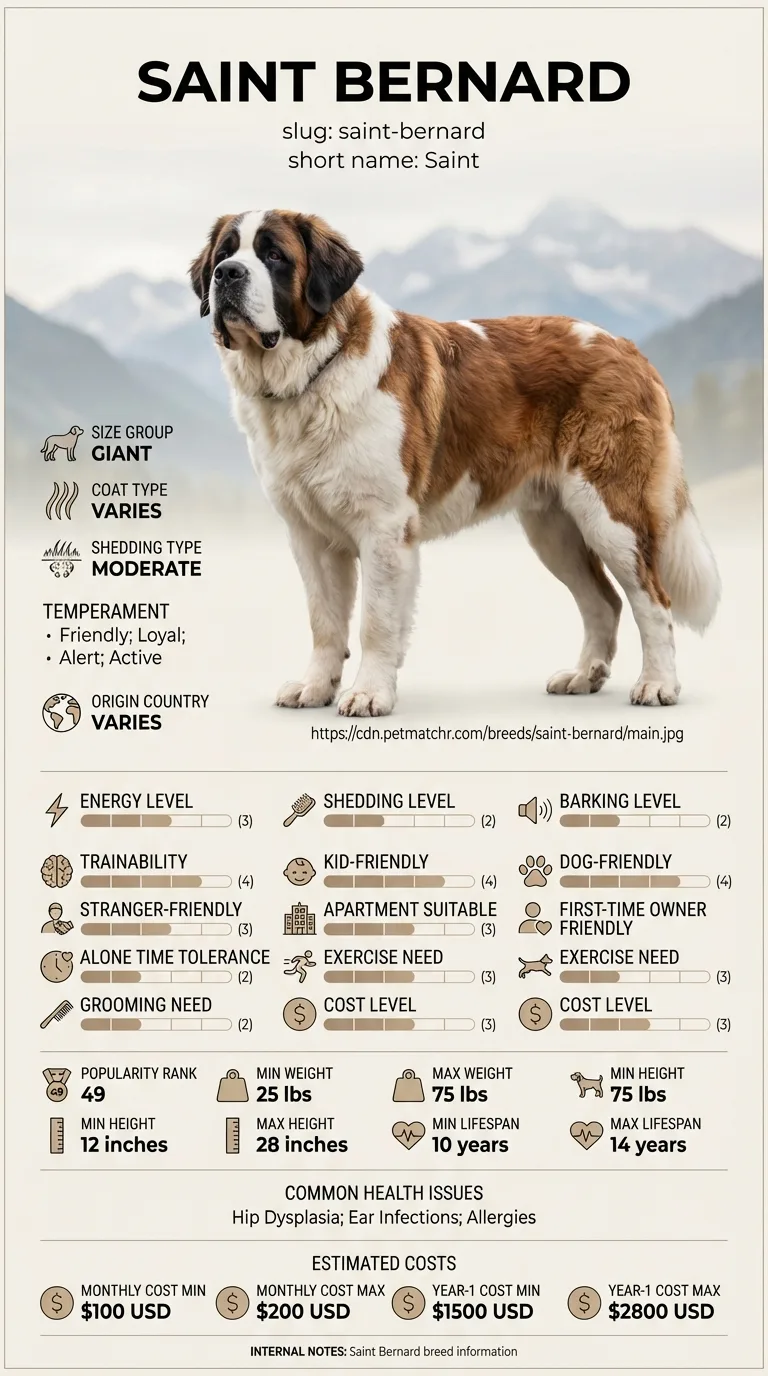
For a Saint Bernard owner or breeder, this genetic specificity means it's possible to know a dog's PRA-rcd3 status, clear, carrier, or affected, years before any vision symptoms would ever show up.
This is most relevant to breeders and prospective puppy buyers trying to interpret genetic test results correctly, since the difference between a carrier and an affected result changes what it actually means for that dog and its future puppies.
This guide is not medical advice. If your dog shows pain, sudden behavior change, or worsening symptoms, consult a licensed veterinarian.
Some links may be affiliate links. We may earn a commission at no extra cost to you. We only suggest products we believe are helpful for dog owners.
We research and check what we publish, but we do not warrant that any figure, date, price, or statement is accurate, complete, or current, and we accept no liability for any loss, cost, injury, or other harm arising from the use of this site. Use it as one reference among several. You remain responsible for your own decisions and for your dog's care - confirm anything that matters with a licensed veterinarian or another qualified professional before you act on it. Full disclaimer.
Check this first
Genetic testing itself is not an emergency topic, since it's typically done well before any symptoms would appear, sometimes even in puppies. However, once a dog is confirmed affected and vision loss begins, the same general PRA emergency guidance applies: any sudden, rapid vision loss occurring over hours or days is different from the expected gradual progression and should prompt a same-day vet visit, since it could indicate a separate, unrelated eye emergency rather than typical rcd3 progression.
For breeders, the practical urgency is more about timing than medical emergency: testing breeding stock before a planned litter, rather than after puppies are already born, is what actually prevents an accidental affected-to-affected or carrier-to-carrier pairing from producing puppies that will develop the disease.
For puppy buyers, the practical urgency is asking for documentation before committing to a specific puppy, since test results for the parents are the only way to meaningfully estimate a specific puppy's own genetic status before symptoms would ever appear.
If any of these apply, call your vet or an emergency clinic now. The rest of this page is for the cases that are not an emergency.
PRA-rcd3 is a specific genetic variant of progressive retinal atrophy caused by a known mutation, which sets it apart from other PRA forms in that a direct DNA test can identify a dog's status, clear, carrier, or affected, well before any vision symptoms would appear. For breeders and puppy buyers, this genetic specificity turns what would otherwise be a wait-and-see condition into something that can be planned around years in advance through simple, affordable testing.
The rcd3 mutation is documented in specific breed lines where genetic testing has identified it, and its prevalence in any given Saint Bernard bloodline depends heavily on whether prior generations have been tested and selectively bred away from the mutation.
PRA-rcd3 results from a specific, identified genetic mutation inherited from both parents, and its presence in a Saint Bernard bloodline depends on the breeding history of that specific line rather than being a universal breed-wide risk, which is exactly why individual genetic testing matters more than assumptions based on breed alone.
There are no environmental triggers for this condition, since it's determined entirely by inherited genetics; the practical environmental factor that matters is breeding practice, specifically whether carrier or affected dogs are tested and appropriately managed in breeding decisions.
Talk to your vet or a veterinary ophthalmologist about genetic testing options if you're considering breeding your Saint Bernard, or if you want confirmation of a puppy's genetic status. Sudden, rapid vision loss in an already affected dog needs a same-day vet visit, since it may indicate a separate emergency rather than expected progression.
Genetic test results are only useful if interpreted correctly, and a few common misunderstandings lead to poor breeding or purchasing decisions.
See all Saint Bernard health problems, which breeds are prone to progressive retinal atrophy pra rcd3, or the full Saint Bernard breed guide for temperament, exercise needs and ownership costs.
Genetic testing results are typically available within one to a few weeks of submitting a sample, and because the test identifies genetic status rather than symptoms, results can be obtained at any age, including in young puppies well before any vision changes would occur.
Success means using genetic test results proactively, before breeding or before purchasing a puppy, to make informed decisions that reduce the chance of producing or acquiring a dog that will develop this specific, currently untreatable condition.
Before planning a litter with his Saint Bernard, Nova, breeder Victor had her tested for PRA-rcd3 as part of a broader genetic health panel, alongside similar testing on the intended sire. Nova came back as a carrier, while the sire tested clear. Because the pairing was carrier-to-clear rather than carrier-to-carrier, none of the resulting puppies could be affected, though some could be carriers themselves. Victor tested each puppy before placement and disclosed results transparently to buyers, giving each new owner clear information from day one.
Key takeaway: Testing both parents before breeding, rather than after puppies were already born, is what let Victor make a pairing decision that eliminated any chance of producing an affected puppy in that specific litter.
It's a specific genetic variant of progressive retinal atrophy, called rod-cone dysplasia type 3, caused by a known mutation that can be identified directly through a DNA test rather than only through clinical eye exams after symptoms appear.
A simple cheek swab or blood sample is sent to a genetic testing lab, which checks for the specific mutation associated with rcd3 and returns a result of clear, carrier, or affected.
A carrier has one copy of the mutation and will not develop the disease itself, though it can pass the gene to offspring. An affected dog has two copies and will typically develop PRA symptoms over time.
It's generally not recommended, since breeding two carriers together carries a real statistical chance of producing affected puppies, even though neither parent shows any symptoms themselves.
Not necessarily. A clear result for this specific variant doesn't rule out other genetic forms of PRA that may exist in the breed, so it should be understood as ruling out this particular mutation rather than PRA broadly.
Yes, requesting documented parent test results is one of the most direct ways to understand a puppy's likely genetic status for this specific condition before any symptoms would ever be visible.
It's relatively affordable compared to most veterinary diagnostics, generally a modest one-time cost per dog tested, making it a practical and accessible screening tool for breeders.
A specific inherited genetic variant of progressive retinal atrophy with a known DNA test available.
The dog has one copy of the mutation, won't develop the disease itself, but can pass it to offspring.
Breeding two carriers together is generally discouraged since it can produce affected puppies.
Yes, documented parent test results are the clearest way to understand a puppy's likely genetic status.
Yes, it's a relatively low-cost, one-time test compared to most veterinary diagnostics.
A one-page prep sheet for this condition: the signs, the questions to ask, what to get priced. Unlocks here.
You get: Vet visit prep sheet
No spam. One-click unsubscribe. See our privacy policy.
Preview page 1 before you decide.