Health
Why are Saint Bernards heat sensitive?
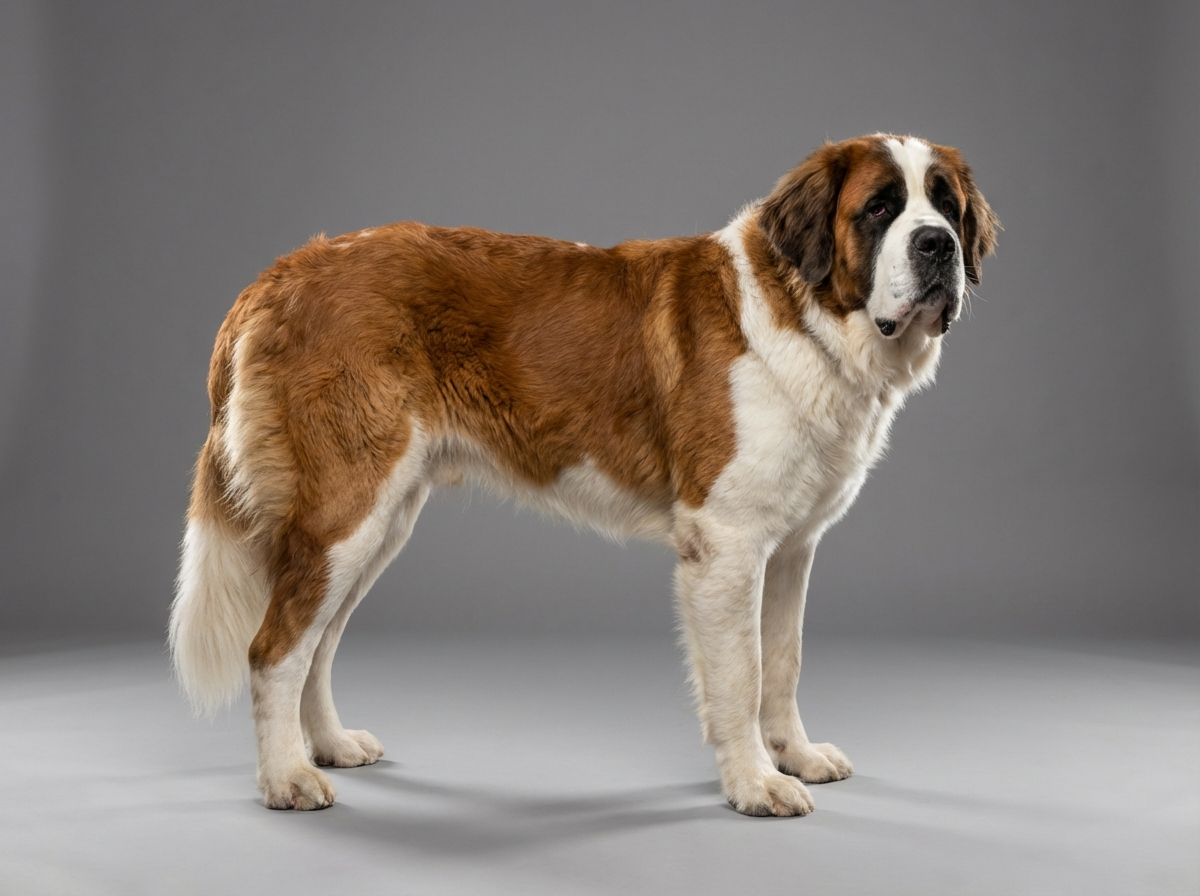
Their giant size, thick double coat and heavy facial folds all limit how efficiently they can shed heat.

Quick answer
Why are Saint Bernards heat sensitive?
Their giant size, thick double coat and heavy facial folds all limit how efficiently they can shed heat.
A Saint Bernard can go from comfortable to dangerously overheated faster than most owners expect, especially compared to smaller, leaner breeds that handle warm weather with far more margin for error.
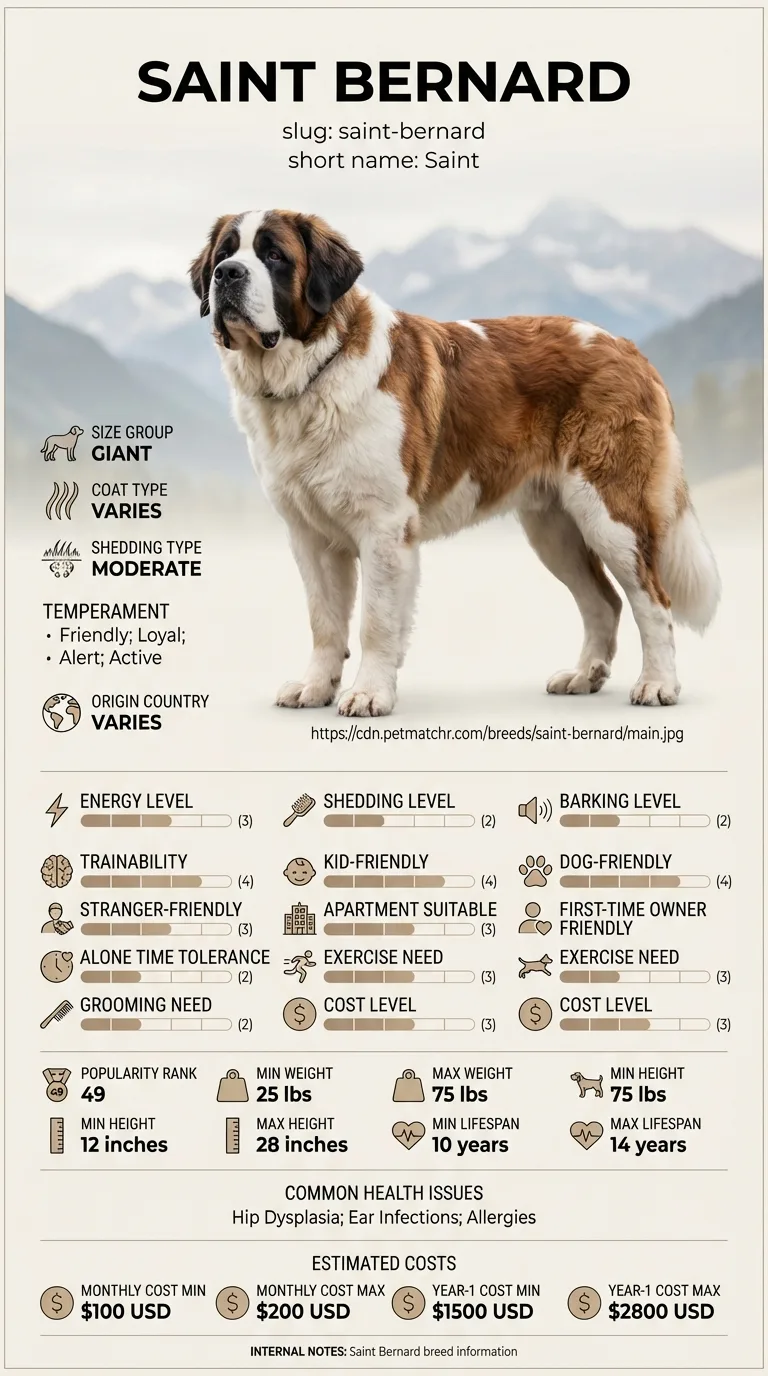
Owners in warm climates, or anyone tempted to keep up normal summer walk routines, run into this most, often not realizing how much their dog's size and coat change the math on heat tolerance.
This guide is not medical advice. If your dog shows pain, sudden behavior change, or worsening symptoms, consult a licensed veterinarian.
Some links may be affiliate links. We may earn a commission at no extra cost to you. We only suggest products we believe are helpful for dog owners.
We research and check what we publish, but we do not warrant that any figure, date, price, or statement is accurate, complete, or current, and we accept no liability for any loss, cost, injury, or other harm arising from the use of this site. Use it as one reference among several. You remain responsible for your own decisions and for your dog's care - confirm anything that matters with a licensed veterinarian or another qualified professional before you act on it. Full disclaimer.
Check this first
Heavy panting that doesn't slow down after rest, bright red gums, drooling that becomes thick and ropey, wobbliness, vomiting, or collapse are all signs of dangerous overheating that need emergency veterinary care immediately, not a wait-and-see cooldown period at home. Heatstroke in a dog this size can progress to organ damage quickly once body temperature climbs high enough.
Mild warmth-related discomfort looks different: seeking shade on their own, drinking more water than usual, or slowing down naturally on a warm walk are all signs of a dog self-regulating appropriately. These don't need emergency care, just a shortened outing and access to water and shade.
The difference that matters is whether the dog can recover on its own once removed from heat. A dog that cools down and returns to normal breathing within ten to fifteen minutes of shade and water is managing the heat. A dog whose panting stays heavy, or who seems disoriented or wobbly, needs a vet immediately, since at that point the body's own cooling mechanisms are being overwhelmed.
If any of these apply, call your vet or an emergency clinic now. The rest of this page is for the cases that are not an emergency.
Heat sensitivity in Saint Bernards comes down to a body built for the opposite climate: a heavy, low-surface-area-to-mass frame, a dense double coat meant to trap warmth, and loose facial skin that adds a little extra airflow resistance. None of this is a defect, it's simply the breed's design working against modern summer conditions, and it means owners need to actively manage heat exposure rather than assume the dog will self-regulate the way a smaller, leaner dog might.
Heat intolerance is close to universal in this breed given its alpine origins, and it's one of the most consistently cited practical challenges of Saint Bernard ownership in warmer regions.
The Saint Bernard was developed for mountain rescue work in cold, snowy conditions, which selected for a large body, a dense double coat, and thick facial skin, all useful for insulation in the cold but counterproductive for shedding heat. Their size also means a lower surface-area-to-body-mass ratio than smaller breeds, so they generate more heat relative to how efficiently they can release it.
Direct sun, high humidity, poor airflow indoors, and lack of shaded rest areas outdoors all compound the breed's built-in heat challenges. Warm climates without air conditioning access are particularly difficult environments for this breed to live comfortably and safely in.
Talk to your vet if your dog seems unusually lethargic on warm days, pants heavily well after activity has stopped, or shows reduced appetite during hot weather. Heavy uncontrolled panting, wobbliness, vomiting, bright red gums, or collapse are signs of heatstroke and require emergency veterinary care immediately.
Some very ordinary summer habits are genuinely risky for a dog built like this.
See all Saint Bernard health problems, which breeds are prone to heat sensitivity, or the full Saint Bernard breed guide for temperament, exercise needs and ownership costs.
Heat sensitivity isn't something that resolves; it's a lifelong feature of the breed that needs to be managed every warm season through adjusted routines, and most owners settle into a seasonal rhythm within their first year of ownership.
Success means a dog that stays comfortable and safe through warm months via shortened, well-timed outdoor time and reliable access to cooling, rather than an expectation that the dog will ever fully adapt to heat the way some other breeds can.
Renee adopted Bella, a two-year-old Saint Bernard, in the spring and kept up their usual midday walk schedule as summer arrived. By July, Bella was panting heavily for long stretches after even short walks and seemed unusually tired in the afternoons. Renee's vet confirmed Bella was managing mild heat stress, not anything more serious, and recommended shifting walks to early morning, adding a kiddie pool in the shaded backyard, and keeping the air conditioning running during the day. Within two weeks, Bella's afternoon energy and appetite were back to normal.
Key takeaway: The fix wasn't medical, it was scheduling: recognizing that a giant, heavily coated breed simply cannot handle the same summer routine as a smaller dog, and adjusting the day around the heat rather than around the calendar.
Their large body mass has less relative surface area to release heat through, their double coat traps warmth, and their heavy jowls and facial folds add a little extra airflow restriction on top of that. All of this was fine for alpine rescue work in the cold, but it works against them in summer heat.
There's no single cutoff, but many owners find that anything above roughly 75 to 80 degrees Fahrenheit, especially with humidity, calls for shorter outings, shaded routes, and closer monitoring than they'd use with a smaller, shorter-coated breed.
Most vets and groomers advise against shaving a double coat down to the skin, since the undercoat actually helps insulate against heat when properly maintained, and shaving can disrupt that and increase sunburn risk. Regular brushing to remove loose undercoat is usually the better approach.
More than usual, and it should always be available rather than rationed. Bringing water on walks and offering it frequently during warm-weather outings is a simple habit that meaningfully reduces overheating risk.
Many do, but it requires real adjustments: air conditioning, shaded and cooled indoor space during the hottest parts of the day, and exercise scheduled for early morning or evening rather than midday.
Often yes, since age-related conditions like heart disease or joint pain can make it harder for an older dog to move to shade quickly or recover as efficiently once they've started to overheat.
Move the dog to shade or air conditioning immediately, offer cool (not ice-cold) water, and apply cool wet towels to the belly, armpits and groin while heading to a vet if the dog doesn't recover quickly.
Their giant size, thick double coat and heavy facial folds all limit how efficiently they can shed heat.
It's best to avoid midday heat and instead walk in the cooler early morning or evening hours.
In warm climates, reliable indoor cooling makes a meaningful difference in this breed's comfort and safety.
It's safer not to leave them unsupervised outside in heat, even with shade, given how quickly this breed can overheat.
No, most experts recommend regular brushing instead, since the double coat helps regulate temperature when properly maintained.
A one-page prep sheet for this condition: the signs, the questions to ask, what to get priced. Unlocks here.
You get: Vet visit prep sheet
No spam. One-click unsubscribe. See our privacy policy.
See a sample page before you decide.
Early access list
The free prep sheet covers the same-day warning signs, a symptom log and the questions to ask. We are considering a fuller kit that adds a cost worksheet for the usual tests and treatments (US price ranges with their sources) and a plain-English guide to ways of covering the bill. It is not built yet; this list tells us whether it is worth building.
One email, no spam, unsubscribe anytime. Information only, not veterinary advice.