Health
Why is glaucoma different from this breed's other eye issues?
It's a genuine emergency causing permanent damage within hours, unlike gradual conditions like entropion or cataracts that allow time for scheduled treatment.

Quick answer
Why is glaucoma different from this breed's other eye issues?
It's a genuine emergency causing permanent damage within hours, unlike gradual conditions like entropion or cataracts that allow time for scheduled treatment.
Most eye problems in this breed give you time to think. Glaucoma does not — a dog with acute glaucoma can lose vision permanently in that same eye before a routine next-day vet appointment would even happen, which is exactly why recognizing it matters so much.
Owners who notice a sudden, dramatically red or cloudy eye and are unsure whether this is an urgent emergency or something that can wait for a regular appointment, when the difference genuinely determines whether vision can be saved.
This guide is not medical advice. If your dog shows pain, sudden behavior change, or worsening symptoms, consult a licensed veterinarian.
Some links may be affiliate links. We may earn a commission at no extra cost to you. We only suggest products we believe are helpful for dog owners.
Check this first
Any one of these signs alone, and certainly several together, should prompt an immediate emergency vet visit rather than waiting to see if it improves — this is precisely the kind of eye problem where waiting even a few hours can mean the difference between saved and lost vision.
If any of these apply, call your vet or an emergency clinic now. The rest of this page is for the cases that are not an emergency.
Glaucoma is a sudden rise in internal eye pressure that causes rapid, irreversible damage to the optic nerve and retina, standing apart from most of this breed's other, more gradually progressing documented eye conditions. It is a genuine ophthalmic emergency where the speed of treatment directly determines whether vision can be preserved.
Glaucoma is a recognized emergency condition across dog breeds generally rather than being specifically documented as elevated in Saint Bernards, but its potential severity and the true emergency nature of acute cases make it worth every owner recognizing regardless of the exact breed-specific frequency.
There is no strongly established Saint Bernard-specific driver for primary glaucoma, though this breed's broader documented eye risks, like chronic entropion-related irritation, could in principle contribute to secondary glaucoma in some individual cases through ongoing inflammation.
Untreated chronic eye inflammation or prior eye trauma can contribute to secondary glaucoma by disrupting normal fluid drainage within the eye over time, making prompt treatment of other eye conditions relevant to reducing this indirect risk.
Treat any sudden severe eye redness, cloudiness, obvious pain, or a dilated, unresponsive pupil as a true emergency requiring immediate veterinary care, not a scheduled appointment. There is no safe waiting period with suspected glaucoma, given how quickly and permanently vision can be lost.
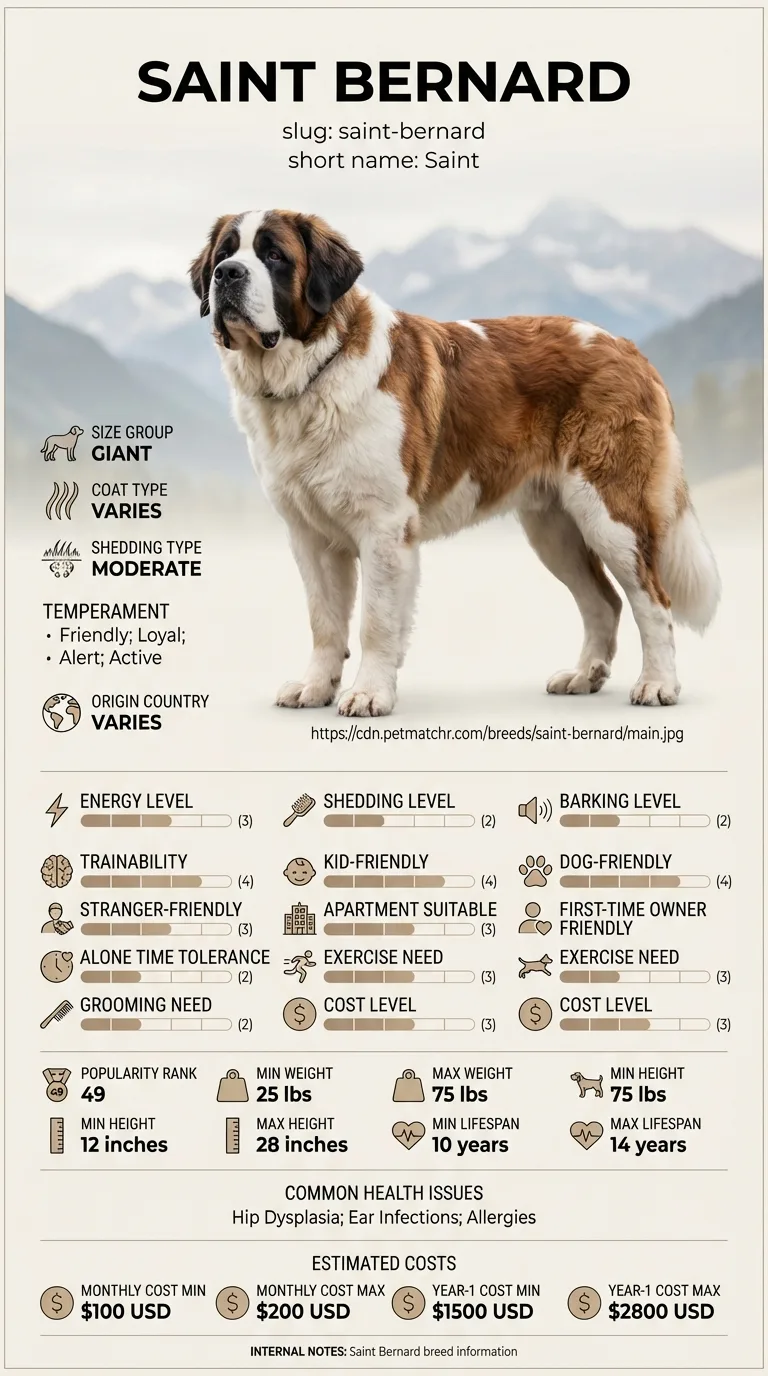
See all Saint Bernard health problems, which breeds are prone to glaucoma, or the full Saint Bernard breed guide for temperament, exercise needs and ownership costs.
There is no safe timeline to delay treatment for suspected acute glaucoma — action within hours, not days, meaningfully affects whether vision can be preserved. Ongoing management, once diagnosed, is typically a lifelong commitment to pressure monitoring and treatment.
Success is recognizing the emergency signs immediately and reaching treatment fast enough to preserve as much vision as possible, understanding that even with prompt care, some degree of vision loss may not be fully preventable depending on how quickly pressure was already elevated before treatment began.
The eye maintains a specific internal fluid pressure that supports its shape and function. In glaucoma, that pressure rises abnormally, either because fluid isn't draining properly or, less commonly, because it's being overproduced. Elevated pressure directly damages the optic nerve and retina, and unlike many other injuries in the body, this particular tissue damage does not reliably heal or reverse once it has occurred, even with prompt subsequent treatment.
This is precisely why glaucoma stands apart from most of this breed's other documented eye conditions: a corneal dystrophy or early cataract can be monitored and treated on a scheduled timeline without losing the option of good outcomes, but acute glaucoma genuinely cannot wait, since the pressure-related damage accumulates by the hour, not the week. Recognizing the specific signs immediately, rather than assuming an eye problem can be evaluated at the next convenient appointment, is what actually protects vision here.
If you think your Saint has glaucoma, the plan is three steps: write down what you have seen and when it started, book a veterinary appointment rather than waiting for the next flare, and take video of the behaviour or symptom before you go — the thing you are worried about rarely happens in the consulting room. Screening in the parents covers hip dysplasia, elbow dysplasia, dilated cardiomyopathy.
What the vet visit should produce is a diagnosis and a written plan, not just reassurance: what is being ruled out, what the monitoring interval is, and which signs mean you come back sooner. Ask what the treatment costs across a year rather than per visit, because that is the number that decides whether you are managing this condition or reacting to it.
Between appointments, keep a short log — dates, what you saw, what changed. It is the single most useful thing an owner brings to a follow-up, and for glaucoma it is often what separates a clear pattern from a guess.
Ruby, a nine-year-old Saint Bernard, developed a suddenly and dramatically red, cloudy right eye one evening, squinting and pawing at her face in obvious discomfort. Her family, uncertain whether this warranted an emergency visit or could wait until their regular vet opened the next morning, called an emergency clinic to describe the symptoms and were told to come in immediately given how the signs matched a possible glaucoma emergency. Tonometry confirmed significantly elevated pressure in the affected eye. Despite prompt treatment that night, Ruby retained only partial vision in that eye, though her vet explained the outcome would very likely have been complete permanent blindness in that eye had treatment waited until the next morning. Her other eye remains closely monitored given the elevated risk of it developing glaucoma as well.
Key takeaway: The decision to call immediately rather than wait until morning was what preserved any vision at all in Ruby's affected eye — with this specific condition, the hours in between genuinely determined the outcome.
Most of this breed's other eye conditions, like entropion or cataracts, progress gradually and allow time for scheduled treatment. Glaucoma involves a sudden pressure rise that can cause permanent damage within hours, making it a genuine emergency rather than something to monitor.
Yes — prompt treatment to lower eye pressure can help preserve vision, which is exactly why recognizing the signs immediately and seeking emergency care matters so much for the outcome.
Elevated pressure causes progressive, irreversible damage to the optic nerve and retina, which can result in permanent blindness in the affected eye, sometimes within as little as a day of onset.
It can start in one eye, but the other eye often carries an elevated risk of developing glaucoma later, so ongoing monitoring of the unaffected eye is important once one eye has been diagnosed.
Yes, often significantly so — squinting, pawing at the eye, and reluctance to be touched near the face are common signs of the discomfort elevated eye pressure causes.
A vet measures internal eye pressure using a specific instrument called a tonometer, which gives a direct, quick reading confirming or ruling out glaucoma.
Glaucoma is generally managed rather than cured, often requiring ongoing pressure-lowering treatment or, in some cases, surgery, with the primary goal being to preserve as much vision and comfort as possible.
It's a genuine emergency causing permanent damage within hours, unlike gradual conditions like entropion or cataracts that allow time for scheduled treatment.
Sudden severe redness, a cloudy or bluish cornea, obvious pain, and a dilated, unresponsive pupil.
Permanent optic nerve and retina damage can occur within hours of onset, making immediate emergency care essential.
Yes, often — the unaffected eye carries an elevated risk and needs ongoing monitoring once one eye is diagnosed.
Yes, with prompt treatment to lower eye pressure, which is why recognizing the signs immediately matters so much.
A one-page prep sheet for this condition: the signs, the questions to ask, what to get priced. Unlocks here.
You get: Vet visit prep sheet
No spam. One-click unsubscribe. See our privacy policy.
Preview page 1 before you decide.