Health
What does an elongated soft palate do?
It droops into the airway opening near the throat, partially obstructing breathing, especially during inhalation.

Quick answer
What does an elongated soft palate do?
It droops into the airway opening near the throat, partially obstructing breathing, especially during inhalation.
Of all the pieces making up a Pug's breathing struggles, this is the one surgeons most often go in and simply shorten.
This is most relevant for owners whose dog has been specifically flagged for soft palate involvement during a BOAS workup, or who are researching what this particular surgical correction actually involves before making a decision with their vet.
This guide is not medical advice. If your dog shows pain, sudden behavior change, or worsening symptoms, consult a licensed veterinarian.
Some links may be affiliate links. We may earn a commission at no extra cost to you. We only suggest products we believe are helpful for dog owners.
An elongated soft palate is tissue at the back of the mouth that, in this breed, is proportionally longer than the shortened jaw can accommodate, causing it to droop into and partially obstruct the airway. It's frequently corrected surgically, either alone or alongside other airway structures, with recovery centered around careful post-operative monitoring for temporary throat swelling.
Some degree of soft palate elongation is close to universal in this breed's anatomy, though the degree significant enough to need surgical correction varies from dog to dog based on overall BOAS severity.
This is a direct structural consequence of selective breeding for a shortened jaw without a proportional reduction in the soft tissue that has to fit within it, making it one of the clearest examples of this breed's anatomical trade-off.
Heat, excitement, and excess weight all increase breathing demand and throat pressure, which can make an elongated soft palate's obstructive effect more noticeable day to day, even though the tissue length itself doesn't change with environment.
Talk to your vet if your dog shows frequent gagging, reverse sneezing, or breathing effort that seems disproportionate even for this breed, since these can point specifically to soft palate involvement. Discuss surgical correction if a severity assessment suggests it would meaningfully improve your dog's breathing and quality of life.
Start here: Pug Most Common Genetic Disorders: What to Screen For
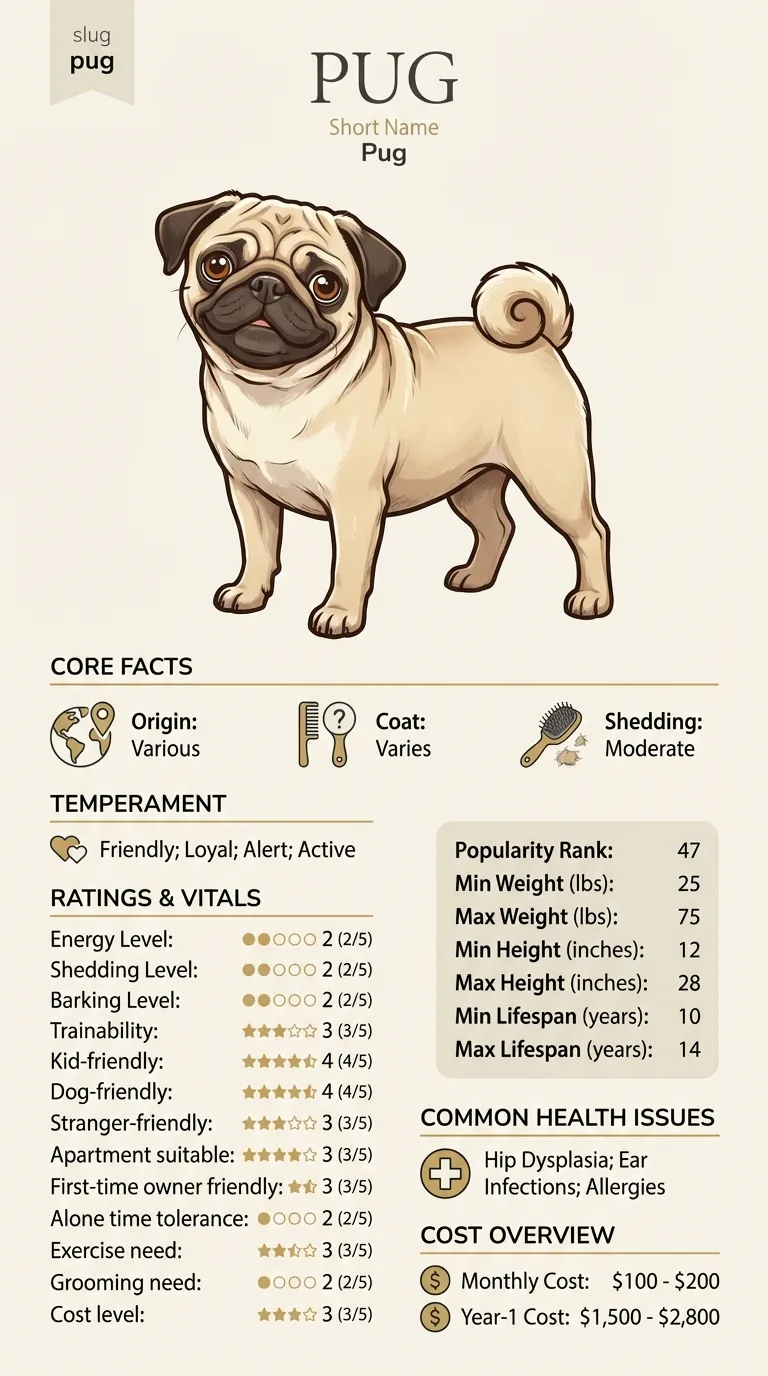
See all PUG health problems, which breeds are prone to elongated soft palate, or the full PUG breed guide for temperament, exercise needs and ownership costs.
Surgery itself typically takes under an hour, with a one-to-two-day hospital stay for monitoring. Full recovery and noticeably improved breathing typically follow within one to two weeks as swelling resolves.
Success means measurably quieter, easier breathing and improved heat and exercise tolerance after recovery, not a completely silent breathing pattern, since some baseline noise remains typical for this breed even after correction.
In a dog with typical facial proportions, the soft palate ends at an appropriate point relative to the throat's other structures, leaving the airway opening clear. In this breed, the jaw shortened through selective breeding, but the soft tissue itself didn't shrink proportionally, leaving it too long for the space available. The extra length droops downward and back, partially covering the opening to the trachea, particularly noticeable during inhalation when airflow pulls the tissue further into the obstructed position. This is part of why breathing effort in this breed often sounds worse during inhalation and can worsen further with excitement or heat, when breathing rate and effort both increase.
The procedure, often called a staphylectomy or palatoplasty, involves surgically shortening the soft palate to a length appropriate for the space available, performed under general anesthesia and often combined with correcting other airway structures, like narrowed nostrils, in the same surgical session. Recovery involves careful monitoring in the initial hours after surgery, since throat swelling from the procedure itself can temporarily narrow the airway further before it improves, which is why extended post-operative observation matters even more than usual for this specific procedure. Most dogs go home within a day or two and show noticeably quieter breathing and improved exercise tolerance once the initial swelling resolves over the following one to two weeks.

If you think your Pug has elongated soft palate, the plan is three steps: write down what you have seen and when it started, book a veterinary appointment rather than waiting for the next flare, and take video of the behaviour or symptom before you go — the thing you are worried about rarely happens in the consulting room. Screening in the parents covers brachycephalic airway syndrome (boas), pug dog encephalitis, corneal ulcers.
What the vet visit should produce is a diagnosis and a written plan, not just reassurance: what is being ruled out, what the monitoring interval is, and which signs mean you come back sooner. Ask what the treatment costs across a year rather than per visit, because that is the number that decides whether you are managing this condition or reacting to it.
Between appointments, keep a short log — dates, what you saw, what changed. It is the single most useful thing an owner brings to a follow-up, and for elongated soft palate it is often what separates a clear pattern from a guess.
Frequent reverse sneezing episodes and loud, effortful breathing during play prompted a vet visit for three-year-old Milo. A sedated airway exam specifically identified an elongated soft palate as the primary contributor, more so than his nostrils, which were only mildly narrowed. Milo's owner opted for surgical correction targeting just the soft palate. Within two weeks of recovery, his reverse sneezing episodes had essentially disappeared, and he could keep up on walks without the frequent stopping he'd needed before.
Key takeaway: Identifying which specific structure is most responsible for a dog's breathing struggle, rather than treating BOAS as one undifferentiated problem, allows for a more targeted, often more effective surgical correction.
It's the soft tissue at the back of the roof of the mouth that, in this breed, tends to be proportionally longer than the shortened jaw beneath it, allowing it to droop into and partially obstruct the airway opening near the throat.
A vet exam, sometimes including a brief sedated look at the throat, can assess soft palate length directly. Signs like snoring, gagging, or reverse sneezing episodes can suggest it, though a proper exam is needed to confirm.
The procedure surgically shortens the soft palate to an appropriate length for the available space, performed under general anesthesia, often alongside correcting other airway structures like narrowed nostrils in the same session.
The hours immediately after surgery need close monitoring, since throat swelling from the procedure itself can temporarily narrow the airway further before healing improves it. This is why extended post-operative observation is standard for this specific surgery.
Most dogs show noticeably quieter breathing and better exercise tolerance within one to two weeks, once initial post-surgical swelling has resolved.
It's frequently combined with correcting other airway structures, like widening narrowed nostrils, in the same surgical session, since dogs needing this correction often have more than one contributing structural issue.
It can be done at various ages, though many veterinary surgeons favor earlier intervention for significantly affected dogs to prevent secondary throat changes from developing further.
It droops into the airway opening near the throat, partially obstructing breathing, especially during inhalation.
A staphylectomy or palatoplasty, which surgically shortens the tissue to an appropriate length.
The first hours after surgery need close monitoring due to temporary throat swelling, but most dogs recover well.
Most dogs show noticeably quieter breathing within one to two weeks after swelling resolves.
It's a significant surgical expense, especially if combined with other corrections; get a specific estimate from your surgeon.
A one-page prep sheet for this condition: the signs, the questions to ask, what to get priced. Unlocks here.
You get: Vet visit prep sheet
No spam. One-click unsubscribe. See our privacy policy.
Preview page 1 before you decide.