Behavior
Which is the better overall choice, since they're so similar?
With size, cost, and apartment fit nearly tied, the deciding factors are grooming effort and trainability — both favor the Papillon if you want the lower-maintenance option.

Quick answer
Which is the better overall choice, since they're so similar?
With size, cost, and apartment fit nearly tied, the deciding factors are grooming effort and trainability — both favor the Papillon if you want the lower-maintenance option.
Papillon or Pomeranian? On paper they differ most on grooming need, and on the scales Papillon is the heavier at 5–10 lbs. Here is how the two compare on everything that shapes an ordinary week.
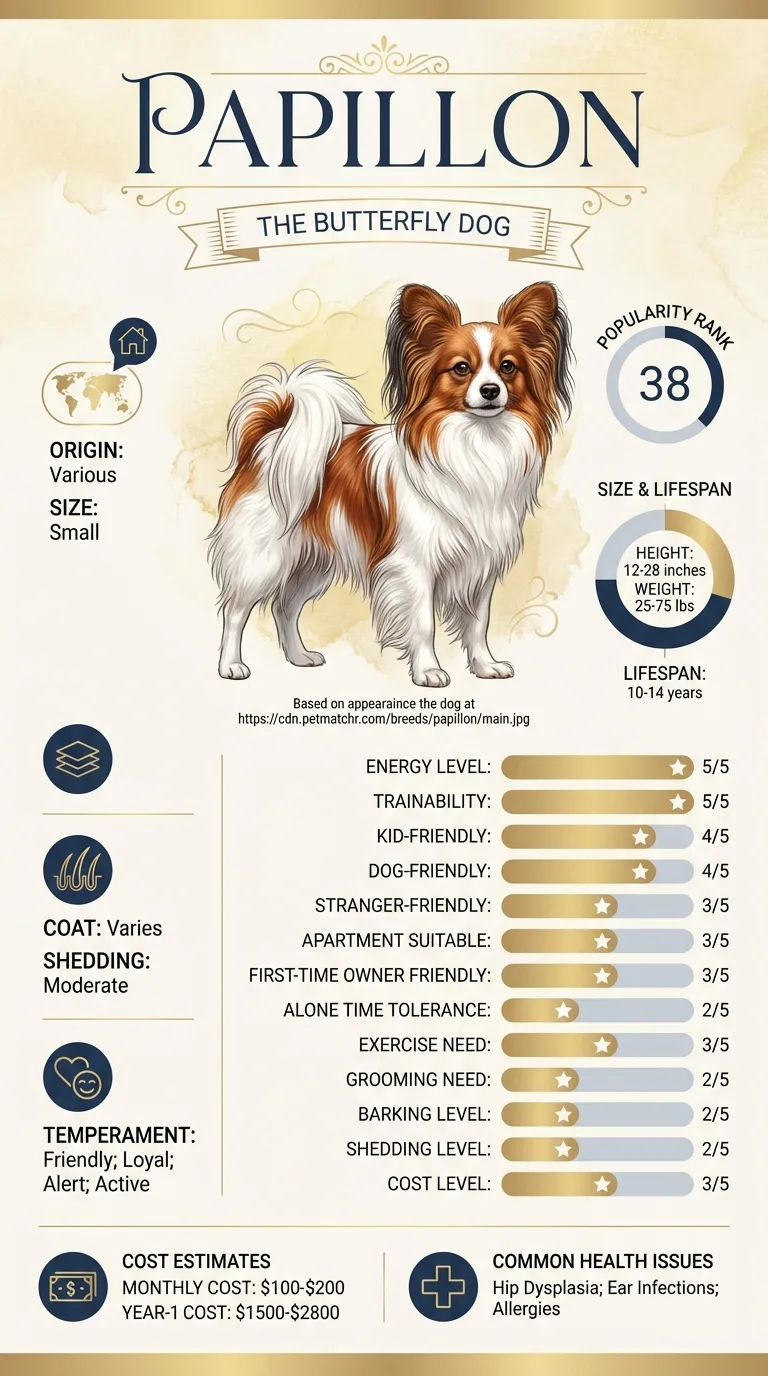
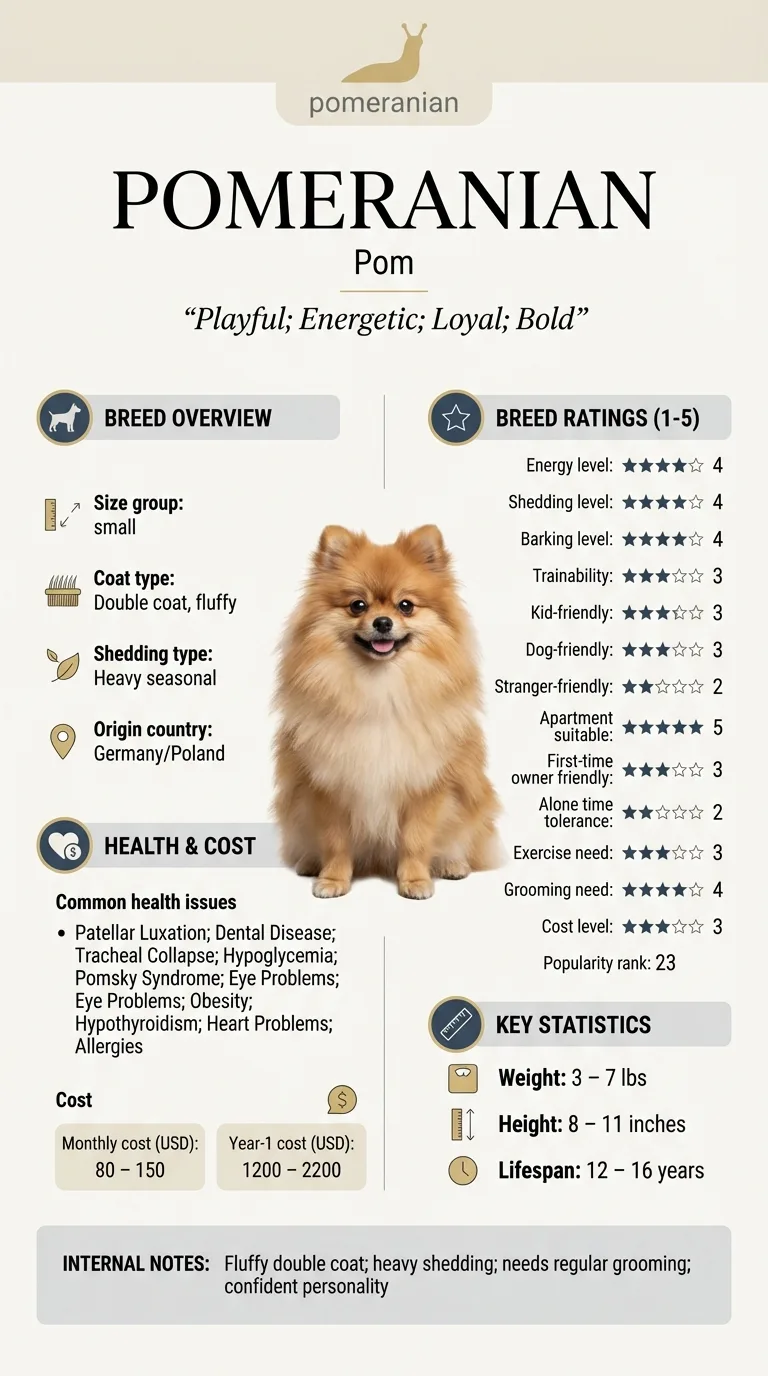
This is for someone already down to Papillon and Pomeranian and deciding between them. For this pair the decision usually turns on grooming need and shedding, so those are covered first and in most detail. Both rate 5/5 for flats, so housing does not settle this one. It is written for the decision rather than the breed history.
Between Papillon and Pomeranian, grooming need is what separates them, and Papillon is the lower-effort dog of the two to keep.
Choose Papillon if this is your first dog, you do not want a standing grooming appointment and shedding is a problem in your house.
Choose Pomeranian if a smaller dog suits your car, your home or your back and you want a dog that is more watchful with visitors.
| Feature | papillon | pomeranian | Winner |
|---|---|---|---|
| Size class | small | small | Equal |
| Weight | 5–10 lbs | 3–7 lbs | Equal |
| Height | 8–11 in | 8–11 in | Equal |
| Lifespan | 14–16 years | 12–16 years | papillon |
| Exercise need | Moderate (3/5) | Moderate (3/5) | Equal |
| Grooming need | Low (2/5) | High (4/5) | papillon |
| Shedding | Low (2/5) | High (4/5) | papillon |
| Energy level | High (4/5) | High (4/5) | Equal |
| Barking | High (4/5) | High (4/5) | Equal |
| Apartment suitability | Very high (5/5) | Very high (5/5) | Equal |
| Good for first-time owners | High (4/5) | Moderate (3/5) | papillon |
| Tolerates being alone | Low (2/5) | Low (2/5) | Equal |
| Trainability | Very high (5/5) | Moderate (3/5) | papillon |
| Good with kids | Moderate (3/5) | Moderate (3/5) | Equal |
| Good with other dogs | High (4/5) | Moderate (3/5) | papillon |
| Friendly to strangers | High (4/5) | Low (2/5) | papillon |
| Cost level | Low (2/5) | Moderate (3/5) | papillon |
| Coat | Long, silky single coat | Double coat, fluffy | Equal |
| Origin | Various | Germany/Poland | Equal |
| Typical monthly cost | $80–$150 | $80–$150 | Equal |
| Typical first-year cost | $1,100–$2,300 | $1,200–$2,200 | Equal |
These are the two closest-matched breeds in this batch by raw size: the Papillon runs 5–10 lbs, the Pomeranian 3–7 lbs, and both stand 8–11 inches at the shoulder — an exact tie on height. If you're choosing based on size alone, there's barely a difference to work with. The Pomeranian's fluffy coat can make it look bigger than its weight suggests, which is worth remembering if you're picking based on looks alone.
Exercise need and energy level both tie — moderate (3/5) exercise, high (4/5) energy, for both breeds. This is a genuinely even split; neither breed asks more of your schedule than the other. Both are playful, active little dogs indoors, and neither demands long structured outings to stay satisfied — a short walk plus some living-room play covers it for either one.
The coats are where these two actually diverge. The Papillon rates low (2/5) for both grooming and shedding, its single coat needing only regular brushing. The Pomeranian rates high (4/5) on both — its double coat is fluffier by design and blows out seasonally, meaning more brushing and more fur around the house. If you're sensitive to loose fur on furniture, that gap alone might settle the decision.
Both breeds tie at very high (5/5) for apartment suitability and high (4/5) for barking, so this section is a wash. Tolerating time alone ties too, both low (2/5), so neither is the dog to leave home for a long workday without a plan. Whichever you choose, plan on some kind of midday check-in or company if you're gone eight hours.
The Papillon pulls ahead here: very high (5/5) trainability against the Pomeranian's moderate (3/5), and high (4/5) suitability for first-time owners against the Pomeranian's moderate (3/5). Papillons consistently rank among the more biddable toy breeds; Pomeranians can be a bit more independent-minded. That independence isn't stubbornness so much as a Pomeranian doing things on its own terms, which some owners find charming rather than frustrating.
Good-with-kids ties at moderate (3/5) for both — neither breed is rated as an ideal match for boisterous young children, common among toy breeds this small. The Papillon rates ahead with other dogs, high (4/5) against moderate (3/5), and with strangers, high (4/5) against the Pomeranian's low (2/5). Careful supervision with kids is a good idea with either breed, regardless of which one you pick.
Lifespans overlap heavily — 14 to 16 years for the Papillon, 12 to 16 for the Pomeranian — with the Papillon's floor sitting higher. Health risks overlap more here than in most comparisons: both lists include patellar luxation, dental disease, and a form of tracheal collapse. The Pomeranian's list runs longer overall, adding hypoglycemia, obesity, and heart problems. Regular dental care and weight management are worth prioritizing with either breed given how much their lists overlap.
Monthly cost is an exact tie at $80–$150 for both breeds, though the Pomeranian's cost level rates moderate (3/5) against the Papillon's low (2/5). First-year ranges are close but not identical — $1,200–$2,200 for the Pomeranian against $1,100–$2,300 for the Papillon. Grooming for the Pomeranian's fluffier double coat likely accounts for what separates the two cost-level ratings, even with the monthly figures lining up exactly.
Papillon weighs 5–10 lbs and lives 14–16 years; Pomeranian weighs 3–7 lbs and lives 12–16 years. The two diverge most on grooming need, shedding and trainability and 1 other rated axes. They are level on tolerates being alone, apartment suitability and barking, so those cannot decide it. In the table, a "winner" means easier for an ordinary household — not better. Size, coat and origin are recorded without a verdict. Because both breeds are scored the same way, the gaps are reliable even where the absolute numbers are rough.

Very close — 5–10 lbs for the Papillon against 3–7 lbs for the Pomeranian, with both standing 8–11 inches tall. Height is an exact tie.
The Pomeranian, rated high (4/5) against the Papillon's low (2/5) — its fluffy double coat blows out seasonally in a way the Papillon's single coat doesn't.
The Papillon, rated very high (5/5) against the Pomeranian's moderate (3/5). It also rates higher for first-time owners, high (4/5) versus moderate (3/5).
Yes — both tie at very high (5/5) for apartment suitability. Expect barking either way, though; both also tie at high (4/5) on that score.
Nearly identical — both run $80–$150 a month, with first-year costs of $1,100–$2,300 for the Papillon and $1,200–$2,200 for the Pomeranian.
More than most pairs on this site — both lists include patellar luxation, dental disease, and a collapsing/tracheal collapse issue. The Pomeranian's list is longer, adding hypoglycemia and heart problems.
The Papillon, rated high (4/5) against the Pomeranian's low (2/5) — the Pomeranian tends to be more reserved around people it doesn't know.
With size, cost, and apartment fit nearly tied, the deciding factors are grooming effort and trainability — both favor the Papillon if you want the lower-maintenance option.
An exact tie: $80–$150 for both breeds.
Neither — exercise need ties at moderate (3/5) for both.
Close, with the Papillon slightly ahead: 14–16 years against the Pomeranian's 12–16.
Secure checkout on Stripe. We never see your card.
7-day money-back guarantee. Instant access.
Health information here is general and is not veterinary advice. If your dog shows pain, sudden behaviour change, or worsening symptoms, consult a licensed veterinarian.
Some links on this site are affiliate links. We may earn a commission at no extra cost to you, and we only suggest products we believe are helpful for dog owners.
We research and check what we publish, but we do not warrant that any figure, date, price, or statement is accurate, complete, or current, and we accept no liability for any loss, cost, injury, or other harm arising from the use of this site. Use it as one reference among several. You remain responsible for your own decisions and for your dog's care - confirm anything that matters with a licensed veterinarian or another qualified professional before you act on it. Full disclaimer.
Match your lifestyle to the right dog.
Take quizNot sure which breed is right for you? Take our 2-minute quiz to find out.
Take the quiz