Health
Is this a documented condition in this breed?
No, it's better recognized in other breeds and would be an atypical, rare finding here.

Quick answer
Is this a documented condition in this breed?
No, it's better recognized in other breeds and would be an atypical, rare finding here.
A muscle that contracts fine but forgets how to let go produces a walk that looks stiff, then loosens up, then stiffens again the moment the dog pauses.
Owners of puppies showing an unusual stiff-legged gait after rest that loosens with continued movement, particularly if a breeder has mentioned a family history of muscle stiffness.
This guide is not medical advice. If your dog shows pain, sudden behavior change, or worsening symptoms, consult a licensed veterinarian.
Some links may be affiliate links. We may earn a commission at no extra cost to you. We only suggest products we believe are helpful for dog owners.
We research and check what we publish, but we do not warrant that any figure, date, price, or statement is accurate, complete, or current, and we accept no liability for any loss, cost, injury, or other harm arising from the use of this site. Use it as one reference among several. You remain responsible for your own decisions and for your dog's care - confirm anything that matters with a licensed veterinarian or another qualified professional before you act on it. Full disclaimer.
Myotonia congenita is a genetic muscle disorder where a chloride channel defect prevents muscles from relaxing normally after contracting, producing a stiff, stumbling gait after rest that loosens with continued movement. It isn't part of this breed's documented health profile and would be a rare, atypical finding, but understanding the mechanism matters if it's ever suspected.
This is not a condition documented as occurring in this breed. It's recognized mainly in a handful of other specific breeds, making its appearance here something a vet would treat as a rare and notable finding requiring proper workup rather than an expected possibility.
This breed's documented health record doesn't include myotonia congenita, and the condition's known genetic basis is concentrated in a small number of other specific breeds where the causative mutations have been identified and studied.
Cold weather is a recognized trigger for temporarily worsening the muscle stiffness in dogs that do have this condition, regardless of breed, though it doesn't cause the underlying genetic defect itself.
Talk to your vet about any unusual, persistent gait abnormality, especially one with a distinctive stiffness-then-loosening pattern after rest. This isn't an emergency on its own, but it warrants a proper workup to rule out both this rare condition and far more likely explanations like hip dysplasia.
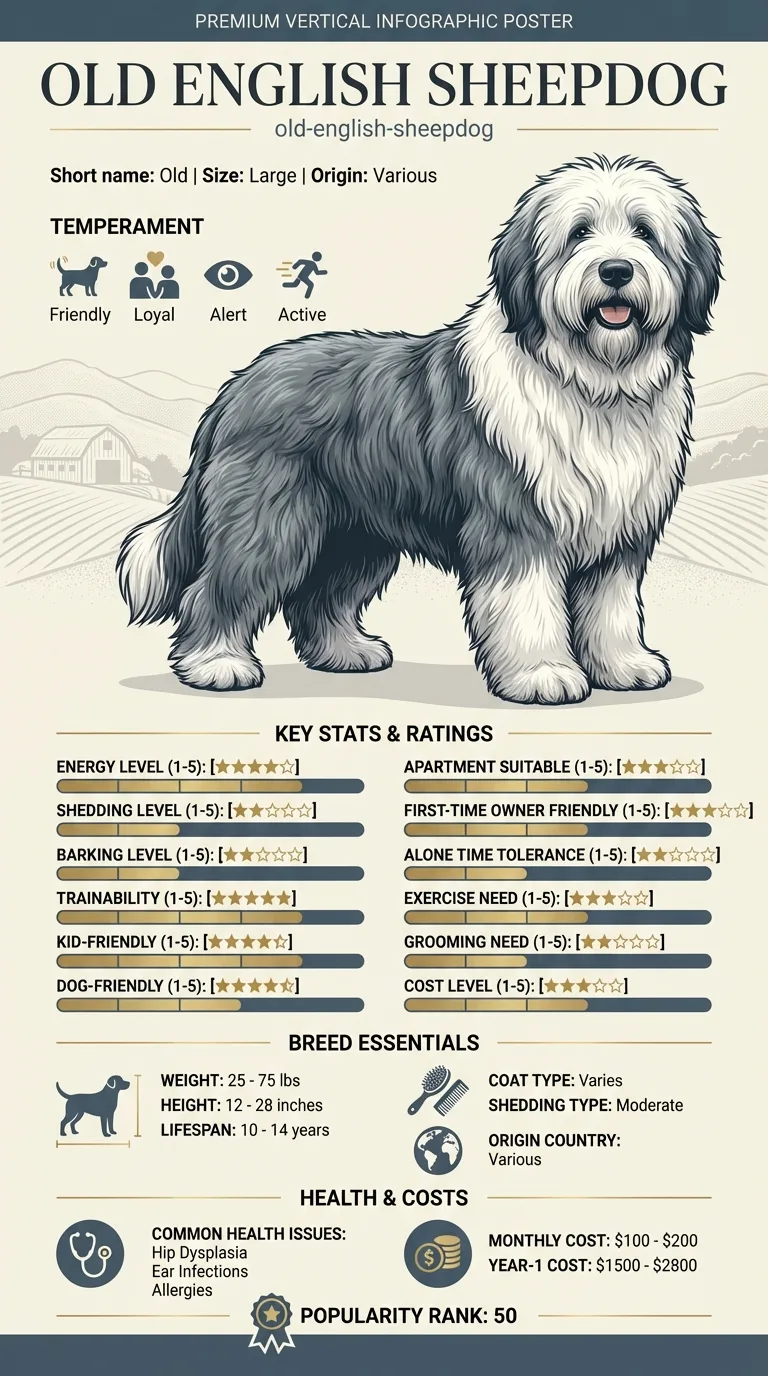
See all OLD English Sheepdog health problems, which breeds are prone to myotonia congenita, or the full OLD English Sheepdog breed guide for temperament, exercise needs and ownership costs.
This is a lifelong genetic condition present from birth in the dogs it does affect, with no progression expected beyond what's already present, unlike a degenerative disease. Diagnosis, if pursued, typically takes a single specialized exam and test.
Success looks like an accurate diagnosis that rules in or out this rare condition, and for a dog that does have it, a stable, comfortable life with manageable stiffness rather than an expectation of it resolving.
Normal muscle function depends on a chloride channel in the cell membrane that helps the muscle fiber reset after contracting, allowing it to relax before the next movement. In myotonia congenita, a genetic mutation impairs that channel, so muscles keep firing and stay contracted longer than intended after each use. The visible result is a puppy that looks stiff and awkward getting up after resting, sometimes described as a bunny-hop or a stumbling first few steps, that noticeably loosens up and moves more normally the longer it continues walking. Some affected puppies also show visibly enlarged muscle bulk, particularly in the hindquarters and face, from the repeated, prolonged contractions. It's a genetic condition present from birth, not something that develops later or is caused by injury or overexertion.
Diagnosis typically involves a clinical exam noting the characteristic stiffness-then-loosening pattern, sometimes supported by electromyography, a test measuring the muscle's electrical activity, which shows a distinctive pattern in myotonic muscle. Genetic testing exists for the specific mutations identified in the breeds where this condition is better documented, though its relevance to a case in this breed specifically would need to be confirmed with a vet familiar with the condition. There's no cure, but many affected dogs live full, reasonably comfortable lives with some permanent movement quirks, particularly stiffness after rest, managed through consistent activity and avoiding triggers like cold weather that can worsen the stiffness temporarily.

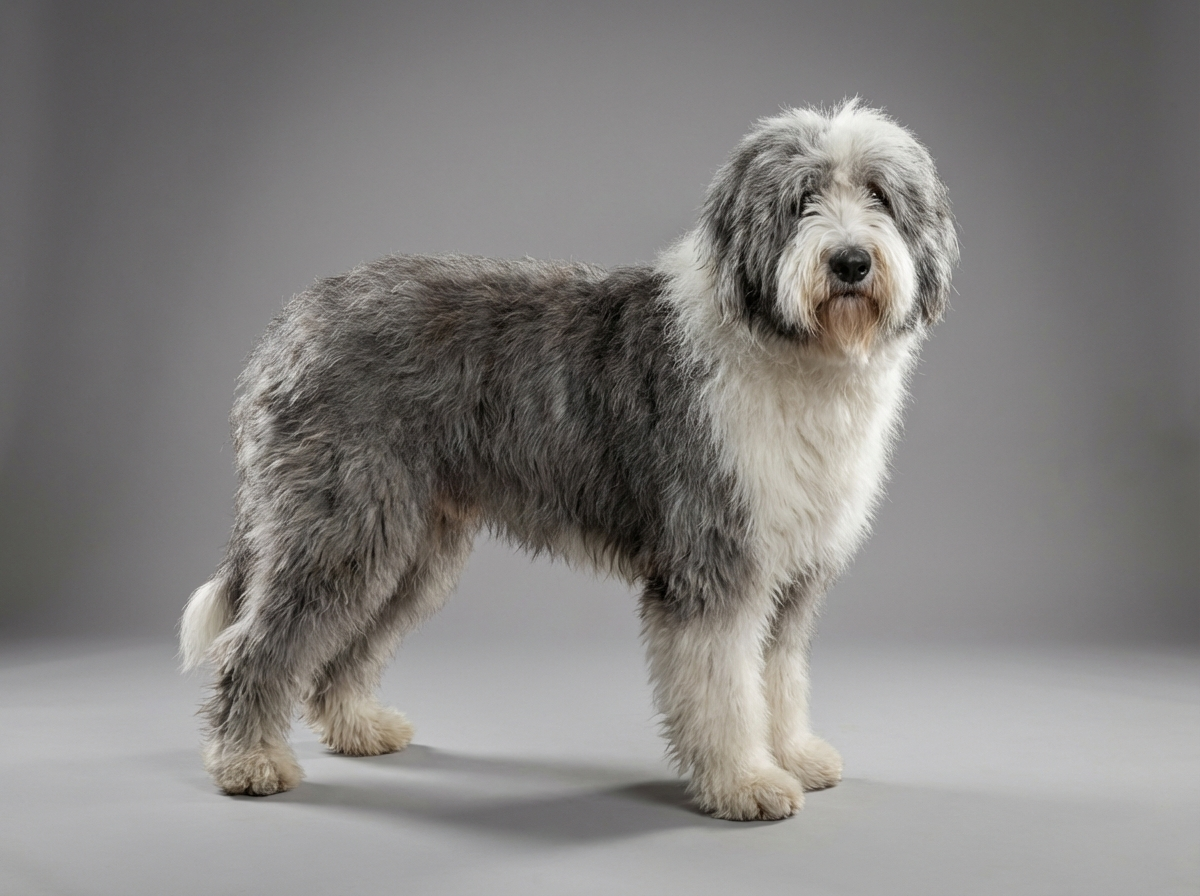
Sage, an Old English Sheepdog puppy in Eugene, would get up from naps looking oddly stiff and stumbling for the first several steps, then walk completely normally within a minute or two. Her owner Phil initially assumed it was just puppy clumsiness, but the pattern was consistent enough by four months old that he brought it up with his vet. Given how atypical the pattern was for a hip or growth-related issue, Sage's vet referred her to a specialist who confirmed myotonia congenita via electromyography, a rare and unexpected finding for the breed. There's no cure, but Sage has done well keeping to a consistent activity routine and staying warm in cold weather, with her stiffness remaining a manageable quirk rather than a worsening problem.
Key takeaway: A puppy's oddly specific stumble-then-smooth-out gait pattern was unusual enough that Phil's vet didn't just default to the more common explanations, and that willingness to dig further named a rare condition instead of leaving it a mystery.
No, it isn't part of this breed's documented health profile. It's better recognized in a handful of other breeds, and its occurrence here would be considered a rare, atypical finding.
Affected dogs often look stiff, stumbling, or bunny-hopping when first getting up after rest, then progressively loosen up and move more normally the longer they keep walking.
It isn't generally considered a painful condition, though the muscle stiffness can be uncomfortable or limiting, particularly in cold weather or after long periods of rest.
A vet familiar with the condition can often recognize the characteristic stiffness-then-loosening pattern on exam, with electromyography available to confirm the distinctive muscle electrical activity if needed.
There's no cure, since it's a genetic channel defect present from birth, but many affected dogs manage well long-term with consistent activity and avoiding known triggers like cold exposure.
Generally no, myotonia congenita affects muscle function and comfort rather than being a life-threatening condition in most documented cases across the breeds where it does occur.
If a specific mutation has been identified and a genetic test is available and validated for the line in question, testing breeding stock is a reasonable precaution to avoid producing more affected puppies.
No, it's better recognized in other breeds and would be an atypical, rare finding here.
Stiff and stumbling right after getting up, loosening progressively the more the puppy moves.
Not typically painful, though the stiffness can be uncomfortable or limiting, especially in cold weather.
No, it's a lifelong genetic condition, though many affected dogs manage well with consistent activity and trigger avoidance.
Electromyography can confirm the distinctive muscle pattern, and genetic testing may be available depending on the specific mutation involved.
A one-page prep sheet for this condition: the signs, the questions to ask, what to get priced. Unlocks here.
You get: Vet visit prep sheet
No spam. One-click unsubscribe. See our privacy policy.
Preview page 1 before you decide.