Health
Why does this breed get ear infections so easily?
Heavy, hair-covered ear leather reduces airflow, creating conditions where yeast and bacteria thrive, regardless of allergies.

Quick answer
Why does this breed get ear infections so easily?
Heavy, hair-covered ear leather reduces airflow, creating conditions where yeast and bacteria thrive, regardless of allergies.
If you've already ruled out or treated allergies and the ear infections keep coming back anyway, the ear's physical structure itself is probably still working against you.
This is for owners looking for a concrete, repeatable routine, not just a diagnosis. It's especially relevant if allergy management alone hasn't fully solved the problem.
This guide is not medical advice. If your dog shows pain, sudden behavior change, or worsening symptoms, consult a licensed veterinarian.
Some links may be affiliate links. We may earn a commission at no extra cost to you. We only suggest products we believe are helpful for dog owners.
We research and check what we publish, but we do not warrant that any figure, date, price, or statement is accurate, complete, or current, and we accept no liability for any loss, cost, injury, or other harm arising from the use of this site. Use it as one reference among several. You remain responsible for your own decisions and for your dog's care - confirm anything that matters with a licensed veterinarian or another qualified professional before you act on it. Full disclaimer.
Check this first
A head tilt, loss of balance, circling, or a dog that seems disoriented alongside ear symptoms can indicate the infection has progressed to affect the inner ear or balance system, and needs prompt veterinary attention rather than routine at-home cleaning. Severe pain, significant swelling of the ear flap, or a strong odor with thick discharge also warrant a vet visit sooner rather than later.
Ordinary recurring infections, redness, mild odor, some scratching, without those more serious signs, are uncomfortable but not an emergency, and are well-addressed with a proper vet-guided treatment course followed by a consistent maintenance routine.
If any of these apply, call your vet or an emergency clinic now. The rest of this page is for the cases that are not an emergency.
Recurring ear infections in this breed are driven both by allergies and, independently, by the physical structure of heavy, hair-covered ear leather that limits airflow to the canal. This page focuses on the practical, routine-based maintenance that helps regardless of whether allergies are the underlying trigger.
Recurring ear infections are one of the most frequently reported issues in heavily-eared, coated breeds generally, and this breed's ear structure makes it a genuinely common, ongoing maintenance concern.
This breed's heavy ear leather, covered in the same dense coat as the rest of the body, physically restricts airflow to the ear canal. That reduced airflow creates a warm, humid environment that supports yeast and bacterial overgrowth on its own, separate from whatever role allergies may or may not be playing in a given dog.
Moisture exposure from baths, swimming, or humid weather, combined with infrequent cleaning and hair left growing inside the canal, are the main environmental contributors to how often infections recur.
Talk to your vet if infections recur more than two to three times a year despite a consistent maintenance routine. Seek prompt care for a head tilt, loss of balance, disorientation, severe pain, or significant ear flap swelling.
A lot of recurring ear infections come down to routine gaps rather than a missed diagnosis.
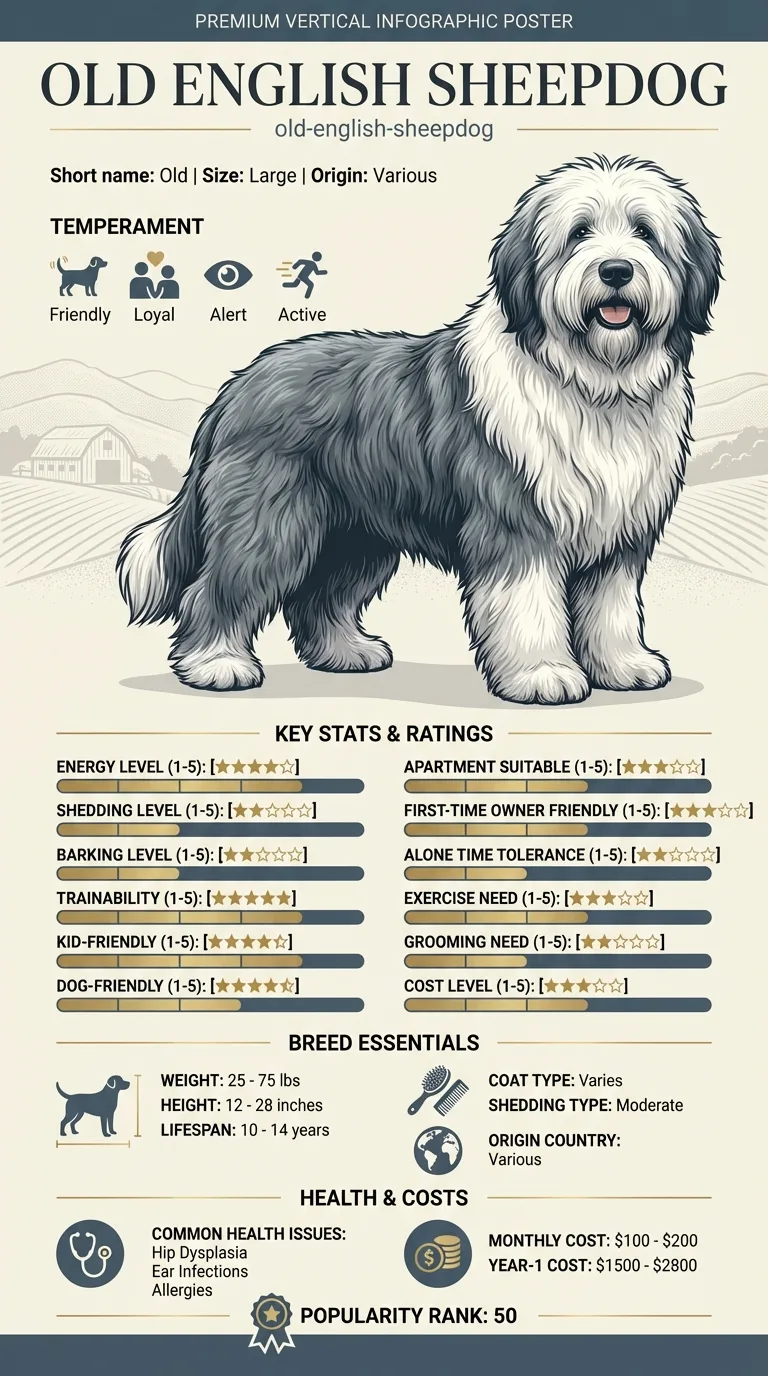
See all OLD English Sheepdog health problems, which breeds are prone to ear infections, or the full OLD English Sheepdog breed guide for temperament, exercise needs and ownership costs.
A proper maintenance routine typically shows a noticeable drop in recurrence within a couple of months of consistent use, though results depend on addressing any underlying allergy alongside the routine itself.
Success looks like ear infections becoming rare or occasional rather than routine, maintained through a consistent cleaning and drying habit rather than only treating flares as they happen.
Bailey, a five-year-old Old English Sheepdog, had completed a full allergy workup and food trial that helped somewhat, but his ears still flared up every couple of months. His vet pointed out that his ear canal hair hadn't been addressed and his cleaning routine was purely reactive. After adding a biweekly cleaning schedule, having a groomer trim the ear canal hair regularly, and thoroughly drying his ears after every bath, Bailey went nearly a year without another infection.
Key takeaway: Allergy treatment addresses one part of the picture, but in this breed, the ear's physical structure needs its own ongoing routine regardless of what's driving any given flare.
The physical structure matters on its own: heavy, hair-covered ear leather reduces airflow to the ear canal, creating a warm, humid environment where yeast and bacteria can thrive independent of any allergic trigger.
This varies by individual dog, but a weekly to biweekly maintenance cleaning with a vet-recommended solution is a reasonable routine for a breed prone to recurring infections, with more frequent cleaning during an active flare as directed by your vet.
Many groomers and vets recommend trimming or plucking hair inside and around the ear canal for breeds prone to infections, since it improves airflow. Ask your groomer or vet about the best approach for your dog specifically.
It's generally better to avoid inserting cotton swabs deep into the ear canal, since this can push debris further in or cause injury. Use a vet-recommended liquid cleaner, let your dog shake their head, then wipe the visible outer ear.
Gently dry the outer ear and surrounding hair with a towel, and consider a vet-approved drying solution afterward if your dog is prone to infections, since trapped moisture is a major contributing factor.
Often because treatment addressed the active infection but a maintenance routine wasn't kept up afterward. Consistent, ongoing care, not just treatment during flares, is what actually reduces recurrence.
A basic vet visit and medication for a routine ear infection often costs under two hundred dollars, though costs rise if the infection is severe, recurring, or requires more advanced diagnostics.
Heavy, hair-covered ear leather reduces airflow, creating conditions where yeast and bacteria thrive, regardless of allergies.
Weekly to biweekly maintenance cleaning is reasonable for a breed prone to recurring infections.
Yes, many groomers and vets recommend it to improve airflow to the ear canal.
Avoid deep insertion; use a vet-recommended liquid solution and wipe only the visible outer ear.
A head tilt, loss of balance, or disorientation, which needs prompt veterinary attention.
A one-page prep sheet for this condition: the signs, the questions to ask, what to get priced. Unlocks here.
You get: Vet visit prep sheet
No spam. One-click unsubscribe. See our privacy policy.
Preview page 1 before you decide.