Health
What is the defining feature of degenerative myelopathy?
It is painless. Progressive hind-limb weakness with no pain on examination points here; weakness with pain points to hips, lower back or disc compression instead.

Quick answer
What is the defining feature of degenerative myelopathy?
It is painless. Progressive hind-limb weakness with no pain on examination points here; weakness with pain points to hips, lower back or disc compression instead.
The single most useful feature of this disease is what it does not do. It does not hurt. A Newfoundland whose hind end is failing and who flinches when you press the lower back almost certainly has something else, and that something else is often treatable.
For owners of older Newfoundlands whose back legs have started to go, who have found DM online and want to know whether it fits, and for anyone who has had an SOD1 result come back and does not know what to do with it.
This guide is not medical advice. If your dog shows pain, sudden behavior change, or worsening symptoms, consult a licensed veterinarian.
Some links may be affiliate links. We may earn a commission at no extra cost to you. We only suggest products we believe are helpful for dog owners.
Degenerative myelopathy is a progressive, painless disease of the spinal cord causing hind-limb weakness that advances over months and has no treatment that halts it. It is documented in specific breeds that do not include the Newfoundland. For an owner of this breed, its main practical role is as a diagnosis to be excluded rather than assumed, because the conditions it resembles in a giant breed, hip disease and spinal compression, are far more common here and are considerably more manageable.
Degenerative myelopathy is common in the breeds classically associated with it and is not a documented Newfoundland condition. Hind-limb weakness in an older Newfoundland is a frequent presentation, but the causes behind it are usually hip dysplasia and its arthritis, lumbosacral disease or slowly compressive disc disease. The practical consequence is that this diagnosis should sit at the end of a Newfoundland's differential list, not the beginning.
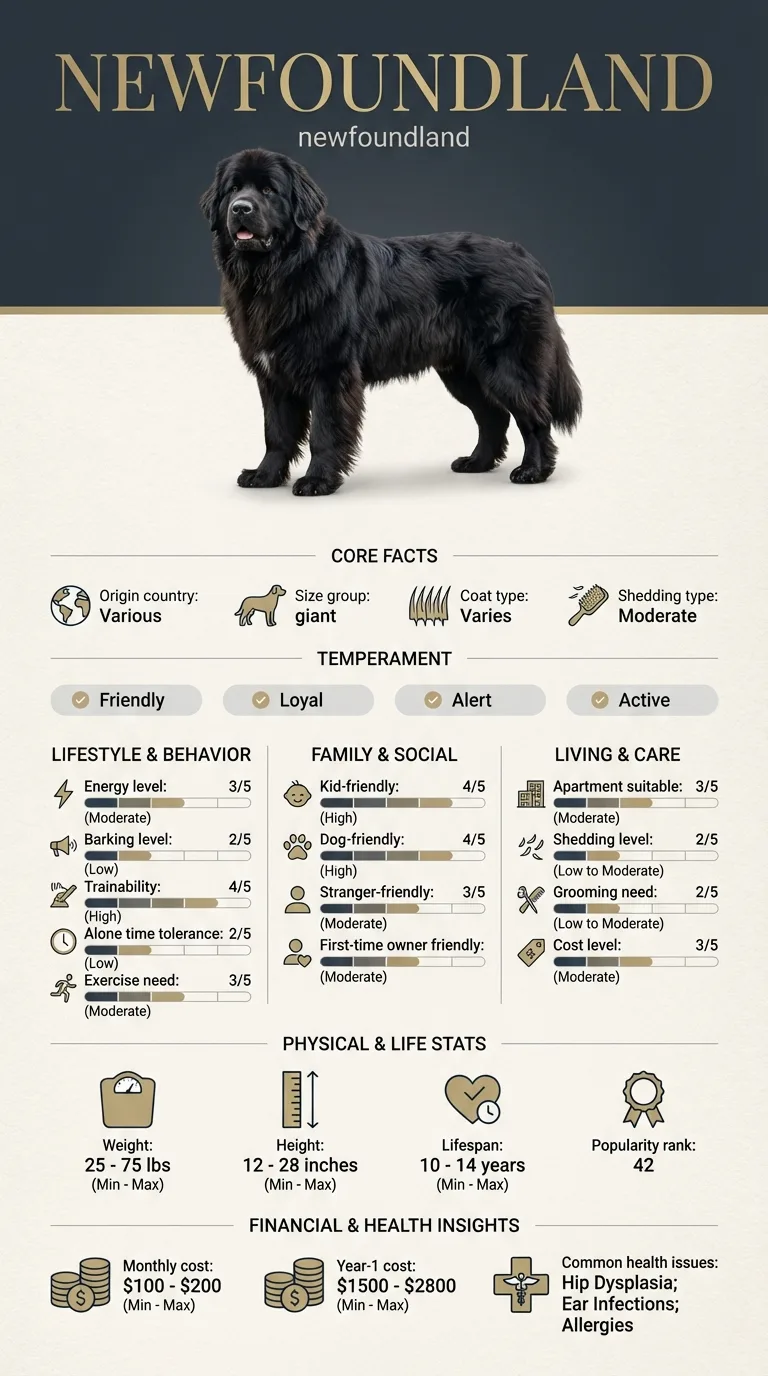
There is no established Newfoundland predisposition to degenerative myelopathy, and claiming one would be inaccurate. The breed features that matter here are the ones that create the mimics: hip dysplasia heads the Newfoundland's documented health issues and produces hind-end difficulty, and a body of 100 to 150 pounds on a 26 to 28 inch frame loads the lower spine enough that lumbosacral degeneration is common in older dogs. Size also determines what a diagnosis means in practice, because supporting the hindquarters of a giant breed with equipment is a fundamentally different undertaking from doing so for a Corgi.
Nothing in the environment causes this disease, and owners of affected dogs should not look for something they did wrong. Environment matters entirely on the management side. Smooth flooring makes a proprioceptively impaired dog slip and lose confidence. Stairs become impassable. Gardens with steps and uneven ground become hazards. Bedding and pressure points matter increasingly as a dog spends more time lying down. And the availability of a second adult to lift and fit equipment is often the factor that determines how long home care remains feasible for a dog this size.
Book a neurological examination for any progressive change in hind-limb function, and be explicit that you want treatable causes excluded before any diagnosis of exclusion is accepted. Ask specifically whether there is pain on examination and whether imaging is indicated. Seek emergency care immediately for a sudden inability to stand, sudden dragging of both hind legs, loss of bladder or bowel control, an inability to pass urine, or severe pain, because acute spinal cord compression is time-critical and is a completely different situation from a slow painless decline. A dog who deteriorates markedly over days rather than months does not have degenerative myelopathy and needs urgent assessment.
See all Newfoundland health problems, which breeds are prone to degenerative myelopathy dm, or the full Newfoundland breed guide for temperament, exercise needs and ownership costs.
Where the disease is genuinely present, the usual course is a gradual decline over many months, beginning with subtle coordination loss in one hind limb and progressing to an inability to support the hindquarters. In a giant breed, the point at which home care becomes impractical arrives earlier than the disease's full course, and owners should discuss that honestly with their vet in advance rather than in crisis. Where the diagnosis turns out to be hip disease or spinal compression instead, the outlook is very different and often substantially improvable.
The first measure of success is diagnostic: every treatable cause has been properly excluded, so nobody is managing a fixable problem as an unfixable one. Beyond that, success is maintained muscle, safe footing, skin that stays intact, continence managed with dignity, and a dog who remains bright and engaged. It is a management goal rather than a recovery goal, and being told that plainly at the start is what allows owners to plan rather than hope.
Degenerative myelopathy is a disease of nerve conduction, not of structures that carry pain fibres. The dog is not comfortable in the sense of being well, but the process itself is painless, and this is the sharpest available distinction from the conditions it imitates.
A Newfoundland's hind end can fail for several reasons, and most of them hurt. Hip dysplasia and the arthritis that follows it, which is the breed's most commonly listed health issue, cause pain on manipulation of the hip and difficulty rising. Lumbosacral disease produces pain on pressure just in front of the tail base and is worse after activity. Cervical spondylomyelopathy in giant breeds can produce neck pain alongside an unsteady gait. Slowly bulging disc disease can be painful too. Any of these will make a dog flinch, dip, or turn its head when the sore area is examined.
Degenerative myelopathy does none of that. It presents as a progressive, usually asymmetrical loss of hind-limb coordination in an older dog with no pain: scuffed nails, feet that cross over, knuckling, a wobble that becomes a stagger. The dog remains bright, eats well and shows no distress on handling.
That contrast is why a proper neurological examination matters so much before anyone accepts a diagnosis. Degenerative myelopathy is untreatable and progressive; hip pain, lumbosacral pain and disc compression are all things that can be improved. Reaching for the untreatable explanation first, on the basis of an internet search and a gene test, is how treatable dogs get written off.

Genetic testing for the SOD1 variant is widely available and widely misunderstood. Here is what a result actually supports.
If you think your Newfoundland has degenerative myelopathy, the plan is three steps: write down what you have seen and when it started, book a veterinary appointment rather than waiting for the next flare, and take video of the behaviour or symptom before you go — the thing you are worried about rarely happens in the consulting room. Screening in the parents covers hip dysplasia, subaortic stenosis, dilated cardiomyopathy.
What the vet visit should produce is a diagnosis and a written plan, not just reassurance: what is being ruled out, what the monitoring interval is, and which signs mean you come back sooner. Ask what the treatment costs across a year rather than per visit, because that is the number that decides whether you are managing this condition or reacting to it.
Between appointments, keep a short log — dates, what you saw, what changed. It is the single most useful thing an owner brings to a follow-up, and for degenerative myelopathy it is often what separates a clear pattern from a guess.
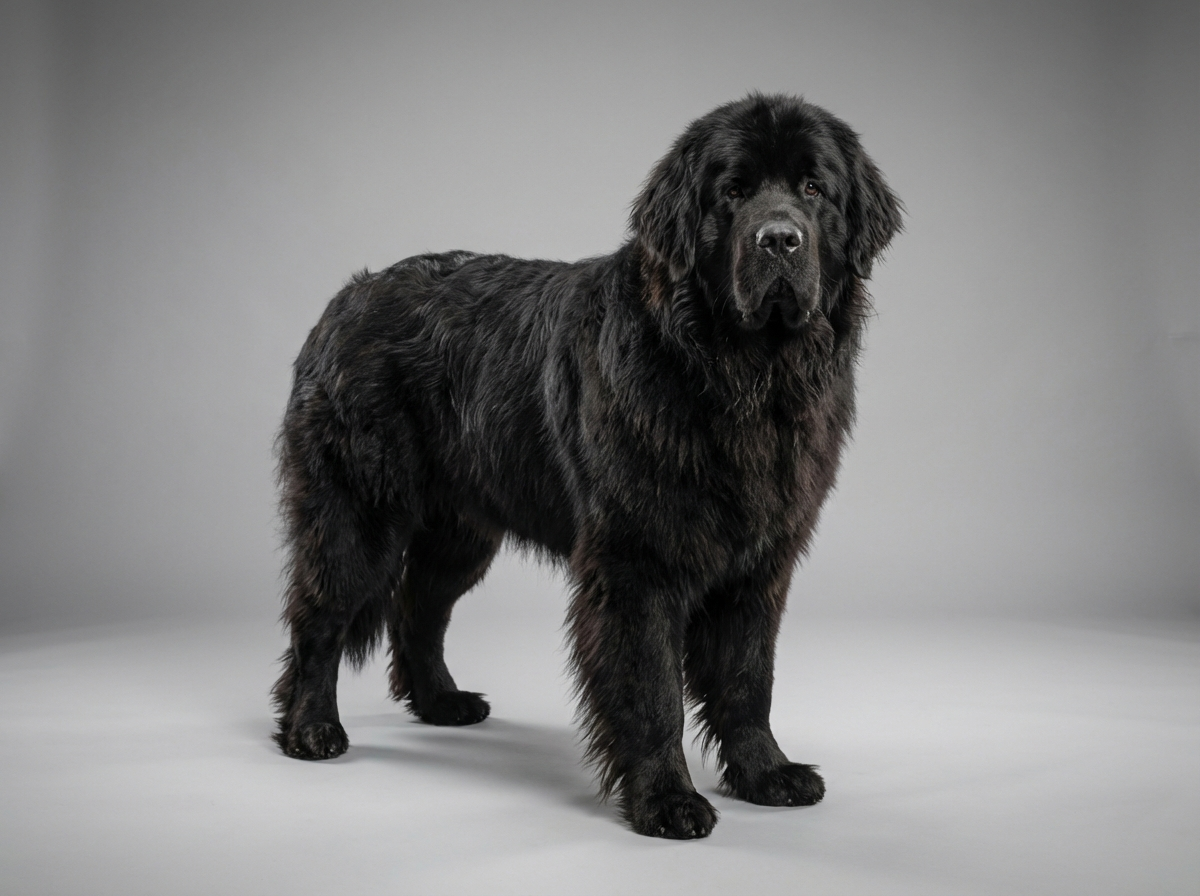
Halvard was nine, a 134-pound Newfoundland whose back end had been getting unreliable for about four months. His owner Anneke ordered a genetic panel, which came back at risk for the SOD1 variant, and she spent a bleak fortnight reading about wheelchairs. Her vet asked one question during the examination that changed the direction: does it hurt? Anneke had not thought about it in those terms. The vet ran a hand firmly along the spine and Halvard dipped his back and turned his head sharply just in front of the tail base, twice. He was referred. The neurologist confirmed pain on lumbosacral extension, found reduced proprioception worse on the left, and imaged him. The finding was lumbosacral degeneration compressing the nerve roots, not degenerative myelopathy. The genetic result was a risk marker in a dog who happened to carry it, which the neurologist explained is not unusual. Halvard was managed medically: eleven pounds of weight loss, a pain plan, a ramp, runners through the house and a twelve-week rehabilitation programme. He was walking better at ten than he had at nine. Anneke's view is unambiguous. The gene test nearly stopped her looking, and the only reason it did not was a vet who asked whether the dog was in pain.
Key takeaway: Painless decline points to degenerative myelopathy; painful decline does not. In a Newfoundland, exclude hips and spine properly before accepting an untreatable diagnosis, and never let a risk gene result end the investigation.
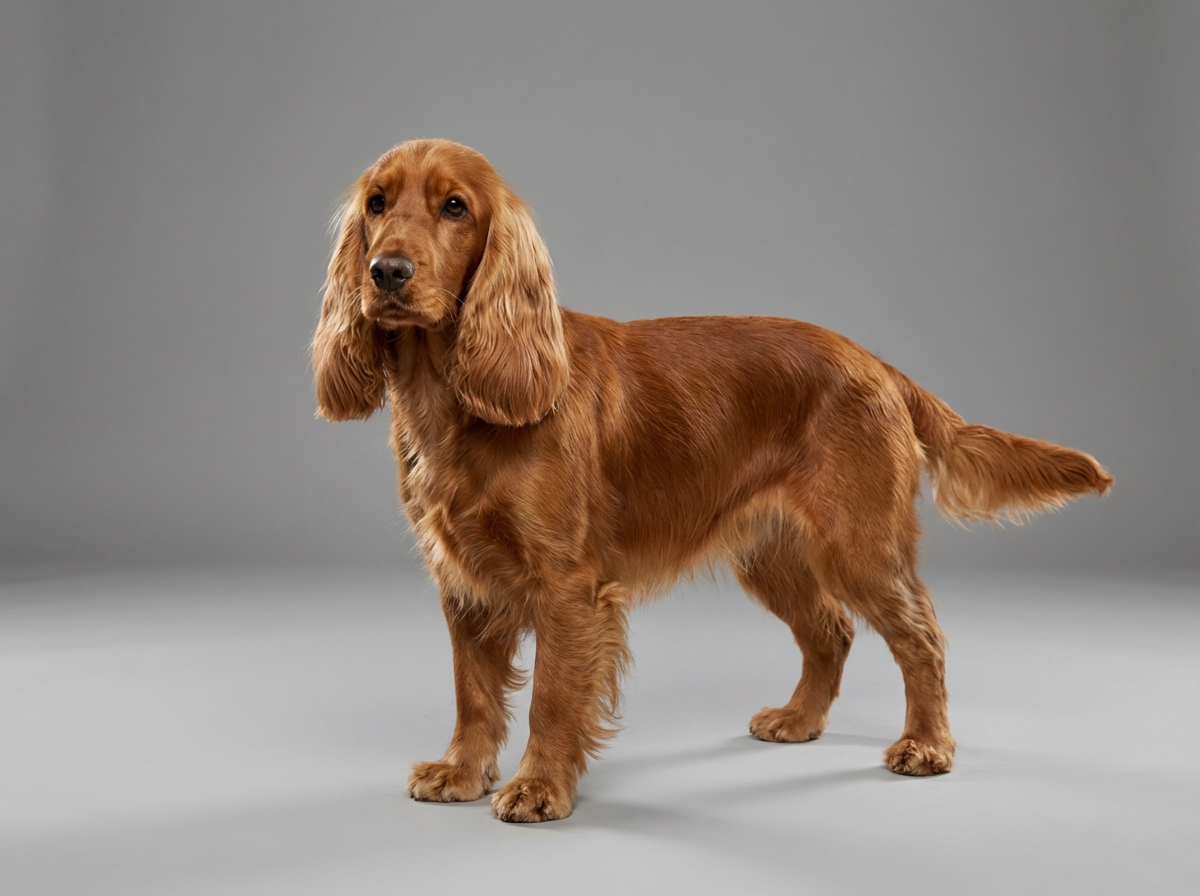
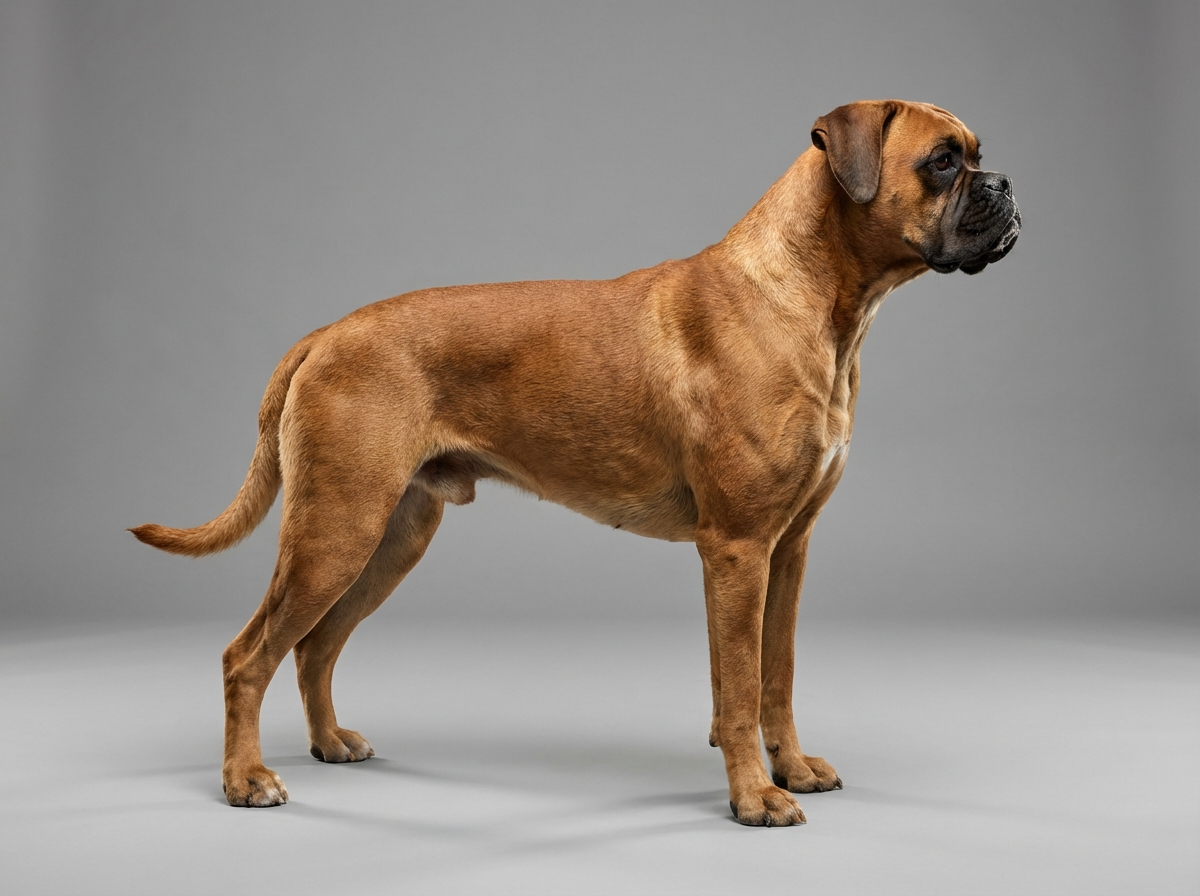
It is not a condition the breed is documented for; the classic breeds are the German Shepherd, Boxer and Pembroke Welsh Corgi. The Newfoundland's listed health issues are hip dysplasia, subaortic stenosis, dilated cardiomyopathy, cystinuria and bloat. A Newfoundland with a failing back end should be assessed for the far commoner orthopaedic and compressive causes first.
Pain and coordination. Hip disease hurts on manipulation, makes rising difficult, and the dog knows where its feet are. Degenerative myelopathy is painless and produces proprioceptive loss: feet that knuckle over, nails scuffed on the top edge, legs that cross when walking. A vet can also test the dog's ability to correct a turned-over paw, which is a direct measure of that pathway.
There is no treatment that halts or reverses the disease. What genuinely helps is physiotherapy and structured exercise to maintain muscle and function for as long as possible, mobility equipment such as harnesses, boots and carts, and careful attention to skin and continence as the disease advances. That is meaningful care, not nothing, and it should be started early.
It typically progresses over months rather than weeks, beginning in the hind limbs and advancing forward. In a giant breed the practical limit arrives sooner than in a small dog, because a 130-pound animal that cannot support its hindquarters is extremely difficult to manage at home even with equipment, and that reality has to be part of the planning conversation.
No, absolutely not. That is the most important message on this page. An at-risk result is common in some populations and does not mean your dog has the disease. If there is any pain, any asymmetry that could be orthopaedic, or any possibility of compression, a neurological examination and imaging can identify problems that are treatable.
Carts work well for many dogs, and some giant breeds use them successfully. The practical questions are the household's ability to lift and fit the equipment daily, the space available, the terrain, and how the dog manages toileting and skin care. Discuss it early with your vet and a rehabilitation professional rather than at the point of crisis.
It is painless. Progressive hind-limb weakness with no pain on examination points here; weakness with pain points to hips, lower back or disc compression instead.
No. It is documented in German Shepherds, Boxers and Corgis. In a Newfoundland, hind-end failure is far more likely to be hip disease or spinal compression, both of which are more manageable.
It identifies a risk variant, not a diagnosis. Many carriers never develop disease. It should never be used to close down an investigation into treatable causes.
Maintain muscle with a physiotherapist's programme, use a support harness, protect the feet with boots, keep floors non-slip, and check the skin over pressure points daily.
The workup that rules out treatable causes, which may include MRI, plus ongoing physiotherapy and mobility equipment sized for a giant breed. Carts and harnesses for a 130-pound dog are custom items.
A one-page prep sheet for this condition: the signs, the questions to ask, what to get priced. Unlocks here.
You get: Vet visit prep sheet
No spam. One-click unsubscribe. See our privacy policy.
Preview page 1 before you decide.