Behavior
What are quick tips for Havanese degenerative myelopathy (DM)?
Monitor mobility and adjust exercise to low-impact activities. Use supportive equipment like harnesses for assistance. Stay in touch with your vet for ongoing care.

Quick answer
What are quick tips for Havanese degenerative myelopathy (DM)?
Monitor mobility and adjust exercise to low-impact activities. Use supportive equipment like harnesses for assistance. Stay in touch with your vet for ongoing care.
Havanese degenerative myelopathy (DM) is a progressive spinal cord disease that can affect your dog's mobility and quality of life.
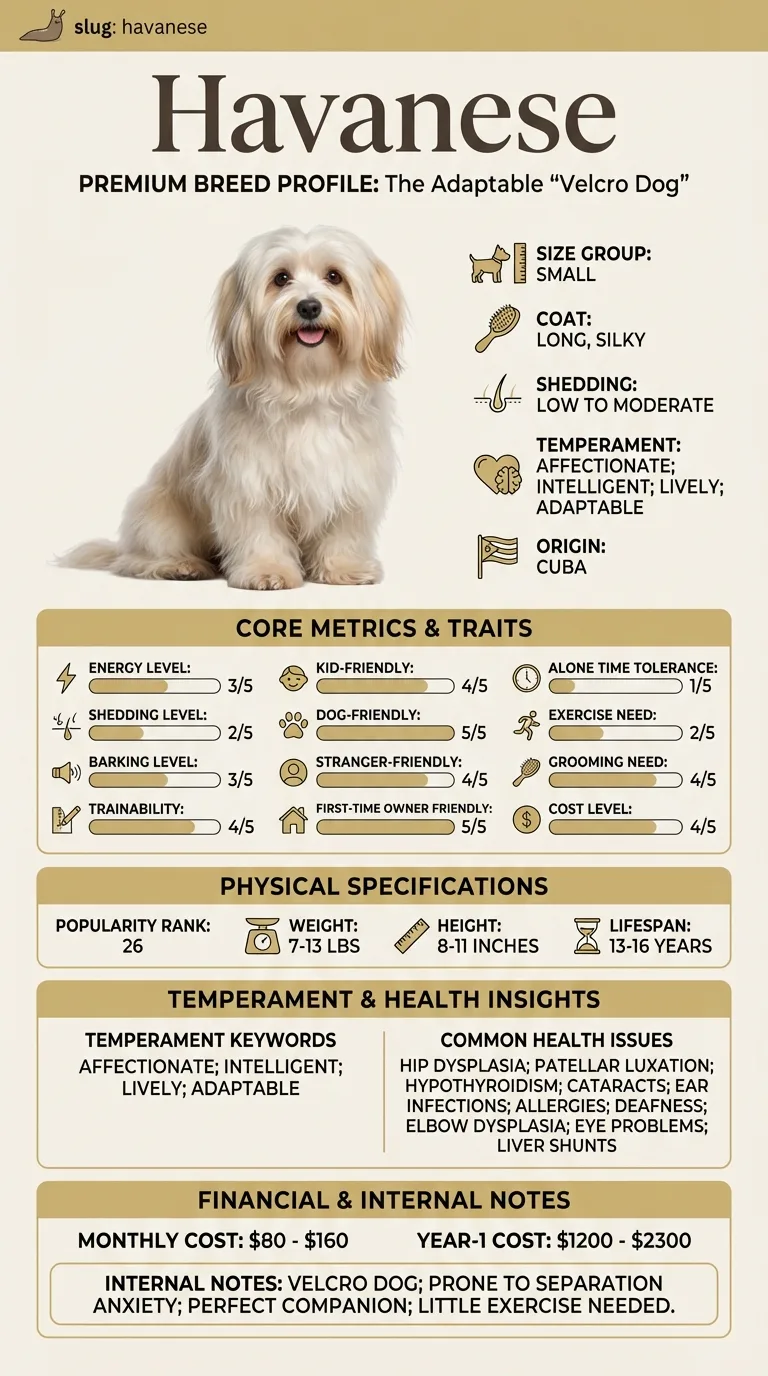
Many Havanese owners face this issue, especially those with older dogs or those who notice subtle changes in their pet's movement and coordination.
This guide is not medical advice. If your dog shows pain, sudden behavior change, or worsening symptoms, consult a licensed veterinarian.
Some links may be affiliate links. We may earn a commission at no extra cost to you. We only suggest products we believe are helpful for dog owners.
We research and check what we publish, but we do not warrant that any figure, date, price, or statement is accurate, complete, or current, and we accept no liability for any loss, cost, injury, or other harm arising from the use of this site. Use it as one reference among several. You remain responsible for your own decisions and for your dog's care - confirm anything that matters with a licensed veterinarian or another qualified professional before you act on it. Full disclaimer.
Check this first
Havanese degenerative myelopathy (DM) can escalate quickly, so it’s important to know when to act. If your dog shows severe symptoms such as sudden loss of coordination, inability to stand, or extreme weakness in the back legs, call your vet immediately. These signs can indicate that the condition is worsening and requires urgent medical attention.
In contrast, milder symptoms like slight wobbliness or occasional stumbling can often be monitored at home. If your Havanese is still able to walk and play, you may want to keep a close eye on their condition while documenting any changes. Create a plan to check in with your vet regularly, especially if you notice changes in behavior or mobility.
Always trust your instincts. If you're unsure about your dog's condition, it’s better to err on the side of caution and consult your vet. Regular check-ups can also help manage the progression of Havanese degenerative myelopathy (DM) and ensure your pet remains comfortable.
If any of these apply, call your vet or an emergency clinic now. The rest of this page is for the cases that are not an emergency.
Havanese degenerative myelopathy (DM) is a progressive spinal cord disease that affects mobility. Day-to-day, you might notice your Havanese struggling to run, jump, or even walk steadily. This condition usually begins with weakness in the hind legs, leading to stumbling or dragging their feet, which can be heartbreaking for owners to witness.
Havanese degenerative myelopathy (DM) is fairly common within the breed, especially in those with a family history of the disease. Many Havanese owners report witnessing early signs of DM in their dogs, making awareness crucial for timely intervention.
Havanese degenerative myelopathy (DM) is often linked to genetic factors. This small breed is predisposed to this progressive spinal cord disease, which can affect their mobility and overall quality of life. Because of their lineage, certain traits make them more susceptible to DM as they age.
Environmental factors can also contribute to the progression of DM. Lack of exercise or obesity can exacerbate mobility issues. Additionally, stress or anxiety can lead to behaviors that might worsen physical health.
It's essential to talk to your vet if you notice significant changes in your Havanese's mobility or behavior. They can provide guidance on managing DM and suggest treatments or therapies that may help.
Avoiding these common mistakes can help manage your Havanese's degenerative myelopathy (DM) more effectively.
Start here: Havanese Most Common Genetic Disorders: What to Screen For
See all Havanese health problems, which breeds are prone to degenerative myelopathy dm, or the full Havanese breed guide for temperament, exercise needs and ownership costs.
Managing Havanese degenerative myelopathy (DM) typically takes several months to adjust to, with gradual changes in your dog's mobility and behavior. Regular vet check-ups and consistent care under your vet's plan can make a difference over time.
Success means maintaining your Havanese's quality of life as long as possible. This includes keeping them comfortable, engaged, and happy, even as mobility decreases.
Maria, a busy nurse from Dallas, noticed her Havanese, Bella, was having trouble getting up after naps. A vet diagnosis confirmed Havanese degenerative myelopathy (DM). Initially overwhelmed, Maria started researching how to stop Havanese degenerative myelopathy (DM) and found that training could help. She set up a gentle exercise routine and learned how to create a supportive environment for Bella. Over time, Bella adapted, and Maria felt more confident in managing her condition.
Key takeaway: With patience and the right approach, you can help your Havanese with DM maintain a good quality of life. Knowledge and support from the vet are essential.
Havanese degenerative myelopathy (DM) is often caused by genetic factors that affect the spinal cord. It's a progressive disease that can lead to mobility issues over time. If your Havanese is showing signs, it's best to discuss this with your vet for guidance and support.
Managing Havanese degenerative myelopathy (DM) involves providing a safe environment and ensuring your dog gets regular, gentle exercise. Physical therapy can also be beneficial. Consider using slings or harnesses to assist your dog with mobility.
While there's no cure for Havanese degenerative myelopathy (DM), you can slow its progression by keeping your dog active and engaged. Routine vet visits for monitoring and managing associated symptoms are essential. Medications may also help manage discomfort.
Training can be beneficial for Havanese dogs with degenerative myelopathy (DM) by reinforcing positive behaviors and maintaining mental stimulation. Focus on low-impact activities and utilize positive reinforcement techniques to encourage participation.
Early signs of Havanese degenerative myelopathy (DM) include difficulty walking, dragging of the back legs, and loss of coordination. You might also notice your dog having trouble getting up or jumping. If you observe these symptoms, it's essential to consult your vet.
Yes, older Havanese dogs may show more pronounced symptoms of degenerative myelopathy (DM) due to age-related factors. These dogs may also have other health issues, which can complicate the diagnosis and management of DM. Regular vet check-ups are crucial for older dogs to monitor their overall health.
While there is no cure for Havanese degenerative myelopathy (DM), you can manage symptoms at home. Providing a safe environment, using mobility aids like harnesses, and engaging in low-impact exercises can help. Consulting a vet for a tailored plan is advisable.
The prognosis for Havanese diagnosed with degenerative myelopathy (DM) varies. While the disease is progressive and ultimately leads to loss of mobility, many dogs maintain a good quality of life for some time. Regular veterinary care and supportive treatments can make a significant difference.
Monitor mobility and adjust exercise to low-impact activities. Use supportive equipment like harnesses for assistance. Stay in touch with your vet for ongoing care.
Caring for a Havanese with degenerative myelopathy (DM) may increase monthly costs, potentially ranging from $80 to $160, depending on treatments and care needed.
While there’s no specific diet for Havanese degenerative myelopathy (DM), a balanced diet rich in nutrients can support overall health. Consult your vet for tailored recommendations.
A one-page prep sheet for this condition: the signs, the questions to ask, what to get priced. Unlocks here.
You get: Vet visit prep sheet
No spam. One-click unsubscribe. See our privacy policy.
Preview page 1 before you decide.