Health
Do Goldendoodles have a genetic anesthesia sensitivity?
No — there's no documented genetic anesthesia sensitivity for this breed, unlike MDR1-affected herding breeds.

Quick answer
Do Goldendoodles have a genetic anesthesia sensitivity?
No — there's no documented genetic anesthesia sensitivity for this breed, unlike MDR1-affected herding breeds.
Worried about anesthesia before your Goldendoodle's next procedure? The real risk factors aren't genetic for this breed — they're things like weight and age, both of which you can actually influence.
This tends to worry owners scheduling a spay, neuter, or dental cleaning for the first time, especially those who've read online that 'doodles' or 'sensitive breeds' shouldn't go under anesthesia — a claim that doesn't hold up for this specific breed.
This guide is not medical advice. If your dog shows pain, sudden behavior change, or worsening symptoms, consult a licensed veterinarian.
Some links may be affiliate links. We may earn a commission at no extra cost to you. We only suggest products we believe are helpful for dog owners.
We research and check what we publish, but we do not warrant that any figure, date, price, or statement is accurate, complete, or current, and we accept no liability for any loss, cost, injury, or other harm arising from the use of this site. Use it as one reference among several. You remain responsible for your own decisions and for your dog's care - confirm anything that matters with a licensed veterinarian or another qualified professional before you act on it. Full disclaimer.
Check this first
A normal, healthy-weight Goldendoodle undergoing a routine spay, neuter, or dental cleaning with standard modern anesthesia protocols and pre-op bloodwork typically has a low, well-managed risk profile — this isn't a breed where owners need to brace for a bad outcome.
Where things can turn urgent is after the procedure: if your dog isn't waking up as expected within the timeframe your vet described, has labored breathing, pale gums, or repeated vomiting once home, call the clinic immediately rather than waiting to see if it passes.
A senior Goldendoodle, or one carrying significant extra weight, is where real caution is warranted — not because of the breed itself, but because age-related organ decline and obesity both change how anesthetic drugs are processed and cleared from the body. Your vet may recommend additional monitoring or adjusted dosing in these cases.
If your vet ever recommends postponing a procedure after bloodwork comes back abnormal, that's not an overreaction — it means they caught something worth addressing first, and that's exactly what pre-anesthetic screening is for.
If any of these apply, call your vet or an emergency clinic now. The rest of this page is for the cases that are not an emergency.
Anesthesia sensitivity is a real concern for some dog breeds, but Goldendoodles are not one of the breeds with documented genetic anesthesia risk. This page explains what owners should actually watch for — weight, age, and pre-op screening — rather than a breed-specific danger that isn't supported by evidence.
There is no established genetic anesthesia sensitivity in Goldendoodles, so this isn't a breed-wide concern the way it is for MDR1-affected herding breeds. The individual risk factors below (weight, age, organ health) apply to dogs of any breed and are the ones worth actually planning around.
Neither the Golden Retriever nor Poodle side of this cross carries a known genetic anesthesia sensitivity such as the MDR1 mutation. What the breed does carry is a strong food motivation and appetite, which makes weight gain more common and is the real, indirect way body composition can affect anesthesia metabolism.
Anesthesia risk in any dog rises with undiagnosed organ dysfunction, obesity, and advanced age — none of which are unique to Goldendoodles. A dog that's been allowed to become overweight, or one going into a procedure without recent bloodwork, faces more risk regardless of breed.
Talk to your vet before any scheduled procedure about your Goldendoodle's current weight, age, and whether pre-anesthetic bloodwork is recommended. After a procedure, call immediately if recovery seems slower than expected, breathing looks labored, gums look pale, or vomiting continues once home.
Most anesthesia worry around Goldendoodles comes from generic 'risky breeds' lists that don't actually apply. Here's where owners go wrong.
See all Goldendoodle health problems, which breeds are prone to anesthesia sensitivity, or the full Goldendoodle breed guide for temperament, exercise needs and ownership costs.
Most healthy, normal-weight Goldendoodles recover from routine anesthesia within 24 to 48 hours, with grogginess clearing well before that. Weight loss, if needed before an elective procedure, takes longer and should be planned with your vet's input.
Success looks like a straightforward, well-monitored procedure with no surprises — not the absence of any risk at all, since anesthesia always carries some baseline risk for any dog of any breed.
Priya Nair had read online that 'doodle' breeds needed special anesthesia precautions and went into her Goldendoodle Luna's spay appointment in Tacoma nervous about it. Her vet explained plainly that Luna didn't carry any known genetic sensitivity, but that her slightly above-ideal weight was worth addressing either way. Pre-op bloodwork came back normal, and Luna went through the spay with a standard protocol and no complications. She was up and eating again by the next evening. Priya's vet used the visit to set a modest weight-loss plan for the months after, since that mattered more for Luna's long-term health than anything specific to her breed.
Key takeaway: The online worry Priya carried in wasn't really about Luna's breed at all — it was about weight and pre-op screening, the same two things that matter for any dog.
No documented genetic anesthesia sensitivity exists for this breed, unlike herding breeds with the MDR1 mutation or very lean sighthounds. A healthy, normal-weight Goldendoodle typically anesthetizes safely with standard modern protocols.
MDR1 is documented in herding breeds like Collies and Australian Shepherds, not in Goldendoodles or their parent breeds. There's no established link between this breed and that mutation.
The real factors are individual, not breed-based: being overweight, being a senior, or having an undiagnosed organ issue. Pre-anesthetic bloodwork is how vets catch these before they become a problem during a procedure.
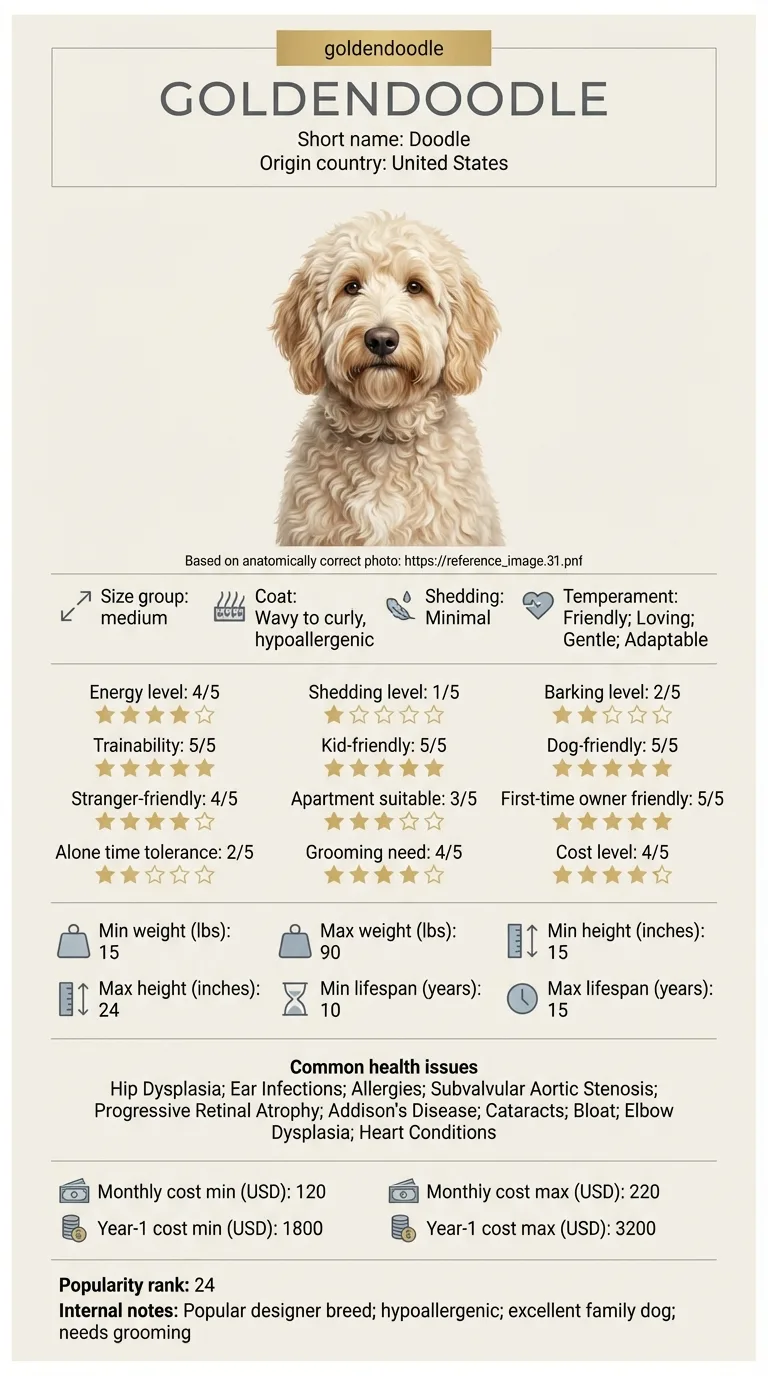
Yes — this breed's weight can range widely between mini, medium, and standard variants, so anesthesia dosing is calculated on your individual dog's actual weight rather than a breed-wide assumption.
Yes. Goldendoodles are a food-motivated breed prone to weight gain, and excess body fat changes how fat-soluble anesthetic drugs are absorbed and cleared, which is a legitimate, manageable risk factor your vet will account for.
Pre-anesthetic bloodwork and a discussion of your dog's weight and age with your vet are reasonable standard precautions for any dog, not something unique to request because of the breed.
No — there's no documented genetic anesthesia sensitivity for this breed, unlike MDR1-affected herding breeds.
Obesity, since this food-motivated breed can gain weight easily, and excess fat changes how anesthetic drugs are metabolized.
It's typically bundled into a spay, neuter, or dental procedure quote and adds a modest amount compared to the overall procedure cost.
Yes, follow your vet's exact fasting window — usually food withheld overnight — to reduce the risk of vomiting or aspiration under anesthesia.
Age itself increases risk somewhat for any dog, mainly through possible hidden organ decline, which is exactly what pre-op bloodwork screens for.
A one-page prep sheet for this condition: the signs, the questions to ask, what to get priced. Unlocks here.
You get: Vet visit prep sheet
No spam. One-click unsubscribe. See our privacy policy.
Preview page 1 before you decide.