Health
Does this breed have a genetic appetite mutation?
No, that specific finding applies to Labrador Retrievers, not this breed.

Quick answer
Does this breed have a genetic appetite mutation?
No, that specific finding applies to Labrador Retrievers, not this breed.
This breed's real weight risk isn't a hungry gene — it's that extra pounds are genuinely harder to see under a coat of loose, wrinkled skin.
Owners who've read about a specific genetic appetite mutation and assumed it applied to their own breed, and anyone who's been surprised at a vet visit to learn their dog is overweight despite looking normal at home.
This guide is not medical advice. If your dog shows pain, sudden behavior change, or worsening symptoms, consult a licensed veterinarian.
Some links may be affiliate links. We may earn a commission at no extra cost to you. We only suggest products we believe are helpful for dog owners.
There's no documented genetic appetite mutation in the Chinese Shar-Pei — that specific finding belongs to Labrador Retrievers. This breed's real, documented weight-gain risk comes from its low exercise needs combined with folded skin that makes early weight gain visually harder to notice than in many other breeds.
A genuine, common risk for this breed given its documented low exercise needs, made more likely to go unnoticed specifically because of its documented fold-heavy skin structure obscuring visual cues.
This breed's documented low exercise needs and energy level reduce calories burned through activity, and its documented loose, folded skin structure makes early weight gain considerably harder to notice by eye than in tighter-skinned breeds.
Portion sizes not adjusted to match this breed's lower activity level, along with infrequent formal weigh-ins or body condition checks, are the practical environmental factors that let weight gain progress unnoticed.
Discuss weight and body condition at every routine visit, and proactively if you notice reduced mobility, increased panting, or any change in stamina, since these can be secondary signs of weight gain that folds have hidden visually.
Start here: Chinese Shar-Pei Most Common Genetic Disorders: Screening
See all Chinese Shar PEI health problems, which breeds are prone to genetic predisposition to obesity, or the full Chinese Shar PEI breed guide for temperament, exercise needs and ownership costs.
Noticeable weight loss with an appropriate calorie adjustment typically takes several weeks to a few months, depending on how much weight needs to come off and how consistently the new routine is followed.
Success looks like weight monitored proactively through hands-on checks and regular weigh-ins, rather than discovered incidentally at a vet visit after it's already become established.
This breed's documented exercise needs and energy level both sit on the lower end, meaning fewer calories are burned through activity compared to a more traditionally active breed, while appetite and feeding habits often don't automatically adjust downward to match. That's a straightforward, documented combination that makes weight gain a realistic risk — no special appetite-gene claim required.
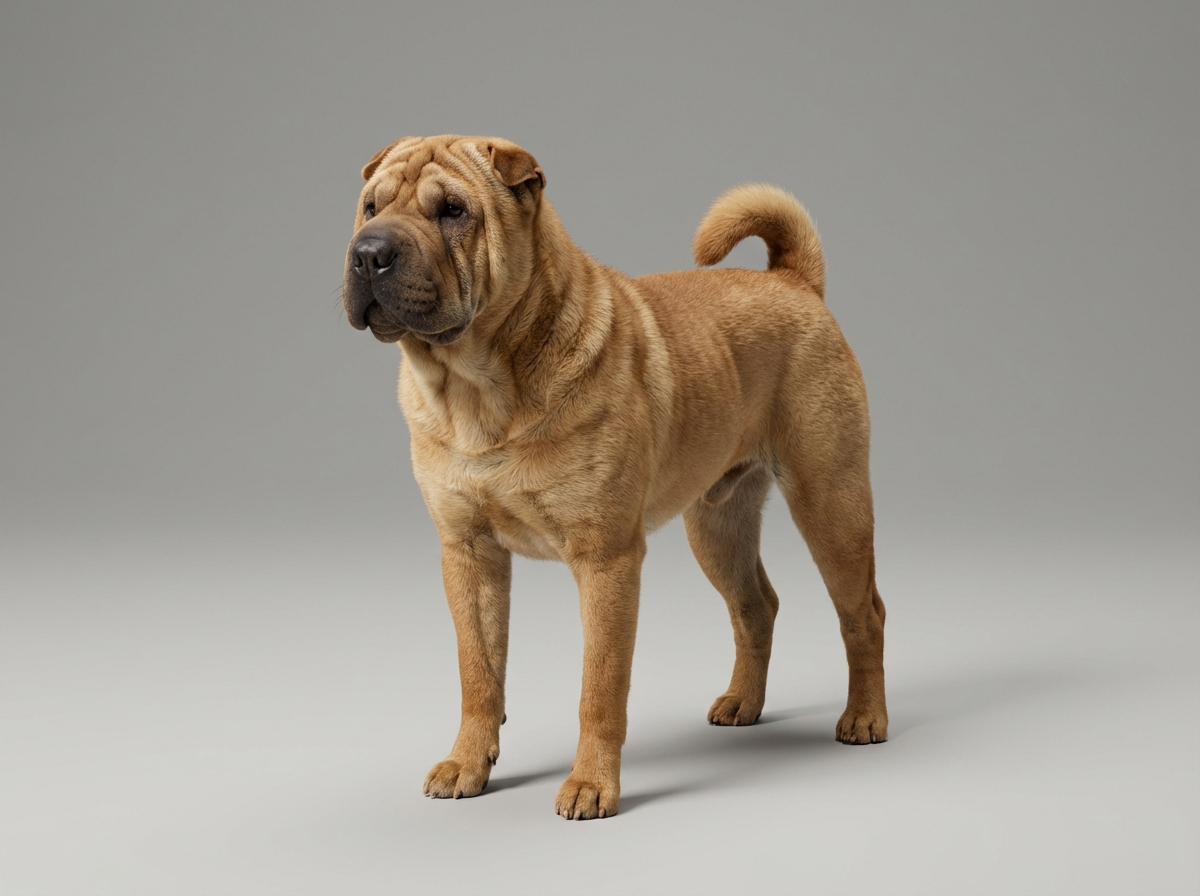
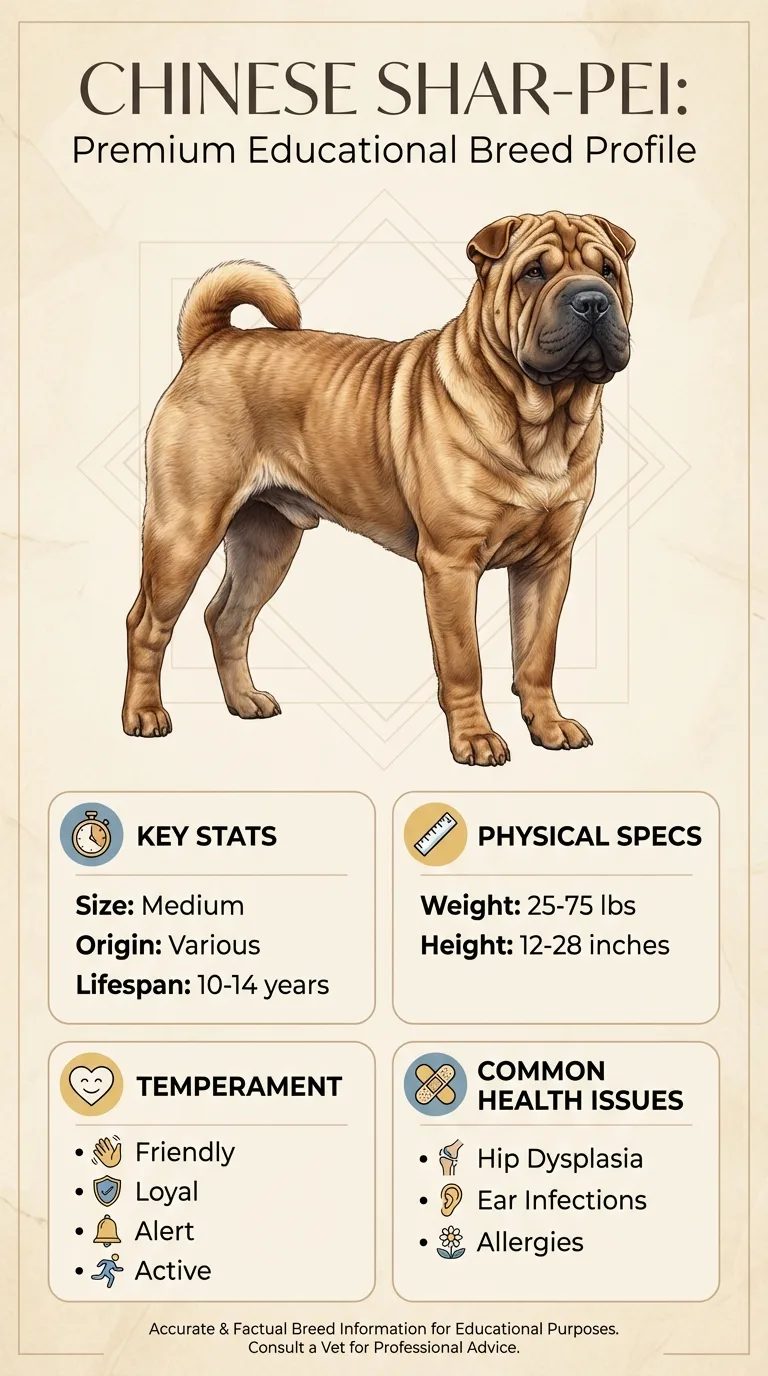
The genuinely underappreciated factor is visual: this breed's documented loose, folded skin structure means early weight gain is considerably harder to see or feel by eye compared to a short-coated, tight-skinned breed where ribs and waistline are more visually obvious. Many owners don't notice creeping weight gain until a vet's hands-on body condition assessment reveals it, well after it's already established.
Practical habits that work around this breed's documented fold-related visibility problem.

If you think your Chinese has genetic predisposition to obesity, the plan is three steps: write down what you have seen and when it started, book a veterinary appointment rather than waiting for the next flare, and take video of the behaviour or symptom before you go — the thing you are worried about rarely happens in the consulting room. Screening in the parents covers skin fold dermatitis, entropion, familial shar-pei fever.
What the vet visit should produce is a diagnosis and a written plan, not just reassurance: what is being ruled out, what the monitoring interval is, and which signs mean you come back sooner. Ask what the treatment costs across a year rather than per visit, because that is the number that decides whether you are managing this condition or reacting to it.
Between appointments, keep a short log — dates, what you saw, what changed. It is the single most useful thing an owner brings to a follow-up, and for genetic predisposition to obesity it is often what separates a clear pattern from a guess.
Corbin was surprised when his vet flagged his Shar-Pei Dumpling as moderately overweight at a routine visit, since Dumpling had never looked heavy to Corbin at home. His vet explained that Dumpling's loose, folded skin made it genuinely difficult to see the early stages of weight gain the way it would be obvious on a shorter-coated, tighter-skinned dog. Corbin started measuring Dumpling's food precisely instead of eyeballing it and began monthly home weigh-ins. Six months later, Dumpling had reached a healthier weight, and Corbin could finally feel his ribs easily during the routine check his vet had taught him.
Key takeaway: This breed's folds aren't hiding a hungry gene — they're just genuinely good at hiding early weight gain from a casual glance, which is exactly why a hands-on check matters more here than a visual one.
No, that specific finding — a POMC gene mutation — is documented in Labrador Retrievers, not this breed. There's no equivalent documented genetic obesity marker for the Chinese Shar-Pei.
This breed's documented low exercise needs and energy level mean fewer calories burned through activity, combined with its folded skin structure making early weight gain visually harder to notice than in many other breeds.
A hands-on rib check is more reliable than visual assessment for this breed — you should be able to feel ribs under a thin layer of fat without pressing hard. Ask your vet to demonstrate this at a wellness visit.
Portion needs vary by individual dog's size and activity, but given this breed's documented lower exercise needs, many owners feed less than a generic breed-size chart suggests. Your vet can help calculate an appropriate amount.
Yes, extra weight adds strain relevant to general joint health and can make heat regulation harder given this breed's already fold-heavy, heat-retentive skin.
A monthly at-home weigh-in, plus a body condition score at every vet visit, is a reasonable habit for catching gradual changes early in this breed specifically.
No, that specific finding applies to Labrador Retrievers, not this breed.
Low documented exercise needs combined with folds that visually hide early weight gain.
A hands-on rib check is more reliable than looking for a visible waistline in this breed.
Often yes, given this breed's documented lower activity level; ask your vet for a specific calculation.
Yes, it adds joint strain and can worsen this breed's heat sensitivity.
A one-page prep sheet for this condition: the signs, the questions to ask, what to get priced. Unlocks here.
You get: Vet visit prep sheet
No spam. One-click unsubscribe. See our privacy policy.
Preview page 1 before you decide.