Health
What's the fastest way to tell arthritis from an FSF flare?
Take a temperature. Fever points to FSF; normal temperature with stiffness points to arthritis. When in doubt, a same-day vet visit settles it.

Quick answer
What's the fastest way to tell arthritis from an FSF flare?
Take a temperature. Fever points to FSF; normal temperature with stiffness points to arthritis. When in doubt, a same-day vet visit settles it.
Swollen, hot joints in this breed can mean two very different things: ordinary age-related arthritis, or a documented fever episode that happens to hit the same joints. Telling them apart changes the entire treatment plan.
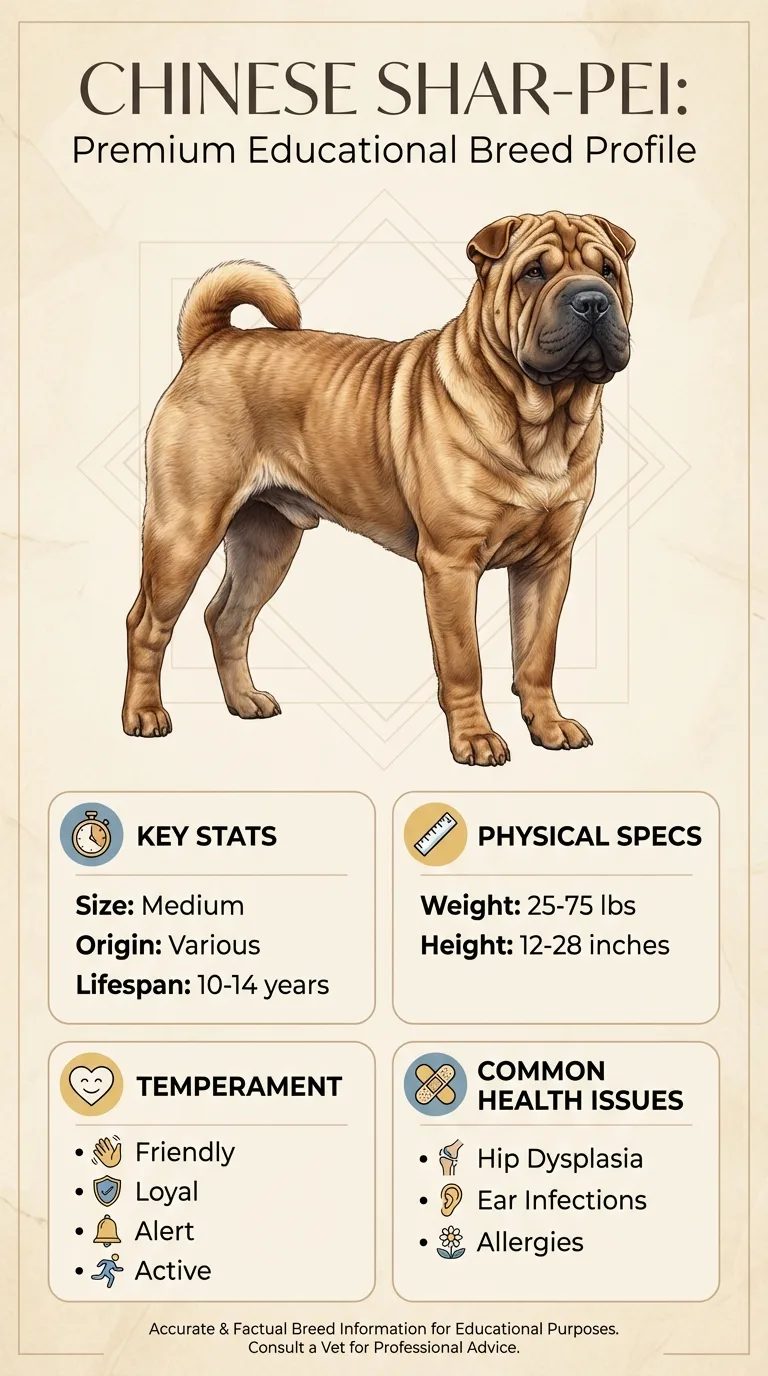
This mostly affects owners of middle-aged to senior Shar-Peis — this breed's documented lifespan runs 8 to 12 years, so joint changes typically start becoming noticeable well before the upper end of that range — and anyone who's already dealing with occasional FSF-like episodes and isn't sure if a new limp is related.
This guide is not medical advice. If your dog shows pain, sudden behavior change, or worsening symptoms, consult a licensed veterinarian.
Some links may be affiliate links. We may earn a commission at no extra cost to you. We only suggest products we believe are helpful for dog owners.
We research and check what we publish, but we do not warrant that any figure, date, price, or statement is accurate, complete, or current, and we accept no liability for any loss, cost, injury, or other harm arising from the use of this site. Use it as one reference among several. You remain responsible for your own decisions and for your dog's care - confirm anything that matters with a licensed veterinarian or another qualified professional before you act on it. Full disclaimer.
Arthritis in the Chinese Shar-Pei follows the same general aging pattern seen in most medium-sized breeds, with no documented early-onset predisposition. What complicates diagnosis here is Familial Shar-Pei Fever, a documented condition unique to the breed that can also cause swollen, painful joints, requiring a vet to distinguish the two.
Age-related arthritis is common in senior dogs of any breed, and this one is no exception given its 8 to 12 year documented lifespan. What's less common, but breed-specific, is the added complication of distinguishing it from FSF flares.
Nothing in this breed's documented profile marks it as arthritis-prone beyond normal aging. However, the documented presence of Familial Shar-Pei Fever means some dogs experience repeated joint inflammation from an entirely separate cause, which can complicate the overall picture of joint health as the dog ages.
Weight, activity level, and sleeping surface all affect how arthritis progresses once it starts. Given this breed's documented lower exercise needs, weight gain is a genuinely common contributing factor that owners can actually control.
See your vet promptly for any joint swelling accompanied by fever, lethargy, or reduced appetite, since this pattern suggests FSF rather than simple arthritis and may need different treatment. Also see your vet if stiffness is worsening steadily over weeks even without fever.
Start here: Chinese Shar-Pei Most Common Genetic Disorders: Screening
See all Chinese Shar PEI health problems, which breeds are prone to arthritis, or the full Chinese Shar PEI breed guide for temperament, exercise needs and ownership costs.
Arthritis is a gradual, lifelong condition to manage rather than cure, typically diagnosed and adjusted for over months as symptoms evolve. An FSF-related joint flare, once correctly identified, usually settles within a few days.
Success looks like your dog moving comfortably day to day, with flares — of either kind — recognized quickly and managed appropriately, not eliminated entirely, since aging joints are a normal part of a long life.
A Familial Shar-Pei Fever episode typically comes on suddenly, usually with a fever, and the swelling is often concentrated around one or both hocks, sometimes with the dog looking generally unwell — lethargic, reluctant to eat — for a day or two before settling back to normal. Arthritis, by contrast, builds gradually over months or years, doesn't come with a fever, and tends to affect the same joints consistently rather than flaring unpredictably.
The practical test most vets use is simple: take a temperature. A true fever points toward FSF; normal body temperature with stiffness that's worse after rest and better after gentle movement points toward arthritis. Bloodwork can also help distinguish the two, since FSF episodes often show inflammatory markers that a straightforward arthritis case won't.
Some dogs deal with both conditions independently as they age, which is exactly why a vet visit — not a guess based on symptoms alone — matters here more than in breeds where only one of these conditions exists.
Once arthritis is confirmed as the cause, these habits make a real difference in day-to-day comfort.

Ingrid noticed her nine-year-old Shar-Pei, Han, limping on a hind leg one evening. She assumed simple stiffness and planned to just watch it, but by morning his hock was visibly swollen and warm, and he'd barely touched his breakfast. A vet visit revealed a low-grade fever, and bloodwork pointed toward an FSF episode rather than arthritis. Han was treated and improved within two days. Ingrid was relieved but confused — he'd had two similar limps in prior years that resolved on their own without ever being checked. Her vet explained that Han likely has both a mild degree of age-related arthritis and occasional FSF flares, and that tracking fever at home going forward would help tell the two apart faster next time.
Key takeaway: The same joint can be a stage for two completely different problems in this breed — a quick at-home temperature check is often the fastest way to know which one you're dealing with.
Check for fever first — a true FSF flare usually comes with a temperature spike and general unwellness, while arthritis causes stiffness without fever, typically worse after rest. Your vet can confirm with an exam and, if needed, bloodwork.
There's no documented early-onset pattern for this breed specifically. Given a typical 8 to 12 year lifespan, most owners start noticing early stiffness in the senior years, roughly from age seven or eight onward, similar to many medium-sized breeds.
Recurring inflammation in the same joints over years is generally something to discuss directly with your vet, since chronic inflammation can contribute to wear over time. This is worth raising specifically if your dog has frequent flares, rather than assuming it's unrelated.
Many vets recommend glucosamine or omega-3 based joint supplements as a reasonable, low-risk addition once arthritis is confirmed, though they work best alongside weight management and appropriate exercise, not as a standalone fix.
Some dogs manage well with supplements and lifestyle changes alone; others need a prescribed anti-inflammatory long-term. This is a case-by-case decision your vet will make based on severity and how your dog responds to initial management.
As in most dogs, cold, damp weather can make joints feel stiffer. A warm, supportive bed and slightly shorter walks in winter are a reasonable adjustment.
Surgery is uncommon for straightforward age-related arthritis and is more typically considered for a specific underlying joint problem, which would be identified through imaging rather than assumed from symptoms alone.
Take a temperature. Fever points to FSF; normal temperature with stiffness points to arthritis. When in doubt, a same-day vet visit settles it.
Joint supplements and an orthopedic bed are a modest upfront and ongoing cost, typically far less than repeated urgent visits for unmanaged pain.
No — gentle, consistent short walks generally help more than complete rest, which can actually stiffen joints further.
Chronic pain can make a normally calm, reserved dog more irritable or withdrawn. A behavior change is worth mentioning at the vet visit rather than dismissed.
Yes — given this breed's documented lower exercise needs, extra weight is both easy to gain and directly worsens joint load.
A one-page prep sheet for this condition: the signs, the questions to ask, what to get priced. Unlocks here.
You get: Vet visit prep sheet
No spam. One-click unsubscribe. See our privacy policy.
Preview page 1 before you decide.