Health
Does this breed's build increase disc disease risk?
No — its documented proportions are standard, not the shortened, long-backed chondrodystrophic build most associated with elevated IVDD risk.

Quick answer
Does this breed's build increase disc disease risk?
No — its documented proportions are standard, not the shortened, long-backed chondrodystrophic build most associated with elevated IVDD risk.
This is one of the clearest cases where a scary-sounding condition doesn't actually match this breed's documented body type — worth knowing before assuming the worst about a stiff morning.
Owners who've read alarming general lists mentioning IVDD for nearly every breed, and anyone trying to understand why their dog's vet didn't seem especially concerned about disc disease specifically.
This guide is not medical advice. If your dog shows pain, sudden behavior change, or worsening symptoms, consult a licensed veterinarian.
Some links may be affiliate links. We may earn a commission at no extra cost to you. We only suggest products we believe are helpful for dog owners.
We research and check what we publish, but we do not warrant that any figure, date, price, or statement is accurate, complete, or current, and we accept no liability for any loss, cost, injury, or other harm arising from the use of this site. Use it as one reference among several. You remain responsible for your own decisions and for your dog's care - confirm anything that matters with a licensed veterinarian or another qualified professional before you act on it. Full disclaimer.
Intervertebral disc disease is strongly linked to chondrodystrophic breeds with shortened limbs and long backs, a body type the Chinese Shar-Pei's documented proportions don't share. General age-related spinal stiffness is the more realistic concern here, with true disc disease being a lower, non-breed-specific risk.
Not documented as a notable risk for this breed. Genuine IVDD cases would be considered incidental rather than expected, unlike in breeds specifically bred with the long-backed, short-limbed structure that drives most disc disease risk.
This breed's documented height and weight reflect standard, proportionate limb and spine ratios, meaning it lacks the chondrodystrophic structure that drives most breed-specific IVDD risk. Any spinal changes seen here are more likely tied to general aging than to an inherited structural predisposition.
Weight and activity level affect general spinal health in any dog. Given this breed's documented lower exercise needs, maintaining a healthy weight is the most relevant, controllable factor for long-term spinal comfort.
See your vet immediately for any sudden loss of coordination in the back legs, dragging of the feet, or apparent severe pain with reluctance to move — these are urgent regardless of whether disc disease turns out to be the cause. Gradual, mild stiffness can be discussed at a routine visit.
Start here: Chinese Shar-Pei Most Common Genetic Disorders: Screening
See all Chinese Shar PEI health problems, which breeds are prone to backspine issues, or the full Chinese Shar PEI breed guide for temperament, exercise needs and ownership costs.
General age-related spinal stiffness develops gradually over months to years and is managed rather than cured. A true acute disc event, if it occurred, would need immediate diagnosis and treatment, with recovery varying widely by severity.
Success looks like your dog aging with normal, manageable stiffness rather than a structural spinal disease — which is the realistic expectation given this breed's documented proportionate build.
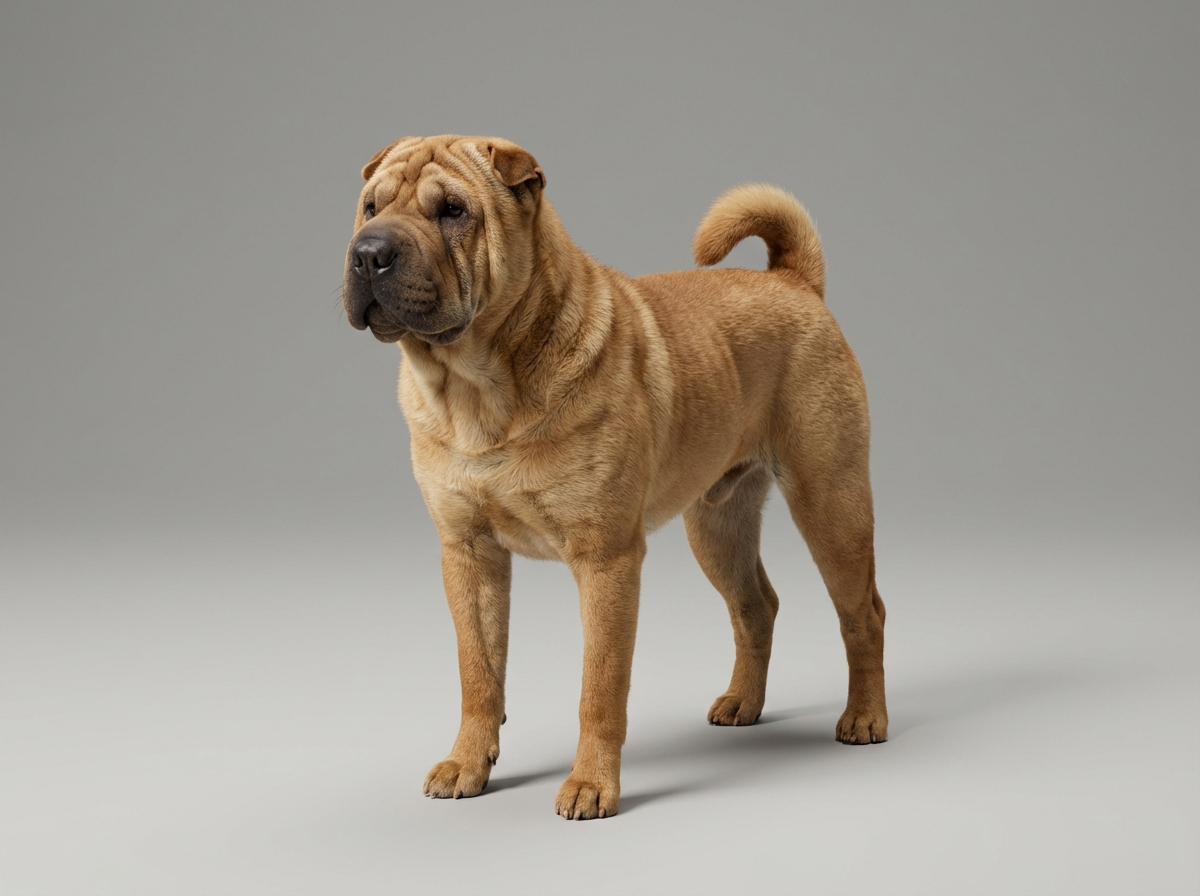
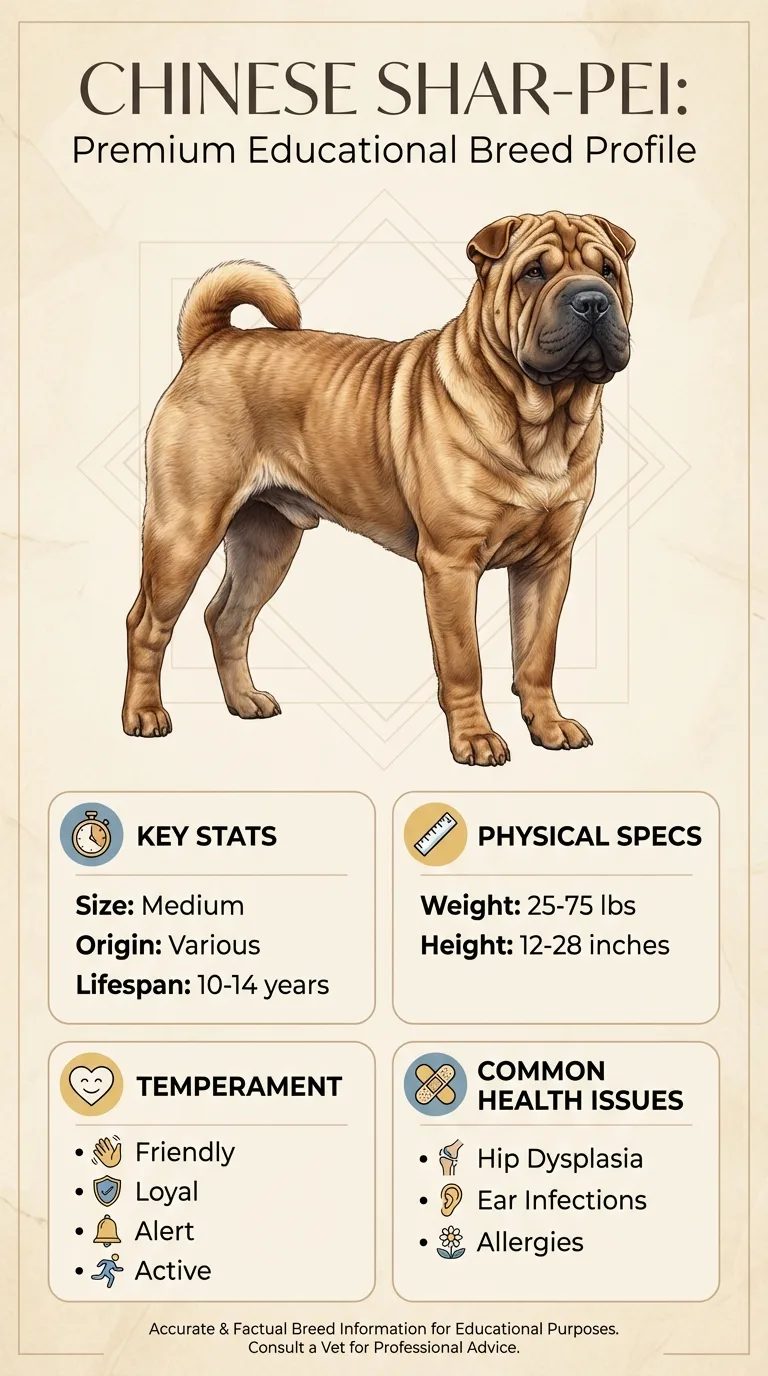
IVDD risk correlates strongly with a specific genetic body type — chondrodystrophy — that produces short, curved limbs and a long back relative to leg length, documented in breeds like dachshunds, basset hounds, and corgis. The Chinese Shar-Pei's documented height of 18 to 20 inches and weight of 45 to 60 pounds reflects standard, proportionate limb and spine ratios, not that shortened structure.
This doesn't mean disc degeneration is impossible here — any dog's spine can degenerate with age — but this breed isn't carrying the specific genetic body plan that makes IVDD a leading, well-documented risk the way it is for chondrodystrophic breeds. General age-related spinal changes are the more realistic concern for this breed as it enters its senior years within its documented 8 to 12 year lifespan.
Rather than IVDD-specific vigilance, here's what's genuinely relevant for this breed's spine as it ages.

Talia's ten-year-old Shar-Pei Bruno started taking longer to get up in the mornings. Worried after reading about disc disease in dogs generally, she brought it up at his next checkup, half-expecting bad news. Her vet examined Bruno's gait and reflexes, found no signs of nerve involvement, and explained that Bruno's build — standard, proportionate, not long-backed — put him at low risk for true disc disease. The stiffness was consistent with ordinary age-related joint changes instead. Talia added a ramp to the car and started a joint supplement on her vet's recommendation. Bruno's morning stiffness has stayed mild and manageable in the year since.
Key takeaway: Not every stiff morning is disc disease — knowing your dog's actual documented build helps you ask the right questions instead of assuming the scariest possible cause.
It's a much lower risk than for chondrodystrophic breeds. This breed's documented body proportions are standard, not the shortened, long-backed structure most associated with IVDD, so it isn't listed among this breed's documented health issues.
It's an inherited trait affecting bone and cartilage growth that results in shortened, often curved limbs and a proportionally long back — the body type seen in breeds like dachshunds and corgis. The Chinese Shar-Pei's documented proportions don't reflect this trait.
Note whether it's mild and improves with gentle movement, which points toward general age-related stiffness, versus sudden severe pain or leg weakness, which needs an urgent vet visit regardless of the eventual cause.
Yes, age-related disc degeneration can occur in any breed over time, just at a documented lower rate than in chondrodystrophic breeds specifically. It's not something to dismiss entirely, just something to keep in realistic proportion.
It would be considered case-by-case based on imaging and symptoms in an individual dog, the same as for any breed, but there's no documented pattern making this a common or expected need for this breed specifically.
Reasonable moderation — ramps for high furniture and controlled activity — is sensible for any aging dog's joints and spine, without needing to treat this breed as unusually fragile.
Not entirely, but it's a good sign. True disc disease usually produces a fairly obvious gait or coordination change, so a dog that's simply a bit slower to rise but otherwise moves normally is far more likely dealing with ordinary age-related stiffness.
No — its documented proportions are standard, not the shortened, long-backed chondrodystrophic build most associated with elevated IVDD risk.
Sudden loss of coordination or use of the back legs is always urgent, regardless of breed or documented risk level.
Not proactively — imaging is appropriate if your vet identifies a specific concern on exam, not as a routine precaution for this breed.
Yes, as a general joint-friendly habit for any aging dog, even without an elevated documented spinal risk.
Yes, ongoing discomfort of any kind can make a normally calm dog more withdrawn or reactive to handling.
A one-page prep sheet for this condition: the signs, the questions to ask, what to get priced. Unlocks here.
You get: Vet visit prep sheet
No spam. One-click unsubscribe. See our privacy policy.
Preview page 1 before you decide.