Health
Does this breed's build put it at risk for back problems?
No — its documented proportions are standard and even, not the long-backed shape linked to elevated spinal risk in other breeds.

Quick answer
Does this breed's build put it at risk for back problems?
No — its documented proportions are standard and even, not the long-backed shape linked to elevated spinal risk in other breeds.
If you've read that this breed is prone to back problems because of its build, it's worth knowing that isn't backed by this breed's actual documented proportions.
Owners comparing generic breed lists that repeat 'back problems' across many breeds without checking build, and anyone whose dog has shown occasional stiffness and isn't sure whether it's spine-related or simply general joint aging.
This guide is not medical advice. If your dog shows pain, sudden behavior change, or worsening symptoms, consult a licensed veterinarian.
Some links may be affiliate links. We may earn a commission at no extra cost to you. We only suggest products we believe are helpful for dog owners.
We research and check what we publish, but we do not warrant that any figure, date, price, or statement is accurate, complete, or current, and we accept no liability for any loss, cost, injury, or other harm arising from the use of this site. Use it as one reference among several. You remain responsible for your own decisions and for your dog's care - confirm anything that matters with a licensed veterinarian or another qualified professional before you act on it. Full disclaimer.
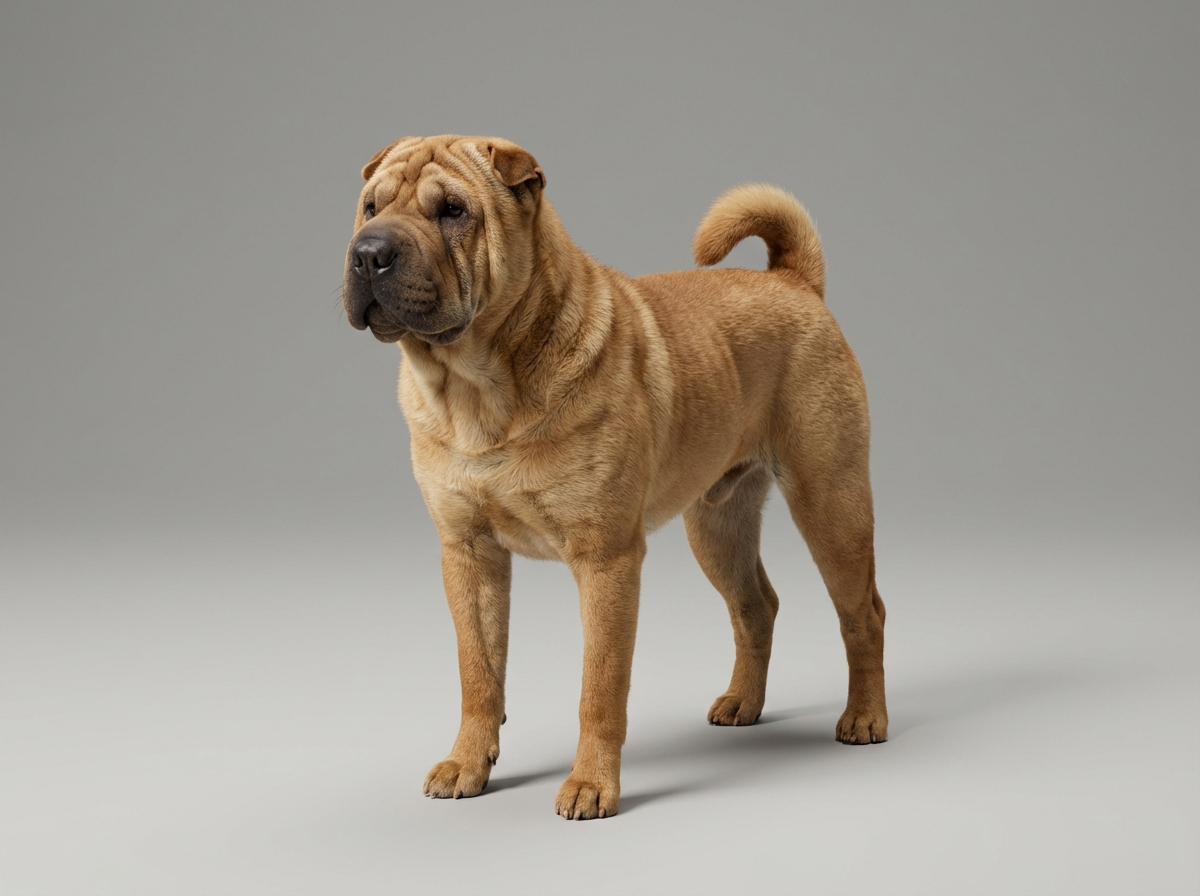
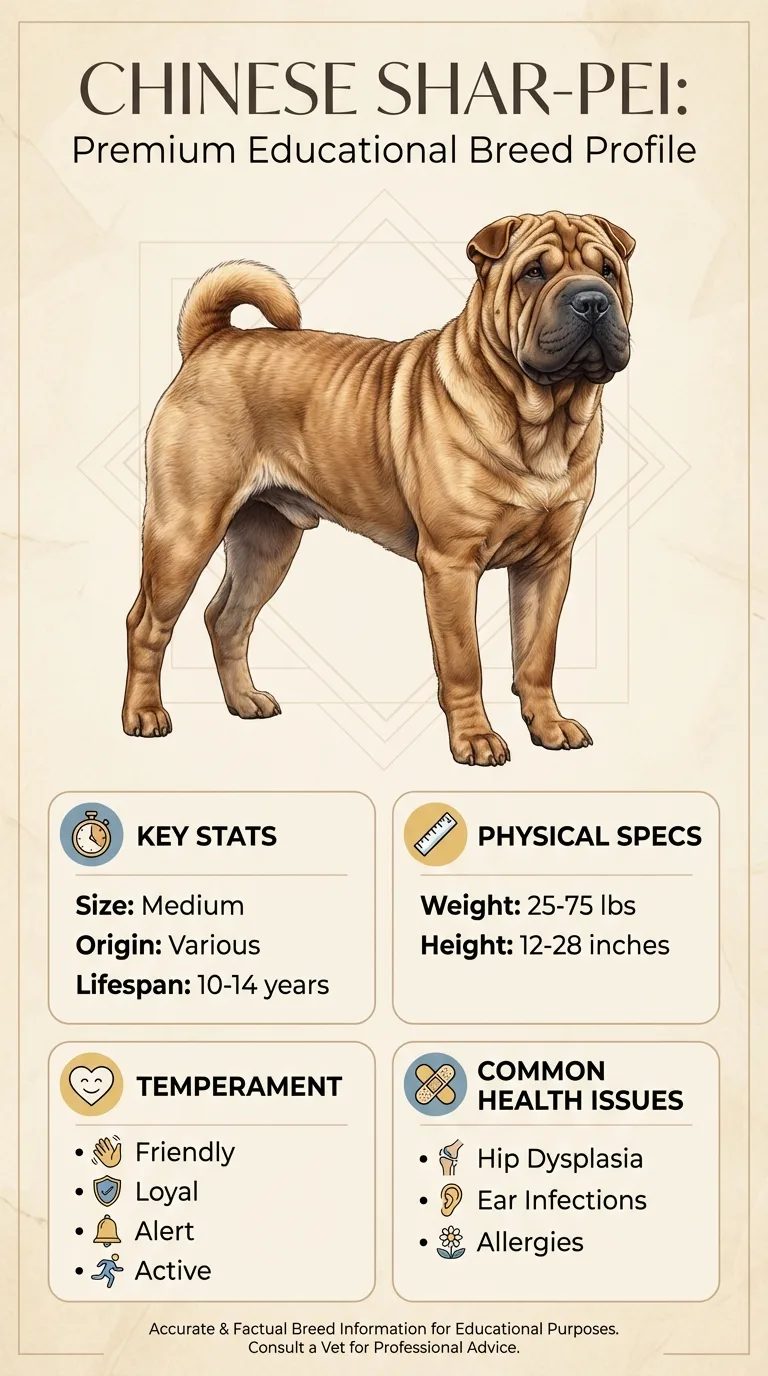
The Chinese Shar-Pei's documented build — a medium, proportionately structured dog — doesn't carry the elevated structural spinal risk seen in long-backed breeds. What can still occur is ordinary muscular back strain from a jump, slip, or overexertion, generally milder and shorter-lived than true structural spinal disease.
Occasional mild strain is common in dogs of any build over a lifetime, but there's no documented pattern of elevated structural back disease specific to this breed the way there is for long-backed breeds.
This breed's documented height and weight fall within normal, even proportions for a medium dog, so there's no structural driver toward spinal disease documented here. Its documented lower exercise needs mean weight gain is a realistic, more relevant risk factor for back strain than the breed's actual body shape.
Slippery floors, repeated jumping on and off furniture, and inconsistent activity levels are the practical, everyday factors that most commonly lead to a muscular back strain in this breed.
See your vet promptly for sudden severe pain, dragging of the back legs, loss of bladder or bowel control, or stiffness that doesn't improve after several days of rest — these can indicate something more serious than simple muscular strain.
Start here: Chinese Shar-Pei Most Common Genetic Disorders: Screening
See all Chinese Shar PEI health problems, which breeds are prone to back problems, or the full Chinese Shar PEI breed guide for temperament, exercise needs and ownership costs.
A mild strain typically improves within three to seven days of rest and restricted activity. Persistent symptoms beyond a week warrant veterinary evaluation rather than continued at-home management.
Success looks like your dog moving normally again within about a week of a minor strain, with preventive habits in place to reduce the odds of a repeat.
Breeds most associated with structural back problems typically have a notably long spine relative to short legs, a build documented for breeds like dachshunds and corgis. The Chinese Shar-Pei's documented height and weight put it in normal, proportionate territory for a medium dog, so it doesn't carry that same structural setup.
What can still happen, as in any dog, is general muscular back strain — from an awkward jump, overexertion, or carrying extra weight given this breed's documented lower exercise needs. This kind of strain is usually mild, resolves with rest, and isn't the same lifelong structural risk seen in long-backed breeds. It's worth treating any back pain seriously regardless, but the underlying cause and prognosis here tend to be more favorable.
Simple habits that lower the odds of a strain-related back issue in a dog of this build.

Owen noticed his Shar-Pei Miso yelp and hesitate before finishing a jump onto the couch after a walk. By evening, Miso was reluctant to be picked up and seemed to hold his back stiffly. Owen restricted Miso's activity for a few days and called the vet the next morning to describe what happened. Given no dragging of the legs and no loss of bladder control, the vet suggested rest and a short course of anti-inflammatory medication, with a follow-up if things didn't improve. Miso was back to jumping onto the couch, more carefully this time with a small step Owen added, within five days.
Key takeaway: A single awkward jump can cause real, if temporary, back strain in any dog — this breed's build doesn't make it especially prone, but simple prevention habits still help avoid a repeat.
Not structurally, based on this breed's documented proportions — a medium, evenly built dog rather than the long-backed shape associated with higher spinal risk in other breeds. General muscular strain can still happen, as in any dog.
A mild strain typically causes short-term stiffness or reluctance to jump that improves with a few days of rest. Sudden severe pain, dragging a limb, or loss of bladder control are signs of something more serious and need immediate vet attention.
Yes. Extra weight adds constant load to the spine and supporting muscles in any dog, and this breed's documented lower exercise needs make weight gain a realistic, preventable risk factor worth taking seriously.
It's a reasonable precaution, especially onto and off furniture or vehicles. Ramps or steps reduce repeated impact without requiring you to eliminate normal activity entirely.
Yes — that's a specific structural spinal condition most associated with long-backed breeds. General muscular back strain, which is what's actually relevant here, is a different and generally less serious issue.
Mild strains often improve within three to seven days of rest and activity restriction. Anything not improving within a week is worth a vet visit to rule out a more serious cause.
It can. A dog documented as calm and reserved may not vocalize discomfort the way a more reactive breed would, so subtle changes like reduced jumping or a stiffer gait deserve attention rather than being read as simply a quiet personality.
No — its documented proportions are standard and even, not the long-backed shape linked to elevated spinal risk in other breeds.
General muscular strain from a jump, slip, or overexertion, not a structural breed-specific weakness.
Often just an exam visit and possibly a short course of anti-inflammatory medication, a modest one-time cost.
It's a low-cost, easy habit that reduces repeated jumping impact, worth adopting even without a diagnosed issue.
Yes, a normally calm dog may become reluctant to be picked up or irritable when touched near the spine — worth a vet check, not a training fix.
A one-page prep sheet for this condition: the signs, the questions to ask, what to get priced. Unlocks here.
You get: Vet visit prep sheet
No spam. One-click unsubscribe. See our privacy policy.
Preview page 1 before you decide.