Living
Better for first-time owners?
The Poodle, rated Very High (5/5) versus the Shar-Pei's Low (2/5).

Quick answer
Better for first-time owners?
The Poodle, rated Very High (5/5) versus the Shar-Pei's Low (2/5).
Chinese Shar-Pei or Poodle? On paper they differ most on apartment suitability, and on the scales Chinese Shar-Pei is the heavier at 45–60 lbs. Here is how the two compare on everything that shapes an ordinary week.
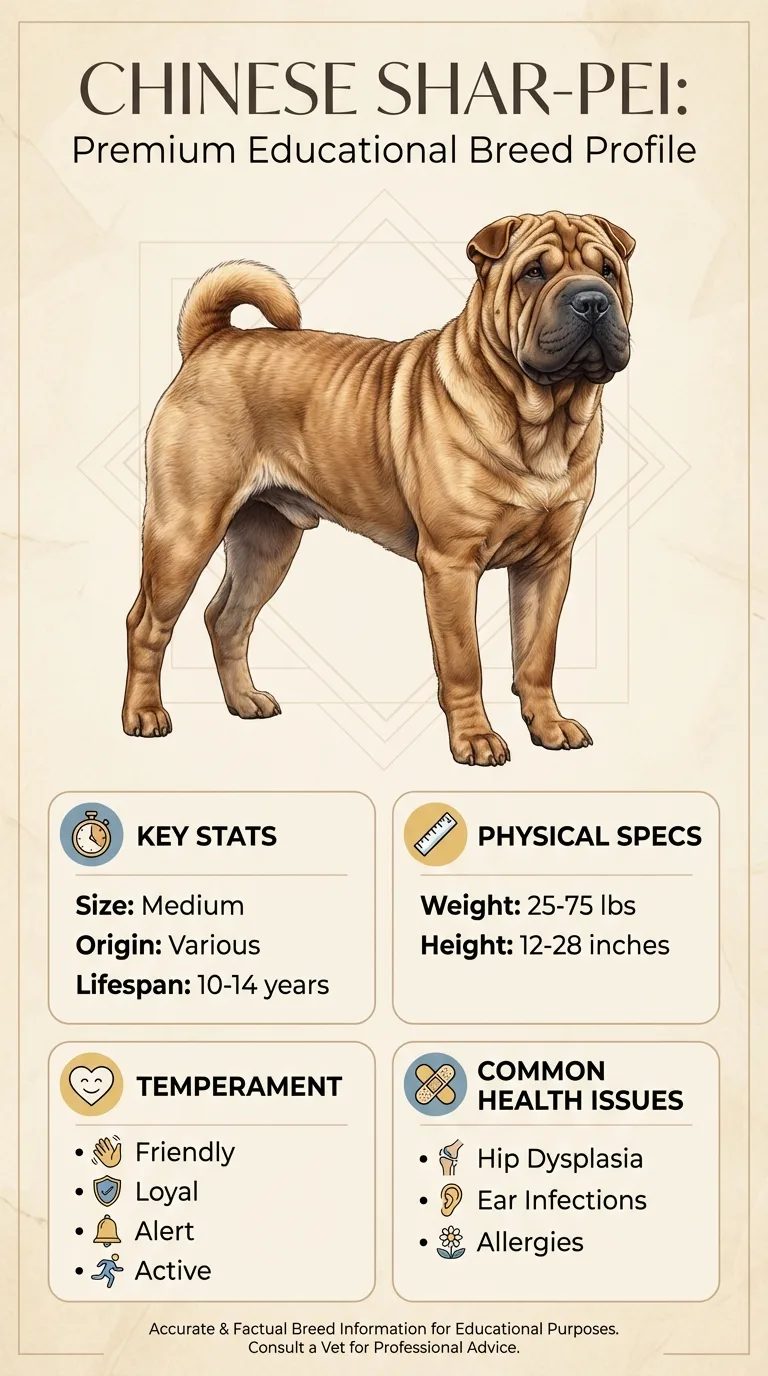
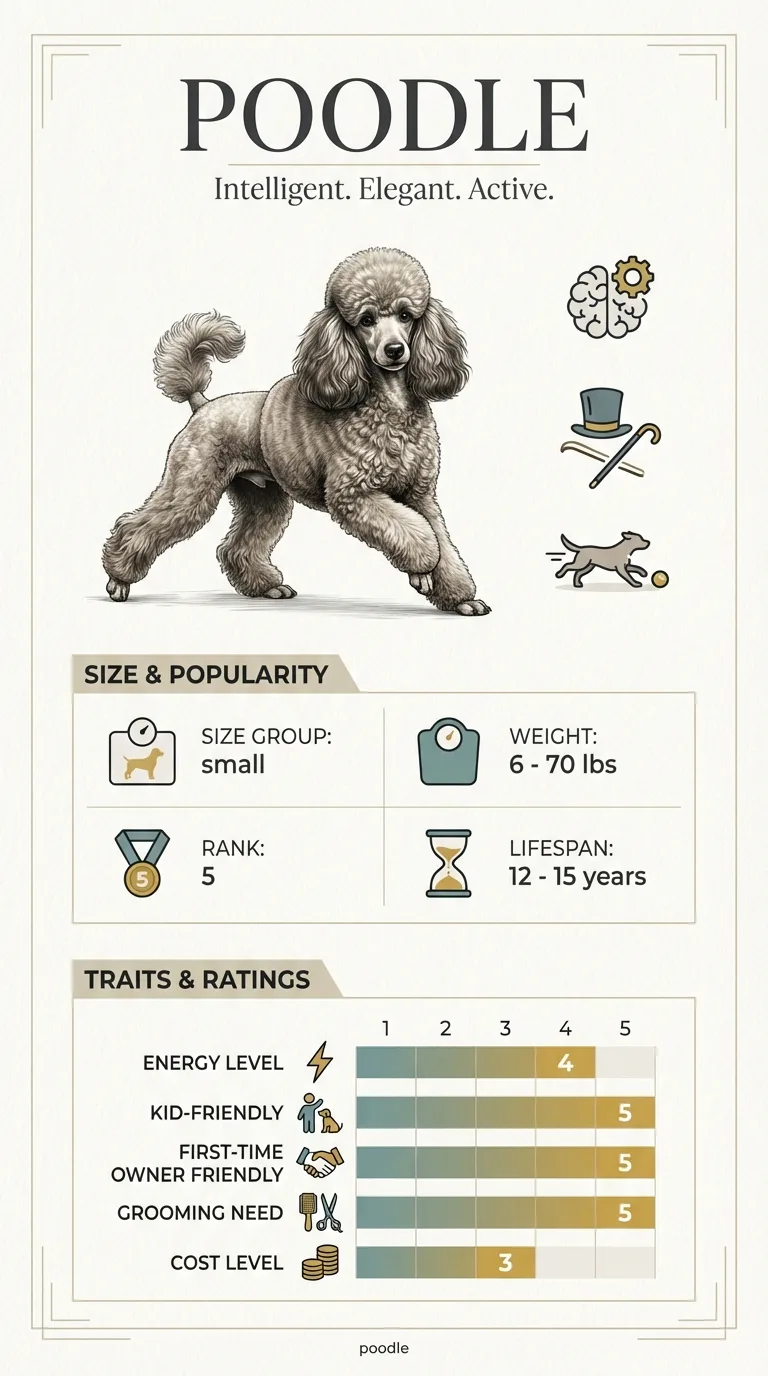
This is for someone already down to Chinese Shar-Pei and Poodle and deciding between them. For this pair the decision usually turns on apartment suitability and grooming need, so those are covered first and in most detail. Anyone choosing from a flat has a clear answer here: Chinese Shar-Pei rates 4/5 against 0/5. The focus throughout is on daily consequences rather than breed background.
Between Chinese Shar-Pei and Poodle, apartment suitability is what separates them, and Chinese Shar-Pei is the lower-effort dog of the two to keep.
Choose Chinese Shar-Pei if you are in a flat or a smaller home, you do not want a standing grooming appointment and the dog will be alone during the working day.
Choose Poodle if this is your first dog, shedding is a problem in your house and your walking routine is modest.
| Feature | chinese shar pei | poodle | Winner |
|---|---|---|---|
| Size class | medium | small | Equal |
| Weight | 45–60 lbs | 6–70 lbs | Equal |
| Height | 18–20 in | 0–0 in | Equal |
| Lifespan | 8–12 years | 12–15 years | poodle |
| Exercise need | Low (2/5) | — (0/5) | poodle |
| Grooming need | Low (2/5) | Very high (5/5) | chinese shar pei |
| Shedding | Low (2/5) | — (0/5) | poodle |
| Energy level | Low (2/5) | High (4/5) | Equal |
| Barking | Low (2/5) | — (0/5) | poodle |
| Apartment suitability | High (4/5) | — (0/5) | chinese shar pei |
| Good for first-time owners | Low (2/5) | Very high (5/5) | poodle |
| Tolerates being alone | Moderate (3/5) | — (0/5) | chinese shar pei |
| Trainability | Low (2/5) | — (0/5) | chinese shar pei |
| Good with kids | Moderate (3/5) | Very high (5/5) | poodle |
| Good with other dogs | Low (2/5) | — (0/5) | chinese shar pei |
| Friendly to strangers | Low (2/5) | — (0/5) | chinese shar pei |
| Cost level | High (4/5) | Moderate (3/5) | poodle |
| Coat | Short and harsh | Curly, dense single coat | Equal |
| Origin | Various | — | Equal |
| Typical monthly cost | $100–$200 | $0–$0 | Equal |
| Typical first-year cost | $1,400–$2,900 | $0–$0 | Equal |
The Poodle's weight range in our data spans an enormous 6 to 70 pounds — reflecting how the breed comes in toy, miniature, and standard varieties — while the Chinese Shar-Pei holds steady at a single medium size, 45 to 60 pounds and 18 to 20 inches. Because a Poodle could be a teacup-sized companion or a dog as large as the Shar-Pei itself, height isn't listed as a single figure the way it is for the Shar-Pei's consistent 18-to-20-inch frame. Anyone comparing these two really needs to pick a Poodle variety first — a toy Poodle and a Shar-Pei have almost nothing in common physically, while a standard Poodle closes much of that size gap.
Our data lists the Poodle's energy level as High, 4/5, a level above the Shar-Pei's Low, 2/5, though its specific exercise-need figure isn't broken out the same way, again because that number shifts substantially between toy and standard varieties. What is consistent across all Poodle sizes is that they're an intelligent, active breed that benefits from mental stimulation as much as physical exercise — puzzle toys, training games, and varied walks tend to suit them better than a plain lap around the block. The Shar-Pei, by contrast, is reliably low-energy regardless of variety, since it doesn't come in different sizes the way the Poodle does.
The Poodle's curly, dense single coat rates Very High, 5/5, for grooming — regular professional clipping is essentially mandatory to prevent painful matting, regardless of which size variety you choose. The Shar-Pei needs far less, Low, 2/5, thanks to its short, harsh coat that sheds and grows with little intervention. Our data doesn't list a specific shedding figure for the Poodle, but its single-coat structure, which lacks a shedding undercoat, is generally why it's popular with allergy-conscious households, even though the grooming bills to maintain that coat run high. The Shar-Pei, rated Low, 2/5, for shedding, needs neither the clipping nor the allergy-friendly reputation to stay low-maintenance.
The Shar-Pei's numbers here are clear and consistent: High, 4/5, apartment suitability, Low, 2/5, barking, and Moderate, 3/5, tolerance for being left alone. Our data doesn't break out matching figures for the Poodle specifically, since apartment suitability and noise level vary enormously by variety — a toy Poodle in a studio apartment is a very different proposition from a standard Poodle in the same space. What holds true across all Poodle sizes is that they're intelligent enough to develop boredom-related barking if under-stimulated, regardless of square footage. The Shar-Pei's steady, quiet, single-size profile makes it the easier of the two to predict for apartment living.
Poodles are widely regarded as one of the most trainable breeds in general, and our data backs that indirectly with a Very High, 5/5, first-time-owner suitability rating — the highest score on this page, well above the Shar-Pei's Low, 2/5. The Shar-Pei's independent, reserved temperament makes it a genuinely more demanding dog to train regardless of the owner's experience level. A first-time owner set on a Poodle, of whichever size, can generally expect faster progress in basic obedience than the same owner would see working with a Shar-Pei, which often benefits from a trainer experienced with strong-willed guardian breeds.
With kids, the Poodle rates Very High, 5/5, clearly ahead of the Shar-Pei's Moderate, 3/5 — consistent with the breed's reputation as an elegant, people-oriented companion across all its size varieties. Specific figures for sociability with other dogs and strangers aren't broken out for the Poodle in our data, but the breed is generally considered adaptable and outgoing in mixed company. The Shar-Pei's Low, 2/5, ratings on both fronts reflect its more guarded, reserved nature — a trait bred into the dog for its original guarding role. Families that frequently host visitors or already have other pets will likely find the Poodle the more predictable, easygoing addition.
Lifespan clearly favors the Poodle, 12 to 15 years against the Shar-Pei's 8 to 12. Interestingly, our data doesn't list specific common health conditions for the Poodle — likely a reflection of how much health profiles differ between toy, miniature, and standard varieties rather than a claim that the breed has no notable issues; prospective owners should still research health screening specific to whichever Poodle size they're considering. The Shar-Pei's five listed conditions are well documented and mostly tied to its wrinkled skin: Skin Fold Dermatitis, Entropion, Familial Shar-Pei Fever, plus Hypothyroidism and Ear Infections. That gives Shar-Pei buyers a clearer, more specific picture to plan around than Poodle buyers get from this data alone.
The Poodle's overall cost rating comes in at Moderate, 3/5, a step below the Shar-Pei's High, 4/5, though specific monthly and first-year dollar figures aren't itemized for the Poodle in our data given how much they'd vary between a toy and a standard-sized dog. What we can say with confidence is the Shar-Pei's range: $100 to $200 a month and $1,400 to $2,900 in the first year, driven by its size and ongoing skin-fold care. A Poodle owner should expect grooming costs specifically to run high regardless of variety, given the breed's Very High grooming rating, even though overall cost trends more moderate than the Shar-Pei's.
Chinese Shar-Pei weighs 45–60 lbs and lives 8–12 years; Poodle weighs 6–70 lbs and lives 12–15 years. The two diverge most on apartment suitability, grooming need and good for first-time owners and 9 other rated axes. Almost every rated axis separates them at least slightly. The table below marks a winner only where one breed is genuinely easier for a typical owner; size and origin are facts rather than merits and stay level. Ratings come from one source applied to both breeds, so they are meaningful against each other rather than as absolute scores.

Because Poodles come in toy, miniature, and standard varieties with very different profiles, our data leaves several ratings — like exercise need and barking — unspecified rather than averaging them into a misleading single figure.
The Poodle, rated Very High (5/5) for first-time owners, the highest score in this comparison, against the Shar-Pei's Low (2/5).
Their curly, dense single coat is generally low-shedding, though our data doesn't list a specific shedding figure for the breed; the Shar-Pei is rated Low (2/5) for comparison.
The Poodle, rated Very High (5/5), well ahead of the Shar-Pei's Moderate (3/5).
12 to 15 years, several years longer than the Shar-Pei's 8 to 12 year lifespan.
Yes, rated Very High (5/5) — regular professional clipping is essentially required regardless of the Poodle's size variety.
Our data doesn't list specific common conditions for the Poodle, likely because health profiles vary by size variety; prospective owners should ask breeders about screening for the specific variety they're considering.
The Poodle, rated Very High (5/5) versus the Shar-Pei's Low (2/5).
The Poodle, at 12-15 years versus the Shar-Pei's 8-12 years.
The Shar-Pei, rated Low (2/5) versus the Poodle's Very High (5/5).
The Poodle, rated Very High (5/5) versus the Shar-Pei's Moderate (3/5).
Secure checkout on Stripe. We never see your card.
7-day money-back guarantee. Instant access.
Health information here is general and is not veterinary advice. If your dog shows pain, sudden behaviour change, or worsening symptoms, consult a licensed veterinarian.
Some links on this site are affiliate links. We may earn a commission at no extra cost to you, and we only suggest products we believe are helpful for dog owners.
We research and check what we publish, but we do not warrant that any figure, date, price, or statement is accurate, complete, or current, and we accept no liability for any loss, cost, injury, or other harm arising from the use of this site. Use it as one reference among several. You remain responsible for your own decisions and for your dog's care - confirm anything that matters with a licensed veterinarian or another qualified professional before you act on it. Full disclaimer.
Match your lifestyle to the right dog.
Take quizNot sure which breed is right for you? Take our 2-minute quiz to find out.
Take the quiz