Living
Basset Hound or Shar-Pei - which suits a first-time owner?
The Basset Hound, by a clear margin - high (4/5) for first-time owners against the Shar-Pei's low (2/5), even though both breeds share a similarly low-energy, independent temperament.

Quick answer
Basset Hound or Shar-Pei - which suits a first-time owner?
The Basset Hound, by a clear margin - high (4/5) for first-time owners against the Shar-Pei's low (2/5), even though both breeds share a similarly low-energy, independent temperament.
Basset Hound or Chinese Shar-Pei? On paper they differ most on good with other dogs, and on the scales Basset Hound is the heavier at 40–65 lbs. Here is how the two compare on everything that shapes an ordinary week.
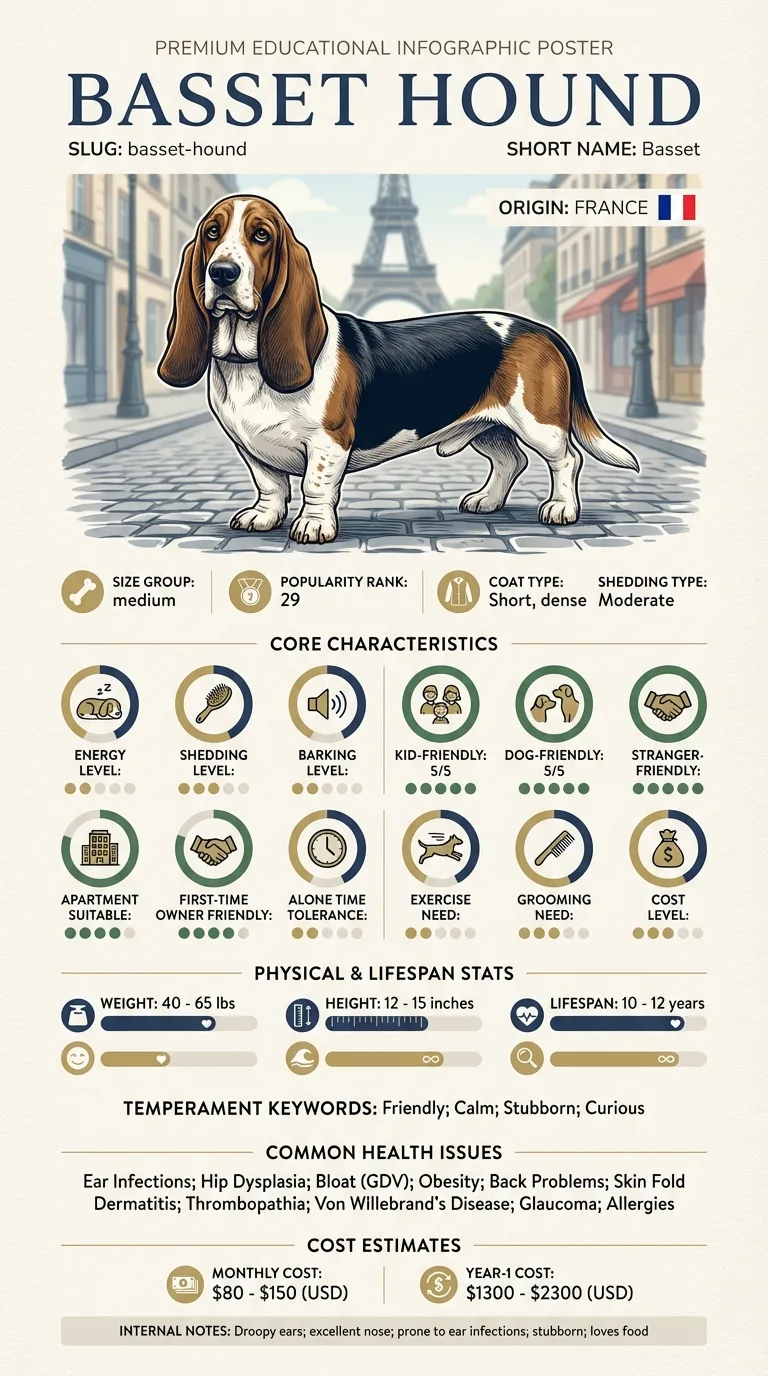
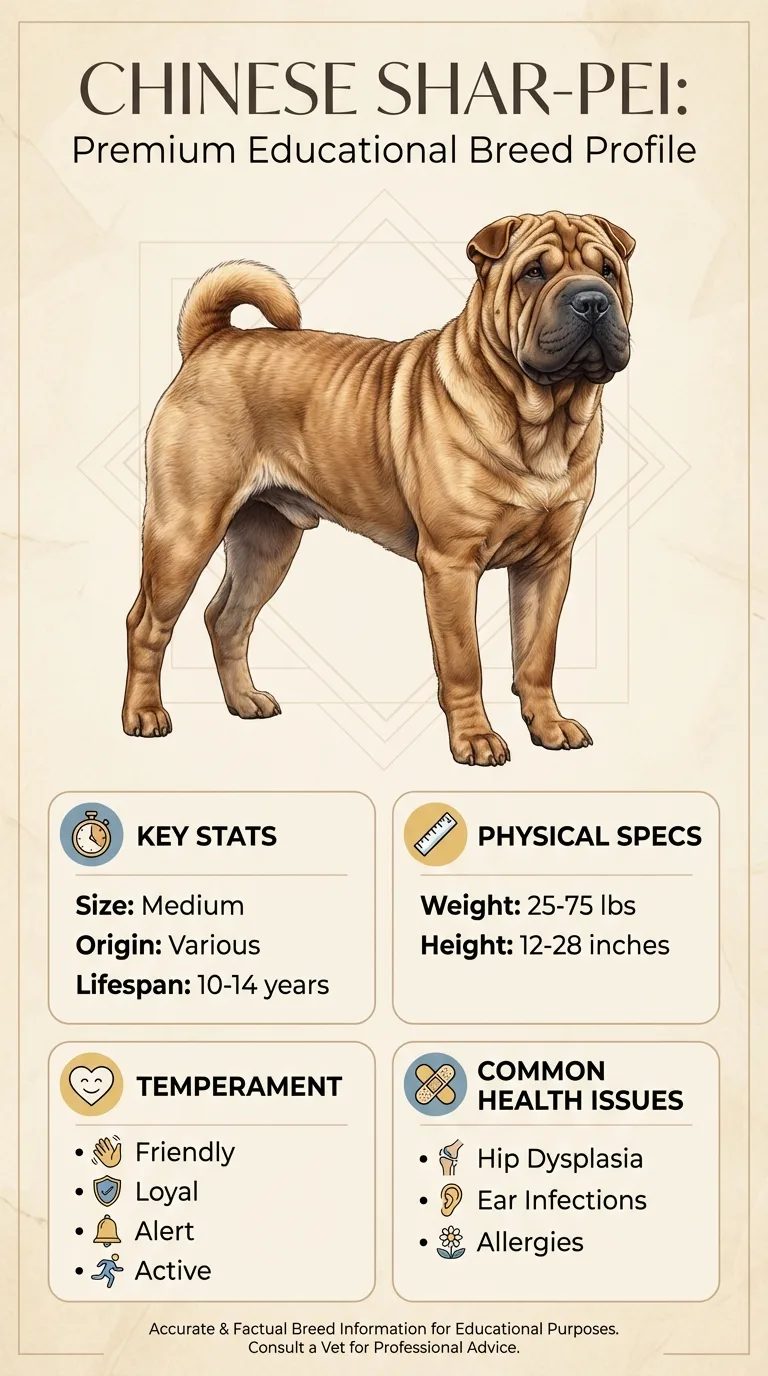
This is for someone already down to Basset Hound and Chinese Shar-Pei and deciding between them. For this pair the decision usually turns on good with other dogs and friendly to strangers, so those are covered first and in most detail. Both rate 4/5 for flats, so housing does not settle this one. The focus throughout is on daily consequences rather than breed background.
Between Basset Hound and Chinese Shar-Pei, good with other dogs is what separates them; neither is the lower-effort dog overall.
Choose Basset Hound if this is your first dog, there are young children at home and you already have another dog.
Choose Chinese Shar-Pei if you do not want a standing grooming appointment, shedding is a problem in your house and the dog will be alone during the working day.
| Feature | basset hound | chinese shar pei | Winner |
|---|---|---|---|
| Size class | medium | medium | Equal |
| Weight | 40–65 lbs | 45–60 lbs | Equal |
| Height | 12–15 in | 18–20 in | Equal |
| Lifespan | 10–12 years | 8–12 years | basset hound |
| Exercise need | Low (2/5) | Low (2/5) | Equal |
| Grooming need | Moderate (3/5) | Low (2/5) | chinese shar pei |
| Shedding | Moderate (3/5) | Low (2/5) | chinese shar pei |
| Energy level | Low (2/5) | Low (2/5) | Equal |
| Barking | Low (2/5) | Low (2/5) | Equal |
| Apartment suitability | High (4/5) | High (4/5) | Equal |
| Good for first-time owners | High (4/5) | Low (2/5) | basset hound |
| Tolerates being alone | Low (2/5) | Moderate (3/5) | chinese shar pei |
| Trainability | Low (2/5) | Low (2/5) | Equal |
| Good with kids | Very high (5/5) | Moderate (3/5) | basset hound |
| Good with other dogs | Very high (5/5) | Low (2/5) | basset hound |
| Friendly to strangers | Very high (5/5) | Low (2/5) | basset hound |
| Cost level | Moderate (3/5) | High (4/5) | basset hound |
| Coat | Short, dense | Short and harsh | Equal |
| Origin | France | Various | Equal |
| Typical monthly cost | $80–$150 | $100–$200 | Equal |
| Typical first-year cost | $1,300–$2,300 | $1,400–$2,900 | Equal |
Both fall in the medium size class, though they carry it differently - the Shar-Pei stands taller at 18-20 inches on 45-60 lbs, while the Basset Hound's 40-65 lbs sits on legs just 12-15 inches high. The Shar-Pei's famous wrinkled skin adds visual bulk without necessarily adding weight. Its wrinkles also mean folds need regular checking, since trapped moisture there is part of what drives its skin fold dermatitis risk.
These two are unusually well matched here - both rate low (2/5) on exercise need and low (2/5) on general energy. Neither breed asks much of you physically, which is part of why both show up on lists of calmer, lower-activity dogs. A short walk and some quiet time at home satisfies either dog, which is unusual for two breeds this different in temperament.
The Shar-Pei needs less coat work than its wrinkles might suggest - low (2/5) grooming and low (2/5) shedding, both a notch below the Basset's moderate (3/5) scores. What the Shar-Pei's wrinkles do add is skin fold dermatitis risk, a condition both breeds actually share. Regular fold-cleaning is closer to a health task than a grooming one, so don't let the low overall score suggest zero maintenance.
Both score high (4/5) for apartment suitability and low (2/5) for barking, making this a non-issue between them. Where they differ is tolerance for being alone - the Shar-Pei rates moderate (3/5), the Basset low (2/5) - so the Basset is more prone to distress when left by itself. Either dog can manage in a smaller space, but a Shar-Pei left alone for long stretches is somewhat less likely to develop anxious habits.
Trainability ties at low (2/5) for both - neither is an eager-to-please breed, and both carry an independent streak in their temperament lists. The real gap is first-time-owner suitability: the Basset rates high (4/5) while the Shar-Pei drops to low (2/5). Both breeds' temperament lists include "independent," a trait that shows up in obedience class as a dog that learns commands but doesn't always feel compelled to use them.
The Basset dominates this category - very high (5/5) with kids, other dogs, and strangers, against the Shar-Pei's moderate (3/5) with kids and low (2/5) with both other dogs and strangers. The Shar-Pei's reserved, independent nature makes it a more selective, one-household kind of dog. If your household regularly has visitors or other dogs around, that difference is worth weighing seriously before choosing the Shar-Pei.
The Basset lives slightly longer, 10-12 years against the Shar-Pei's wider 8-12 range. Both breeds actually share two conditions - skin fold dermatitis and ear infections - though the Shar-Pei's list adds familial Shar-Pei fever and entropion, an eyelid disorder tied to its facial wrinkles. Familial Shar-Pei fever in particular is breed-specific and worth asking a breeder or vet about directly.
The Shar-Pei costs more to maintain - high (4/5) cost level against the Basset's moderate (3/5), with a monthly range of $100-200 versus $80-150 and a first-year ceiling of $2,900 against the Basset's $2,300. Skin fold care and the occasional vet visit for flare-ups likely account for a meaningful part of that higher Shar-Pei range, on top of its already-higher baseline cost level.
Basset Hound weighs 40–65 lbs and lives 10–12 years; Chinese Shar-Pei weighs 45–60 lbs and lives 8–12 years. The two diverge most on good with other dogs, friendly to strangers and good for first-time owners and 1 other rated axes. They are level on apartment suitability, barking and energy level, so those cannot decide it. The table below marks a winner only where one breed is genuinely easier for a typical owner; size and origin are facts rather than merits and stay level. Ratings come from one source applied to both breeds, so they are meaningful against each other rather than as absolute scores.

Yes, unusually so - both rate low (2/5) on exercise need and low (2/5) on general energy, making this one of the few close matches in the data.
Two, specifically - skin fold dermatitis and ear infections appear on both lists, which makes sense given the Basset's loose skin and long ears and the Shar-Pei's deep wrinkles.
The Basset Hound, clearly - high (4/5) against the Shar-Pei's low (2/5). The Shar-Pei's reserved, independent temperament takes more experienced handling despite its calm energy level.
The Basset Hound, by a wide margin - very high (5/5) against the Shar-Pei's low (2/5), consistent with the Shar-Pei's "reserved" temperament trait.
The Shar-Pei, rated low (2/5) against the Basset Hound's moderate (3/5), and it needs less grooming overall too (2/5 vs 3/5).
The Shar-Pei runs higher - high (4/5) cost level, $100-200 monthly, versus the Basset Hound's moderate (3/5) rating and $80-150 range.
The Shar-Pei, rated moderate (3/5) against the Basset Hound's low (2/5), despite the Basset's reputation as an easygoing breed.
The Basset Hound, by a clear margin - high (4/5) for first-time owners against the Shar-Pei's low (2/5), even though both breeds share a similarly low-energy, independent temperament.
The Basset Hound, at $80-150 versus the Shar-Pei's $100-200, with a moderate (3/5) cost rating against the Shar-Pei's high (4/5).
No - both rate low (2/5) on exercise need, one of the closest matches in this whole comparison.
The Basset Hound, at a steadier 10-12 years against the Shar-Pei's wider 8-12 year range.
Secure checkout on Stripe. We never see your card.
7-day money-back guarantee. Instant access.
Health information here is general and is not veterinary advice. If your dog shows pain, sudden behaviour change, or worsening symptoms, consult a licensed veterinarian.
Some links on this site are affiliate links. We may earn a commission at no extra cost to you, and we only suggest products we believe are helpful for dog owners.
We research and check what we publish, but we do not warrant that any figure, date, price, or statement is accurate, complete, or current, and we accept no liability for any loss, cost, injury, or other harm arising from the use of this site. Use it as one reference among several. You remain responsible for your own decisions and for your dog's care - confirm anything that matters with a licensed veterinarian or another qualified professional before you act on it. Full disclaimer.
Match your lifestyle to the right dog.
Take quizNot sure which breed is right for you? Take our 2-minute quiz to find out.
Take the quiz