Health
What's the fastest way to check my Shar-Pei for swelling?
Run your hands along the back, ears, and muzzle folds after anything new — a treat, a walk somewhere unfamiliar, a product. Compare firmness and puffiness to how the dog usually feels.

Quick answer
What's the fastest way to check my Shar-Pei for swelling?
Run your hands along the back, ears, and muzzle folds after anything new — a treat, a walk somewhere unfamiliar, a product. Compare firmness and puffiness to how the dog usually feels.
One minute your Shar-Pei looks normal. Twenty minutes later, the folds around the eyes and muzzle look puffier than usual, and something is clearly wrong.
Owners of a breed with naturally loose, wrinkled skin are at a real disadvantage here — puffiness and swelling hide well in a coat that's already folded. New puppy owners, and anyone whose dog has just started a new food, medication or vaccine schedule, are the ones most likely to be caught off guard.
This guide is not medical advice. If your dog shows pain, sudden behavior change, or worsening symptoms, consult a licensed veterinarian.
Some links may be affiliate links. We may earn a commission at no extra cost to you. We only suggest products we believe are helpful for dog owners.
We research and check what we publish, but we do not warrant that any figure, date, price, or statement is accurate, complete, or current, and we accept no liability for any loss, cost, injury, or other harm arising from the use of this site. Use it as one reference among several. You remain responsible for your own decisions and for your dog's care - confirm anything that matters with a licensed veterinarian or another qualified professional before you act on it. Full disclaimer.
A true allergic reaction in a Chinese Shar-Pei is a fast-onset immune response — to an insect sting, a food, a medication, or a topical product — that causes swelling, hives, or in rare cases full anaphylaxis. It's distinct from the breed's better-known chronic skin fold and ear issues, both in speed and in what triggers it, though the two can look similar to an untrained eye.
True acute allergic reactions are uncommon compared to this breed's chronic skin conditions, but they are not rare — most owners of a dog documented with a fold-dermatitis-prone, ear-infection-prone skin profile will see at least one unmistakable reaction over the dog's lifetime, usually tied to a specific new exposure.
Nothing in this breed's documented profile marks it as unusually reaction-prone. What is documented is skin fold dermatitis and chronic ear infections, both signs that the skin barrier already runs a bit reactive at baseline. That baseline inflammation can make it harder to tell where routine irritation ends and a genuine allergic reaction begins, and it means the immune system is already somewhat primed when a new trigger shows up.
Reactions cluster around new exposures — a treat tried for the first time, a lawn recently treated with pesticide, a first vaccine of the season, a new shampoo. Warmer months bring more stinging insects and more outdoor plant contact, which is when most sting-related reactions occur.
Call immediately — this is an emergency, not a wait-and-see situation — if you see swelling spreading beyond the initial site, pale or bluish gums, vomiting, weakness, or any sign of difficulty breathing. Even isolated facial swelling without those signs should be seen the same day, since it can progress.
Start here: Chinese Shar-Pei Most Common Genetic Disorders: Screening
See all Chinese Shar PEI health problems, which breeds are prone to allergic reactions, or the full Chinese Shar PEI breed guide for temperament, exercise needs and ownership costs.
A mild, localized reaction typically resolves within a few hours to a day with vet-guided antihistamine treatment. A more serious reaction requiring emergency care usually stabilizes within the same visit, with recovery over 24 to 48 hours.
Success means catching the reaction early, getting appropriate treatment quickly, and identifying the trigger well enough to avoid a repeat — not necessarily eliminating every possible allergen from your dog's life.
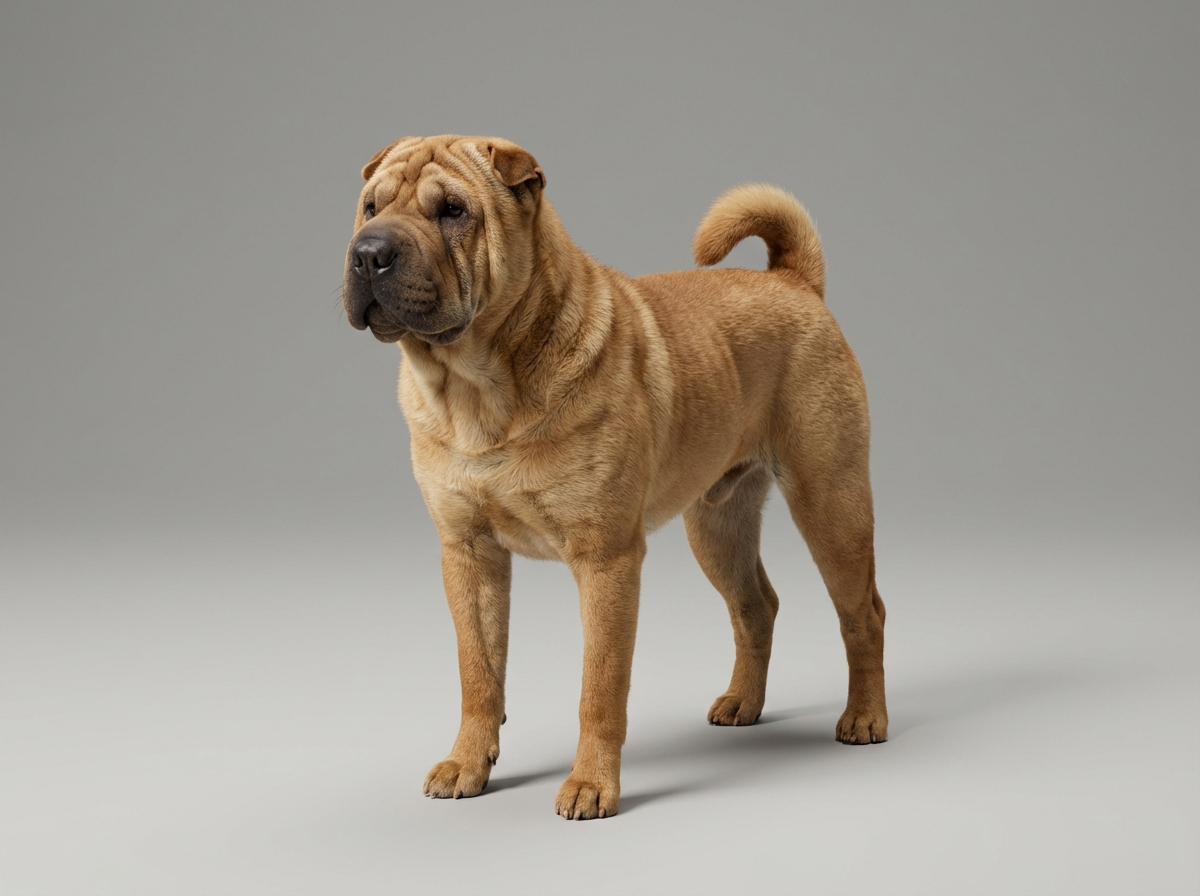
Most dogs show an allergic reaction as visible facial swelling — a muzzle that suddenly looks rounder, eyes that squint from swollen lids. On a Chinese Shar-Pei, the baseline face already has that rounded, folded look, so a genuine reaction has to be compared against how your own dog normally looks, not against a mental picture of an average dog.
The short, harsh coat documented for this breed is actually an advantage here: there's no long fur to hide hives along the back and flanks, so raised welts (urticaria) tend to be visible if you run a hand over the skin rather than just looking at the coat. Owners who get in the habit of a quick post-walk, post-meal hand-check are the ones who catch reactions early, before swelling reaches the throat.
Because this breed's skin already runs some baseline inflammation risk — it's the same skin that's prone to fold dermatitis and chronic ear infections — a first-time reaction can look, to an inexperienced eye, like just another flare-up. The difference is speed: fold dermatitis builds over days, an allergic reaction builds over minutes to a few hours.
These are the most frequent triggers behind a sudden reaction, roughly in the order owners tend to encounter them.

Priya had owned Mochi for two years and thought she knew every wrinkle on his face. During a backyard afternoon, he yelped near the flower bed, and within fifteen minutes the folds around his left eye looked noticeably tighter and rounder than the right side. Unsure if it was just normal fold puffiness or something more, Priya called her vet's after-hours line and described what she saw, including a photo she'd taken that morning for comparison. The vet asked her to come in immediately given the asymmetry and the recent yelp. At the clinic, Mochi received an antihistamine injection and was monitored for an hour. The swelling had already started reducing by the time they left. Priya now keeps a same-day comparison photo habit and a small first-aid card taped inside a kitchen cabinet with her vet's emergency number.
Key takeaway: Asymmetric swelling compared to a known baseline, plus a clear trigger event, is enough reason to call the vet immediately — you don't need every symptom on the checklist before it counts as urgent.
Speed is the tell. Fold dermatitis builds over several days and stays localized to the folds. A true allergic reaction changes the way your dog looks within minutes to a couple of hours, often spreading beyond the folds to the muzzle, ears, and eyelids, sometimes with hives across the back.
Yes, though it's uncommon. Warning signs include sudden vomiting, weak or wobbly gait, pale gums, and collapse, usually within an hour of exposure to the trigger. This is a genuine emergency and needs immediate veterinary care, not a wait-and-watch approach.
There's no documented breed-wide predisposition to acute allergic reactions specifically. What is documented is that this breed's skin already deals with fold dermatitis and ear infections, so the skin is often already inflamed, which can make a true reaction harder to distinguish visually — not necessarily more likely to occur.
Compare it to a recent photo if you have one, check the gums for color and the gait for wobbliness, and call your vet or an emergency clinic right away rather than waiting to see if it resolves on its own. Swelling that's spreading, or that includes the throat area, needs immediate attention.
Yes. Sensitivities can develop after repeated exposure, not just on the first try. If swelling or hives appear after a meal your dog has had many times before, treat it the same as a new-trigger reaction and contact your vet.
Don't guess at dosing or medication choice on your own. Call your vet or an emergency line first — they can tell you whether an antihistamine is appropriate for this specific reaction and at what amount, based on your dog's size and symptoms.
Often, yes, especially if the trigger isn't obvious. Your vet may recommend keeping a log of food, products, and environment for a few weeks, and in some cases referral for allergy testing if reactions repeat.
Run your hands along the back, ears, and muzzle folds after anything new — a treat, a walk somewhere unfamiliar, a product. Compare firmness and puffiness to how the dog usually feels.
No — some puffiness is just this breed's normal wrinkled structure. It becomes concerning when it changes quickly compared to your dog's baseline, or comes with breathing changes.
Yes. Introducing one new food item at a time, and waiting a few days before adding another, makes it far easier to identify what caused a reaction if one happens.
A same-day emergency visit for an allergic reaction commonly falls in the low hundreds of dollars for observation and medication, more if hospitalization is needed overnight.
Training won't prevent an immune response, but a dog trained to tolerate calm handling makes it much easier to check folds, ears, and gums quickly when something looks off.
A one-page prep sheet for this condition: the signs, the questions to ask, what to get priced. Unlocks here.
You get: Vet visit prep sheet
No spam. One-click unsubscribe. See our privacy policy.
Preview page 1 before you decide.