Behavior
What are quick tips for managing Poodle (Miniature) schnauzer comedo syndrome?
Maintain regular grooming, use medicated shampoos, and watch for signs of skin irritation. Regular vet check-ups can help manage the condition effectively.

Quick answer
What are quick tips for managing Poodle (Miniature) schnauzer comedo syndrome?
Maintain regular grooming, use medicated shampoos, and watch for signs of skin irritation. Regular vet check-ups can help manage the condition effectively.
Poodle (Miniature) Schnauzer Comedo Syndrome is a skin condition that can cause discomfort and issues for your dog. Understanding it is crucial for their health and happiness.
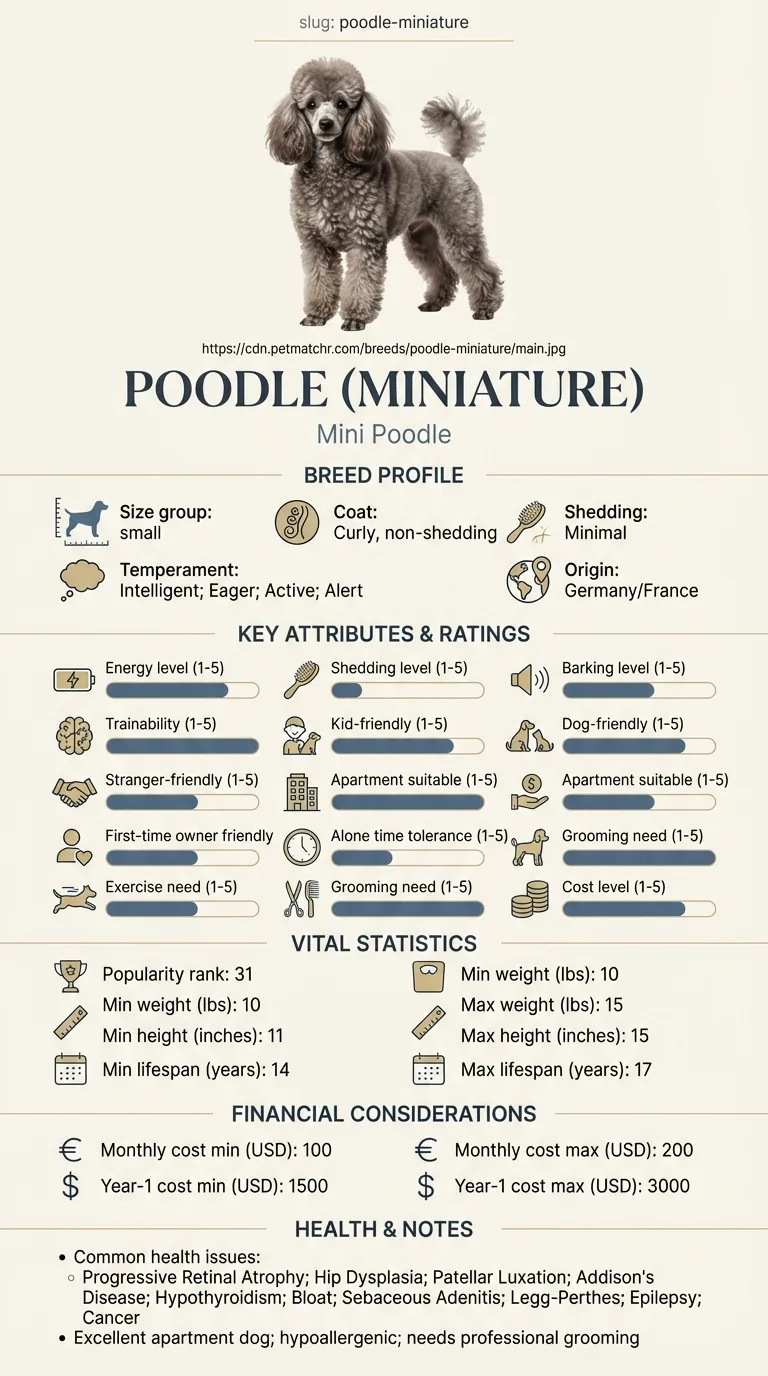
This issue typically affects owners who may not be familiar with skin conditions in dogs. Busy pet parents, especially first-time owners, might overlook the signs of Schnauzer Comedo Syndrome, thinking it’s just a grooming issue. If you’ve noticed unusual skin changes in your Mini Poodle, you’re not alone.
This guide is not medical advice. If your dog shows pain, sudden behavior change, or worsening symptoms, consult a licensed veterinarian.
Some links may be affiliate links. We may earn a commission at no extra cost to you. We only suggest products we believe are helpful for dog owners.
We research and check what we publish, but we do not warrant that any figure, date, price, or statement is accurate, complete, or current, and we accept no liability for any loss, cost, injury, or other harm arising from the use of this site. Use it as one reference among several. You remain responsible for your own decisions and for your dog's care - confirm anything that matters with a licensed veterinarian or another qualified professional before you act on it. Full disclaimer.
Check this first
Understanding when Poodle (Miniature) schnauzer comedo syndrome becomes an emergency is crucial for your dog's health. Some symptoms warrant immediate veterinary attention, while others can be managed at home with careful monitoring. Recognizing these signs will help you make the right decision for your furry friend.
If any of these apply, call your vet or an emergency clinic now. The rest of this page is for the cases that are not an emergency.
Poodle (Miniature) schnauzer comedo syndrome is a skin condition that results in blackheads and hair loss, primarily on the back and sides. Daily life with this issue can involve frequent grooming and monitoring for signs of irritation. It often leads to discomfort for your dog and frustration for you, especially if not managed properly.
This condition is relatively common in Miniature Poodles, affecting around 10-15% of the breed. If your Mini Poodle shows signs of this syndrome, it's a good idea to consult your vet.
Poodle (Miniature) schnauzer comedo syndrome is often linked to the breed's genetics. Mini Poodles can be predisposed to skin conditions due to their fine, dense coat. This genetic tendency can lead to the development of comedones, or blackheads, which may become irritated and infected.
Environmental factors also play a significant role. Poor grooming, allergens in the environment, or even certain diets can contribute to skin problems. If your Mini Poodle is exposed to irritants, it may exacerbate the symptoms of schnauzer comedo syndrome.
If the symptoms worsen or if you see signs of infection, such as swelling, redness, or discharge, schedule a vet visit. Your vet can determine if medication or a special treatment is needed for your Mini Poodle.
Avoiding these common mistakes can help improve your Poodle (Miniature) schnauzer comedo syndrome. Here are some behaviors to steer clear of.
Start here: Miniature Poodle Most Common Genetic Disorders: Screening
See all Poodle Miniature health problems, which breeds are prone to schnauzer comedo syndrome, or the full Poodle Miniature breed guide for temperament, exercise needs and ownership costs.
You can expect to see improvements in your Mini Poodle's skin condition within 4 to 8 weeks of consistent care and treatment.
Success means having fewer skin lesions, reduced itching, and an overall healthier coat. Your dog should feel more comfortable and show increased energy levels.
If your Poodle (Miniature) shows any of these serious symptoms, contact your veterinarian immediately: - Severe itching or scratching that leads to bleeding. - Swelling, redness, or discharge from the skin. - Signs of infection, like foul odor or pus. - Changes in appetite or behavior, indicating pain or distress.

In contrast, if your Poodle (Miniature) has mild symptoms, you can often manage them at home. Look for these signs: - Minor redness or irritation. - Occasional scratching without injury. - Small clumps of hair loss without skin damage. - No changes in behavior or appetite.

Lisa, a first-time dog owner in Seattle, noticed that her Mini Poodle, Charlie, was scratching excessively and developing bumps on his skin. After consulting her vet, she learned that Charlie had Schnauzer Comedo Syndrome. Determined to help him, Lisa implemented a strict grooming schedule, switched to a high-quality, hypoallergenic diet, and applied medicated ointments recommended by the vet. Slowly but surely, Charlie’s skin began to heal, and Lisa felt immense relief as he became more playful and less irritable.
Key takeaway: With patience and the right care, many dogs with Schnauzer Comedo Syndrome can lead comfortable, happy lives.
Poodle (Miniature) schnauzer comedo syndrome is a skin condition often caused by genetics. It leads to the formation of blackheads and can affect the dog's comfort and appearance. Regular grooming and skin care can help manage this issue.
To help stop Poodle (Miniature) schnauzer comedo syndrome, maintain a consistent grooming routine. Regular bathing with a gentle, medicated shampoo can keep the skin clean and reduce blackhead formation. Consult your vet for specific products tailored to your dog's needs.
While Poodle (Miniature) schnauzer comedo syndrome is not usually life-threatening, it can lead to skin infections if not treated. It's important to monitor your dog's skin and seek veterinary advice if you notice signs of irritation or infection.
Symptoms of Poodle (Miniature) schnauzer comedo syndrome typically include blackheads, bumps, and hair loss on the skin. You might also notice your dog scratching or licking the affected areas, which can lead to irritation. If you see these signs, it’s best to consult your vet.
Grooming should include regular brushing to remove dead hair and skin cells. Use a quality shampoo recommended by your vet, and consider professional grooming every few weeks to help manage the condition effectively.
Yes, a poor diet can contribute to skin issues, including schnauzer comedo syndrome. Feeding a balanced diet rich in omega fatty acids can promote healthier skin and fur. Always consult your vet for dietary recommendations.
Yes, Poodle (Miniature) schnauzer comedo syndrome is believed to have a genetic component. This condition is more common in certain breeds, so it’s essential to discuss your dog’s lineage with a breeder or vet. Responsible breeding can help reduce the risk of this syndrome.
Older Poodles (Miniature) can develop schnauzer comedo syndrome, particularly if they have a genetic predisposition. Age can also affect skin health in general, so regular grooming and vet check-ups are crucial to catch any issues early.
While you can't fully prevent Poodle (Miniature) schnauzer comedo syndrome, maintaining a good grooming routine can help. Regular baths with a mild shampoo and proper skin care can reduce the risk of skin issues. Be sure to consult your vet for tailored advice.
You should see a vet if you notice worsening symptoms or if your dog seems uncomfortable. If the blackheads become inflamed or if your dog is excessively scratching, it's time for a professional evaluation. Early intervention can make a significant difference in treatment outcomes.
Maintain regular grooming, use medicated shampoos, and watch for signs of skin irritation. Regular vet check-ups can help manage the condition effectively.
Look for gentle, medicated shampoos specifically designed for skin conditions. Your vet can recommend the best options tailored for your Poodle (Miniature).
Grooming should ideally be done every 4-6 weeks to keep the skin healthy and to manage comedo syndrome effectively.
Foods rich in omega fatty acids can improve skin health. Consult your vet for the best dietary options for your Poodle (Miniature).
A one-page prep sheet for this condition: the signs, the questions to ask, what to get priced. Unlocks here.
You get: Vet visit prep sheet
No spam. One-click unsubscribe. See our privacy policy.
Preview page 1 before you decide.