Health
What is distichiasis?
An extra eyelash growing from an abnormal spot on the lid margin, usually directed toward the eye, causing repeated irritation with each blink.

Quick answer
What is distichiasis?
An extra eyelash growing from an abnormal spot on the lid margin, usually directed toward the eye, causing repeated irritation with each blink.
An eye that waters, squints and gets repeat infections is not always unlucky. Sometimes an eyelash growing in the wrong direction has been rubbing the same spot on the cornea for months.
Owners treating recurring eye redness with drops that work for a few days and then stop working, and anyone told their dog 'just has sensitive eyes' without anyone examining the eyelid margin itself under magnification.
This guide is not medical advice. If your dog shows pain, sudden behavior change, or worsening symptoms, consult a licensed veterinarian.
Some links may be affiliate links. We may earn a commission at no extra cost to you. We only suggest products we believe are helpful for dog owners.
A share of the eye infections and irritation documented in this breed trace not to an infection acquired from the environment but to an eyelid or eyelash that is structurally misdirected: distichiasis, where a misplaced lash rubs the cornea, and entropion, where the lid margin itself rolls inward. Both create chronic mechanical irritation that treating with drops alone does not resolve, because the underlying cause keeps contacting the eye's surface.
Eyelid and eyelash conformation problems are recognized causes of recurring eye irritation in small breeds generally, and eye infections are specifically documented among this breed's health issues, making a lid examination a reasonable step whenever redness or tearing does not fully resolve with standard treatment.
This breed's compact facial structure and prominent eyes create less margin for error in eyelid conformation than a longer-faced dog has, and eye infections are documented as one of its recognized health issues. When a lash follicle sits in the wrong location, or when lid tissue and muscle proportions cause inward rolling, the result is a lid that works against the eye rather than protecting it.
Nothing environmental causes a misdirected lash or a rolled lid, since both are structural, but environmental irritants such as dust, wind or dry air can turn a mild, previously tolerable case into one with visible symptoms by adding an extra layer of surface irritation on top of the mechanical rubbing.
Book an appointment for any eye irritation, tearing or squinting that recurs after treatment, or that affects consistently the same eye or the same spot, since this pattern suggests a mechanical cause needing direct examination of the lid margin rather than repeated drops. Seek same-day care for a visibly cloudy cornea, a held-shut eye, or sudden severe pain, since these can indicate an active ulcer that needs prompt treatment.
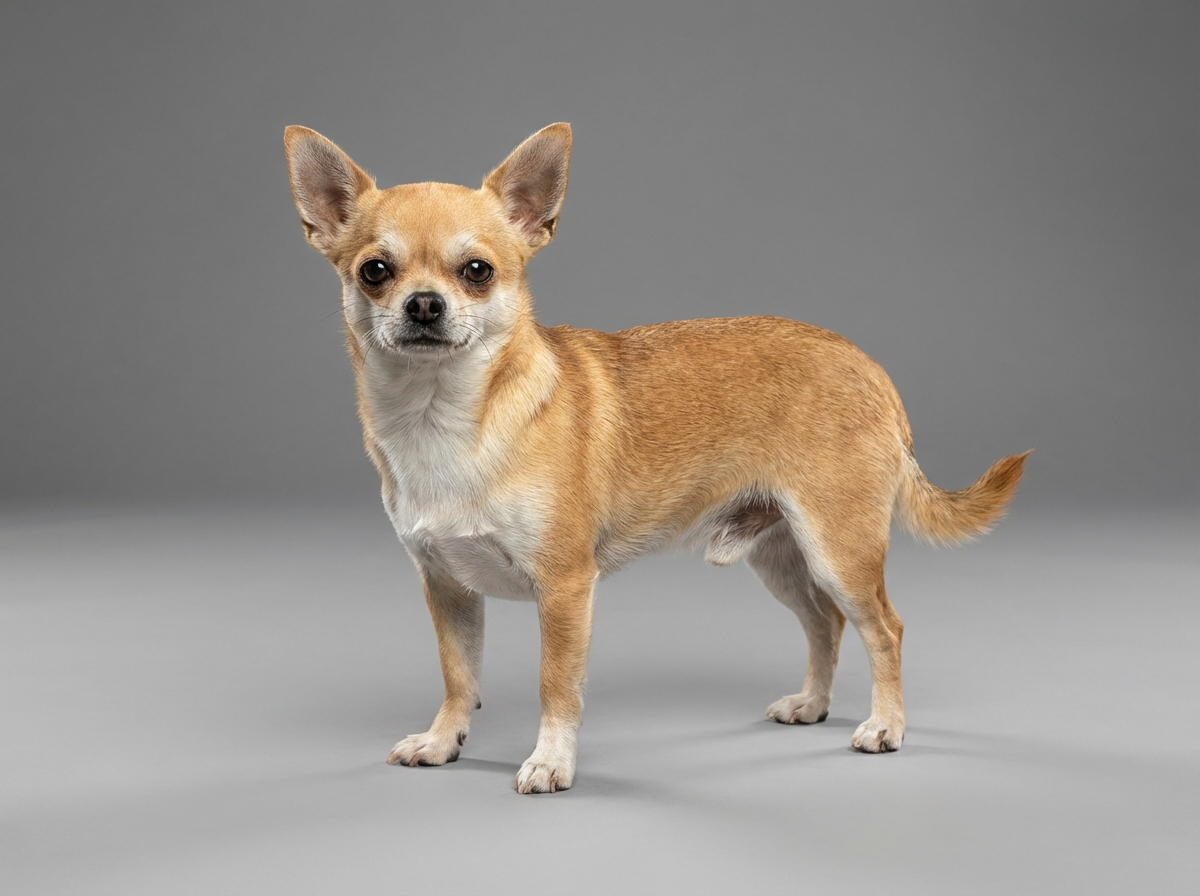
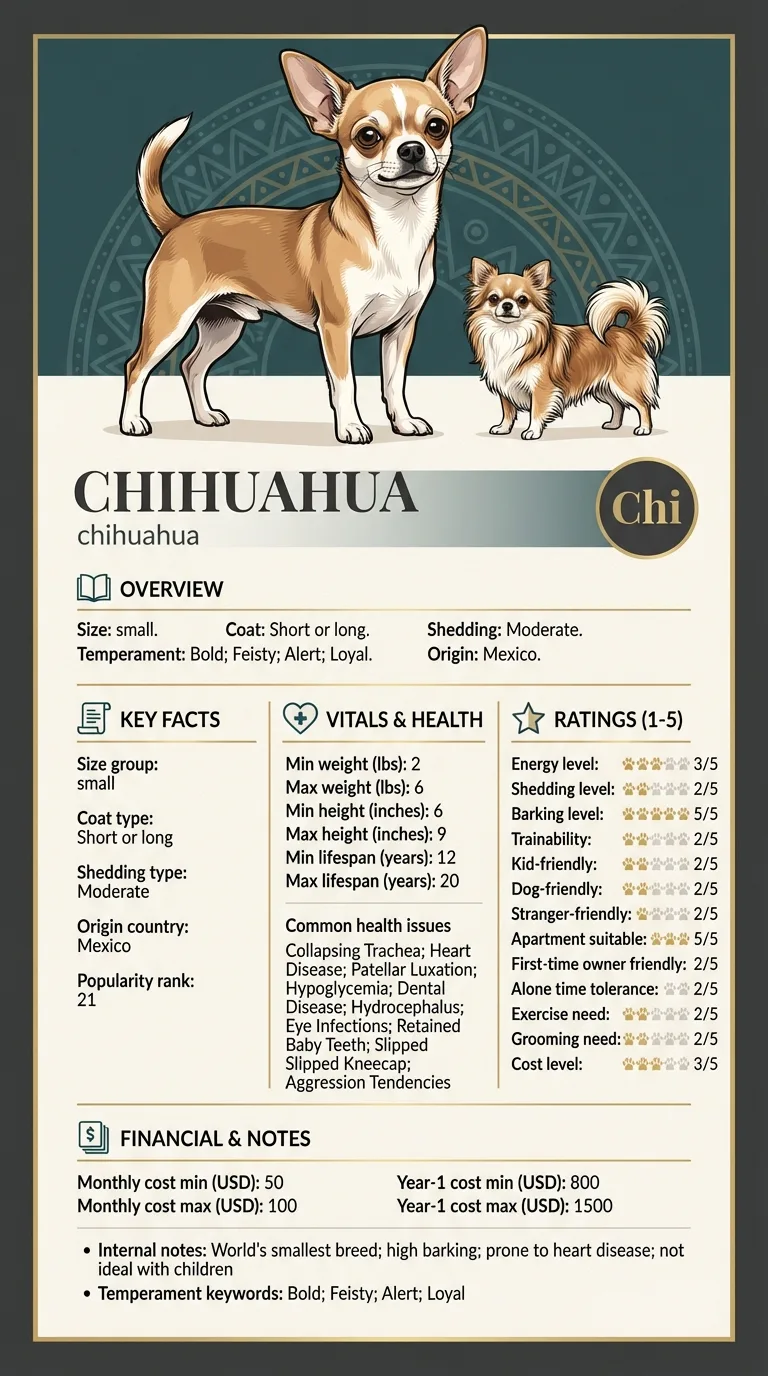
See all Chihuahua health problems, which breeds are prone to eye disorders, or the full Chihuahua breed guide for temperament, exercise needs and ownership costs.
A single problem lash removed by electrolysis often resolves symptoms within days to a couple of weeks, though monitoring for regrowth from the same follicle is worthwhile. Surgical correction of entropion typically shows comfort improvement within the two-week recovery window, with the corrected lid position being permanent.
Success is an eye that stays comfortable, dry around the lid margin and free of recurring redness without ongoing drops. For a surgically corrected lid, it means a permanent change in position rather than a temporary fix that needs repeating.
Distichiasis is the presence of extra eyelashes emerging from an abnormal spot along the lid margin, growing inward toward the eye rather than outward and away from it. Depending on how coarse the misplaced lash is and exactly where it sits, it can graze the cornea with every blink, producing chronic low-grade irritation, or in more severe cases a deeper scratch or ulcer that keeps recurring in precisely the same location.
Entropion is a rolling-in of the eyelid margin itself, usually the lower lid, so that the haired skin outside the lid folds inward and the hair contacts the eye directly with every blink instead of the smooth inner lid surface. It ranges from mild, causing intermittent squinting and tearing, to marked enough that surgical correction of the lid position is the only real fix. Less commonly, ectropion, an outward-rolling of the lid, leaves the eye's surface less protected and more exposed to debris and drying.
What unites all three is that the eye itself is often structurally normal; the problem is mechanical and external to it. A vet examines the lid margin closely, sometimes with magnification, to find the exact lash or fold responsible, because treating the resulting redness or ulcer with drops alone, without correcting the mechanical cause, means the irritation returns as soon as the drops stop.

Treatment targets the mechanical cause rather than only the resulting irritation.
If you think your Chi has eye disorders, the plan is three steps: write down what you have seen and when it started, book a veterinary appointment rather than waiting for the next flare, and take video of the behaviour or symptom before you go — the thing you are worried about rarely happens in the consulting room. Screening in the parents covers collapsing trachea, heart disease, patellar luxation.
What the vet visit should produce is a diagnosis and a written plan, not just reassurance: what is being ruled out, what the monitoring interval is, and which signs mean you come back sooner. Ask what the treatment costs across a year rather than per visit, because that is the number that decides whether you are managing this condition or reacting to it.
Between appointments, keep a short log — dates, what you saw, what changed. It is the single most useful thing an owner brings to a follow-up, and for eye disorders it is often what separates a clear pattern from a guess.
Coco squinted his left eye on and off for close to four months, and each course of antibiotic drops his owner Beto picked up settled it for about a week before the squinting returned. Two separate visits treated it as a recurring infection without anyone examining the lid margin under magnification. At a third visit, a different vet used a slit lamp and found a single fine eyelash emerging from just inside the lower lid margin, angled directly toward the cornea, with a faint linear mark on the cornea's surface exactly where it made contact. The lash was removed and the follicle treated with cryotherapy to prevent regrowth from that same spot. Within ten days the squinting had stopped completely, and it has not returned in the eighteen months since. Beto's frustration was specific: two rounds of drops had each briefly calmed the surface without anyone asking what kept irritating it underneath.
Key takeaway: Eye drops that work for a week and then stop working are not a sign the infection is stubborn. They are a sign something is still touching the eye, and that something is usually found by someone looking directly at the lid margin rather than treating the redness again.
A distichia grows from an abnormal location along the lid margin, in a spot that should not produce hair, and it is usually directed toward the eye's surface rather than away from it, which is what causes irritation with every blink.
It is most often present from a young age in predisposed dogs, but lid position can also change with scarring from a prior injury or chronic squinting from a painful eye elsewhere, so an acquired case is possible even if congenital cases are more typical.
If a misdirected lash or a rolled-in lid is still contacting the cornea, drops can calm the surface temporarily but the mechanical irritation continues underneath, so symptoms return as soon as treatment stops. This pattern is the clue that points toward a conformational cause.
It is a routine procedure in veterinary ophthalmology, performed under general anesthesia with the small-patient precautions this breed's size requires. Most dogs recover comfortably within one to two weeks with an appropriate cone or barrier to prevent rubbing.
Recurrence in exactly the same spot, squinting that a course of antibiotic drops does not fully resolve, or visible hair contacting the eye's surface on close inspection are all reasons to ask specifically about eyelid and eyelash examination rather than treating it as a one-off infection.
Chronic, untreated irritation can lead to scarring or a deep ulcer that threatens vision in severe cases, which is why a recurring pattern deserves a proper lid examination rather than repeated rounds of drops without a clear cause identified.
An extra eyelash growing from an abnormal spot on the lid margin, usually directed toward the eye, causing repeated irritation with each blink.
An inward rolling of the eyelid so that haired skin contacts the eye's surface instead of the smooth inner lid, ranging from mild to needing surgical correction.
If a misdirected lash or rolled lid is the actual cause, drops only calm symptoms temporarily. The mechanical cause needs its own treatment to stop the cycle.
Yes, it is a routine ophthalmic procedure, done under anesthesia with precautions suited to a small patient's size.
A one-page prep sheet for this condition: the signs, the questions to ask, what to get priced. Unlocks here.
You get: Vet visit prep sheet
No spam. One-click unsubscribe. See our privacy policy.
Preview page 1 before you decide.