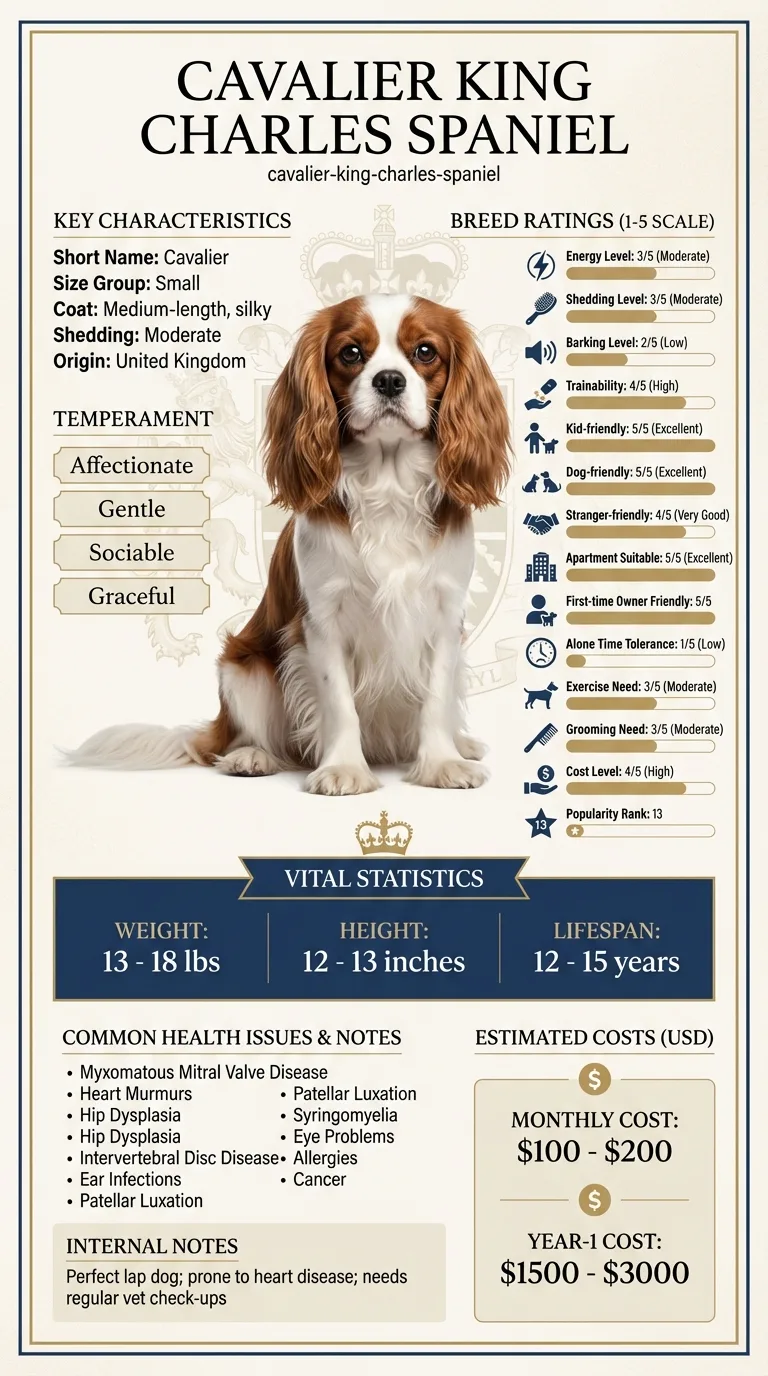
Cavalier King Charles Spaniel Osteochondritis Dissecans (OCD)
Quick answer
What are quick tips for managing Cavalier King Charles Spaniel osteochondritis dissecans (ocd)?
Limit high-impact activities to reduce stress on joints. Regular vet check-ups are essential for monitoring health. Weight management can also help alleviate joint strain.
Cavalier King Charles Spaniels can suffer from osteochondritis dissecans (OCD), which causes joint discomfort and can affect their quality of life. (Cavalier King Charles Spaniel osteochondritis dissecans (ocd))
Owners of Cavalier King Charles Spaniels, especially those who notice their dog limping or expressing discomfort, may find this issue particularly challenging. It can be frustrating for first-time dog owners or busy families who want to ensure their pets are healthy and well-cared-for.
Important reminder
This guide is not medical advice. If your dog shows pain, sudden behavior change, or worsening symptoms, consult a licensed veterinarian.
Some links may be affiliate links. We may earn a commission at no extra cost to you. We only suggest products we believe are helpful for dog owners.
We research and check what we publish, but we do not warrant that any figure, date, price, or statement is accurate, complete, or current, and we accept no liability for any loss, cost, injury, or other harm arising from the use of this site. Use it as one reference among several. You remain responsible for your own decisions and for your dog's care - confirm anything that matters with a licensed veterinarian or another qualified professional before you act on it. Full disclaimer.
Check this first
When Cavalier King Charles Spaniel Osteochondritis Dissecans (OCD) Is an Emergency
Recognizing when Cavalier King Charles Spaniel osteochondritis dissecans (OCD) becomes an emergency is crucial. If your dog shows extreme limping, swelling, or refuses to put weight on a leg, these are red flags. Additionally, if your Cavalier exhibits severe pain, cries when touched, or has a sudden change in behavior, call your vet immediately.
If any of these apply, call your vet or an emergency clinic now. The rest of this page is for the cases that are not an emergency.
What this problem looks like
Cavalier King Charles Spaniel osteochondritis dissecans (OCD) is a joint condition that can lead to pain and discomfort. This problem often manifests as limping, reluctance to play, or difficulty climbing stairs. Daily life for affected Cavaliers can be challenging, as they may struggle with normal activities due to joint discomfort.
Common triggers
Rapid growth during puppyhood
Excessive exercise or strain on joints
Genetic predisposition to joint issues
Obesity leading to increased stress on joints
Osteochondritis dissecans (OCD) is relatively common in Cavalier King Charles Spaniels, especially in younger dogs. Breeders and owners should be aware of this risk, as it can affect their quality of life.
Why this happens
Breed factors
Cavalier King Charles Spaniels are small dogs that can be prone to joint issues like osteochondritis dissecans (OCD). Their genetics may predispose them to cartilage development problems, which can lead to discomfort and mobility issues. Additionally, their overall structure can make them more susceptible to these types of orthopedic conditions.
Environment factors
Environmental factors also play a role in the development of OCD. Excessive weight gain due to a high-calorie diet or lack of exercise can strain their joints. Moreover, if they engage in high-impact activities, especially at a young age, it can exacerbate joint problems.
What you can do at home (once it is not an emergency)
When to talk to your vet
If your Cavalier is exhibiting persistent limping, reluctance to play, or signs of pain, it's essential to consult your vet. They can evaluate your dog's condition and suggest appropriate treatments, which may include pain management or surgical options.
At home, alongside your vet's plan
Monitor your Cavalier's weight. Keep them at a healthy weight to reduce stress on their joints. Consult your vet for ideal weight guidelines.
Limit high-impact activities such as jumping or running on hard surfaces. Instead, provide gentle exercises like short walks or swimming.
Incorporate joint supplements into their diet after discussing with your vet. Glucosamine and omega-3 fatty acids can support joint health.
Mistakes that make Osteochondritis Dissecans (OCD) worse
Avoiding common pitfalls can help your Cavalier King Charles Spaniel manage osteochondritis dissecans (OCD) better. Here are some mistakes to steer clear of.
Ignoring Symptoms: Many owners dismiss early signs of discomfort, thinking it's just normal aging. Recognizing and addressing symptoms early can prevent further joint damage.
Over-exercising: Exercise is important, but too much can exacerbate OCD symptoms. Stick to short, gentle walks instead of long runs.
Neglecting Weight Management: Keeping your Cavalier at a healthy weight can reduce stress on their joints. Monitor their diet and avoid overfeeding to maintain a healthy weight.
Using Inappropriate Training Techniques: Harsh training methods can increase stress and anxiety, worsening OCD. Use positive reinforcement techniques instead to build trust and reduce anxiety.
Failing to Follow Vet Recommendations: Not adhering to your vet's treatment plan can lead to worsening symptoms. Always follow through with prescribed therapies and check-ups.
Skimping on Joint Supplements: Many owners overlook the benefits of joint supplements. Talk to your vet about starting a suitable supplement regimen to support joint health.
Ignoring Environmental Adjustments: A hard floor can aggravate joint pain. Provide soft bedding and consider using rugs to minimize discomfort in your home.
More Cavalier King Charles Spaniel health & behavior issues
With consistent, proper care, you can see improvements in about 3 to 6 months.
Success means your Cavalier King Charles Spaniel can move comfortably, engage in light play, and show less reluctance to exercise.
When to Watch and Wait
In less severe cases, you can monitor your Cavalier's condition at home. If they show mild limping or occasional stiffness after play but still engage in normal activities, you might not need immediate vet attention. However, keep a close watch and create a plan for gradual exercise and rest.
Cavalier King Charles Spaniel - When to Watch and Wait
Emily and Bella's Journey with OCD
Emily, a busy nurse in Los Angeles, adopted Bella, her Cavalier King Charles Spaniel, hoping for a playful companion. After a few months, Bella began limping and showing signs of discomfort. Emily learned that Bella had osteochondritis dissecans (OCD), which required careful management through weight control and low-impact exercises. By working with a vet and a trainer, Emily followed a tailored exercise plan and adjusted Bella's diet. Within six months, Bella was much more active and seemed happier.
Key takeaway: With patience and the right approach, you can help your Cavalier King Charles Spaniel manage OCD and enjoy a fulfilling life.
Frequently asked questions
Why does my Cavalier King Charles Spaniel have osteochondritis dissecans (ocd)?
Cavalier King Charles Spaniels may develop osteochondritis dissecans (OCD) due to genetic predispositions and abnormal cartilage growth in their joints. This condition often leads to discomfort and mobility issues. It's essential to consult a vet for a proper diagnosis and treatment options.
How can I stop my Cavalier from suffering due to osteochondritis dissecans (ocd)?
To manage osteochondritis dissecans (OCD) in your Cavalier, focus on controlled exercise and weight management. Avoid high-impact activities that stress their joints. Regular vet visits will help monitor the condition and adjust treatment as needed.
What are the treatment options for Cavalier King Charles Spaniel osteochondritis dissecans (ocd)?
Treatment for osteochondritis dissecans (OCD) in Cavaliers can include physical therapy, anti-inflammatory medications, and dietary supplements. In severe cases, surgery may be necessary to remove loose cartilage or repair the joint. Always discuss options with your veterinarian.
Can training help with my Cavalier's osteochondritis dissecans (ocd)?
Training can help manage your Cavalier's osteochondritis dissecans (OCD) by reinforcing low-impact commands and routines. Focus on training sessions that promote gentle behavior, avoiding strenuous activities. Consistency is key to helping them adapt.
What signs should I look for in my Cavalier King Charles Spaniel with osteochondritis dissecans (ocd)?
Watch for signs like limping, reluctance to play, or difficulty getting up. If your Cavalier shows signs of pain or discomfort, it's crucial to consult a veterinarian promptly. Early intervention can help manage the condition effectively.
What causes osteochondritis dissecans (OCD) in Cavalier King Charles Spaniels?
Osteochondritis dissecans (OCD) in Cavalier King Charles Spaniels is typically caused by abnormal cartilage development in the joints. This can stem from a combination of genetic factors, rapid growth in puppies, and injury. It's important to monitor their activity level and consult with a vet if you notice any signs of discomfort.
How can I help my Cavalier King Charles Spaniel with OCD?
You can help your Cavalier King Charles Spaniel with OCD by ensuring they receive appropriate rest and limiting high-impact activities. A vet may recommend physical therapy or specific exercises to strengthen the joints. Regular check-ups and following a vet's advice on managing their weight can also be beneficial.
Is there a specific diet that can help with my Cavalier's OCD?
While there's no one-size-fits-all diet for managing osteochondritis dissecans (OCD), feeding a balanced diet that supports joint health is crucial. Look for high-quality dog food with omega fatty acids and glucosamine. Always consult your veterinarian for dietary recommendations tailored to your Cavalier's specific needs.
When should I take my Cavalier to the vet for OCD symptoms?
You should take your Cavalier King Charles Spaniel to the vet if you notice persistent limping, joint swelling, or signs of pain, especially after exercise. Early intervention can help manage osteochondritis dissecans (OCD) and prevent further complications. Don't hesitate to seek professional advice if you're concerned.
Can older Cavalier King Charles Spaniels develop OCD?
While osteochondritis dissecans (OCD) typically develops in younger dogs, older Cavalier King Charles Spaniels can still experience joint issues related to previous OCD or other conditions. Regular vet check-ups are important for aging dogs to catch any potential problems early on and to help manage their overall joint health.
What are quick tips for managing Cavalier King Charles Spaniel osteochondritis dissecans (ocd)?
Limit high-impact activities to reduce stress on joints. Regular vet check-ups are essential for monitoring health. Weight management can also help alleviate joint strain.
Costs
How much does treatment for Cavalier King Charles Spaniel osteochondritis dissecans (ocd) cost?
Treatment costs can vary widely, typically ranging from $500 to $3,000 depending on the severity and treatment method. Always discuss financial options with your vet.
Living
Can Cavalier King Charles Spaniels live with osteochondritis dissecans (ocd)?
Yes, with proper management, many Cavaliers can live comfortable, happy lives despite OCD. Regular care and a tailored approach can significantly improve their quality of life.
A fuller vet-visit kit for Cavalier King Charles Spaniel Osteochondritis Dissecans OCD
The free prep sheet covers the same-day warning signs, a symptom log and the questions to ask. We are considering a fuller kit that adds a cost worksheet for the usual tests and treatments (US price ranges with their sources) and a plain-English guide to ways of covering the bill. It is not built yet; this list tells us whether it is worth building.
One email, no spam, unsubscribe anytime. Information only, not veterinary advice.