Health
What are quick tips for Cavalier King Charles Spaniel heart conditions?
Focus on regular vet check-ups, a balanced diet, and moderate exercise. Monitor their weight closely to prevent added strain on the heart.

Quick answer
What are quick tips for Cavalier King Charles Spaniel heart conditions?
Focus on regular vet check-ups, a balanced diet, and moderate exercise. Monitor their weight closely to prevent added strain on the heart.
Cavalier King Charles Spaniel heart conditions can deeply affect your pet's health and happiness. Understanding them is crucial for their well-being.
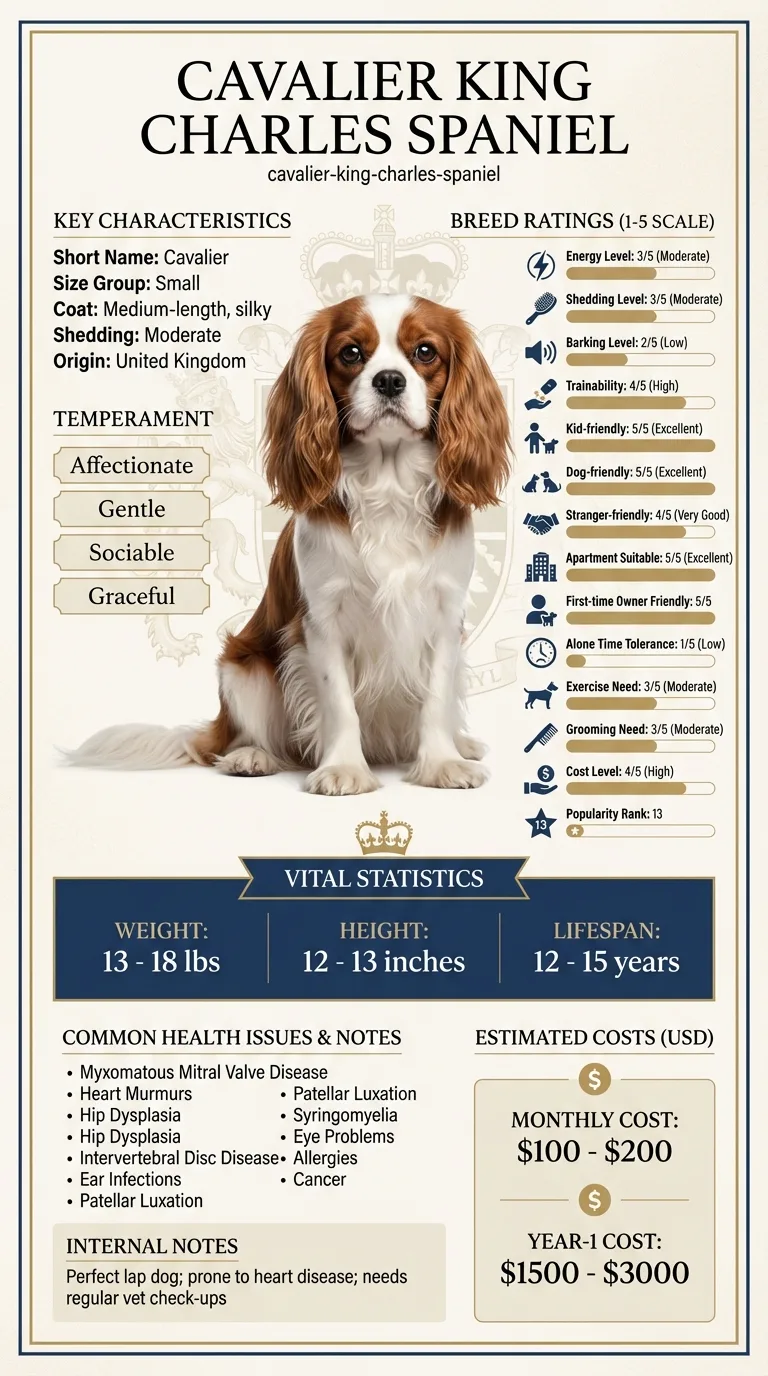
Many Cavalier owners find themselves grappling with these heart issues. They may notice symptoms like coughing or lethargy, which can be distressing for both the pet and the owner.
This guide is not medical advice. If your dog shows pain, sudden behavior change, or worsening symptoms, consult a licensed veterinarian.
Some links may be affiliate links. We may earn a commission at no extra cost to you. We only suggest products we believe are helpful for dog owners.
We research and check what we publish, but we do not warrant that any figure, date, price, or statement is accurate, complete, or current, and we accept no liability for any loss, cost, injury, or other harm arising from the use of this site. Use it as one reference among several. You remain responsible for your own decisions and for your dog's care - confirm anything that matters with a licensed veterinarian or another qualified professional before you act on it. Full disclaimer.
Check this first
It's important to know when Cavalier King Charles Spaniel heart conditions become urgent. Some signs indicate you should call your vet immediately, while others can be monitored with a watchful eye. If your Cavalier shows any of the following red flags, don’t wait—contact your vet right away.
Red-flag signs include sudden lethargy, difficulty breathing, persistent coughing, or fainting spells. These symptoms can point to serious heart issues that require immediate attention. Also, if you notice a rapid heartbeat or any swelling in the abdomen, seek help right away.
On the other hand, if your Cavalier is experiencing mild symptoms such as occasional coughing or slight exercise intolerance, you may be able to monitor these conditions at home. Keep a close watch and note any changes. It’s always a good idea to have a plan in place, including regular vet check-ups, especially since Cavaliers are prone to heart issues. If symptoms persist or worsen, consult your vet for guidance.
If any of these apply, call your vet or an emergency clinic now. The rest of this page is for the cases that are not an emergency.
Cavalier King Charles Spaniel heart conditions are a serious concern for owners. These small, affectionate dogs are particularly prone to heart issues such as Myxomatous Mitral Valve Disease and heart murmurs. Owners may notice symptoms like coughing, lethargy, or difficulty breathing, which can be distressing for both the dog and the family.
Heart conditions are very common in Cavalier King Charles Spaniels, affecting a significant portion of the breed. It's estimated that over 50% of Cavaliers will develop some form of heart disease by the age of five. This makes awareness and proactive care essential for owners.
Cavalier King Charles Spaniels are predisposed to certain heart conditions due to their genetics. Specifically, they are prone to Myxomatous Mitral Valve Disease, which affects their heart's ability to function properly. This breed's small size and unique anatomy can also contribute to these heart issues.
Environmental factors, such as diet and exercise, can exacerbate heart conditions. A sedentary lifestyle or poor nutrition can lead to obesity, putting additional strain on the heart. Stressful environments, such as loud noises or being left alone for long periods, can also worsen heart health.
If you notice any signs of heart problems, such as coughing, lethargy, or difficulty breathing, contact your veterinarian immediately. Regular vet check-ups are essential for early detection and management of heart conditions.
Avoid these common mistakes that can worsen heart conditions in Cavalier King Charles Spaniels. Instead, focus on safer alternatives to help your pup thrive.
Start here: Cavalier King Charles Spaniel Genetic Disorders: Screening
See all Cavalier King Charles Spaniel health problems, which breeds are prone to heart conditions, or the full Cavalier King Charles Spaniel breed guide for temperament, exercise needs and ownership costs.
You should expect to see improvements in your Cavalier King Charles Spaniel's heart health within a few months of proper care and management.
Success means regular vet visits, a balanced diet, and a consistent exercise routine that keeps your dog active and comfortable.
Emily, a busy nurse in New York, adopted Max, a Cavalier King Charles Spaniel, who was diagnosed with heart murmur shortly after she brought him home. At first, she felt overwhelmed, unsure of how to manage his health. After consulting with a vet and creating a structured care plan, Emily adjusted Max's diet and incorporated gentle exercise into their daily routine. With regular check-ups and a lot of love, Max showed significant improvement in his energy levels and overall health.
Key takeaway: With the right support, managing Cavalier King Charles Spaniel heart conditions is possible, but it requires dedication and a proactive approach.
Cavalier King Charles Spaniels are prone to heart conditions mainly due to genetics. Myxomatous Mitral Valve Disease is common in this breed, often starting as early as three years old. Regular vet visits are essential for early detection and management.
While you can't change genetics, you can help your Cavalier maintain a healthy weight and stay active. A balanced diet and regular exercise can reduce the risk of heart disease. Regular check-ups with your vet also help catch issues early.
Watch for symptoms like coughing, difficulty breathing, fatigue, or a swollen abdomen. If your Cavalier shows any of these signs, contact your vet promptly. Early intervention can make a difference in managing heart conditions.
Training isn't a direct solution for heart conditions, but ensuring your dog is calm and not overly excited can help. Focus on gentle, low-impact exercises and consider training that encourages relaxation. Consult your vet for tailored advice.
Treatment options vary depending on the specific heart condition. Common approaches include medications to manage symptoms and improve heart function. In severe cases, surgery may be recommended, so always discuss options with your vet.
Costs can vary widely based on the condition and treatment required. Expect to spend anywhere from $100 to $200 monthly for ongoing care, with potential initial costs in the range of $1,500 to $3,000 in the first year. Always check with your vet for estimates.
Support your Cavalier by maintaining a healthy lifestyle, providing a stress-free environment, and closely monitoring their health. Regular vet visits, a good diet, and moderate exercise can help manage their condition effectively.
Early signs of heart conditions can include coughing, difficulty breathing, and lethargy. If your Cavalier shows any of these symptoms, it's essential to consult a vet right away.
Yes, many Cavalier King Charles Spaniels can live a normal lifespan even with heart conditions. However, proper management, regular vet check-ups, and medication can significantly improve their quality of life.
You can help your Cavalier by providing a low-salt diet, ensuring they get regular but not excessive exercise, and keeping them calm during stressful situations. Consult your vet for a tailored plan.
Yes, Cavalier King Charles Spaniels are generally more prone to heart conditions as they age. It's crucial to monitor their health closely and schedule regular vet visits for early detection.
If diagnosed, follow your vet's recommendations for treatment, which may include medication and lifestyle changes. Regular monitoring and open communication with your vet can help manage the condition effectively.
Focus on regular vet check-ups, a balanced diet, and moderate exercise. Monitor their weight closely to prevent added strain on the heart.
For a Cavalier with heart conditions, aim for vet visits every 6 months for monitoring and possible adjustments in treatment.
Yes, a heart-healthy diet can support overall health. Consult your vet for specific dietary recommendations tailored to your Cavalier's needs.
Look out for increased coughing, lethargy, or sudden weight gain. If you notice these, contact your vet immediately.
Yes, heart conditions, especially Myxomatous Mitral Valve Disease, are prevalent in this breed. Regular monitoring is essential.
A one-page prep sheet for this condition: the signs, the questions to ask, what to get priced. Unlocks here.
You get: Vet visit prep sheet
No spam. One-click unsubscribe. See our privacy policy.
Preview page 1 before you decide.