DogBreedCompass
← Back to breed profile

Cavalier King Charles Spaniel Most Common Genetic Disorders

Cavalier King Charles Spaniels are known for their affectionate nature, but they are also prone to several genetic disorders that can impact their health. Understanding these issues is crucial for potential and current owners. (Cavalier King Charles Spaniel most common genetic disorders)

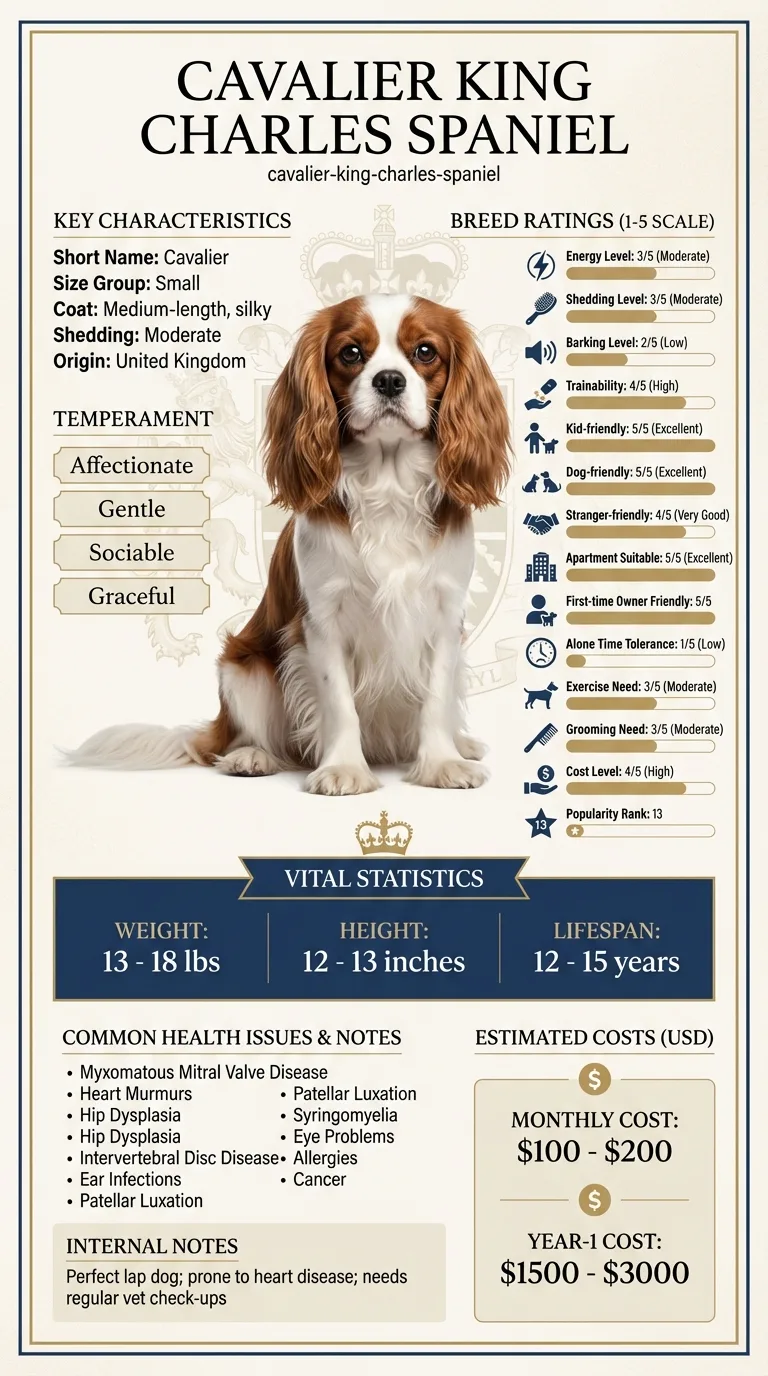
Cavalier King Charles Spaniel Most Common Genetic Disorders infographic

Owners of Cavalier King Charles Spaniels, especially first-time dog parents, often face challenges related to health issues. These can include managing vet visits, understanding symptoms, and finding the right treatment options.

Important reminder

This guide is not medical advice. If your dog shows pain, sudden behavior change, or worsening symptoms, consult a licensed veterinarian.

Some links may be affiliate links. We may earn a commission at no extra cost to you. We only suggest products we believe are helpful for dog owners.

What this problem looks like

Cavalier King Charles Spaniels are adorable companions, but they are prone to several genetic disorders that can impact their health and quality of life. Common issues include heart problems like Myxomatous Mitral Valve Disease and conditions such as hip dysplasia and syringomyelia. These disorders can lead to daily challenges, such as managing pain, frequent vet visits, and sometimes costly treatments.

Common triggers

  • Genetics is the primary trigger for these disorders.
  • Age can exacerbate existing health issues.
  • Poor diet and lack of exercise may worsen symptoms.

Genetic disorders are quite common in Cavalier King Charles Spaniels, with research indicating that over 50% may experience significant health issues during their lifetime. This breed's popularity and breeding practices contribute to the prevalence of these disorders.

Why this happens

Breed factors

Cavalier King Charles Spaniels are prone to several genetic disorders due to their breeding history. Common issues include heart disease, hip dysplasia, and eye problems. Many of these conditions are hereditary and linked to the breed's small size and specific lineage.

Environment factors

Environmental factors also play a role in the health of your Cavalier. Poor diet, lack of exercise, and inadequate veterinary care can exacerbate genetic predispositions. Stressful environments can worsen anxiety and related health issues.

What you can try

At-home strategies

  • Provide a balanced diet tailored to small breeds. Look for high-quality dog food that meets their nutritional needs.
  • Ensure your Cavalier gets regular exercise. Aim for daily walks and playtime to maintain a healthy weight and reduce anxiety.
  • Create a calm home environment. Use calming music or pheromone diffusers to help ease any stress your dog may feel.
  • Regularly check your dog's health at home. Look for changes in behavior, appetite, or physical condition that may signal a problem.

When to consider a trainer

If your Cavalier shows persistent anxiety or behavioral issues, consider hiring a professional trainer. A trainer can provide guidance tailored to your dog's specific needs and help implement effective training methods.

When to talk to your vet

If you notice signs of health problems, such as coughing, limping, or changes in appetite, consult your vet. Regular check-ups are essential for early detection of genetic disorders common in Cavaliers.

Realistic expectations

Addressing the Cavalier King Charles Spaniel most common genetic disorders can take several months to years, depending on the specific issue. Regular vet visits and consistent care are essential for managing these disorders effectively.

Success means improved health and quality of life for your dog. This might include better management of symptoms, more active participation in daily activities, and fewer trips to the vet for acute issues.

Mistakes that make this worse – Cavalier King Charles Spaniel most common genetic disorders

Many owners inadvertently worsen their Cavalier King Charles Spaniel's genetic issues. Here are some common mistakes to avoid, along with safer alternatives.

  • Ignoring regular vet check-ups: Skipping routine vet visits can lead to undetected health problems. Ensure your Cavalier gets regular check-ups to catch issues early.
  • Neglecting exercise: Too little physical activity can exacerbate health issues. Aim for moderate daily exercise to keep your dog fit and healthy.
  • Feeding poor-quality food: Cheap dog food may lack essential nutrients. Invest in high-quality dog food to support your Cavalier's health and longevity.
  • Overlooking dental care: Dental issues can lead to serious health complications. Brush your Cavalier's teeth regularly and consider dental treats.
  • Avoiding training: Failing to train can lead to behavioral issues that worsen anxiety. Basic obedience training can help your Cavalier feel more secure.
  • Disregarding weight management: Allowing your dog to become overweight can strain their joints and heart. Monitor their diet and exercise to maintain a healthy weight.
  • Not socializing enough: Lack of social interaction can increase anxiety and behavioral issues. Regularly expose your Cavalier to new environments and dogs to help them adjust.

When It Is an Emergency

Here are the red-flag signs that mean you should call your vet now:

- Difficulty breathing or persistent coughing. - Sudden lethargy or loss of appetite. - Severe vomiting or diarrhea lasting more than a day. - Signs of pain, such as whining or not wanting to move. - Swelling in the abdomen or a noticeable change in behavior.

On the other hand, if your Cavalier shows mild symptoms, you can monitor them at home. Look for:

- Occasional sneezing or mild coughing. - Slight changes in eating habits without other symptoms. - Minor itching or skin irritations.

In these cases, keep a close eye on your dog. If symptoms worsen or don’t improve within a few days, contact your vet. Remember, it’s always better to err on the side of caution.

Cavalier King Charles Spaniel Most Common Genetic Disorders - When It Is an Emergency

Emma's Journey with Charlie's Health Issues

Emma, a first-time dog owner, adopted Charlie, a Cavalier King Charles Spaniel. Soon after bringing him home, she noticed he was lethargic and had difficulty breathing. A vet visit revealed that Charlie had Myxomatous Mitral Valve Disease, a common genetic disorder in Cavaliers. Determined to help him, Emma committed to a treatment plan that included medication and regular check-ups. With time, Charlie gained more energy and was able to enjoy walks again. Emma learned to monitor his health closely and became proactive about his care.

Key takeaway: The journey to manage Cavalier King Charles Spaniel most common genetic disorders requires patience, commitment, and regular veterinary care. Early detection and treatment can lead to a happier, healthier life for your pet.

Frequently asked questions

What are the most common genetic disorders in Cavalier King Charles Spaniels?

Cavalier King Charles Spaniels are prone to several genetic disorders. The most common include Myxomatous Mitral Valve Disease, hip dysplasia, and syringomyelia. Regular veterinary check-ups and genetic testing can help in early diagnosis. This answer relates to Cavalier King Charles Spaniel most common genetic disorders.

Why does my Cavalier King Charles Spaniel have most common genetic disorders?

Genetic disorders in Cavalier King Charles Spaniels often stem from their breeding history. Breeding practices aimed at maintaining certain traits can inadvertently increase the risk of hereditary issues. Responsible breeding and health screening can mitigate these risks.

How can I stop my Cavalier King Charles Spaniel from developing genetic disorders?

While you can't completely prevent genetic disorders, you can minimize risks by choosing a reputable breeder who conducts health screenings. Additionally, maintaining a healthy diet and regular exercise can improve their overall health.

What should I do if my Cavalier King Charles Spaniel has a genetic disorder?

If your Cavalier shows signs of a genetic disorder, the first step is to consult your vet. They can provide a diagnosis and recommend treatment options. Early intervention often leads to better outcomes.

Are there training methods that can help with my Cavalier King Charles Spaniel's health issues?

Training can help manage some behavioral aspects related to health issues. For example, teaching commands can keep them calm during vet visits. However, focus on health care and regular check-ups for underlying genetic disorders.

How often should I take my Cavalier King Charles Spaniel to the vet?

Regular vet visits are crucial for Cavaliers, especially due to their predispositions. Aim for at least twice a year for check-ups, and more frequently if your dog shows symptoms of a genetic disorder.

What are the early signs of genetic disorders in Cavalier King Charles Spaniels?

Early signs can include unusual behavior, difficulty with movement, or signs of pain. If you notice your Cavalier is lethargic or reluctant to play, it's important to consult your vet.

Are Cavalier King Charles Spaniels more susceptible to genetic disorders as they age?

Yes, as Cavalier King Charles Spaniels age, they may become more susceptible to genetic disorders, especially heart issues like Myxomatous Mitral Valve Disease. Regular vet check-ups are vital for early detection and management.

How can I support my Cavalier with genetic disorders?

Support can include providing a balanced diet, regular exercise, and following your vet's recommendations for treatment. Training and socialization can also help improve their overall well-being.

When should I consider genetic testing for my Cavalier King Charles Spaniel?

Consider genetic testing if your Cavalier shows symptoms of potential disorders or if you plan to breed them. Testing can help identify risks and inform your care strategy.

Can Cavalier King Charles Spaniels with genetic disorders live a happy life?

Absolutely! With proper care, management, and a loving environment, many Cavalier King Charles Spaniels live fulfilling lives despite genetic disorders. It's important to stay informed and proactive about their health.

Quick answers

View more answers
Health

What are quick tips for Cavalier King Charles Spaniel most common genetic disorders?

Choose a reputable breeder and schedule regular vet visits to monitor health. Early intervention can help manage genetic disorders effectively.

Training

How to train a Cavalier King Charles Spaniel with genetic disorders?

Focus on positive reinforcement training methods. This helps manage behavior while ensuring your dog feels secure and loved.

Costs

What are the costs associated with Cavalier King Charles Spaniel genetic disorders?

Expect monthly costs between $100-$200 for health care. Yearly expenses can range from $1,500 to $3,000, especially if medical issues arise.

Health

Can genetic testing help my Cavalier King Charles Spaniel?

Yes, genetic testing can identify predispositions to certain disorders. This allows for proactive management and care strategies.

Related DogBreedCompass guides

Related guides