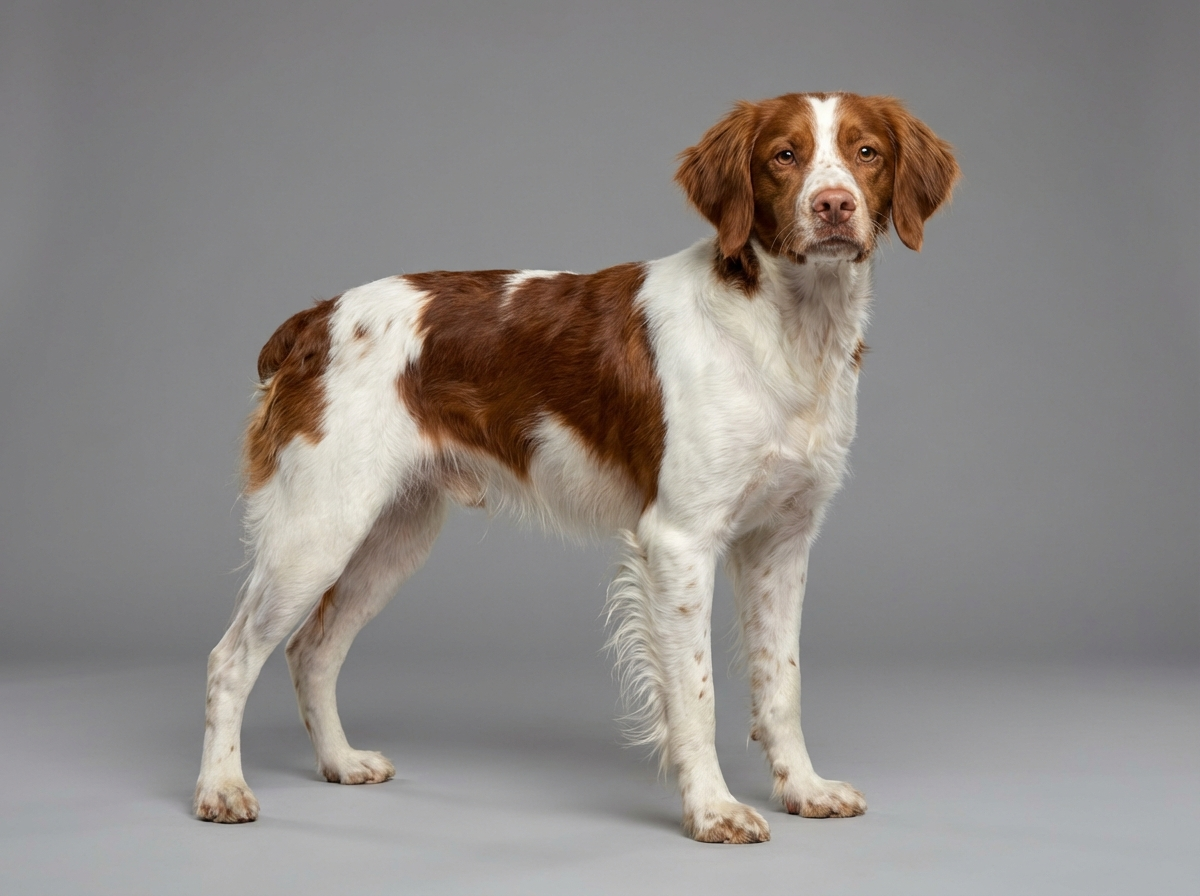
Health
What's the mildest type of von Willebrand's disease?
Type 1, which is also the most common and widely distributed form across dog breeds generally.

Quick answer
What's the mildest type of von Willebrand's disease?
Type 1, which is also the most common and widely distributed form across dog breeds generally.
Rather than waiting to discover a clotting problem during surgery, a simple DNA swab can tell you in advance whether your Brittany carries the genetic marker for Type 1 von Willebrand's disease.
Breeders making pairing decisions face the most direct application of this information, since understanding carrier versus affected status shapes responsible breeding choices. Buyers researching a specific puppy or breeding line also benefit from understanding what a genetic test result actually means, rather than treating any mention of von Willebrand's disease as equally concerning.
This guide is not medical advice. If your dog shows pain, sudden behavior change, or worsening symptoms, consult a licensed veterinarian.
Some links may be affiliate links. We may earn a commission at no extra cost to you. We only suggest products we believe are helpful for dog owners.
We research and check what we publish, but we do not warrant that any figure, date, price, or statement is accurate, complete, or current, and we accept no liability for any loss, cost, injury, or other harm arising from the use of this site. Use it as one reference among several. You remain responsible for your own decisions and for your dog's care - confirm anything that matters with a licensed veterinarian or another qualified professional before you act on it. Full disclaimer.
Type 1 von Willebrand's disease is the mildest and most widely distributed form of this inherited clotting disorder across dog breeds, involving a partial reduction in clotting protein rather than the more severe dysfunction or absence seen in Types 2 and 3. Its relatively well-mapped genetics make it a strong candidate for direct DNA testing, giving breeders and owners concrete information well before any bleeding episode would otherwise reveal the condition.
Type 1 is understood to be the most common and broadly distributed form of von Willebrand's disease across dog breeds generally, making it a reasonable and increasingly accessible genetic test to include in a Brittany's health screening panel.
As a widely distributed genetic variant across many breeds rather than one confined to a single breed's population, Type 1 von Willebrand's disease can appear in a Brittany's lineage the same way it can in numerous other breeds, making genetic screening a broadly relevant consideration rather than something unique to any one breed's specific risk profile.
Because this is a genetic condition, environment doesn't influence whether a dog carries the marker. What environment does influence is whether that information gets used, through breeder testing practices and informed pairing decisions.
Discuss DNA panel testing options with your vet if you're planning to breed your Brittany, and mention any known carrier or affected genetic status before any future surgery, so appropriate precautions can be planned in advance.
See all Brittany health problems, which breeds are prone to von willebrands disease vwd1, or the full Brittany breed guide for temperament, exercise needs and ownership costs.
DNA panel results are typically available within a few weeks of sample submission via a simple cheek swab. This is a one-time test rather than something requiring repeat testing, unlike clinical blood clotting factor levels which can be rechecked if needed.
Success looks like breeding and surgical decisions made with clear, specific genetic information, reducing the chance of an affected litter or an unexpected surgical bleeding complication.
Von Willebrand's disease is generally classified into three types based on how much clotting protein is present and how it functions. Type 1 involves a partial reduction in von Willebrand factor, generally causing mild to moderate bleeding tendencies, and it's both the most common type overall and the most widely distributed across many different dog breeds. Types 2 and 3 involve more severe protein dysfunction or near-complete absence, respectively, causing more significant bleeding risk, though these more severe types tend to be more breed-specific and less broadly distributed than Type 1.
Because Type 1 has a relatively well-understood genetic basis in many breeds, DNA testing for the specific genetic marker is often available and can identify a dog's status directly, rather than relying solely on a blood-based clotting factor test that measures the downstream effect rather than the underlying gene.
A carrier or even an affected result for Type 1 doesn't necessarily mean severe clinical disease, since this specific type tends to produce milder symptoms than Types 2 or 3, but the information remains valuable for both breeding decisions and pre-surgical planning.

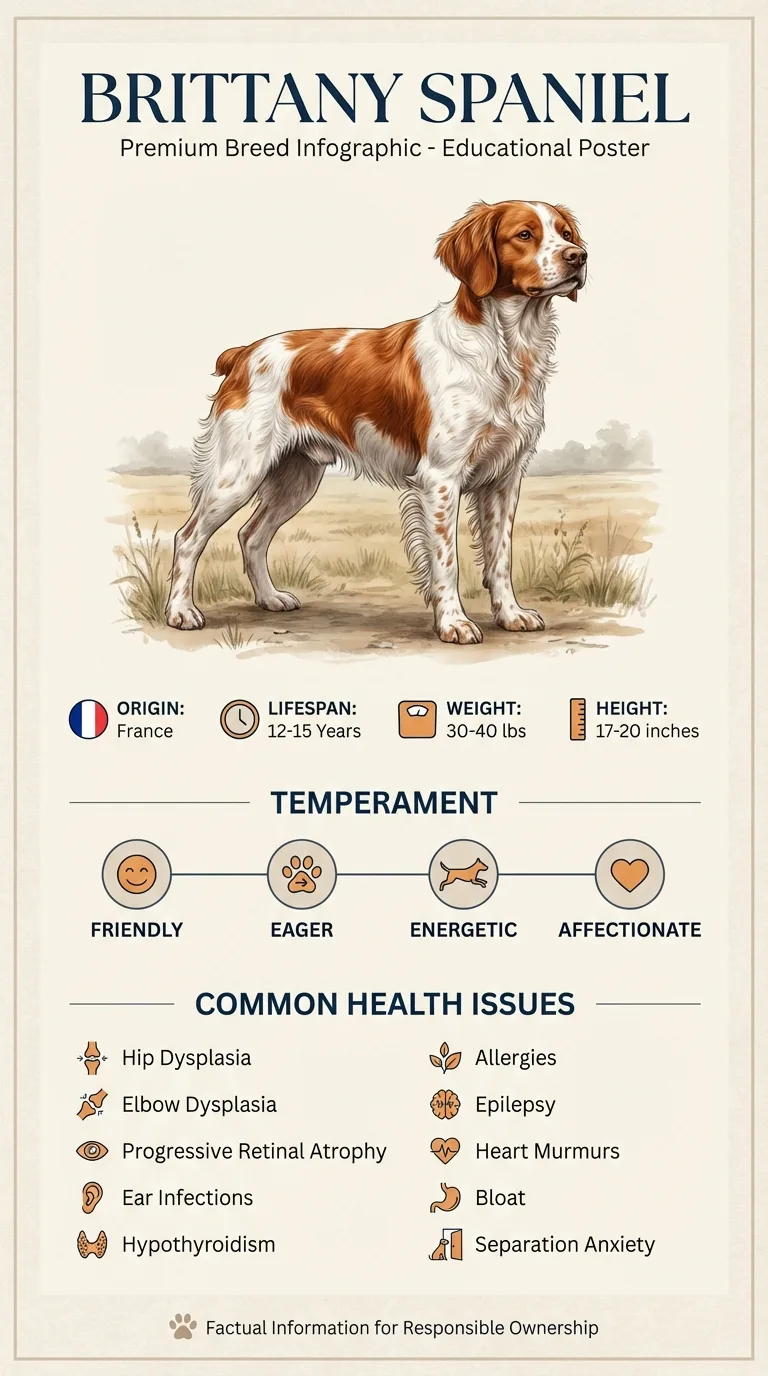
If you think your Brittany has von willebrand's disease (vwd1), the plan is three steps: write down what you have seen and when it started, book a veterinary appointment rather than waiting for the next flare, and take video of the behaviour or symptom before you go — the thing you are worried about rarely happens in the consulting room. Screening in the parents covers hip dysplasia, elbow dysplasia, progressive retinal atrophy.
What the vet visit should produce is a diagnosis and a written plan, not just reassurance: what is being ruled out, what the monitoring interval is, and which signs mean you come back sooner. Ask what the treatment costs across a year rather than per visit, because that is the number that decides whether you are managing this condition or reacting to it.
Between appointments, keep a short log — dates, what you saw, what changed. It is the single most useful thing an owner brings to a follow-up, and for von willebrand's disease (vwd1) it is often what separates a clear pattern from a guess.
A Brittany breeder planning a litter had both prospective parent dogs tested for the Type 1 von Willebrand's disease genetic marker as part of her standard pre-breeding health panel, alongside hip and eye testing. Results showed the female was a carrier, while the male tested completely clear. Rather than avoiding the pairing altogether, she proceeded with the breeding, understanding that this specific combination could produce carrier puppies but not affected ones. She informed each puppy buyer of their individual puppy's carrier status based on follow-up testing of the litter, giving new owners clear information for any future breeding decisions or surgical planning of their own.
Key takeaway: Understanding the specific genetics, not just a general 'tested for von Willebrand's' label, is what actually allows for informed, responsible pairing decisions.
Yes, it's both the most common type overall in dogs and the one most widely distributed across many different breeds, compared to the rarer, more severe Types 2 and 3.
They serve complementary purposes — DNA testing identifies the specific genetic marker directly, while a blood test measures actual clotting factor levels, which can occasionally differ slightly from what the genetics alone would predict.
A carrier can reasonably be bred to a genetically clear dog to avoid producing affected puppies, which is the standard responsible approach for managing a recessive genetic trait like this one.
Not necessarily — Type 1 tends to produce milder bleeding tendencies compared to Types 2 and 3, though individual severity can still vary, and precautions around surgery remain worthwhile.
It's typically a modest cost, often around fifty to a hundred dollars depending on the testing lab, usually collected through a simple cheek swab.
It's a reasonable question to ask, particularly for a breed where clotting-related conditions are worth screening for, alongside other standard health testing like hip and eye screening.
Type 1, which is also the most common and widely distributed form across dog breeds generally.
Yes, a DNA panel test can often identify the Type 1 genetic marker well before any bleeding episode would reveal the condition clinically.
Yes, carriers typically show mild or no clinical symptoms and live completely normal lives as pets.
Usually a modest fee, often in the range of fifty to a hundred dollars, collected via a simple cheek swab.
Yes, testing both dogs allows for informed pairing decisions that avoid producing affected puppies from two carrier parents.
A one-page prep sheet for this condition: the signs, the questions to ask, what to get priced. Unlocks here.
You get: Vet visit prep sheet
No spam. One-click unsubscribe. See our privacy policy.
See a sample page before you decide.
Early access list
The free prep sheet covers the same-day warning signs, a symptom log and the questions to ask. We are considering a fuller kit that adds a cost worksheet for the usual tests and treatments (US price ranges with their sources) and a plain-English guide to ways of covering the bill. It is not built yet; this list tells us whether it is worth building.
One email, no spam, unsubscribe anytime. Information only, not veterinary advice.