Living
Bloodhound or Brittany for a first-time owner?
Brittany, rated 4/5 for first-time owners versus the Bloodhound's 2/5.

Quick answer
Bloodhound or Brittany for a first-time owner?
Brittany, rated 4/5 for first-time owners versus the Bloodhound's 2/5.
Bloodhound or Brittany Spaniel? On paper they differ most on trainability, and on the scales Bloodhound is the heavier at 90–110 lbs. Here is how the two compare on everything that shapes an ordinary week.
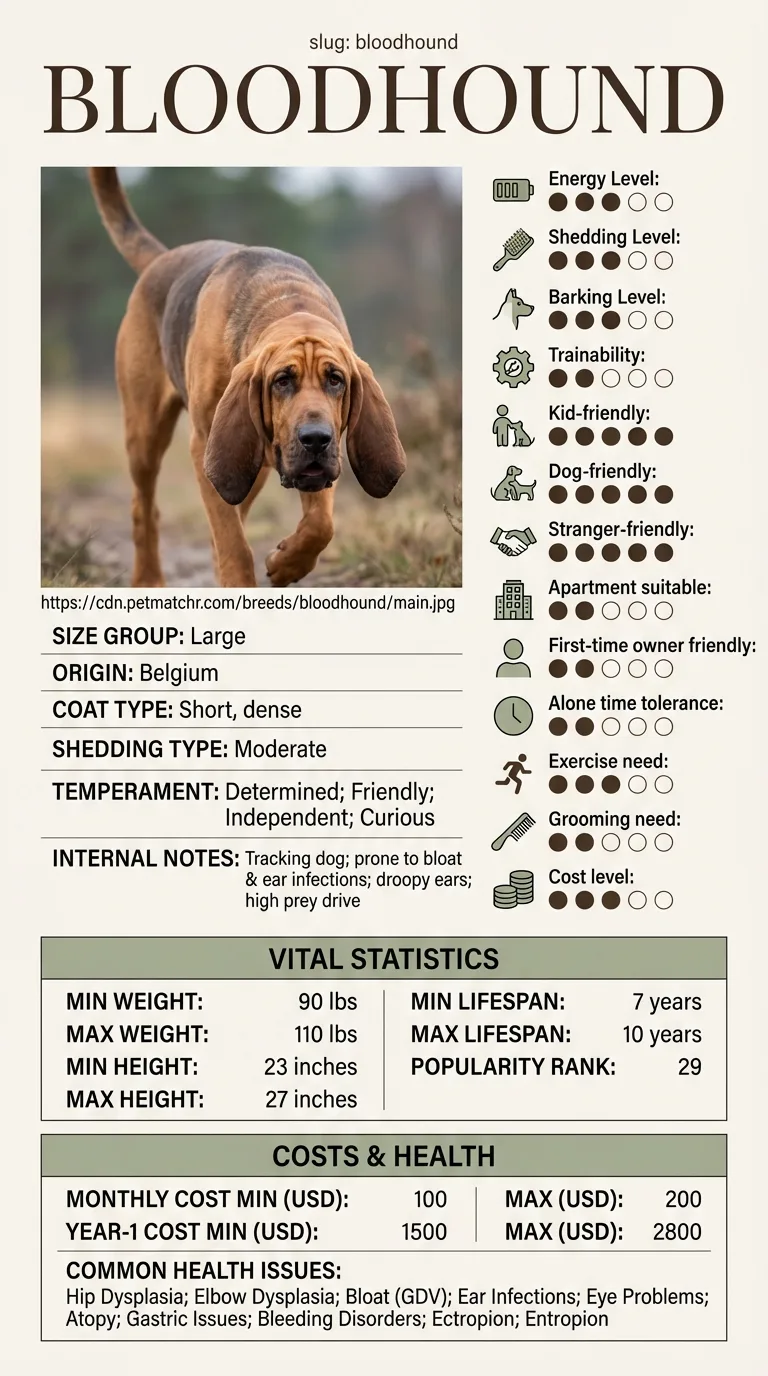
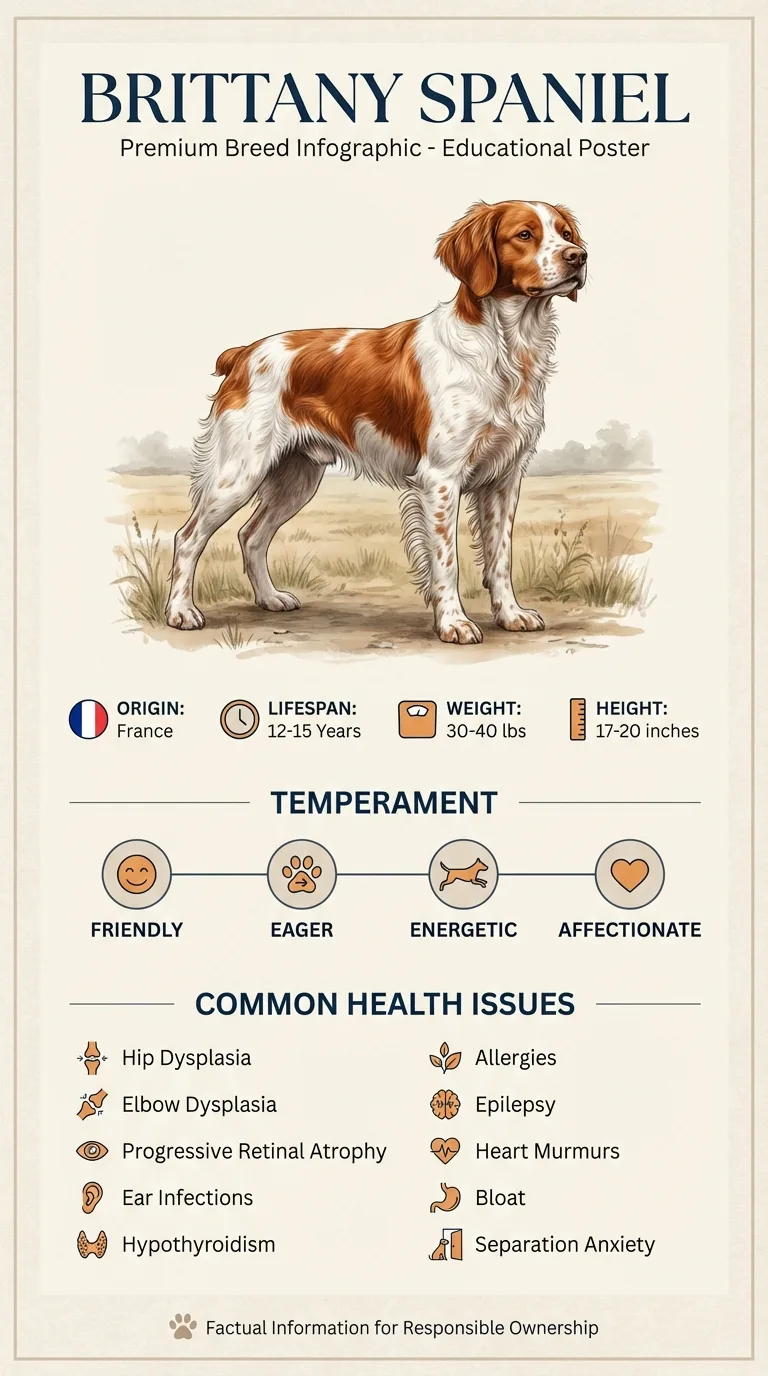
This is for someone already down to Bloodhound and Brittany Spaniel and deciding between them. For this pair the decision usually turns on trainability and good for first-time owners, so those are covered first and in most detail. Anyone choosing from a flat has a clear answer here: Brittany Spaniel rates 3/5 against 2/5. It is written for the decision rather than the breed history.
Between Bloodhound and Brittany Spaniel, trainability is what separates them, and Brittany Spaniel is the lower-effort dog of the two to keep.
Choose Bloodhound if your walking routine is modest.
Choose Brittany Spaniel if you are in a flat or a smaller home, this is your first dog and there are young children at home.
| Feature | bloodhound | brittany | Winner |
|---|---|---|---|
| Size class | large | medium | Equal |
| Weight | 90–110 lbs | 30–40 lbs | Equal |
| Height | 23–27 in | 17–20 in | Equal |
| Lifespan | 7–10 years | 12–15 years | brittany |
| Exercise need | Moderate (3/5) | High (4/5) | bloodhound |
| Grooming need | Low (2/5) | Low (2/5) | Equal |
| Shedding | Moderate (3/5) | Moderate (3/5) | Equal |
| Energy level | Moderate (3/5) | High (4/5) | Equal |
| Barking | Moderate (3/5) | Low (2/5) | brittany |
| Apartment suitability | Low (2/5) | Moderate (3/5) | brittany |
| Good for first-time owners | Low (2/5) | High (4/5) | brittany |
| Tolerates being alone | Low (2/5) | Low (2/5) | Equal |
| Trainability | Low (2/5) | Very high (5/5) | brittany |
| Good with kids | High (4/5) | Very high (5/5) | brittany |
| Good with other dogs | High (4/5) | Very high (5/5) | brittany |
| Friendly to strangers | High (4/5) | High (4/5) | Equal |
| Cost level | Moderate (3/5) | Moderate (3/5) | Equal |
| Coat | Short, dense | Medium, wavy coat | Equal |
| Origin | Belgium | France | Equal |
| Typical monthly cost | $100–$200 | $90–$180 | Equal |
| Typical first-year cost | $1,500–$2,800 | $1,300–$2,500 | Equal |
A 90-110 lb Bloodhound is close to three times the weight of a 30-40 lb Brittany Spaniel, and stands 23-27 inches against the Brittany's 17-20. The Bloodhound's short, dense coat and characteristic loose, wrinkled skin support a scent-tracking build, while the Brittany's medium, wavy coat covers a lighter, more athletic frame built for covering ground quickly in the field. Both are working hunting breeds by origin, the Bloodhound from Belgium and the Brittany from France, but their physical builds point toward very different styles of fieldwork.
The Brittany needs more activity, rated high (4/5) exercise need against the Bloodhound's moderate (3/5), with an energy level to match, high (4/5) versus moderate (3/5). Bred as a versatile pointing and flushing gun dog, the Brittany carries the friendly, eager, energetic temperament of a dog that wants to move and work constantly. The Bloodhound's exercise needs are real but steadier, more suited to long tracking walks than the brisk, athletic activity a Brittany thrives on. Neither breed is a low-energy couch companion, but the Brittany asks for noticeably more.
Grooming need ties at low (2/5) for both breeds, and shedding ties at moderate (3/5) too, an unusually even match on coat care. The practical routines differ slightly, though: the Brittany's medium, wavy coat benefits from regular brushing to prevent tangles, especially after time in brush or water, while the Bloodhound's short coat needs less brushing but more attention to its facial wrinkles and long ears, which are prone to trapping moisture and debris. Overall coat maintenance is comparable, just distributed differently across the body.
The Brittany edges ahead on apartment suitability, moderate (3/5) against the Bloodhound's low (2/5), though neither is an ideal apartment dog given their field-dog exercise needs. Barking favors the Bloodhound, moderate (3/5) against the Brittany's low (2/5), a quieter profile than its energetic temperament might suggest. Both breeds tolerate being alone poorly, tied at low (2/5), and the Brittany's health list even names separation anxiety directly, so owners of either breed working long hours should plan for exercise before and after work, not just on weekends.
The Brittany is dramatically more trainable, very high (5/5) against the Bloodhound's low (2/5), and its first-time-owner rating reflects that gap too, high (4/5) versus the Bloodhound's low (2/5). Bred to work closely with a handler in the field, the Brittany responds eagerly to direction, while the Bloodhound's independent, nose-driven instincts make it a genuinely difficult breed to train for recall or off-leash reliability. A first-time owner drawn to a hunting-breed temperament will find the Brittany a far more forgiving choice than the Bloodhound.
The Brittany rates very high (5/5) with kids and very high (5/5) with other dogs, both edging out the Bloodhound's high (4/5) in each category, while the two tie at high (4/5) friendly to strangers. Both are genuinely sociable breeds well suited to busy, multi-dog or multi-child households, but the Brittany's numbers suggest an especially easygoing companion in group settings, consistent with its friendly, affectionate temperament tags and its long history as a cooperative gun dog worked alongside other dogs in the field.
The Brittany lives substantially longer, 12-15 years against the Bloodhound's 7-10, one of the larger lifespan gaps in this comparison set. The Bloodhound's ten-item health list leans on large-breed structural risks, hip and elbow dysplasia, bloat, ectropion and entropion tied to its loose facial skin. The Brittany's list, also ten items, includes hip and elbow dysplasia too, but adds progressive retinal atrophy, epilepsy, heart murmurs and separation anxiety, a mix of genetic and behavioral concerns worth discussing with a breeder or vet before committing.
The Bloodhound costs slightly more monthly, $100-200 against the Brittany's $90-180, and its first-year range runs a bit higher too, $1,500-2,800 versus $1,300-2,500, largely a function of its considerably larger size and food needs. Both fall in the moderate cost tier overall. The Brittany's longer expected lifespan means total lifetime costs may still run comparable or higher despite the lower monthly figure, simply because there are more years of food, vet visits and care to plan for.
Bloodhound weighs 90–110 lbs and lives 7–10 years; Brittany Spaniel weighs 30–40 lbs and lives 12–15 years. The two diverge most on trainability and good for first-time owners. They are level on tolerates being alone, cost level and grooming need, so those cannot decide it. In the table, a "winner" means easier for an ordinary household — not better. Size, coat and origin are recorded without a verdict. Because both breeds are scored the same way, the gaps are reliable even where the absolute numbers are rough.

The Brittany, rated very high (5/5) trainability against the Bloodhound's low (2/5), reflecting its history as a responsive hunting companion.
The Brittany lives considerably longer, 12-15 years on average, compared to the Bloodhound's 7-10 years.
Yes, it's listed directly among its health concerns, so owners should build in exercise and gradual alone-time training rather than leaving it for long stretches unprepared.
The Bloodhound needs somewhat less, rated moderate (3/5) exercise need against the Brittany's high (4/5).
Yes, it rates high (4/5) for first-time owners against the Bloodhound's low (2/5), largely thanks to its eager, trainable temperament.
Very well, it's rated very high (5/5) good with other dogs, edging out the Bloodhound's still-solid high (4/5).
The Brittany, at $90-180 per month versus the Bloodhound's $100-200.
Brittany, rated 4/5 for first-time owners versus the Bloodhound's 2/5.
Considerably: it rates 5/5 on trainability versus the Bloodhound's 2/5, which tends to follow its nose over commands.
The Brittany, rated low (2/5) barking versus the Bloodhound's moderate (3/5).
A big one: the Brittany averages 12-15 years while the Bloodhound averages just 7-10.
Secure checkout on Stripe. We never see your card.
7-day money-back guarantee. Instant access.
Health information here is general and is not veterinary advice. If your dog shows pain, sudden behaviour change, or worsening symptoms, consult a licensed veterinarian.
Some links on this site are affiliate links. We may earn a commission at no extra cost to you, and we only suggest products we believe are helpful for dog owners.
We research and check what we publish, but we do not warrant that any figure, date, price, or statement is accurate, complete, or current, and we accept no liability for any loss, cost, injury, or other harm arising from the use of this site. Use it as one reference among several. You remain responsible for your own decisions and for your dog's care - confirm anything that matters with a licensed veterinarian or another qualified professional before you act on it. Full disclaimer.
Match your lifestyle to the right dog.
Take quizNot sure which breed is right for you? Take our 2-minute quiz to find out.
Take the quiz