Health
Is obesity a real risk for such an active breed?
Yes, especially when a Brittany's actual activity level falls well below what its energy level and metabolism were built for.

Quick answer
Is obesity a real risk for such an active breed?
Yes, especially when a Brittany's actual activity level falls well below what its energy level and metabolism were built for.
A Brittany kept as a house pet without a real outlet for its energy can pack on weight surprisingly fast, especially once neutered or past the puppy stage when metabolism naturally slows.

Owners who adopted a Brittany expecting a easygoing family dog, without fully accounting for its exercise needs, are the most likely to see weight creep in. Owners of neutered or spayed adult dogs also face this, since the metabolic slowdown that follows can catch up with feeding habits that worked fine for a younger, unaltered dog.
This guide is not medical advice. If your dog shows pain, sudden behavior change, or worsening symptoms, consult a licensed veterinarian.
Some links may be affiliate links. We may earn a commission at no extra cost to you. We only suggest products we believe are helpful for dog owners.
We research and check what we publish, but we do not warrant that any figure, date, price, or statement is accurate, complete, or current, and we accept no liability for any loss, cost, injury, or other harm arising from the use of this site. Use it as one reference among several. You remain responsible for your own decisions and for your dog's care - confirm anything that matters with a licensed veterinarian or another qualified professional before you act on it. Full disclaimer.
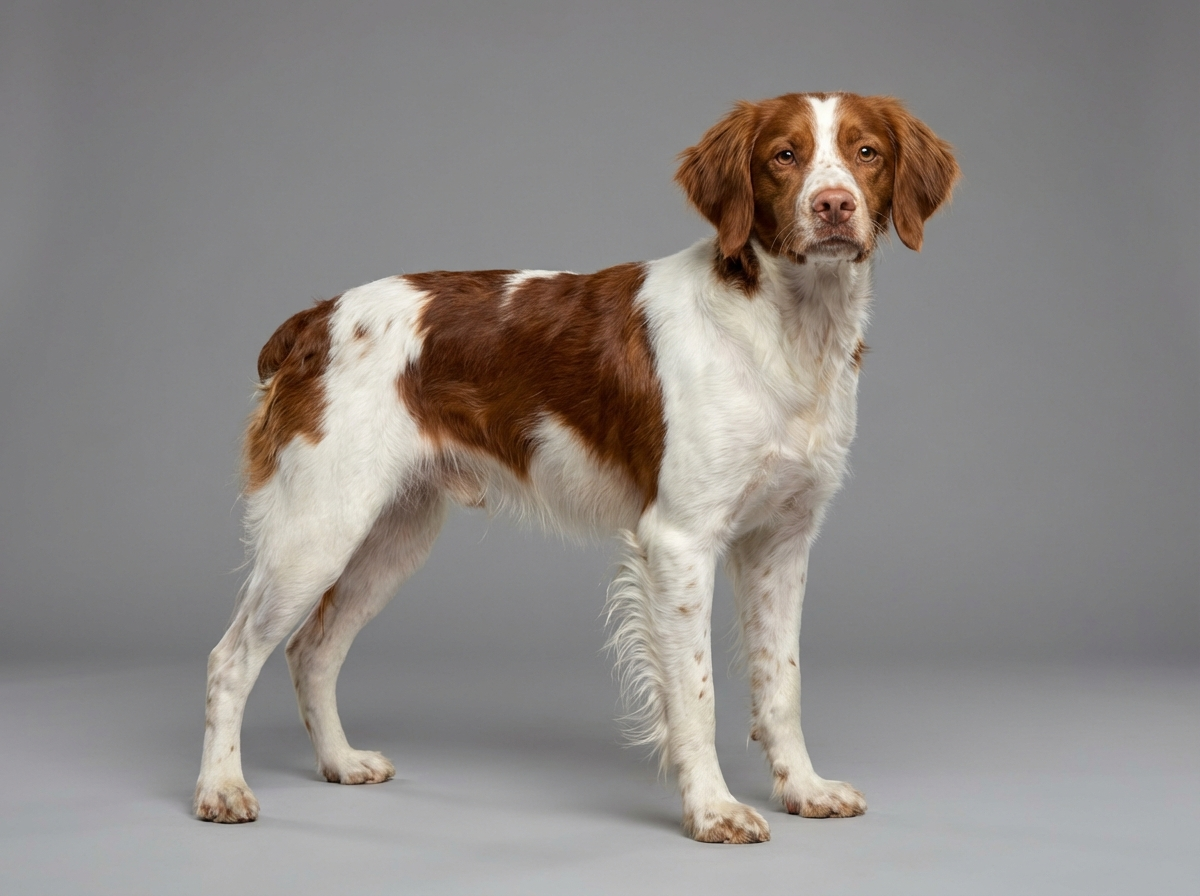
Obesity in Brittanys is a genuine mismatch problem: a breed with one of the higher energy ratings among sporting dogs, living a life that often provides far less activity than its genetics were built for. Rather than being simply about willpower or a single bad habit, it tends to develop gradually from a calorie intake calibrated for an active working dog applied to a more sedentary house-pet lifestyle.
While not one of this breed's named documented health issues in the same way hip dysplasia or heart murmurs are, obesity is a widely recognized general risk across dog breeds, and it's a particularly relevant one for Brittanys given the sizable gap that can open between their built-in energy needs and a typical pet household's activity level.
Brittanys carry one of the higher energy ratings among sporting breeds, reflecting their history as endurance field dogs. That same trait means their appetite and metabolism are calibrated for meaningful daily activity, and a shortfall in exercise translates into weight gain more readily than it might in a naturally lower-energy breed.
How much real exercise a dog gets, how treats and training rewards are managed, and whether feeding amounts are adjusted after life changes like neutering or aging all directly shape whether this breed's natural energy translates into fitness or into extra weight.
Schedule a weight assessment if you're unsure whether your dog's weight is healthy, and talk to your vet about a structured weight-loss plan if a hands-on check suggests excess weight, rather than guessing at a new feeding amount on your own.
See all Brittany health problems, which breeds are prone to obesity, or the full Brittany breed guide for temperament, exercise needs and ownership costs.
Gradual, sustainable weight loss, typically around one to two percent of body weight per week, is generally recommended over rapid loss. Most dogs on a structured plan reach a healthy weight within a few months, depending on how much needs to come off.
Success looks like a lean, visible waist and easily felt ribs maintained consistently, along with the energy and joint comfort that tend to improve once a naturally athletic breed is back near its ideal weight.
A Brittany's calorie needs are often calculated, consciously or not, around an image of a dog running fields for hours — because that's genuinely what this breed was built to do. When real life looks more like a couple of daily walks and weekend outings, the calorie math often doesn't get adjusted to match, and the gap between expected and actual activity slowly shows up on the scale.
This is compounded by the fact that Brittanys are eager, food-motivated dogs in many cases, which makes them easy to overfeed with treats during training, a method this highly trainable breed responds to well. The same trainability that makes this breed a joy to work with can quietly contribute to extra calories if treat portions aren't accounted for in the overall daily intake.
None of this breed's genuinely documented health concerns exist in isolation — weight is one of the few risk factors an owner has significant day-to-day control over, and its effects ripple into several of the others.

Biscuit, a Brittany who'd hunted actively for years, gained close to eight pounds within a year after his owner's work schedule changed and daily field trips became weekend-only outings. His owner hadn't reduced his food to match the drop in activity, and it took a vet visit flagging his body condition score for the gradual change to really register. Together they set a measured feeding plan and added structured daily walks plus twice-weekly scent-work sessions to keep him engaged without needing full field access. Biscuit lost the extra weight over about four months and, according to his owner, seemed noticeably more like his old self once he did.
Key takeaway: A drop in a Brittany's activity level needs a matching drop in food, or the natural appetite this breed carries for an active lifestyle will show up on the scale.
You should be able to feel ribs easily with light pressure and see a visible waist from above. If ribs are hard to feel or there's no waist tuck, your dog is likely carrying extra weight.
This breed generally needs substantial daily exercise, often an hour or more of real activity, not just a short leash walk, to match its natural energy level and support a healthy weight.
Neutering itself doesn't directly cause weight gain, but it does lower metabolic rate somewhat, meaning the same feeding amount that worked before can lead to gradual weight gain afterward if not adjusted.
Yes, especially in a highly trainable, food-motivated breed that may receive frequent treats during regular training sessions. Accounting for treats within the daily calorie total is important, not just measuring the base meal.
A gradual plan combining a measured, appropriate calorie reduction with a steady, sustainable increase in exercise, ideally guided by your vet, works better than a drastic sudden change.
Yes, in most cases weight loss is achievable with consistent effort, and many dogs show noticeable improvement in energy and mobility once they return to a healthy weight.
Yes, especially when a Brittany's actual activity level falls well below what its energy level and metabolism were built for.
Check for easily felt ribs and a visible waist from above; if either is missing, a vet weight assessment is worthwhile.
Yes, extra weight adds meaningful strain to hips and elbows, both areas already documented as risk points in this breed.
Prescription weight-management diets add some cost, but overall the exercise and portion-control side of a weight plan is often relatively low-cost.
Generally an hour or more of real, varied activity daily, matching this breed's naturally high energy level.
A one-page prep sheet for this condition: the signs, the questions to ask, what to get priced. Unlocks here.
You get: Vet visit prep sheet
No spam. One-click unsubscribe. See our privacy policy.
Preview page 1 before you decide.