Health
Is anesthesia riskier for Brittanys than other breeds?
Not as a breed trait. The real risk factors are individual, mainly a documented heart murmur or seizure history rather than anything inherent to being a Brittany.

Quick answer
Is anesthesia riskier for Brittanys than other breeds?
Not as a breed trait. The real risk factors are individual, mainly a documented heart murmur or seizure history rather than anything inherent to being a Brittany.
The anesthesia risk that matters for a Brittany isn't about breed-wide drug sensitivity. It's about two specific, documented conditions this breed carries more often than average.
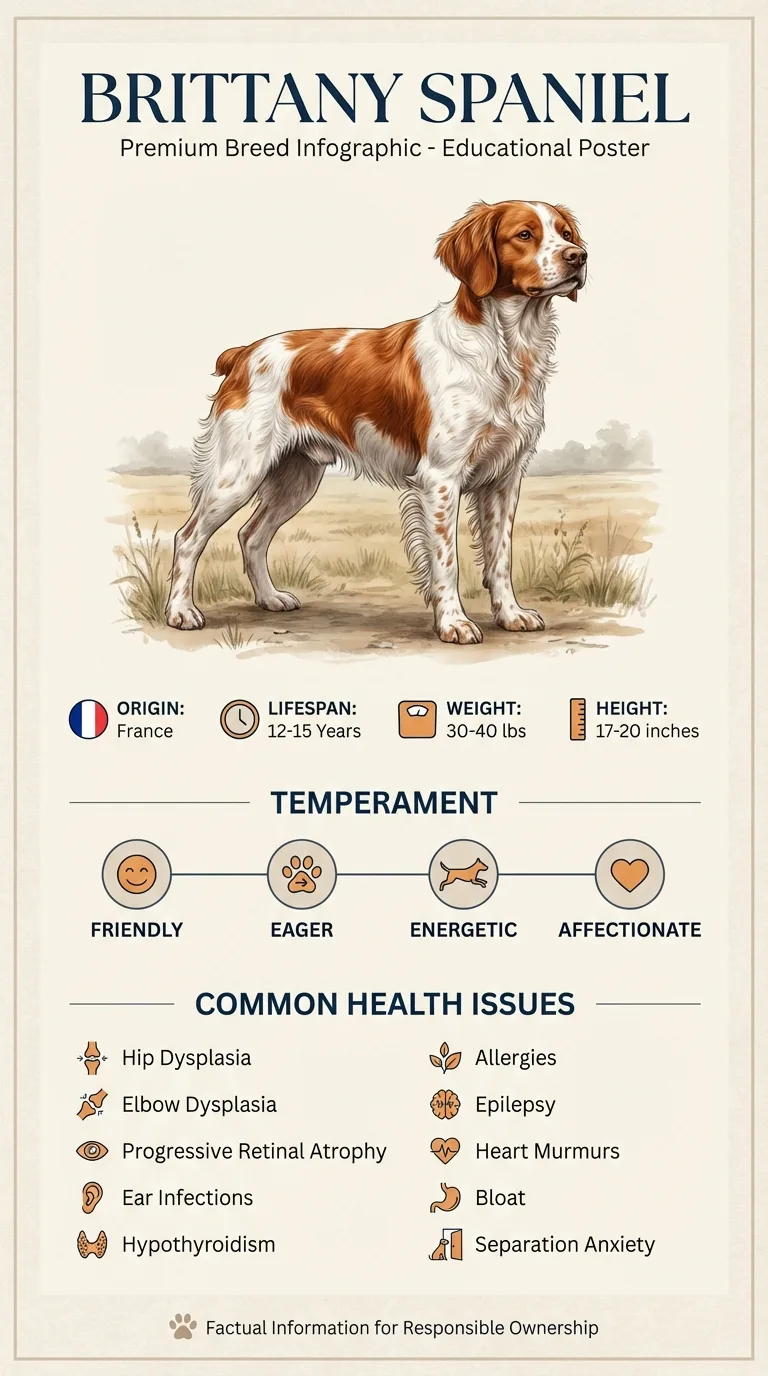
This mostly concerns owners of a Brittany who has been diagnosed with epilepsy or has a known heart murmur, and who are now facing a routine procedure like a dental cleaning or spay/neuter that requires general anesthesia.
This guide is not medical advice. If your dog shows pain, sudden behavior change, or worsening symptoms, consult a licensed veterinarian.
Some links may be affiliate links. We may earn a commission at no extra cost to you. We only suggest products we believe are helpful for dog owners.
We research and check what we publish, but we do not warrant that any figure, date, price, or statement is accurate, complete, or current, and we accept no liability for any loss, cost, injury, or other harm arising from the use of this site. Use it as one reference among several. You remain responsible for your own decisions and for your dog's care - confirm anything that matters with a licensed veterinarian or another qualified professional before you act on it. Full disclaimer.
Anesthesia sensitivity as a breed-wide trait applies to dogs with unusually low body fat, like sighthounds, not to Brittanys. What actually shapes anesthesia planning for this breed is individual health history, particularly a documented heart murmur or a seizure disorder, both of which appear on this breed's list of known health concerns.
True anesthetic complications are uncommon in healthy Brittanys undergoing routine procedures. The conversation about anesthesia risk comes up more often simply because heart murmurs and epilepsy are both documented enough in the breed that many owners encounter one or the other at some point.
Brittanys carry documented risk for both epilepsy and heart murmurs, and both conditions directly affect anesthetic drug selection: certain sedatives can lower seizure threshold, and certain drugs affect heart rhythm or blood pressure more than others. Neither condition is universal in the breed, but a vet needs to know if either applies before planning any procedure.
Anesthetic risk in general rises with an unaddressed pre-existing condition, incomplete disclosure of a dog's history to the anesthetizing vet, or skipped pre-anesthetic screening. None of these are unique to Brittanys, but they matter more for a dog that already has one of this breed's documented conditions on record.
Discuss anesthesia risk specifically if your Brittany has ever had a seizure, fainting episode, or a heart murmur diagnosis, well before a scheduled procedure so there's time to plan rather than react. Any unusual grogginess, vomiting, or slow recovery beyond what your vet described as normal after a procedure warrants a same-day call.
See all Brittany health problems, which breeds are prone to anesthesia sensitivity, or the full Brittany breed guide for temperament, exercise needs and ownership costs.
For a healthy Brittany with no documented complicating condition, anesthesia and same-day recovery are typically uneventful, with full return to normal energy within a day. For a dog with a known murmur or seizure history, expect an extra pre-procedure appointment or two for evaluation before the actual day.
Success looks like a boring, uneventful procedure day: stable vitals throughout, a normal wake-up, and no surprises your vet hadn't already discussed with you in advance.
Breeds flagged for genuine anesthetic drug sensitivity tend to share a trait: very low body fat and lean muscle mass, which changes how fat-soluble anesthetic drugs distribute and clear from the body. Sighthounds are the classic example.
A Brittany, at a moderate 30 to 40 pounds with a build suited to endurance field work rather than sprinting, doesn't fit that profile. There is no documented breed-wide drug metabolism issue for Brittanys the way there is for sighthounds, so a standard anesthetic protocol is generally appropriate for a healthy dog of this breed.
The real factors are individual health history, not breed-wide drug sensitivity.

Tom scheduled a routine dental cleaning for Belle, his six-year-old Brittany, and mentioned almost as an afterthought that she'd had a heart murmur noted at her last checkup. The vet team paused the standard pre-op plan and recommended a brief cardiac evaluation first. The murmur turned out to be mild and not a reason to cancel the cleaning, but it did change which sedative combination they used and meant Belle got continuous heart rate monitoring throughout instead of the standard intermittent checks. The cleaning went smoothly, and Belle was back to her usual energy by the next morning. Tom later realized how close he'd come to not mentioning the murmur at all, since it had seemed like minor news buried in a longer appointment months earlier.
Key takeaway: A documented heart murmur or seizure history should always be flagged before any anesthesia, even if it seemed minor when first diagnosed. It changes the plan, not whether the procedure can happen.
No. That designation typically applies to sighthounds and a few other breeds with unusual body composition. A healthy Brittany undergoes standard anesthetic protocols without special breed-specific drug adjustments.
Not necessarily. It means your vet will likely recommend a pre-anesthetic cardiac evaluation and choose drugs and monitoring suited to the murmur's severity, rather than avoiding anesthesia entirely for routine procedures.
Yes, with planning. Vets generally avoid certain sedatives known to lower seizure threshold and monitor more closely during recovery, since the stress and drug exposure of anesthesia can occasionally trigger a seizure in a predisposed dog.
Standard bloodwork checking organ function is typical for any dog, and a vet may add a cardiac exam or echocardiogram if a murmur has been noted, or discuss seizure history if epilepsy is documented.
Most healthy dogs are alert and near-normal within a few hours and fully back to baseline energy within 24 hours, though grogginess the evening of a procedure is completely normal.
Age itself isn't a strict contraindication, but older dogs are more likely to have developed a heart murmur or other condition that changes the anesthetic plan, which is why senior pre-anesthetic workups tend to be more thorough.
It's a decision to make with your vet, not a strict yes or no. Bloodwork catches issues that don't show up on a physical exam, and for a dog with any documented cardiac or seizure history, skipping it removes information your vet would otherwise use to plan safely.
Not as a breed trait. The real risk factors are individual, mainly a documented heart murmur or seizure history rather than anything inherent to being a Brittany.
Mention any history of seizures, fainting, murmurs, or medication reactions clearly, even if they seem minor, since these directly affect drug choice.
Yes, it's typically billed separately from the procedure itself, usually in the range most vet clinics charge for a basic panel, and many clinics include it by default for procedures needing sedation.
Yes, gradual handling exercises and short positive vet-office visits unrelated to procedures can lower a dog's baseline stress, which makes the whole pre-anesthetic process smoother.
Follow your vet's specific fasting window exactly, typically an overnight fast, since food in the stomach during sedation raises the risk of aspiration.
A one-page prep sheet for this condition: the signs, the questions to ask, what to get priced. Unlocks here.
You get: Vet visit prep sheet
No spam. One-click unsubscribe. See our privacy policy.
Preview page 1 before you decide.