Health
What is the most urgent eye sign?
An eye that is painful, squinted or held shut. That is a same-day veterinary problem in this breed, not a wait-and-see one.

Quick answer
What is the most urgent eye sign?
An eye that is painful, squinted or held shut. That is a same-day veterinary problem in this breed, not a wait-and-see one.
A corneal ulcer is a wound on tissue half a millimetre thick with no blood supply of its own. It can go from a scratch to a threat to the eye in forty-eight hours, and pain is the signal that starts the clock.
Owners whose Boston has come in from the garden squinting, people whose dog has had repeated ulcers and want to know why, and anyone who needs to know what to do if an eye is injured out of hours.
This guide is not medical advice. If your dog shows pain, sudden behavior change, or worsening symptoms, consult a licensed veterinarian.
Some links may be affiliate links. We may earn a commission at no extra cost to you. We only suggest products we believe are helpful for dog owners.
Check this first
In a breed with shallow orbits, a significant blow to the head or violent restraint around the neck can force the eyeball forward past the lids, which then close behind it. This is proptosis. It is uncommon, it is genuinely terrifying, and what you do in the first ten minutes affects whether the eye is saved.
If any of these apply, call your vet or an emergency clinic now. The rest of this page is for the cases that are not an emergency.
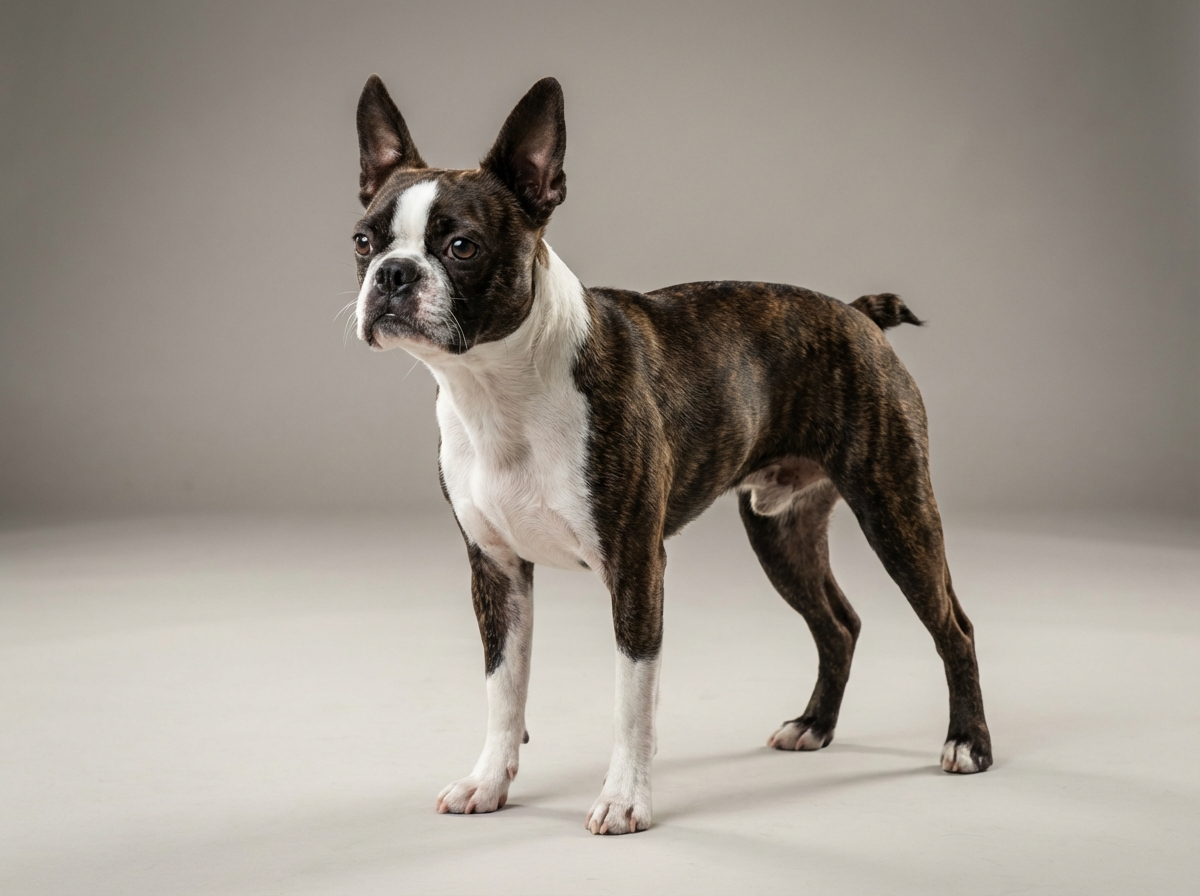
Boston Terriers have prominent eyes in shallow sockets with limited bony protection, which is why corneal ulcers appear among the breed's documented health issues. A superficial scratch on avascular corneal tissue can deepen rapidly under bacterial and enzymatic attack, so a painful eye is a same-day emergency. In rare cases, head trauma or scruff restraint can force the globe forward past the lids entirely.
Corneal ulceration is one of only five conditions consistently documented in this breed, which reflects how frequently it occurs. Most Boston owners will deal with at least one eye injury over a dog's eleven to thirteen years. Proptosis is genuinely rare, but it is included here because the correct first response is not intuitive and the window is short.
Skull shortening reduced the depth of the orbit without reducing the size of the globe, so the eye sits forward with less bone around it and no muzzle projecting in front. In some individuals the lids cannot fully cover the globe during a blink, leaving the central cornea slightly dry. Reduced corneal sensitivity is described in short-faced breeds, meaning the protective blink reflex is less brisk. Each factor alone is manageable; together they explain why this breed's eyes are on its documented problem list.
The everyday environment supplies almost all of the injuries. Hedges and undergrowth at exactly the height of a small dog's face, households with cats, dog parks with much larger playmates, and windy or dusty conditions all raise exposure. Equipment matters more than owners realise: neck collars increase pressure around the head and neck during pulling, which in a shallow-orbited breed is a genuine, if uncommon, mechanism for the worst injury of all.
Seek same-day care for any eye that is painful, squinted, held shut, watering, red, cloudy, or being rubbed - do not wait to see whether it settles overnight. Go immediately, at any hour, for an eye that has been struck, an eye that appears to be bulging or displaced from its socket, sudden severe pain, visible damage to the surface, or apparent sudden loss of vision. During any journey for a prolapsed eye, keep the surface moist and stop the dog rubbing. Never apply drops or ointment left over from a previous problem, particularly steroid preparations, which can turn a treatable ulcer into a lost eye.
See all Boston Terrier health problems, which breeds are prone to eye problems, or the full Boston Terrier breed guide for temperament, exercise needs and ownership costs.
Superficial ulcers typically heal in five to seven days with appropriate treatment, and a recheck to confirm healing is not optional. Deeper ulcers take weeks and may need surgical support. Proptosis is repaired immediately, and the outcome for vision in that eye depends heavily on how long the globe was displaced.
A comfortable eye with a clear cornea and no scarring across the visual axis, healing confirmed at a recheck rather than assumed, and a home routine - harness, route choice, daily checks - that makes the next injury less likely than the last.
The cornea is a transparent structure only a fraction of a millimetre thick, made of precisely arranged collagen with no blood vessels running through it - vessels would destroy its clarity. That avascularity is the reason it is transparent and the reason it heals differently from other tissue.
A superficial scratch heals within days as surface cells slide across to cover the defect. The problem is what can happen in the meantime. Bacteria colonising the wound, and the dog's own inflammatory response, can release enzymes that digest corneal collagen. When that process runs, the ulcer deepens rather than closing, and it can do so with startling speed - a shallow defect on Monday can be a deep, sight-threatening one by Wednesday.
Two Boston-specific factors compound this. Reduced corneal sensitivity is recognised in short-faced breeds, so these dogs may not blink or protect the eye as vigorously as they should. And where the lids cannot fully close over a prominent globe, the central cornea dries slightly with every blink cycle, which both predisposes to damage and slows healing.
That combination is why a painful eye in a Boston is a same-day problem, and why the recheck appointment matters as much as the first one.

If you think your Boston has eye problems, the plan is three steps: write down what you have seen and when it started, book a veterinary appointment rather than waiting for the next flare, and take video of the behaviour or symptom before you go — the thing you are worried about rarely happens in the consulting room. Screening in the parents covers brachycephalic airway syndrome (boas), patellar luxation, cataracts.
What the vet visit should produce is a diagnosis and a written plan, not just reassurance: what is being ruled out, what the monitoring interval is, and which signs mean you come back sooner. Ask what the treatment costs across a year rather than per visit, because that is the number that decides whether you are managing this condition or reacting to it.
Between appointments, keep a short log — dates, what you saw, what changed. It is the single most useful thing an owner brings to a follow-up, and for eye problems it is often what separates a clear pattern from a guess.
Rachel's Boston, Pepper, came back from a hedge-lined footpath blinking hard on the left. It was Saturday evening, the eye was watering but Pepper was otherwise cheerful, and Rachel decided to see how it looked in the morning. By Sunday lunchtime the eye was clamped shut and Pepper would not let anyone near her head. The emergency clinic found an ulcer that had deepened significantly overnight. It took three weeks of intensive treatment, a protective collar Pepper detested, and two rechecks before it healed, and it left a small scar off to one side. The vet's comment stayed with Rachel: on Saturday evening this was probably a five-day problem. Pepper walks a different route now, and Rachel's rule is that a squinting eye goes in the same day, whatever day that is.
Key takeaway: In this breed a painful eye does not keep until morning. The cornea can lose a great deal of thickness in the hours you spend deciding whether it is serious.
Shallow eye sockets leave the globe prominent and unprotected, lids may not close fully over it, and corneal sensitivity is reduced in short-faced breeds so the eye is defended less vigorously. Corneal ulcers are documented on this breed's health list for exactly these reasons.
Squinting or holding the eye shut, watering, rubbing at the face on that side, a dull or hazy patch on the surface, redness, and reluctance to be touched around the head. Pain is the key signal.
Same day, without exception. Corneal ulcers in this breed can deepen within forty-eight hours, and the difference between a superficial ulcer treated on day one and a deep one treated on day three is substantial.
No, and this is important. Some ophthalmic preparations, particularly those containing steroids, make a corneal ulcer dramatically worse and can contribute to losing the eye. Never apply anything without a current diagnosis.
Recurrent ulceration suggests an underlying factor - inadequate tear film, lids or lashes rubbing the surface, incomplete blinking, or reduced sensitivity. Repeat episodes should prompt an ophthalmology referral rather than another course of drops.
Sensible management helps considerably: avoiding dense undergrowth, supervising play with larger dogs, and using a harness. Protective goggles exist and some dogs tolerate them, though most owners find route choice more practical.
Superficial ulcers usually heal without lasting opacity. Deeper ones frequently leave a scar, which may be visible but often does not meaningfully affect vision unless it sits centrally.
An eye that is painful, squinted or held shut. That is a same-day veterinary problem in this breed, not a wait-and-see one.
Drive to an emergency hospital immediately, keep the eye moist, stop the dog rubbing, and never try to replace it yourself.
No. Old or borrowed drops can turn a treatable ulcer into a lost eye, particularly steroid-containing ones.
Use a harness rather than a collar, never lift by the scruff, avoid dense undergrowth, and supervise play with bigger dogs.
A one-page prep sheet for this condition: the signs, the questions to ask, what to get priced. Unlocks here.
You get: Vet visit prep sheet
No spam. One-click unsubscribe. See our privacy policy.
Preview page 1 before you decide.