Health
Do Australian Shepherds get stenotic nares?
No — it's a brachycephalic-breed trait documented in Bulldogs, French Bulldogs, and Pugs, not in Australian Shepherds.

Quick answer
Do Australian Shepherds get stenotic nares?
No — it's a brachycephalic-breed trait documented in Bulldogs, French Bulldogs, and Pugs, not in Australian Shepherds.
Stenotic nares sounds like a scary breathing problem, and in the right breed it can be — but the right breed has a flat face, and the Australian Shepherd doesn't.

Owners who've read about brachycephalic airway problems in general dog-health content and want to know whether it applies to their Australian Shepherd's occasional snorting or noisy breathing are the audience here.
This guide is not medical advice. If your dog shows pain, sudden behavior change, or worsening symptoms, consult a licensed veterinarian.
Some links may be affiliate links. We may earn a commission at no extra cost to you. We only suggest products we believe are helpful for dog owners.
We research and check what we publish, but we do not warrant that any figure, date, price, or statement is accurate, complete, or current, and we accept no liability for any loss, cost, injury, or other harm arising from the use of this site. Use it as one reference among several. You remain responsible for your own decisions and for your dog's care - confirm anything that matters with a licensed veterinarian or another qualified professional before you act on it. Full disclaimer.
Stenotic nares — narrowed nostril openings that restrict airflow — is a well-characterized component of Brachycephalic Obstructive Airway Syndrome in flat-faced breeds like English Bulldogs, French Bulldogs, and Pugs, but it isn't established as occurring in Australian Shepherds. For an Aussie showing noisy or labored breathing, allergies, heat exposure, or normal exertion panting are far more likely and far more relevant explanations to investigate first.
Stenotic nares is common enough within brachycephalic breeds that it's a routine finding at puppy exams for those breeds, but it is not recognized as occurring in Australian Shepherds at all. That makes it a far less relevant topic for this breed than the eye conditions, joint issues, and allergies that are actually documented in Aussie health records.
The compressed, shortened skull that produces stenotic nares has been documented and bred into specific brachycephalic lines over generations, with English Bulldogs, French Bulldogs, and Pugs among the most studied. Australian Shepherd skull and muzzle proportions follow an entirely different, elongated conformation, so there's no established pathway connecting this breed to the trait.
Because stenotic nares is a fixed anatomical feature present from birth in affected breeds, environment doesn't cause or worsen it there, and it has even less relevance to a breed where the trait doesn't occur at all. Environmental factors that do matter for Aussie breathing and exertion are heat and humidity during exercise, worth managing for reasons unrelated to nostril shape.
See a vet promptly for labored breathing that doesn't settle with rest, pale or bluish gums, or breathing distress during heat exposure — these are genuine emergencies in any breed. Ask about allergies, airway infection, or heat-related illness as the starting points, since these are the conditions that actually fit an Australian Shepherd.
Stenotic nares gets discussed constantly in brachycephalic-breed health content, and that visibility can make it feel more broadly relevant than it is. Watch for these mistakes.
See all Australian Shepherd health problems, which breeds are prone to small nostrils stenotic nares, or the full Australian Shepherd breed guide for temperament, exercise needs and ownership costs.
Because stenotic nares isn't a relevant condition for this breed, there's no meaningful timeline or progression to track for it in an Australian Shepherd. Any real breathing concern in this breed follows the timeline of whatever the actual underlying cause turns out to be — allergies, heat stress, or infection each resolve on their own separate schedules.
Success here looks like recognizing that a brachycephalic-specific condition doesn't apply to this breed and redirecting attention to the health issues that genuinely do: joint health, eye conditions, allergies, and the other items on the breed's real documented list. An owner who stops worrying about nostril shape and starts tracking actual Aussie risk factors is better positioned to catch real problems early.
Stenotic nares develops because a shortened, compressed skull crowds the same amount of soft tissue into a much smaller space, pinching the nostril openings into narrow slits. The Australian Shepherd has a moderate, well-proportioned muzzle roughly as long as its skull, so that crowding effect simply doesn't occur.
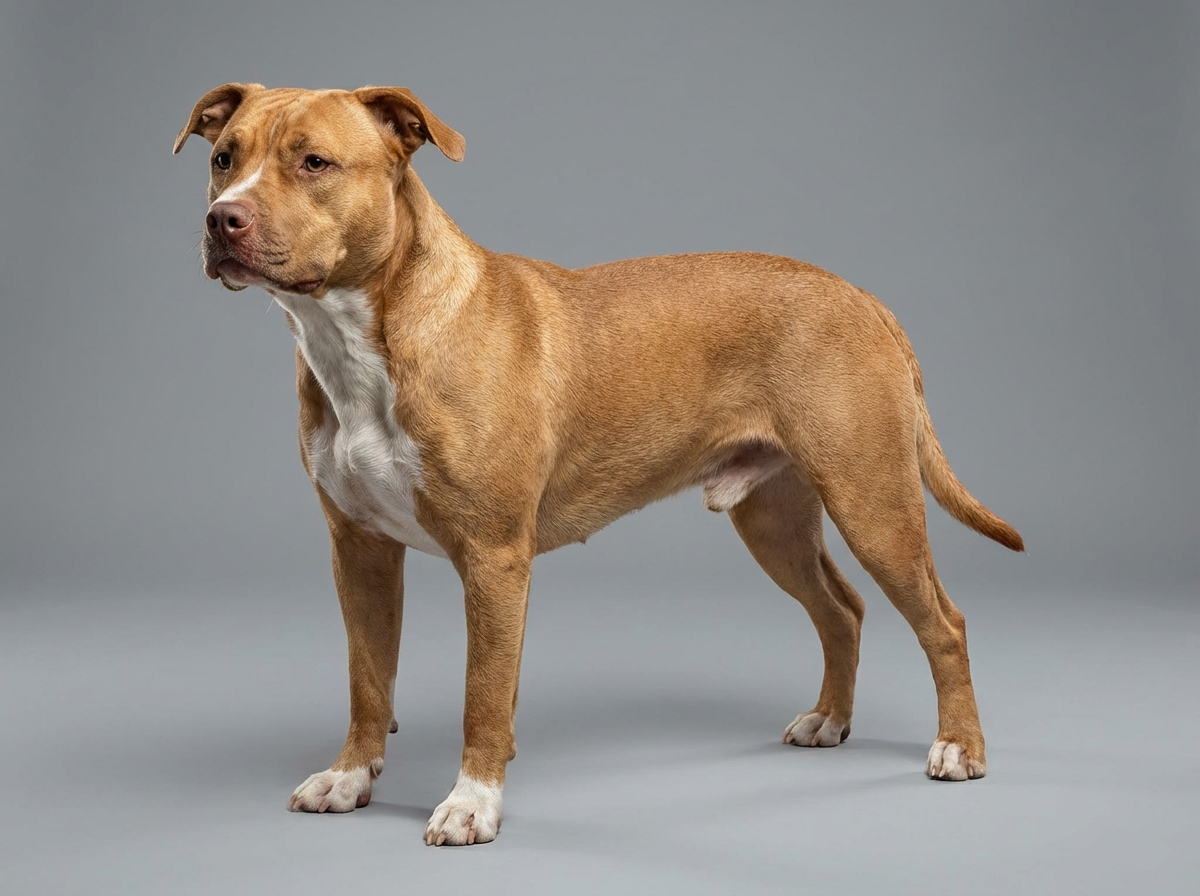
Veterinary literature describes stenotic nares specifically in brachycephalic lines — English Bulldogs, French Bulldogs, Pugs, and Boston Terriers among the most cited — because the trait tracks with skull shape, not with general breed health risk. An Aussie's nostrils, viewed straight on, should show open, round-to-oval openings rather than the pinched slits seen in an affected brachycephalic dog.
None of this means an Aussie's breathing is never worth a second look; it just means the explanation, when there's a real one, lies elsewhere. A vet examining noisy breathing in this breed is looking for allergies, an airway infection, or a foreign object — not a conformational nostril defect that isn't part of this breed's anatomy.

Labored breathing that persists after a dog has cooled down and rested, breathing paired with pale or bluish gums, or sudden reluctance to exercise all warrant a same-day veterinary call in any breed, Aussies included. These patterns point toward genuine emergencies — heatstroke, a cardiac issue, or airway infection — none of which relate to nostril structure.
More often, an owner is hearing a healthy dog work hard: Australian Shepherds are athletic, high-drive dogs that can pant heavily and audibly after herding-intensity exercise, especially in warm weather. Because the breed carries a double coat, heat management during exercise is a genuinely relevant safety topic here, distinct from any nostril-narrowing concern.
If nasal discharge, sneezing, or noisy breathing shows up alongside itchy skin, paw-licking, or recurrent ear problems, allergies are the far more likely and far better-documented explanation in this breed. That's a conversation worth having with a vet on its own merits, not filtered through a brachycephalic airway framework that doesn't apply here.

While reading up on general dog respiratory health before her Australian Shepherd puppy's first checkup, Priya in Boise came across a detailed article on stenotic nares and worried her puppy's occasional snorting after play might be an early sign. Her vet examined the puppy's nostrils, found them open and normally shaped, and explained that stenotic nares is a trait documented in flat-faced breeds and doesn't occur in Australian Shepherds. The snorting turned out to be a routine reverse sneeze, and the visit shifted instead toward a baseline conversation about hip health, eye checks, and the breed's real risk list.
Key takeaway: A condition well-documented in flat-faced breeds isn't a realistic concern for an Australian Shepherd's normal muzzle — the genuinely useful focus for this breed is its actual documented health list: joints, eyes, thyroid, allergies, and cancer screening.
No — stenotic nares is characterized in brachycephalic breeds like English Bulldogs, French Bulldogs, and Pugs, whose short skulls compress the nostril openings. Australian Shepherds have a normal, medium-length muzzle that doesn't produce this conformation, so the condition isn't documented in the breed.
Occasional snorting is most often a reverse sneeze, a brief reflex many breeds have, or just a dog clearing its nose after sniffing something irritating. It's unrelated to nostril structure and usually resolves within seconds on its own.
Yes, to a large degree — a vet or an attentive owner can see whether the nostril openings are wide and round-to-oval or pinched into narrow slits. An Australian Shepherd's nostrils should look open and unrestricted, consistent with the breed's normal muzzle length.
Persistent labored breathing, breathing that doesn't settle after rest, pale or bluish gums, or breathing distress paired with heat exposure are the signs that warrant prompt veterinary attention. These point toward heat-related illness or a genuine airway or cardiac issue, not a nostril defect.
Not specifically ones tied to nostril or skull anatomy; the breed's genuinely documented health list centers on hip and elbow dysplasia, epilepsy, several eye conditions, hypothyroidism, allergies, and cancer. Allergies in particular can produce nasal symptoms that sometimes get mistaken for an airway obstruction.
It's theoretically possible only if a dog's ancestry includes a brachycephalic breed and it inherited that flatter skull conformation, which would be visibly apparent in the muzzle and nose shape. A purebred Australian Shepherd with a standard medium-length muzzle isn't a candidate for this trait.
Panting after exercise is open-mouth breathing to cool down, effortful but not obstructed. Stenotic nares causes visibly narrowed nostril openings and labored breathing even at rest or mild activity in affected brachycephalic dogs, a pattern that doesn't match typical Aussie exertion panting.
No — it's a brachycephalic-breed trait documented in Bulldogs, French Bulldogs, and Pugs, not in Australian Shepherds.
English Bulldogs, French Bulldogs, Pugs, and Boston Terriers are among the breeds where stenotic nares is well-documented as part of brachycephalic airway syndrome.
Usually not — it's most often a harmless reverse sneeze or normal nose-clearing, not a sign of narrowed nostrils.
Almost certainly not, since that surgery addresses a brachycephalic conformation defect that Australian Shepherds don't have.
No — this is a structural anatomy question, not a behavioral one, so training has no role in it for this breed.
A one-page prep sheet for this condition: the signs, the questions to ask, what to get priced. Unlocks here.
You get: Vet visit prep sheet
No spam. One-click unsubscribe. See our privacy policy.
Preview page 1 before you decide.