DogBreedCompass

Pit Bull or Aussie: One Loves People, One Loves Dogs

The Pit Bull rates 2/5 with other dogs and 3/5 with strangers. The Australian Shepherd rates 4/5 with other dogs and 2/5 with strangers. It is a near-perfect inversion, and it decides which dog fits which life.

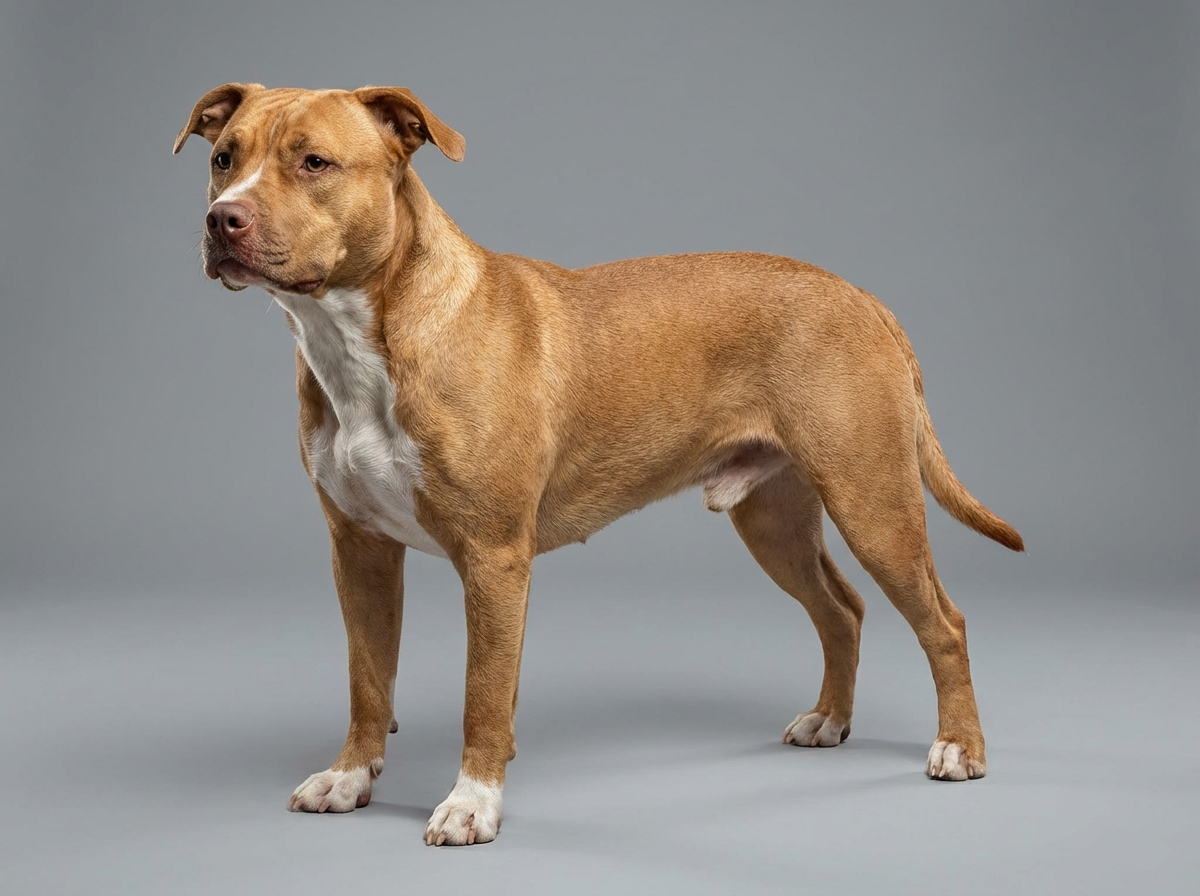
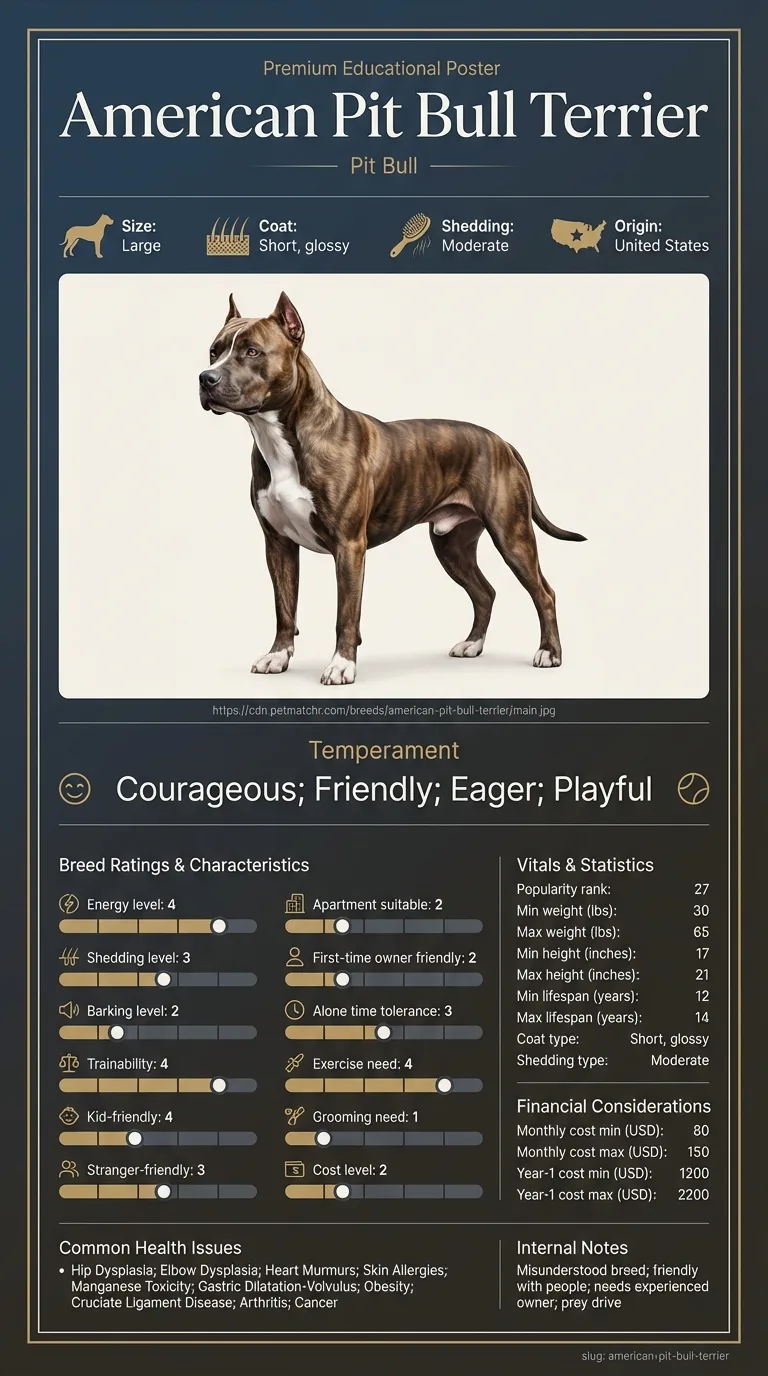
american pit bull terrier infographic
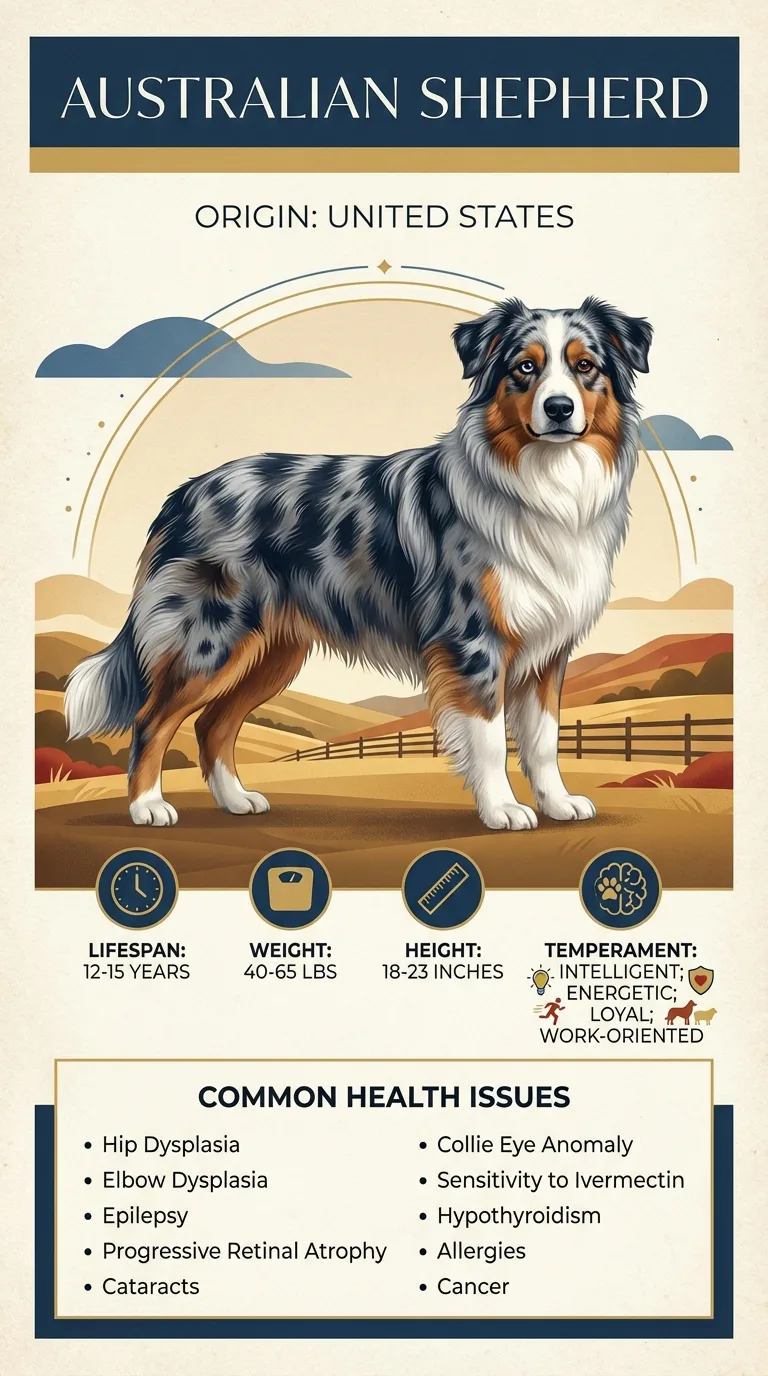
australian shepherd infographic

This page is for an active owner choosing between two medium-sized working breeds, and needing to know whether their household is one that meets lots of dogs or lots of people.

Quick verdict

The Aussie is the more demanding dog by a clear margin — 5/5 exercise, 5/5 energy and a brain that must be employed — while the Pit Bull is cheaper, cleaner and easier to satisfy but harder to manage around other dogs.

Choose american pit bull terrier if...

Choose the American Pit Bull Terrier if you want a people-oriented dog with a near-zero grooming bill and a manageable hour of daily exercise, and you can commit to careful management around other dogs.

Choose australian shepherd if...

Choose the Australian Shepherd if you have one to two hours a day plus real mental work to offer, you want a dog that is easy in group settings, and you will socialise it properly to offset a 2/5 stranger rating.

Head-to-head comparison

Featureamerican pit bull terrieraustralian shepherdWinner
Weight30–65 lbs40–65 lbsEqual
Height17–21 in18–23 inEqual
Lifespan12–14 years12–15 yearsaustralian shepherd
CoatShort, glossyMedium double coatamerican pit bull terrier
Grooming need1/53/5american pit bull terrier
Shedding3/5 — moderate4/5 — heavy seasonalamerican pit bull terrier
Energy level4/55/5american pit bull terrier
Exercise need4/55/5american pit bull terrier
Trainability4/55/5australian shepherd
Barking2/53/5american pit bull terrier
Good with kids4/54/5Equal
Good with other dogs2/54/5australian shepherd
Friendly to strangers3/52/5american pit bull terrier
Apartment suitability2/51/5american pit bull terrier
Good for first-time owners2/52/5Equal
Tolerates being alone3/52/5american pit bull terrier
Typical monthly cost$80–150$100–200american pit bull terrier
Typical first-year cost$1,200–2,200$1,500–2,800american pit bull terrier

Deep dive

The sociability inversion, and why it exists

It is unusual to find two breeds whose social ratings mirror each other this precisely, and the explanation is entirely in their working histories.

Bull-and-terrier dogs were handled constantly by people, often in close physical contact and often in stressful situations, and any dog that was difficult with humans was removed from the population quickly and deliberately. The result is a breed that is typically warm and open with people — 4/5 with children, 3/5 with strangers, and described as courageous, friendly, eager and playful. What was not selected against, historically, was intolerance of other dogs, which is why the 2/5 sits where it does.

The Australian Shepherd is the reverse. A ranch herding dog worked alongside other dogs constantly — in teams, around stock, in yards — so dog-dog sociability was functionally necessary, giving the 4/5. Meanwhile a dog guarding stock and property on isolated land had no reason to welcome unfamiliar people, and the 2/5 reflects a natural reserve that shows as aloofness, watchfulness, and in poorly socialised dogs as fearful barking or backing away.

The practical translation is about your life rather than the dog. A household that walks in busy parks, uses daycare and meets other dogs constantly will find the Aussie far easier. A household with a lot of visitors, children's friends coming and going and people at the door will find the Pit Bull far easier.

Both ratings improve with work, and both degrade without it. For the Aussie the work is early, calm, repeated exposure to unfamiliar people with no forced greetings. For the Pit Bull it is controlled, well-chosen introductions to stable dogs and a lifetime of sensible management rather than optimism.

5/5 against 4/5, and a brain that has to be employed

The Aussie's own notes specify one to two hours daily and describe a working dog that excels at sports. Its 5/5 for both energy and exercise is honest, and the mental component is not optional.

What satisfies an Australian Shepherd is a task with rules: herding, agility, obedience, rally, disc, scent work, or structured training sessions. Distance alone does not do it. A five-mile run produces a fitter Aussie with the same unmet need, and that need surfaces as behaviour — herding children and other pets, nipping at heels, chasing bicycles and cars, patrolling, shadow and light chasing, and obsessive repetitive habits that are genuinely difficult to unpick once established.

The Pit Bull's 4/5 is a simpler proposition. An hour to ninety minutes of real activity — a brisk walk plus flirt pole, spring pole, tug, weight pull or a training session — and the dog settles. It is strong and athletic and it enjoys work, but it does not have the herding breed's compulsion to be employed. Its 3/5 tolerance for time alone against the Aussie's 2/5 reflects the same difference.

Both rate 2/5 for first-time owners, and both fail when under-exercised, but the failure modes differ. An under-exercised Pit Bull is mouthy, destructive and harder to manage around other dogs. An under-exercised Aussie becomes frantic, obsessive and neurotic.

On space, the Aussie's 1/5 for apartments against the Pit Bull's 2/5 is fair. Neither is ideal in a flat, but the Pit Bull is quiet at 2/5 barking, settles hard indoors and needs less, while an Aussie in a flat needs its whole requirement met outside the building every single day.

Merle breeding: the question to ask before buying an Aussie puppy

The merle coat pattern — the mottled blue or red marbling the breed is known for — is produced by a dominant gene, and it carries a specific risk that every Aussie buyer should understand.

A dog with one copy of the merle gene is a normal merle. A dog with two copies, produced when two merle parents are bred together, is a double merle, and the outcome is frequently serious: substantially white coats, congenital deafness in one or both ears, and eye defects ranging from small malformed eyes to blindness. Roughly a quarter of puppies from a merle-to-merle mating are expected to inherit two copies.

Responsible Aussie breeders do not breed merle to merle. Asking a breeder directly what colour both parents are, and whether either has been genetically tested for a hidden or cryptic merle — a merle that does not look like one — is a fair and revealing question.

The breed's health list carries two more eye entries alongside it: collie eye anomaly, which is congenital and best identified by an ophthalmic examination of puppies at six to eight weeks, and progressive retinal atrophy with cataracts. Eye certification on breeding stock is standard practice in the breed.

The list also names sensitivity to ivermectin, which is the MDR1 drug sensitivity common in herding breeds. A cheap one-off DNA swab identifies it, the result should live on the dog's veterinary file, and it changes which antiparasitics, sedatives and chemotherapy drugs are safe at normal doses.

The Pit Bull's list is orthopaedic and dermatological instead: hip and elbow dysplasia, skin allergies, heart murmurs, bloat, obesity, cruciate ligament disease, arthritis and cancer.

Grooming 1/5 against 3/5

This is one of the widest coat gaps between two dogs of similar size.

The Pit Bull's short glossy coat rates 1/5 for grooming and 3/5 for shedding. The routine is a rubber curry mitt once a week and a bath when needed. No matting, no undercoat, no seasonal event, no professional appointment and no equipment. The short stiff hairs do embed in fabric, so it is not a hair-free dog, but the time cost is essentially nil. The thin coat does mean the breed feels cold quickly and benefits from a coat in winter, and pale-skinned dogs can sunburn.

The Aussie carries a medium-length double coat rated 3/5 for grooming and 4/5 for shedding, with heavy seasonal blows. It needs brushing two or three times a week with an undercoat rake and a slicker, more during a blow, with attention to the ruff, the britches, behind the ears and the feathering on the legs. Twice a year the undercoat comes out wholesale for two or three weeks. It should not be shaved — a double coat insulates in both directions and regrowth after a shave is often permanently altered.

Across a twelve to fifteen year life that is a real difference in hours and in the state of the house.

Cost follows the same pattern. The Pit Bull sits at cost level 2/5, $80–150 a month and $1,200–2,200 in the first year — one of the cheapest dogs on this site. The Aussie is 3/5, $100–200 and $1,500–2,800.

The caveat on the Pit Bull's low cost is insurance and housing. Breed restrictions in tenancy agreements, housing rules and insurance policies frequently apply to bully-type dogs and almost never to herding breeds, and that is worth checking in writing before committing.

Children, households and the honest recommendation

Both breeds rate 4/5 with children and both can be excellent family dogs, with different cautions.

The Aussie's caution is herding instinct. Circling, bumping and nipping at running heels is common around young children, it is hardware rather than naughtiness, and it responds well to early redirection into legitimate outlets. Its reserve with strangers also extends to visiting children, which is another argument for broad early socialisation.

The Pit Bull's caution is physical and social rather than temperamental. It is a strong, enthusiastic, body-slamming dog that can knock a small child over in play, and its 2/5 with other dogs means family walks in busy areas need planning. Neither of those is about the dog's attitude to children, which is generally excellent.

Both rate 2/5 for first-time owners, for opposite reasons: the Aussie because its needs are relentless and its reserve requires work, the Pit Bull because managing dog-dog reactivity and navigating breed restrictions takes commitment and judgement.

The honest recommendation is that these two rarely suit the same household. If you have one to two hours a day, want to do a dog sport, and live somewhere with plenty of dogs around, the Aussie will repay you enormously — it is one of the most capable breeds there is. If your life is busier with people than with activity, and an hour of exercise plus a five-minute grooming routine is what you can sustain, the Pit Bull is a far more realistic dog, provided you take the management and the paperwork seriously.

Lifespans are similar at 12 to 14 and 12 to 15 years, and both are good figures for medium-sized working dogs.

American Pit Bull Terrier vs Australian Shepherd at a glance

The Pit Bull rates 2/5 with other dogs and 3/5 with strangers. The Australian Shepherd rates 4/5 with other dogs and 2/5 with strangers. It is a near-perfect inversion, and it decides which dog fits which household.

The Aussie is the more demanding dog by a clear margin — 5/5 exercise, 5/5 energy, and a brain that must be given real work or it finds its own. The Pit Bull is cheaper, cleaner, and easier to satisfy physically, but harder to manage in group settings with other dogs.

Choose the American Pit Bull Terrier if you want a people-oriented dog with a near-zero grooming bill and a manageable hour of daily exercise, and you can commit to careful management around other dogs. Choose the Australian Shepherd if you have one to two hours a day plus real mental work to offer and want a dog that is easy in group settings.

Frequently asked questions

Which is better with other dogs?

The Australian Shepherd at 4/5 against the Pit Bull's 2/5. Aussies worked in teams around stock and are generally easy in group settings. The Pit Bull needs careful management, avoids dog parks, and can become less tolerant at social maturity.

Which is better with strangers?

The Pit Bull at 3/5 against the Aussie's 2/5. Bully-type dogs were selected to be handled by people; herding dogs were not selected to welcome them. The Aussie's reserve needs deliberate socialisation to stay confident rather than fearful.

Why should Australian Shepherds not be bred merle to merle?

Because a puppy inheriting two copies of the merle gene is frequently deaf, visually impaired or both. Roughly a quarter of a merle-to-merle litter is expected to be affected. Ask a breeder what colour both parents are.

Which needs more exercise?

The Aussie at 5/5 against 4/5, and the difference is bigger than one point suggests. It needs one to two hours plus genuine mental work; the Pit Bull is satisfied by an hour to ninety minutes of physical activity.

Which sheds less?

The Pit Bull, comfortably — 1/5 grooming and 3/5 shedding against 3/5 and 4/5. A curry mitt once a week is the whole routine, against brushing two or three times a week and two annual coat blows.

What is the ivermectin sensitivity on the Aussie's list?

The MDR1 drug sensitivity found in herding breeds, which makes certain antiparasitics, sedatives and chemotherapy agents dangerous at normal doses. A one-off DNA swab identifies it and the result belongs on the dog's veterinary file.

Which is cheaper to own?

The Pit Bull at $80–150 a month against $100–200, at cost level 2/5 against 3/5. The offsetting factor is insurance and housing restrictions, which apply to bully-type dogs far more often.

Quick answers

View more answers
Living

Pit Bull or Australian Shepherd: which should I choose?

The Aussie if you have one to two hours daily plus mental work and want a dog that is easy around other dogs. The Pit Bull if your life is people-heavy rather than activity-heavy and you can manage dog-dog introductions carefully.

Costs

Which is cheaper to keep?

The American Pit Bull Terrier at $80–150 a month against $100–200, and $1,200–2,200 in the first year against $1,500–2,800.

Health

What should I ask an Australian Shepherd breeder?

The colour and merle status of both parents, MDR1 DNA results, eye certification including a puppy examination for collie eye anomaly, and hip and elbow scores.

Training

What happens to an under-exercised Aussie?

It becomes obsessive rather than merely bored — herding children, nipping heels, chasing bikes, patrolling and fixating on shadows or lights. Those habits are hard to undo once established.

Related DogBreedCompass guides

  • American Pit Bull Terrier breed guideThe Pit Bull profile covers temperament, exercise and the practical realities of ownership.
  • Australian Shepherd breed guideThe Aussie profile covers the breed's exercise demands, herding instinct and coat maintenance.
  • common genetic disorders in Australian ShepherdsThe breed's inherited risks include two eye conditions and a drug sensitivity worth testing for.
  • obesity in Pit Bull TerriersObesity appears explicitly on the Pit Bull's list and drives its cruciate and joint problems.
  • hip dysplasia in Pit Bull TerriersHip dysplasia sits on both lists and is the shared screening question for either breeder.
  • Australian Shepherd versus Border CollieBuyers weighing herding breeds usually compare the Aussie against the other obvious candidate.

Related guides

Important reminder

Health information here is general and is not veterinary advice. Drug sensitivity, eye screening and individual risk should be discussed with your own veterinarian.

Some links on this site are affiliate links. We may earn a commission if you buy through them, at no additional cost to you.

Find Your Perfect Breed

Match your lifestyle to the right dog.

Take quiz

Find your match

Not sure which breed is right for you? Take our 2-minute quiz to find out.

Take the quiz