DogBreedCompass
← Back to breed profile

Genetic Predisposition to Obesity in Australian Shepherds

Quick answer

Why is this breed prone to weight gain when exercise drops?

Its very high documented energy and exercise needs mean appetite and metabolism expect substantial daily activity, so reduced exercise without adjusted food quickly leads to weight gain.

A dog bred to work outdoors for hours doesn't quietly adjust its appetite downward when a busy week cuts exercise short — the calories still come in expecting the output that used to burn them off.

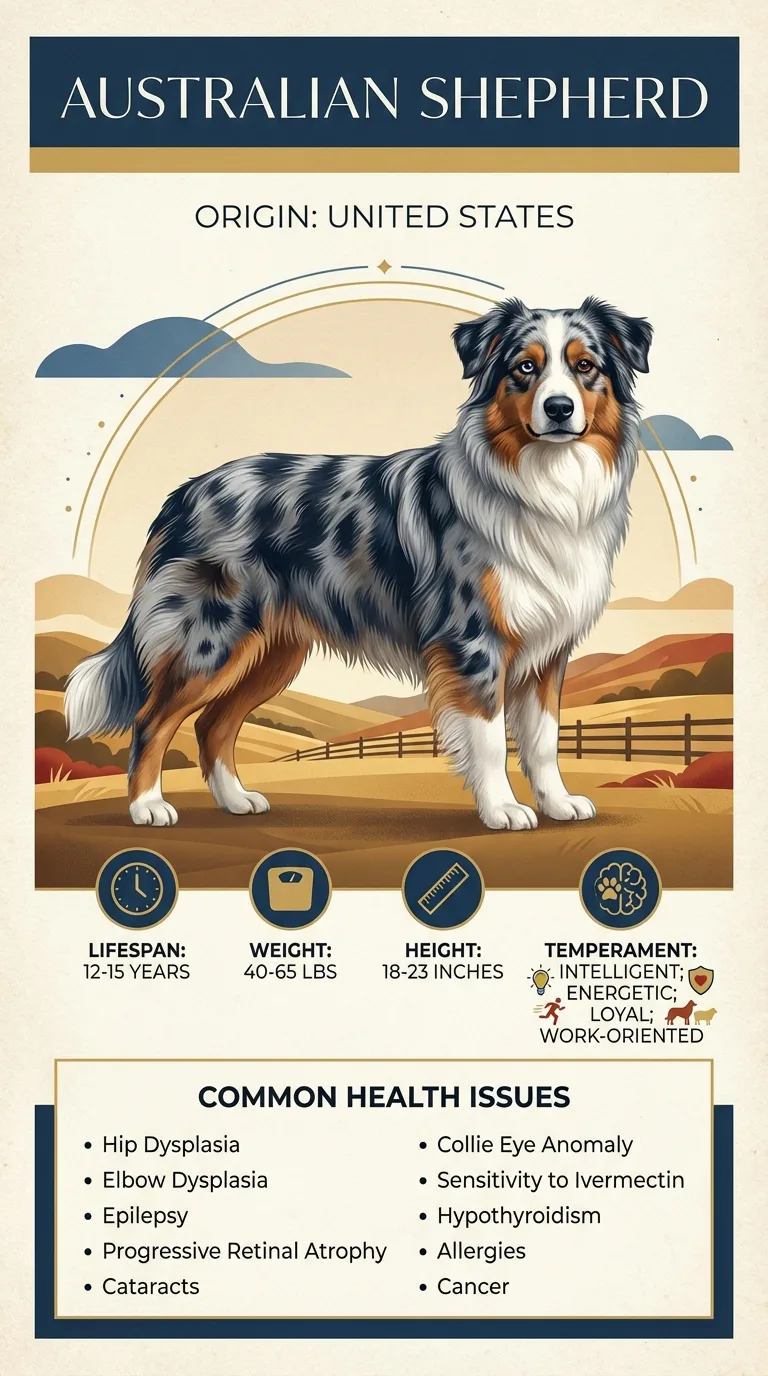
Genetic Predisposition to Obesity in Australian Shepherds infographic

Owners going through a temporary lifestyle change, a recovery period after surgery, or simply the natural activity decline of aging are the ones most likely to see unexpected weight gain creep in.

Important reminder

This guide is not medical advice. If your dog shows pain, sudden behavior change, or worsening symptoms, consult a licensed veterinarian.

Some links may be affiliate links. We may earn a commission at no extra cost to you. We only suggest products we believe are helpful for dog owners.

What this problem looks like

Weight gain risk in Australian Shepherds isn't driven by a documented breed-specific obesity gene, but by a mismatch between an appetite and metabolism calibrated for this breed's very high documented energy and exercise needs and real-world periods of reduced activity. When exercise drops without a matching food adjustment, weight can climb faster than owners expect, sometimes hidden by the breed's thick double coat.

Common triggers

  • A period of reduced exercise from injury, recovery, or a busy schedule
  • Natural activity decline as a dog enters its senior years
  • Liberal treat use as a substitute for mental stimulation
  • Portion sizes left unchanged despite reduced actual activity
  • A thick double coat masking early visual signs of weight gain

Weight management is a relevant, common concern for this breed specifically because its documented energy and exercise needs sit so high, meaning any real-world shortfall in activity has an outsized effect on weight compared to a lower-energy breed.

Why this happens

Breed factors

This breed's documented very high energy level and exercise need mean its appetite and metabolism are calibrated for substantial daily activity, so weight gain risk is primarily about maintaining that activity-to-calorie balance rather than an inherited metabolic abnormality.

Environment factors

Life changes that reduce exercise — an injury, a busy season, aging, or a move to a smaller living space — are the main environmental drivers, especially when food portions aren't adjusted to match the new activity level.

What you can do at home (once it is not an emergency)

When to talk to your vet

Talk to your vet if you notice gradual weight gain despite feeling like feeding hasn't changed, or if you're unsure how to adjust portions during a recovery period. Sudden, unexplained weight gain or loss should always be evaluated rather than assumed to be diet-related alone.

At home, alongside your vet's plan

  • Feel along your dog's ribs regularly rather than relying on visual coat appearance to judge weight.
  • Adjust food portions whenever exercise drops for an extended period, such as during recovery or a busy stretch.
  • Account for treat calories within your dog's total daily intake rather than treating them as separate.
  • Maintain consistent daily exercise appropriate for this breed's high activity needs whenever possible.
  • Reassess portions periodically as your dog ages and activity naturally shifts.

Mistakes that let weight creep in unnoticed

This breed's coat and typically athletic build can hide early weight gain longer than a short-coated breed would, making these habits easier to overlook.

  • Keeping portion sizes the same during a period of reduced exercise, like recovery from injury.
  • Using high-calorie treats liberally as a substitute for the mental stimulation regular exercise provides.
  • Not adjusting food as a dog ages and naturally becomes somewhat less active.
  • Assuming a lean-looking coat hides weight gain, when a thick double coat can mask early changes.

See all Australian Shepherd health problems, which breeds are prone to genetic predisposition to obesity, or the full Australian Shepherd breed guide for temperament, exercise needs and ownership costs.

What to expect, and how you know it is working

Weight changes can appear within a few weeks of an activity or diet shift, and correcting course with adjusted portions and exercise typically shows results within one to two months.

Success means maintaining a lean, healthy body condition through ongoing attention to the activity-calorie balance, not a one-time diet fix, since this breed's needs shift with life stage and circumstances.

Why this is about mismatch, not a specific gene

Unlike some breeds with a documented genetic mutation directly linked to increased appetite, this breed's weight gain risk is better explained by a mismatch between an appetite and metabolism calibrated for high activity and the reality of a period with less exercise than the dog's body expects. A dog built and fed for 1 to 2 hours of daily activity gains weight quickly if that activity drops to a fraction of that without a corresponding adjustment to food.

This matters because it means the fix is usually more straightforward than managing an inherited metabolic condition: matching portions to actual current activity level, rather than a fixed amount, is usually enough to keep weight in a healthy range even through temporary lower-activity periods.

Australian Shepherd Weight Gain: When a High-Drive Body Gets Less Than It Needs - Why this is about mismatch, not a specific gene

The Weight Nobody Noticed Under Bear's Coat

Bear tore his cruciate ligament and spent twelve weeks on strict activity restriction during recovery. His owner, Fallon, kept feeding his usual portions since his coat still looked the same, but a follow-up vet visit revealed he'd gained several pounds that were only obvious once the vet felt along his ribs. Fallon cut his portions by about a quarter for the remainder of recovery and gradually reintroduced exercise as cleared. Bear returned to his normal weight within two months of resuming full activity, and Fallon now adjusts his food any time his exercise routine changes meaningfully.

Key takeaway: A thick, well-groomed coat can hide real weight changes for longer than owners expect, which is why a hands-on check matters more than a visual one for this breed.

Frequently asked questions

Is there a specific gene that causes obesity in Australian Shepherds?

This breed doesn't have a specifically documented obesity-linked gene mutation the way some other breeds do. Weight gain here is better explained by a mismatch between a high activity-calibrated appetite and reduced real-world exercise.

Why does my Aussie gain weight so fast when exercise drops?

This breed's documented very high energy level and exercise need mean its appetite and metabolism expect substantial daily activity, so even a short period of reduced exercise without a food adjustment can lead to noticeable weight gain.

How can I tell if my dog is gaining weight under a thick coat?

Feel along the ribs rather than relying on visual coat appearance — you should be able to feel individual ribs with light pressure without them being visibly prominent.

Should I reduce food during a recovery period with less exercise?

Yes, adjusting portions to match actual current activity level, rather than keeping the usual amount, helps prevent weight gain during any temporary lower-activity period.

Does aging affect this breed's weight gain risk?

Yes, as activity naturally declines somewhat with age, food intake often needs a corresponding reduction to avoid gradual weight gain in senior years.

Are treats a big factor in weight gain for this breed?

They can be, especially if used liberally as a substitute for the mental stimulation this intelligent breed needs, so accounting for treat calories within the daily total matters.

Quick answers

View more answers
Health

Why is this breed prone to weight gain when exercise drops?

Its very high documented energy and exercise needs mean appetite and metabolism expect substantial daily activity, so reduced exercise without adjusted food quickly leads to weight gain.

Health

How do I check my dog's weight under a thick coat?

Feel along the ribs with light pressure rather than judging by visual coat appearance alone.

Living

Should I feed less during a low-activity recovery period?

Yes, adjust portions to match current activity level rather than keeping the usual amount unchanged.

Health

Does this breed have a specific obesity gene?

No documented mutation specific to this breed is known; weight gain here is mainly a lifestyle and activity-matching issue.

Costs

Can treats contribute significantly to weight gain?

Yes, especially if used often as a substitute for mental stimulation rather than accounted for within total daily calories.

Related DogBreedCompass guides

Bring the right questions to the vet

A one-page prep sheet for this condition: the signs, the questions to ask, what to get priced. Unlocks here.

You get: Vet visit prep sheet

No spam. One-click unsubscribe. See our privacy policy.

Preview page 1 before you decide.

Related guides