Living
Which breed makes more sense for most households?
For anyone without a high-energy lifestyle or fenced yard, the Shih Tzu is the more practical choice; the Aussie only makes sense if you can meet its 5/5 exercise need daily.

Quick answer
Which breed makes more sense for most households?
For anyone without a high-energy lifestyle or fenced yard, the Shih Tzu is the more practical choice; the Aussie only makes sense if you can meet its 5/5 exercise need daily.
Are you torn between the energetic Australian Shepherd and the affectionate Shih Tzu? Each breed has its unique traits, making them suitable for different lifestyles.
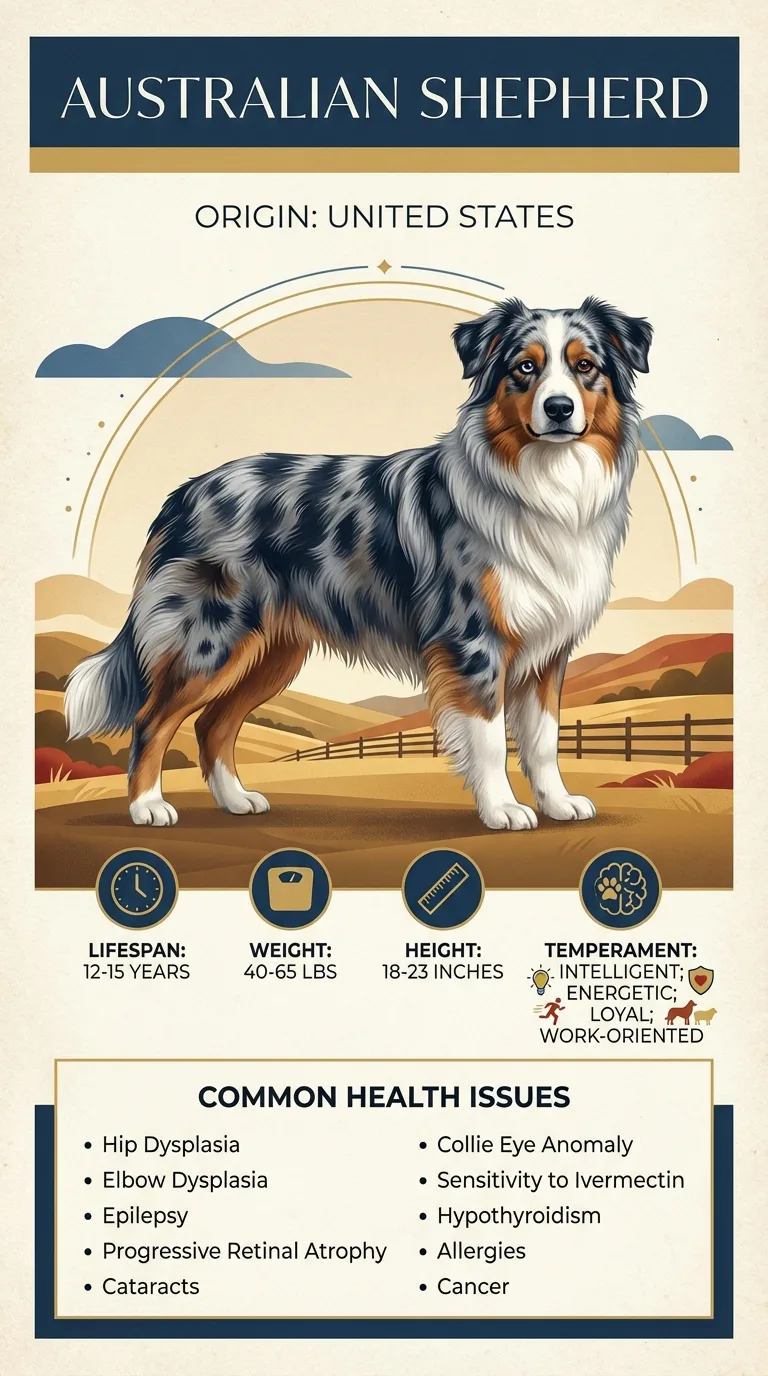
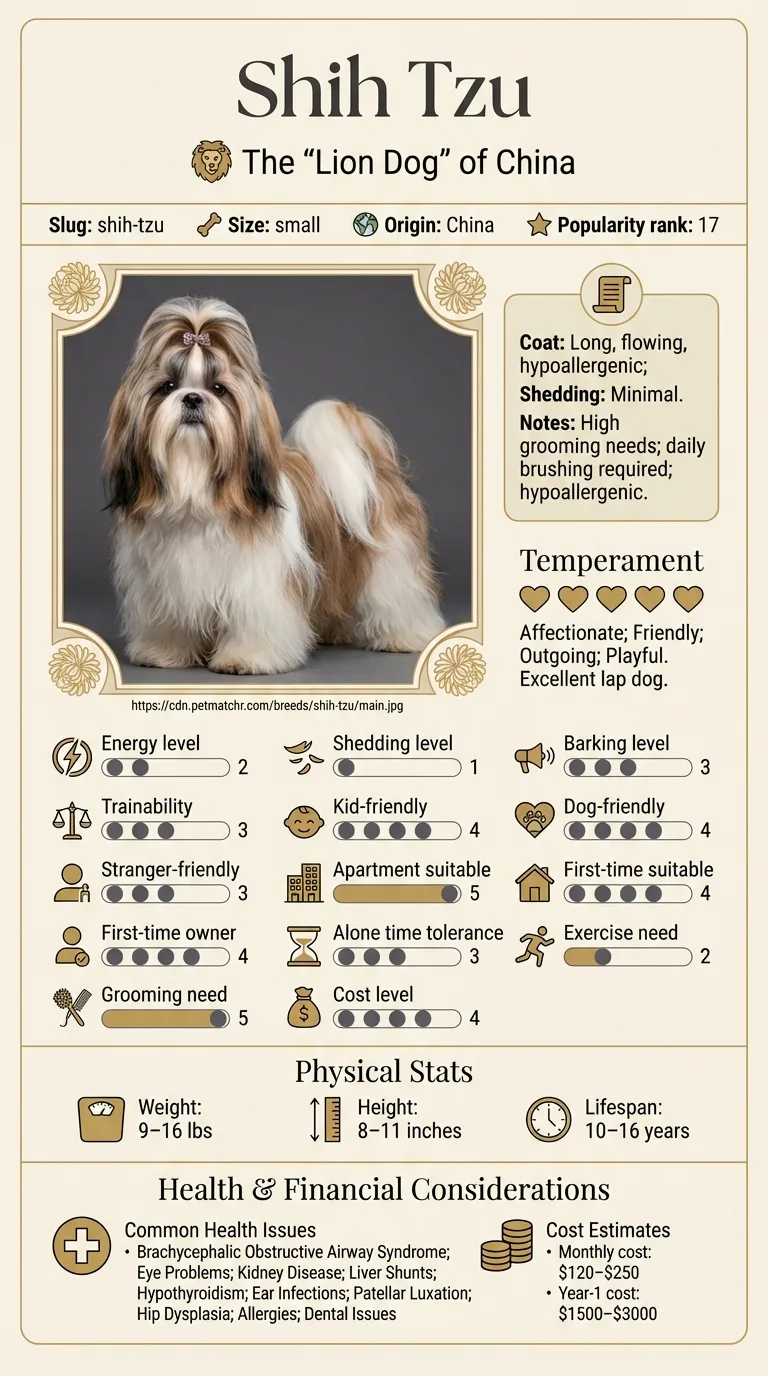
This comparison is perfect for dog lovers trying to decide between an Australian Shepherd and a Shih Tzu. You might be a busy family looking for a friendly companion, or perhaps you're an apartment dweller seeking a smaller, more manageable dog. Understanding the key differences will help you choose the right breed that fits your living situation, activity level, and family dynamics.
If you're an active person or family, the Australian Shepherd may be your best bet, while the Shih Tzu is ideal for a more relaxed lifestyle.
Choose the Australian Shepherd if you enjoy outdoor activities, have ample space, and can dedicate time to daily exercise and training.
Opt for the Shih Tzu if you're looking for a smaller, low-energy dog that thrives in apartments and requires less demanding exercise.
| Feature | australian shepherd | shih tzu | Winner |
|---|---|---|---|
| Size class | medium | small | Equal |
| Weight | 40–65 lbs | 9–16 lbs | Equal |
| Height | 18–23 in | 8–11 in | Equal |
| Lifespan | 12–15 years | 10–16 years | australian shepherd |
| Exercise need | Very high (5/5) | Low (2/5) | shih tzu |
| Grooming need | Moderate (3/5) | Very high (5/5) | australian shepherd |
| Shedding | High (4/5) | Very low (1/5) | shih tzu |
| Energy level | Very high (5/5) | Low (2/5) | Equal |
| Barking | Moderate (3/5) | Moderate (3/5) | Equal |
| Apartment suitability | Very low (1/5) | Very high (5/5) | shih tzu |
| Good for first-time owners | Low (2/5) | High (4/5) | shih tzu |
| Tolerates being alone | Low (2/5) | Moderate (3/5) | shih tzu |
| Trainability | Very high (5/5) | Moderate (3/5) | australian shepherd |
| Good with kids | High (4/5) | High (4/5) | Equal |
| Good with other dogs | High (4/5) | High (4/5) | Equal |
| Friendly to strangers | Low (2/5) | Moderate (3/5) | shih tzu |
| Cost level | Moderate (3/5) | High (4/5) | australian shepherd |
| Coat | Medium-length double coat | Long, flowing, hypoallergenic | Equal |
| Origin | United States | China | Equal |
| Typical monthly cost | $100–$200 | $120–$250 | Equal |
| Typical first-year cost | $1,500–$2,800 | $1,500–$3,000 | Equal |
You're looking at a 40-65 lb working dog against a 9-16 lb lapdog here. The Aussie stands 18-23 inches; the Shih Tzu tops out around 11 inches, small enough to travel in a carrier. There's no overlap in the weight ranges at all, so size alone should settle a lot of the decision before you even get to temperament.
Exercise need is about as far apart as these ratings get: the Aussie is maxed at 5/5, the Shih Tzu sits at a low 2/5. The Aussie was bred to work livestock all day; the Shih Tzu was bred to sit in a lap. A short daily walk genuinely satisfies a Shih Tzu, while the same routine would leave an Aussie climbing the walls.
The Shih Tzu flips the usual small-dog assumption - it needs very high grooming (5/5) thanks to a long, flowing coat that mats without regular brushing, though it barely sheds (1/5). The Aussie is the opposite: moderate grooming (3/5) but heavy shedding (4/5) from its double coat. Pick your maintenance style - brushing out mats versus vacuuming fur.
The Shih Tzu was built for this: 5/5 on apartment suitability, 4/5 as a first-timer's dog, and moderate 3/5 tolerance for being left alone. The Aussie scores 1/5 on apartment fit and only 2/5 on tolerating alone time - it needs room to move and someone around. Barking is equal at moderate (3/5) for both, so noise complaints aren't the deciding factor.
The Aussie is a 5/5 on trainability, among the most responsive working breeds around, though it still rates only 2/5 for first-time owners because that drive needs an experienced hand to channel. The Shih Tzu trains at a moderate 3/5 - stubborn in short bursts but generally cooperative - and rates a friendlier 4/5 for first-time owners. If this is your first dog, the Shih Tzu is the more forgiving pick on paper.
Both breeds score well and evenly with kids and other dogs (4/5 each). The Shih Tzu is warmer with strangers at 3/5 versus the Aussie's 2/5, which fits its reputation as an outgoing companion breed rather than a watchful herder. Neither is a bad family fit; the difference shows up more in how each greets new people at the door.
Lifespan ranges overlap heavily - 12-15 years for the Aussie, 10-16 for the Shih Tzu - so age expectancy isn't a clear differentiator. Their health risks diverge sharply though: the Aussie's list centers on hip and elbow dysplasia, epilepsy and eye conditions, while the Shih Tzu's includes brachycephalic airway issues, kidney disease and liver shunts tied to its flat face and small size. Hypothyroidism and allergies show up on both lists.
The Shih Tzu actually costs a bit more to keep despite being the smaller dog - $120-$250 monthly against the Aussie's $100-$200, and a higher cost-level rating (4/5 vs 3/5) reflecting that coat maintenance. First-year totals land close, $1,500-$3,000 for the Shih Tzu versus $1,500-$2,800 for the Aussie. Don't assume small means cheap here - regular professional grooming visits for the Shih Tzu's coat can add up to more than the extra food a larger Aussie eats each month.


Dramatically. The Aussie runs 40-65 lbs and up to 23 inches tall, while the Shih Tzu tops out at 16 lbs and 11 inches. There's no size overlap between them.
The Aussie, by a lot - it's rated 4/5 for shedding against the Shih Tzu's 1/5. The tradeoff is that the Shih Tzu needs far more grooming time (5/5) to keep its long coat from matting.
According to these ratings, yes - the Shih Tzu scores 4/5 for first-time owners against the Aussie's 2/5. The Aussie's intelligence and drive need experienced handling to avoid boredom-driven behavior problems.
The Shih Tzu, decisively, with a 5/5 apartment score against the Aussie's 1/5. The Aussie's very high exercise need makes small-space living genuinely unfair to the dog.
The Shih Tzu actually runs slightly higher at $120-$250 a month versus the Aussie's $100-$200, mostly due to grooming upkeep for that long coat.
Hypothyroidism, allergies, and hip dysplasia appear on both lists. Beyond that they diverge - the Aussie faces more orthopedic and neurological risks, while the Shih Tzu faces airway and organ issues tied to its small, flat-faced build.
Neither has an edge - both are rated moderate (3/5) for barking, so vocal tendencies won't sway this decision either way.
For anyone without a high-energy lifestyle or fenced yard, the Shih Tzu is the more practical choice; the Aussie only makes sense if you can meet its 5/5 exercise need daily.
$100-$200 for an Aussie, $120-$250 for a Shih Tzu - the smaller dog isn't the cheaper one here.
The Aussie needs 5/5, essentially daily vigorous activity; the Shih Tzu is satisfied at 2/5, low-key walks.
The Shih Tzu's range tops out higher at 16 years versus the Aussie's 15, though both start around the 10-12 year mark on the low end.
Secure checkout on Stripe. We never see your card.
7-day money-back guarantee. Instant access.
This guide is not medical advice. If your dog shows pain, sudden behavior change, or worsening symptoms, consult a licensed veterinarian.
Some links may be affiliate links. We may earn a commission at no extra cost to you. We only suggest products we believe are helpful for dog owners.
We research and check what we publish, but we do not warrant that any figure, date, price, or statement is accurate, complete, or current, and we accept no liability for any loss, cost, injury, or other harm arising from the use of this site. Use it as one reference among several. You remain responsible for your own decisions and for your dog's care - confirm anything that matters with a licensed veterinarian or another qualified professional before you act on it. Full disclaimer.
Match your lifestyle to the right dog.
Take quizNot sure which breed is right for you? Take our 2-minute quiz to find out.
Take the quiz