Behavior
What's a common early sign of back strain in this breed?
A hunched posture or reluctance to jump after a hard play or training session is the most common early sign.

Quick answer
What's a common early sign of back strain in this breed?
A hunched posture or reluctance to jump after a hard play or training session is the most common early sign.
A slightly arched back after a big play session, or a reluctance to be picked up under the belly, is often the first sign of a strained back muscle rather than anything more serious.
Owners of dogs in agility, disc sports, or serious herding work see this most, since repeated hard turns and sudden stops load the lower back and core muscles far more than casual walks ever would.
This guide is not medical advice. If your dog shows pain, sudden behavior change, or worsening symptoms, consult a licensed veterinarian.
Some links may be affiliate links. We may earn a commission at no extra cost to you. We only suggest products we believe are helpful for dog owners.
We research and check what we publish, but we do not warrant that any figure, date, price, or statement is accurate, complete, or current, and we accept no liability for any loss, cost, injury, or other harm arising from the use of this site. Use it as one reference among several. You remain responsible for your own decisions and for your dog's care - confirm anything that matters with a licensed veterinarian or another qualified professional before you act on it. Full disclaimer.
Everyday back problems in Australian Shepherds are usually soft-tissue strain rather than a structural spinal defect, driven by the demands of a breed built for hard turns, jumps, and sudden stops. A hunched posture or reluctance to jump after intense activity is the most common presentation, and it typically responds well to rest.
Soft-tissue back strain is common in this breed given how much hard-turning, high-impact activity a typical Aussie does, especially in working and sport lines. Most cases are mild and resolve with rest rather than requiring extensive treatment.
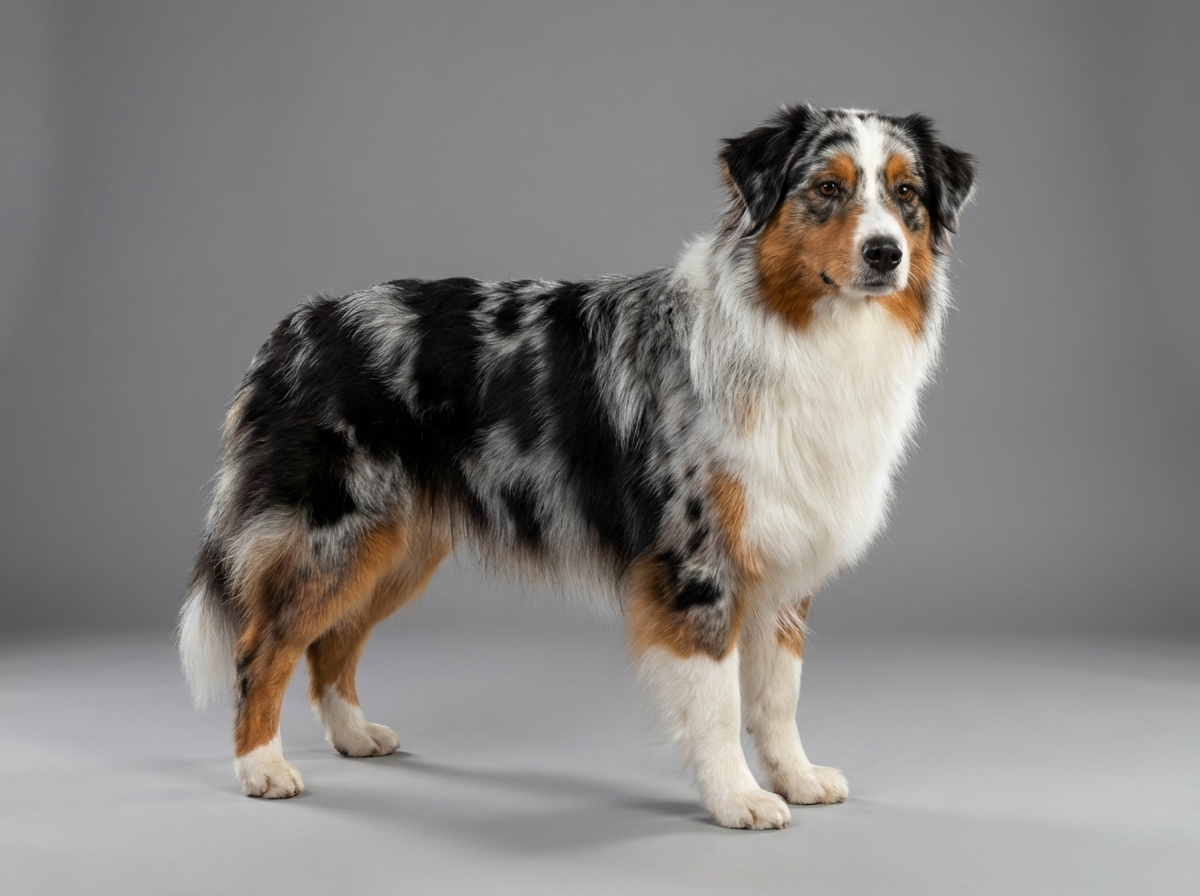
This breed's high energy level and drive to work mean the back and core muscles absorb constant load from sprinting, cutting, and jumping. A proportionate, athletic build supports this activity well under normal conditions, but repeated high-impact stress still adds up over time.
Hard surfaces, repeated jumping without a ramp, and skipping warm-ups before intense activity all increase strain risk. Owners who push through early stiffness rather than resting the dog also see problems recur more often.
Talk to your vet if soreness doesn't improve within a week of rest, or if you notice uneven gait or reluctance to move at all. Dragging a paw, sudden hind-leg weakness, or inability to stand are signs of a more serious spinal issue and need emergency evaluation immediately.
Simple muscle strain usually heals with rest, but pushing through it is how a minor issue turns into a chronic one.
See all Australian Shepherd health problems, which breeds are prone to back problems, or the full Australian Shepherd breed guide for temperament, exercise needs and ownership costs.
Most simple muscle strains improve noticeably within 5 to 7 days of rest and continue improving over two to three weeks before a full return to high-intensity activity.
Success looks like a full return to normal movement and activity level after a rest period, with no lingering hesitation to jump or turn. Recurring strain despite rest is a signal to look for an underlying cause.
Muscle and soft-tissue back strain generally causes a hunched posture, reluctance to jump, or sensitivity when picked up, but the dog can usually still walk normally and bear weight evenly on all four legs. It typically improves within days of rest.
Disc-related back problems look different and more serious: uneven gait, dragging a paw, or sudden weakness in the hind legs are signs of a spinal cord issue rather than simple muscle strain, and they need urgent veterinary evaluation rather than home rest. Knowing which pattern you're looking at changes how quickly you need to act.

Beau's owner, Elena, noticed him walking with a slightly hunched back the morning after an especially long frisbee session at the park. Beau was reluctant to jump into the car and flinched slightly when Elena picked him up. A vet exam ruled out anything neurological and confirmed a simple muscle strain, recommending a week of rest and short leash walks only. Beau was back to normal within eight days, and Elena now builds in a short warm-up jog before any high-intensity frisbee session.
Key takeaway: Most back soreness in an active, well-built dog like this is a manageable strain rather than a spinal emergency, but it still deserves a proper rest period instead of pushing through it.
Most cases are soft-tissue strain from hard turns, jumps, or sudden stops during high-intensity activity, rather than a structural spinal defect.
Simple strain causes a hunched posture and reluctance to jump but even weight-bearing on all legs. Dragging a paw, uneven gait, or hind-leg weakness points to a more serious disc issue needing urgent care.
Most mild strains improve significantly within 5 to 7 days of rest and activity restriction, though full return to high-intensity activity should be gradual.
Yes, a ramp for cars and furniture reduces jarring impact on the back and is a simple way to prevent re-injury during recovery and beyond.
Yes, a short warm-up of easy trotting and gentle stretches before hard activity reduces the risk of muscle strain, similar to how it works for human athletes.
It's more common in that group than in casual pet dogs, simply because of the repeated hard turns and landings those sports demand of the spine and core muscles.
A hunched posture or reluctance to jump after a hard play or training session is the most common early sign.
Rest, activity restriction, and sometimes vet-guided anti-inflammatory treatment are the standard approach for soft-tissue strain.
Short, gentle leash walks are usually fine, but high-impact activity like jumping and hard turns should be paused until fully healed.
A simple strain typically involves one vet visit and a short course of treatment, though imaging is added if a more serious cause is suspected.
Dragging a paw, sudden hind-leg weakness, or inability to stand means emergency evaluation, not home rest.
A one-page prep sheet for this condition: the signs, the questions to ask, what to get priced. Unlocks here.
You get: Vet visit prep sheet
No spam. One-click unsubscribe. See our privacy policy.
Preview page 1 before you decide.