Health
Is Wobbler syndrome common in Akitas?
No — it's primarily documented in Great Danes and Dobermans, not established as a hallmark Akita condition.

Quick answer
Is Wobbler syndrome common in Akitas?
No — it's primarily documented in Great Danes and Dobermans, not established as a hallmark Akita condition.
A wobbly, uncoordinated hind-end gait in a large dog understandably points owners toward Wobbler syndrome, a condition best documented in giant breeds — but it's worth understanding how loosely that actually applies to an Akita.
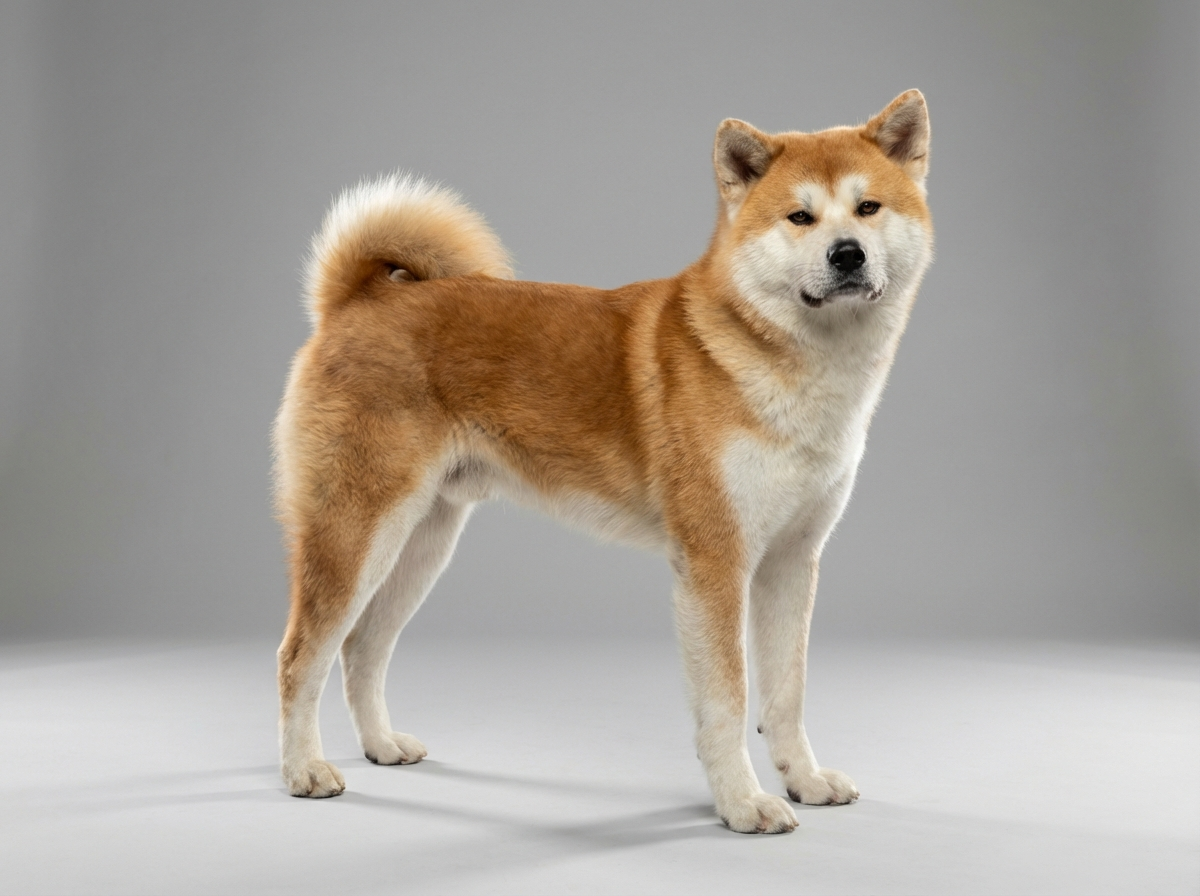
Owners of large, older Akitas who notice an unsteady, swaying gait in the hind end are the ones who typically encounter this term in their research, often after searching general large-breed neurologic symptoms.
This guide is not medical advice. If your dog shows pain, sudden behavior change, or worsening symptoms, consult a licensed veterinarian.
Some links may be affiliate links. We may earn a commission at no extra cost to you. We only suggest products we believe are helpful for dog owners.
We research and check what we publish, but we do not warrant that any figure, date, price, or statement is accurate, complete, or current, and we accept no liability for any loss, cost, injury, or other harm arising from the use of this site. Use it as one reference among several. You remain responsible for your own decisions and for your dog's care - confirm anything that matters with a licensed veterinarian or another qualified professional before you act on it. Full disclaimer.
Check this first
A large dog that suddenly can't stand, drags its hind paws, or loses coordination rapidly over a day or two needs urgent evaluation regardless of the eventual diagnosis. Rapid neurologic decline, whatever the specific cause, benefits from prompt imaging and treatment before permanent nerve damage sets in.
A gradual, slowly worsening swaying or crossing-over gait in the hind legs over weeks to months is more typical of the range of conditions that could be at play in an older large dog, and this pattern is appropriate for a scheduled neurologic workup rather than an emergency visit.
For an Akita specifically, given that Wobbler syndrome isn't a hallmark breed condition, a vet is likely to also seriously consider degenerative myelopathy, disc disease, or orthopedic causes — the urgency of getting any progressive gait change evaluated is the same regardless of which of these turns out to be the answer.
If any of these apply, call your vet or an emergency clinic now. The rest of this page is for the cases that are not an emergency.
Wobbler syndrome is a compression of the spinal cord in the neck that produces a swaying, uncoordinated gait, most classically documented in Great Danes and Doberman Pinschers. It isn't established as a hallmark condition in the Akita, though the breed's large size means a vet evaluating an unsteady gait will still consider it alongside more likely explanations.
It's well documented in Great Danes and Dobermans specifically, with far lower and less-established prevalence in most other breeds, the Akita included. When an older Akita shows hind-end incoordination, statistically more common conditions such as degenerative myelopathy or disc disease are more likely explanations.
The Akita's large size and strong, muscular neck don't map onto the specific vertebral conformations documented as driving Wobbler syndrome in Great Danes and Dobermans. The breed's genuinely relevant neurologic and spinal risks — degenerative myelopathy and general age-related disc disease — involve different mechanisms and are worth prioritizing in a workup for gait changes.
Because Wobbler syndrome isn't established as a meaningful Akita-specific risk, there are no well-documented environmental triggers specific to this breed and condition. General spinal health factors — weight management, avoiding repeated high-impact stress, and prompt evaluation of gait changes — remain relevant regardless of which specific condition turns out to be the cause.
See a vet promptly for any new or progressive hind-end incoordination, swaying gait, or dragging of the rear paws. Seek same-day care if the decline is rapid — occurring over a day or two — or if your dog loses the ability to stand.
An uncoordinated gait has several possible causes, and assuming the wrong one can delay proper treatment. Avoid these mistakes.
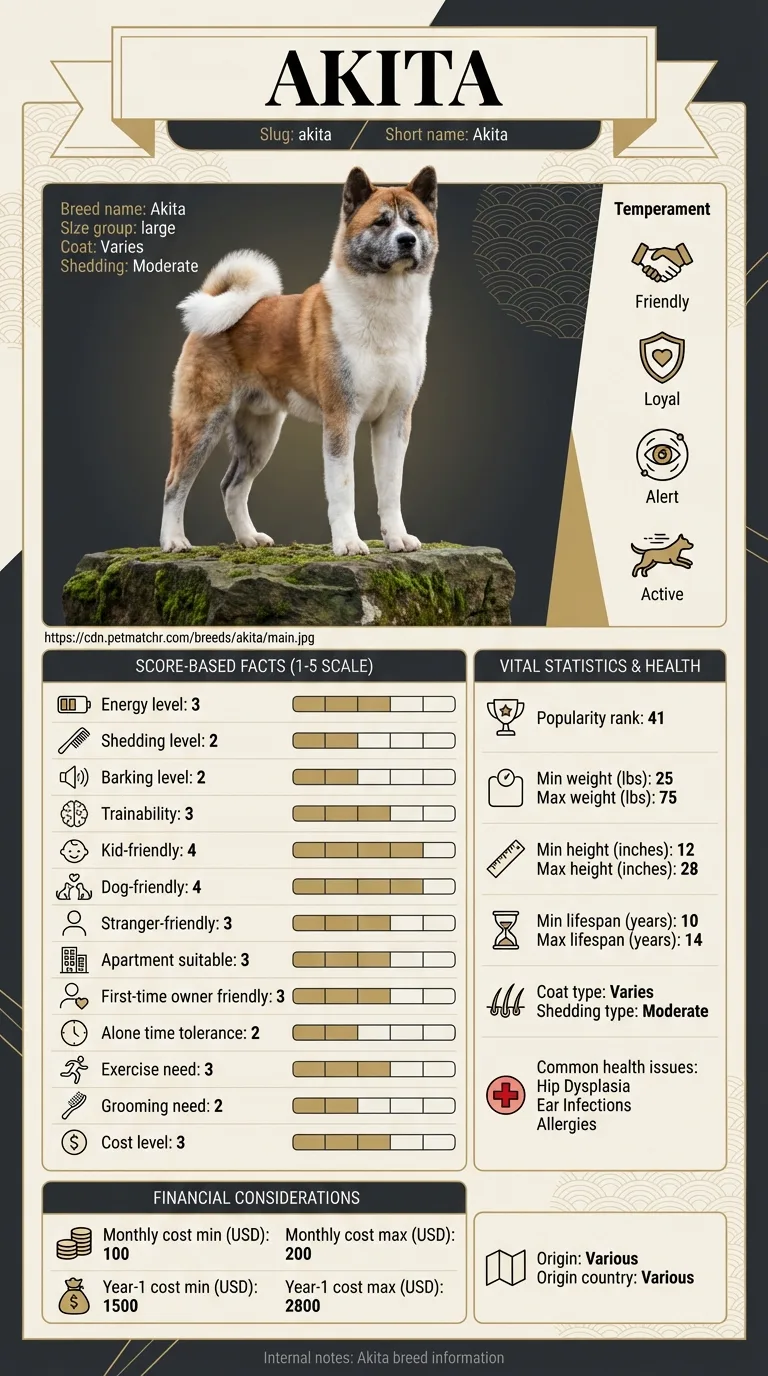
See all Akita health problems, which breeds are prone to wobbler syndrome, or the full Akita breed guide for temperament, exercise needs and ownership costs.
Because Wobbler syndrome specifically isn't a well-established risk in this breed, there's no meaningful breed-specific timeline to reference for it. Whatever the actual diagnosis turns out to be, the more common possibilities in an Akita each have their own distinct management timelines your vet or a neurologist can outline.
Success looks like getting an accurate diagnosis promptly and starting the right management plan for whatever is actually causing the gait change, rather than time lost focusing on a condition that isn't well established in this breed.
If you think your Akita has wobbler syndrome, the plan is three steps: write down what you have seen and when it started, book a veterinary appointment rather than waiting for the next flare, and take video of the behaviour or symptom before you go — the thing you are worried about rarely happens in the consulting room. Screening in the parents covers hip dysplasia, progressive retinal atrophy, hypothyroidism.
What the vet visit should produce is a diagnosis and a written plan, not just reassurance: what is being ruled out, what the monitoring interval is, and which signs mean you come back sooner. Ask what the treatment costs across a year rather than per visit, because that is the number that decides whether you are managing this condition or reacting to it.
Between appointments, keep a short log — dates, what you saw, what changed. It is the single most useful thing an owner brings to a follow-up, and for wobbler syndrome it is often what separates a clear pattern from a guess.
Derek noticed his ten-year-old Akita, Ghost, had started swaying slightly in the hind end on walks around Missoula, occasionally crossing his back paws over each other. Concerned it might be something serious like Wobbler syndrome he'd read about, Derek brought Ghost in for a full workup. A neurologic exam and follow-up MRI showed early degenerative myelopathy rather than cervical spinal cord compression. Derek's vet explained that Wobbler syndrome wasn't a realistic fit for Ghost's breed and exam findings, and outlined a management plan — including a physical therapy referral — better suited to the actual diagnosis.
Key takeaway: A large dog's unsteady gait deserves a full workup rather than an assumption based on a condition more associated with other giant breeds — in an Akita, the more statistically likely explanations should be considered first.
Not in the way it is for Great Danes or Dobermans. It's primarily documented in a handful of giant and large breeds with specific neck conformations, and the Akita isn't among the breeds where it's considered a hallmark risk, though isolated cases in large breeds generally can't be entirely excluded.
It involves malformation or instability of the cervical vertebrae that compresses the spinal cord, producing a swaying, uncoordinated gait, most often in the hind legs initially.
Degenerative myelopathy, general disc disease, or orthopedic conditions like hip dysplasia or arthritis are all more likely explanations for gait changes in this breed and need to be considered first.
MRI is the gold standard for visualizing spinal cord compression in the neck, sometimes combined with myelography, typically performed at a specialty or referral center.
Options range from medical management with activity restriction and anti-inflammatory medication for mild cases, to surgical decompression for more severe or progressive cases.
It's reasonable to mention if you're concerned, but expect your vet to prioritize a broader neurologic workup given how much more common other causes are in this breed.
Large body size is a contributing factor across several spinal conditions, but Wobbler syndrome specifically is tied more to particular neck and vertebral conformations documented in a small number of breeds rather than size alone.
No — it's primarily documented in Great Danes and Dobermans, not established as a hallmark Akita condition.
Degenerative myelopathy, disc disease, or arthritis are all more probable explanations in this breed.
A neurologic exam followed by MRI, usually at a specialty referral center, gives the clearest answer.
Yes — reduce jumping and stairs and get a vet evaluation promptly rather than waiting to see if it resolves.
A trainer can't treat the underlying condition but can help you manage safe movement and confidence once a diagnosis and plan are in place.
A one-page prep sheet for this condition: the signs, the questions to ask, what to get priced. Unlocks here.
You get: Vet visit prep sheet
No spam. One-click unsubscribe. See our privacy policy.
Preview page 1 before you decide.