Living
Akita vs Shih Tzu: which should I choose?
The Shih Tzu if you live in a flat, want a small low-shedding companion that copes with a working day, and will fund grooming. The Akita if you want low daily maintenance and no heat restrictions.

Quick answer
Akita vs Shih Tzu: which should I choose?
The Shih Tzu if you live in a flat, want a small low-shedding companion that copes with a working day, and will fund grooming. The Akita if you want low daily maintenance and no heat restrictions.
The Shih Tzu rates 5/5 for grooming — the highest on this site — and 1/5 for shedding. It weighs nine to sixteen pounds. Almost everything about living with one comes back to that coat, and to a flat face that makes the rest of the maintenance more urgent than it looks.
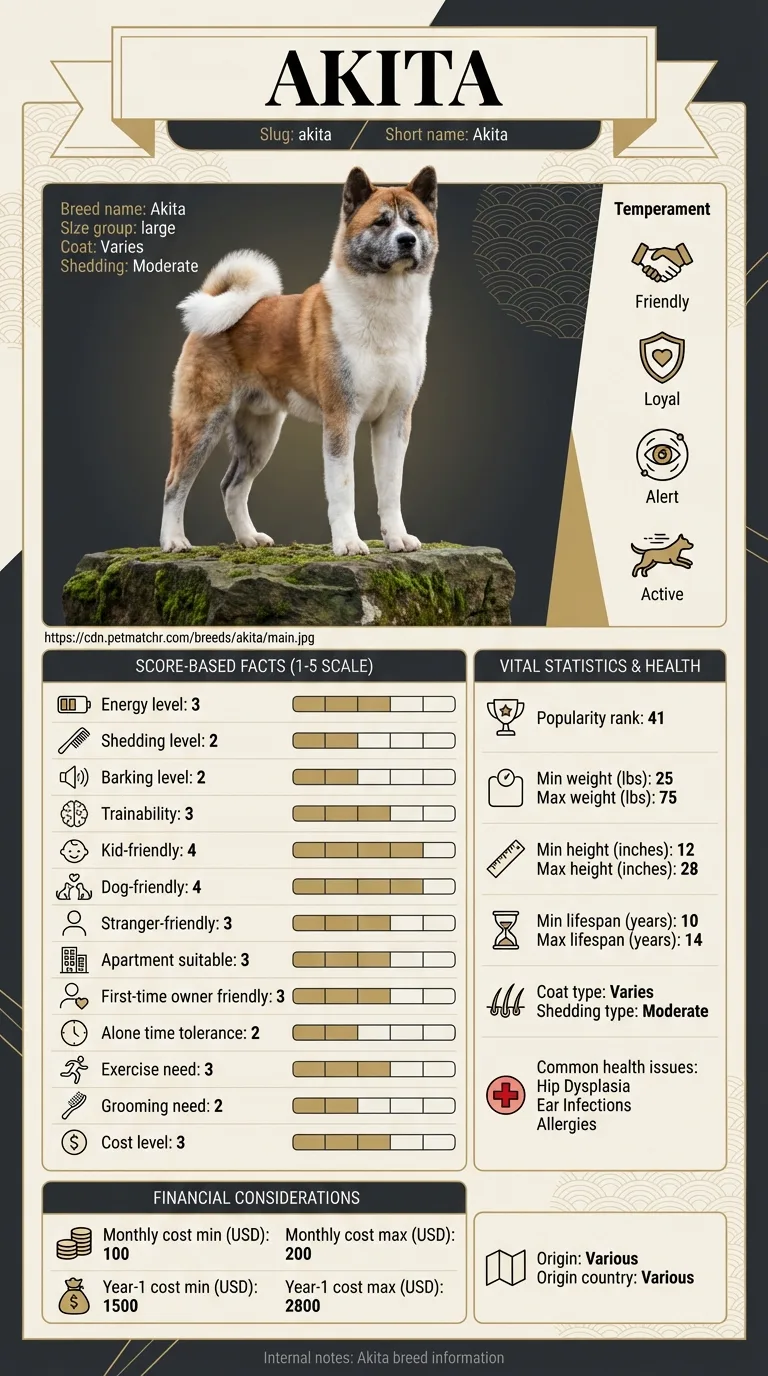
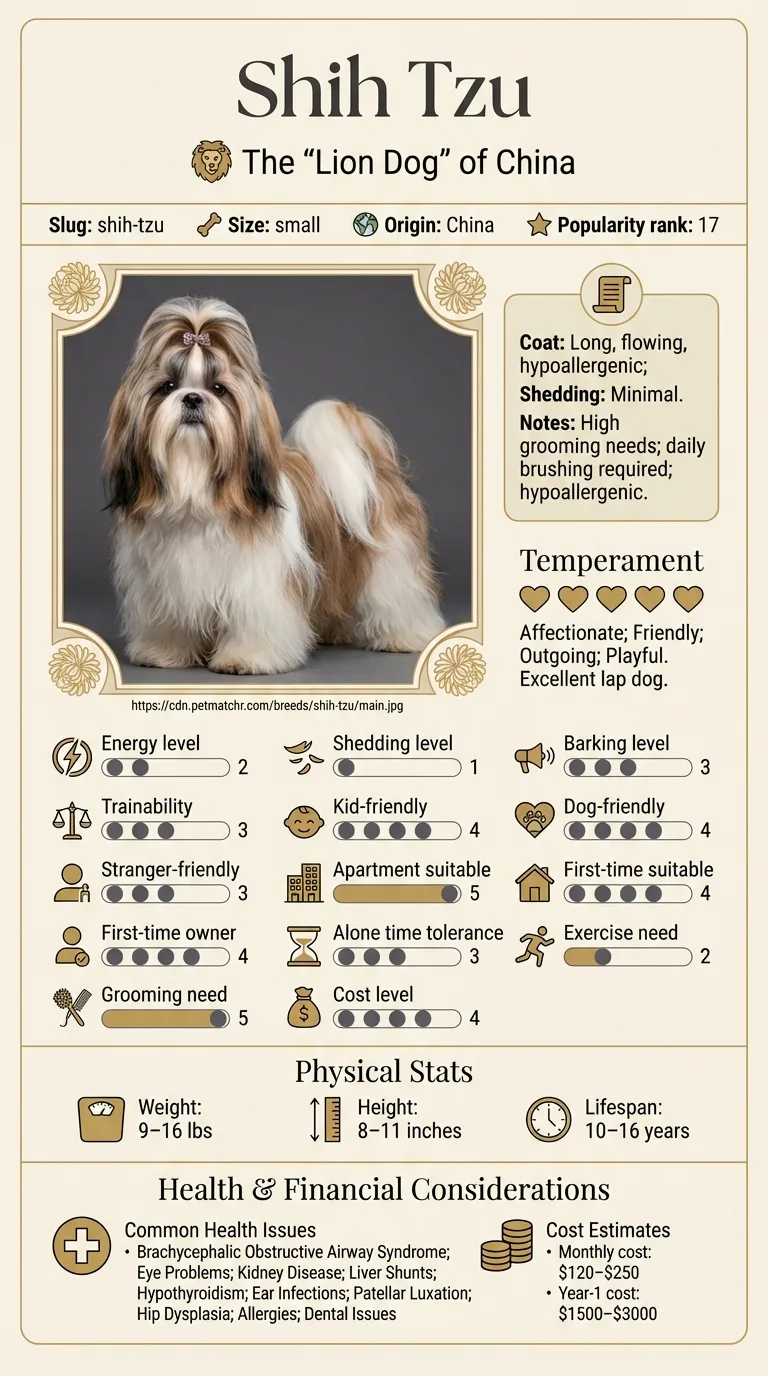
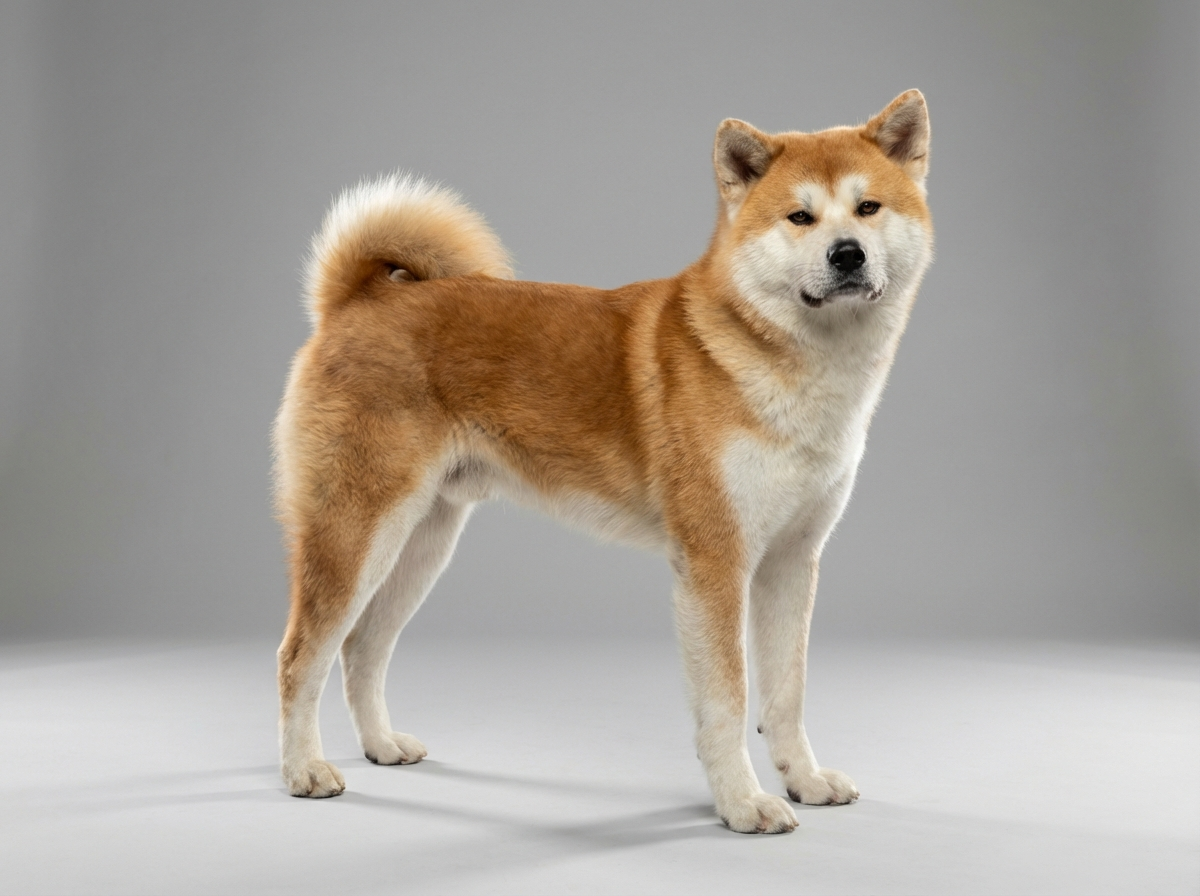
This page is for someone weighing a small long-coated companion against a large guardian. It covers the real grooming commitment and the alternatives to it, breathing and eye fragility, a kidney condition worth knowing about, and cost.
The Shih Tzu is the easier dog to house and the harder one to maintain, and it is more expensive to run than an Akita despite weighing a tenth as much.
Choose the Akita if you want low daily maintenance and no heat restrictions. It grooms at 3/5 against the Shih Tzu's 5/5, costs $110–$240 a month against $120–$250, and can be exercised in summer. You are accepting 5/5 shedding, 1/5 for first-time owners, 2/5 with other dogs and strangers, and a much larger dog.
Choose the Shih Tzu if you live in a flat and want a small, affectionate, low-shedding companion that copes with a working day. It rates 5/5 for apartments, 4/5 with children, other dogs and first-time owners, sheds at 1/5 and tolerates being alone at 3/5. You are accepting a 5/5 coat and a short face.
| Feature | akita | shih tzu | Winner |
|---|---|---|---|
| Weight | 70–130 lbs | 9–16 lbs | Equal |
| Height | 24–28 in | 8–11 in | Equal |
| Lifespan | 10–13 years | 10–16 years | shih tzu |
| Coat | Dense double coat | Long and flowing | Equal |
| Grooming need | Moderate (3/5) | Very high (5/5) | akita |
| Shedding | Very high (5/5) | Very low (1/5) | shih tzu |
| Energy level | Moderate (3/5) | Low (2/5) | Equal |
| Exercise need | Moderate (3/5) | Low (2/5) | shih tzu |
| Trainability | Moderate (3/5) | Moderate (3/5) | Equal |
| Barking | Low (2/5) | Moderate (3/5) | akita |
| Good with kids | Moderate (3/5) | High (4/5) | shih tzu |
| Good with other dogs | Low (2/5) | High (4/5) | shih tzu |
| Friendly to strangers | Low (2/5) | Moderate (3/5) | shih tzu |
| Apartment suitability | Low (2/5) | Very high (5/5) | shih tzu |
| Good for first-time owners | Very low (1/5) | High (4/5) | shih tzu |
| Tolerates being alone | Moderate (3/5) | Moderate (3/5) | Equal |
| Typical monthly cost | $110–$240 | $120–$250 | akita |
| Typical first-year cost | $1,700–$3,200 | $1,500–$3,000 | shih tzu |
The Shih Tzu's coat is long, flowing and effectively single, growing continuously rather than shedding out. That is why it drops so little hair and why it mats so readily.
Kept in full coat it needs combing to the skin every day, plus a topknot to keep hair out of the eyes and regular bathing. That is a real daily commitment and it is how the breed is shown.
The alternative is a short all-over clip — commonly called a puppy cut — kept up by a groomer every six to eight weeks. It reduces the daily work to a quick comb, it is more comfortable for the dog, and the great majority of pet Shih Tzus wear one. There is no reason to feel apologetic about it.
What does not work is the middle option: a long coat brushed occasionally. That produces mats to the skin, which cannot be combed out and have to be clipped off, often uncovering sore skin underneath.
Eye and face care come with the coat — hair growing toward the eye surface is a genuine irritant on a face this flat, so trimming or tying it back is health maintenance rather than styling.
Brachycephalic obstructive airway syndrome heads the Shih Tzu's condition list. The skull is shortened while the soft tissue is not, producing narrowed nostrils and often an elongated soft palate.
It is generally less severe here than in a Pug or a French Bulldog, but the rules are the same in kind: exercise early and late in warm weather, a harness rather than a collar, strict weight control, and no parked cars. Snoring and snorting are normal for the breed; laboured breathing at rest is not, and warrants a conversation with a vet.
The eyes are the more common everyday problem. They are large, prominent and set in shallow sockets, and many Shih Tzus cannot fully blink, so the surface dries and injures. Corneal ulcers are frequent and urgent — a squinting, weeping or closed eye needs same-day attention, because an untreated ulcer can perforate.
Ask a breeder how the parents breathe under exertion, how open their nostrils are, and about eye health in the line.
The Akita has none of this. Its constraint is a dense coat that means summer walks move to the cooler ends of the day and should never be clipped.
Kidney disease and liver shunts both appear on the Shih Tzu's list, and both are worth recognising early because both present quietly.
Renal dysplasia is an inherited condition in which the kidneys do not develop normally. Affected dogs may be smaller than their littermates, drink and urinate excessively, eat poorly and fail to thrive, and it can show in the first year rather than in old age. Blood and urine testing are how it is found.
A liver shunt is a blood vessel bypassing the liver, so toxins are not filtered out. The signs overlap — poor growth, excessive drinking, disorientation or unsteadiness after meals, occasionally seizures — and a bile acid blood test is the standard first step.
The practical rule for both is the same: a small-breed puppy that drinks a great deal, grows poorly or seems vague after eating should be tested rather than watched.
Hypothyroidism, ear infections, patellar luxation, hip dysplasia, allergies and dental disease complete the list.
The Akita's burden is autoimmune and endocrine, with hip dysplasia and bloat.
The Shih Tzu runs $120–$250 a month and $1,500–$3,000 in the first year, against the Akita's $110–$240 and $1,700–$3,200.
Grooming explains most of the monthly figure. A professional appointment every six to eight weeks across a life that can reach sixteen years is the single largest predictable cost of owning this breed, and unless you learn to clip the dog yourself it does not go away.
Eye treatment is the other recurring item, and dentistry the third — crowded teeth in a small jaw mean daily brushing genuinely reduces the anaesthetics needed over a long life.
The Akita's spending is food-dominated and flat, with autoimmune disease and bloat as the large uncertain risks, and no grooming line at all.
On exercise the Shih Tzu needs 2/5 against 3/5 — two short walks, timed around temperature in summer — and it rates 5/5 for apartments against 2/5.
Lifespan runs 10 to 16 years against 10 to 13, with well-bred dogs at the upper end.
$120–$250 a month against $110–$240. A twelve-pound dog outspending a hundred-pound one is unusual, and as with the short-faced breeds generally, the reason is maintenance and medicine rather than food.
Trainability ties at 3/5 — the Shih Tzu is not slow, it is unpersuaded, and house-training in particular takes patience. Time alone also ties at 3/5, which is genuinely unusual for a companion breed and one of the Shih Tzu's best qualities. Most palace-bred companions rate 1/5 or 2/5 here.
The coat rows are the headline: 5/5 grooming and 1/5 shedding against 3/5 and 5/5. Neither dog is low-effort; they are opposite kinds of effort.
The Akita's advantages are quiet at 2/5 barking against 3/5, no heat restriction, and a body without a compromised airway.
The Shih Tzu's are size, sociability, and a 5/5 apartment rating.

5/5, the highest rating on this site. In full coat it needs combing to the skin every day plus a topknot and regular bathing. Most pet owners choose a short puppy cut instead, kept up by a groomer every six to eight weeks, which reduces daily work to a quick comb and is more comfortable for the dog.
Because the Shih Tzu's cost is grooming and medicine rather than food — $120–$250 a month against $110–$240. A professional appointment every six to eight weeks for up to sixteen years is the biggest predictable expense, with eye treatment and dentistry behind it.
Better than most companion breeds — it rates 3/5, the same as the Akita, where the Cavalier and Havanese rate 1/5. That is one of the Shih Tzu's underrated qualities and a large part of why it suits a working household in a flat.
They are brachycephalic, so yes to some degree, though generally less severely than a Pug or a French Bulldog. Exercise early and late in warm weather, use a harness rather than a collar, and keep the dog lean. Snoring is normal for the breed; laboured breathing at rest is not.
The eyes are large, prominent and set in shallow sockets, and many cannot fully blink, so the surface dries and injures easily. Hair growing toward the eye makes it worse. A squinting, weeping or closed eye is a same-day veterinary problem — an untreated corneal ulcer can perforate.
An inherited condition in which the kidneys do not develop normally. Affected dogs may be smaller than their littermates, drink and urinate excessively, eat poorly and fail to thrive, sometimes in the first year. Blood and urine testing find it, and a puppy that drinks a great deal should be tested rather than watched.
The Shih Tzu, at 1/5 against the Akita's 5/5 — the full width of the scale. The coat grows continuously rather than shedding out, which is exactly why it mats and why the grooming rating is 5/5. A low-shedding coat is a trade, not a saving.
The Shih Tzu if you live in a flat, want a small low-shedding companion that copes with a working day, and will fund grooming. The Akita if you want low daily maintenance and no heat restrictions.
The Shih Tzu runs $120–$250 a month and the Akita $110–$240, with first-year totals of $1,500–$3,000 and $1,700–$3,200. Grooming is the main driver of the Shih Tzu's figure.
Entirely. Most pet Shih Tzus wear one, it is more comfortable for the dog, and it cuts the daily work to a quick comb. What does not work is a long coat brushed only occasionally — that produces mats to the skin that have to be clipped off.
The Shih Tzu at 2/5 against the Akita's 3/5 — two short walks cover the day, timed around temperature in warm weather because of the short face.
Secure checkout on Stripe. We never see your card.
7-day money-back guarantee. Instant access.
Health information here is general and is not veterinary advice. If your dog shows pain, sudden behaviour change, or worsening symptoms, consult a licensed veterinarian.
Some links on this site are affiliate links. We may earn a commission at no extra cost to you, and we only suggest products we believe are helpful for dog owners.
We research and check what we publish, but we do not warrant that any figure, date, price, or statement is accurate, complete, or current, and we accept no liability for any loss, cost, injury, or other harm arising from the use of this site. Use it as one reference among several. You remain responsible for your own decisions and for your dog's care - confirm anything that matters with a licensed veterinarian or another qualified professional before you act on it. Full disclaimer.
Match your lifestyle to the right dog.
Take quizNot sure which breed is right for you? Take our 2-minute quiz to find out.
Take the quiz