Living
Which is heavier?
The Newfoundland, which can outweigh the GWP by 80 pounds or more.

Quick answer
Which is heavier?
The Newfoundland, which can outweigh the GWP by 80 pounds or more.
German Wirehaired Pointer or Newfoundland? On paper they differ most on energy level, and on the scales Newfoundland is the heavier at 100–150 lbs. Here is how the two compare on everything that shapes an ordinary week.
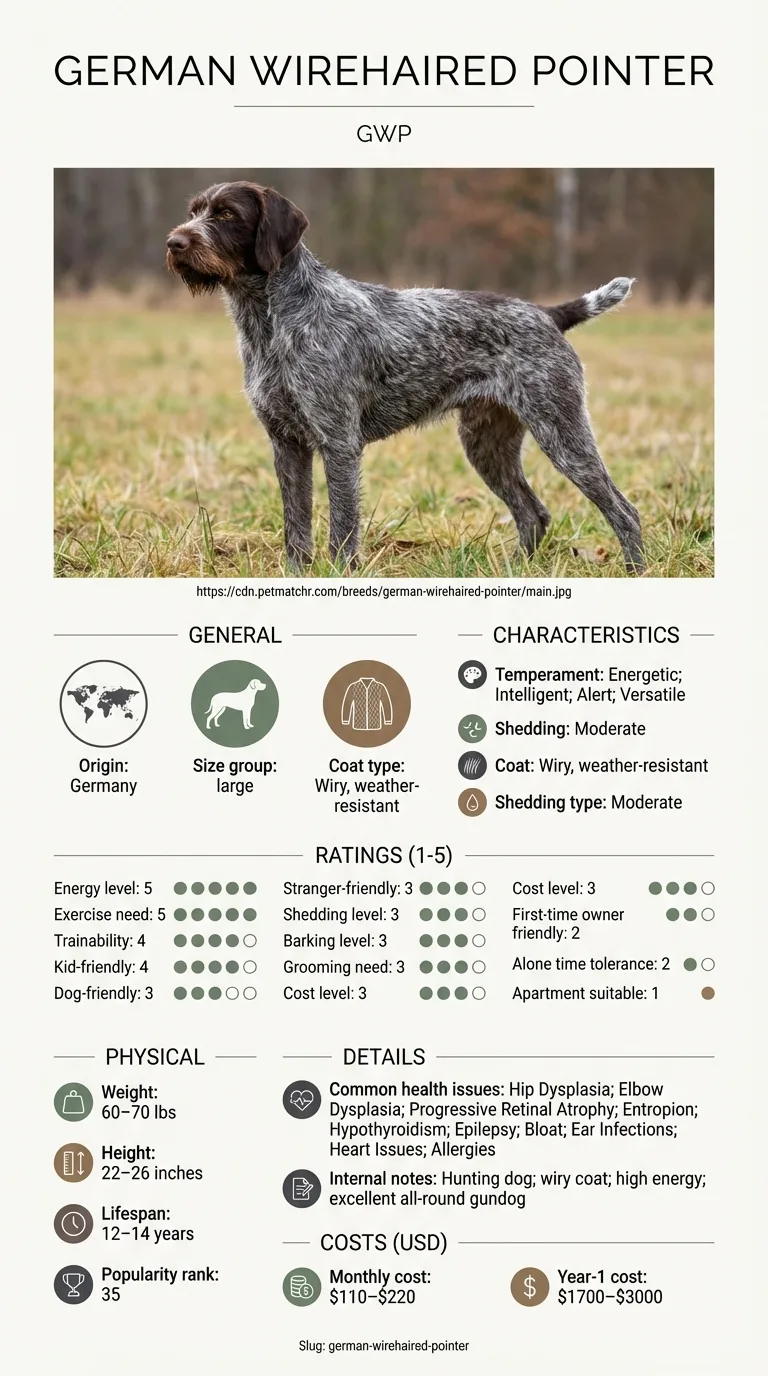
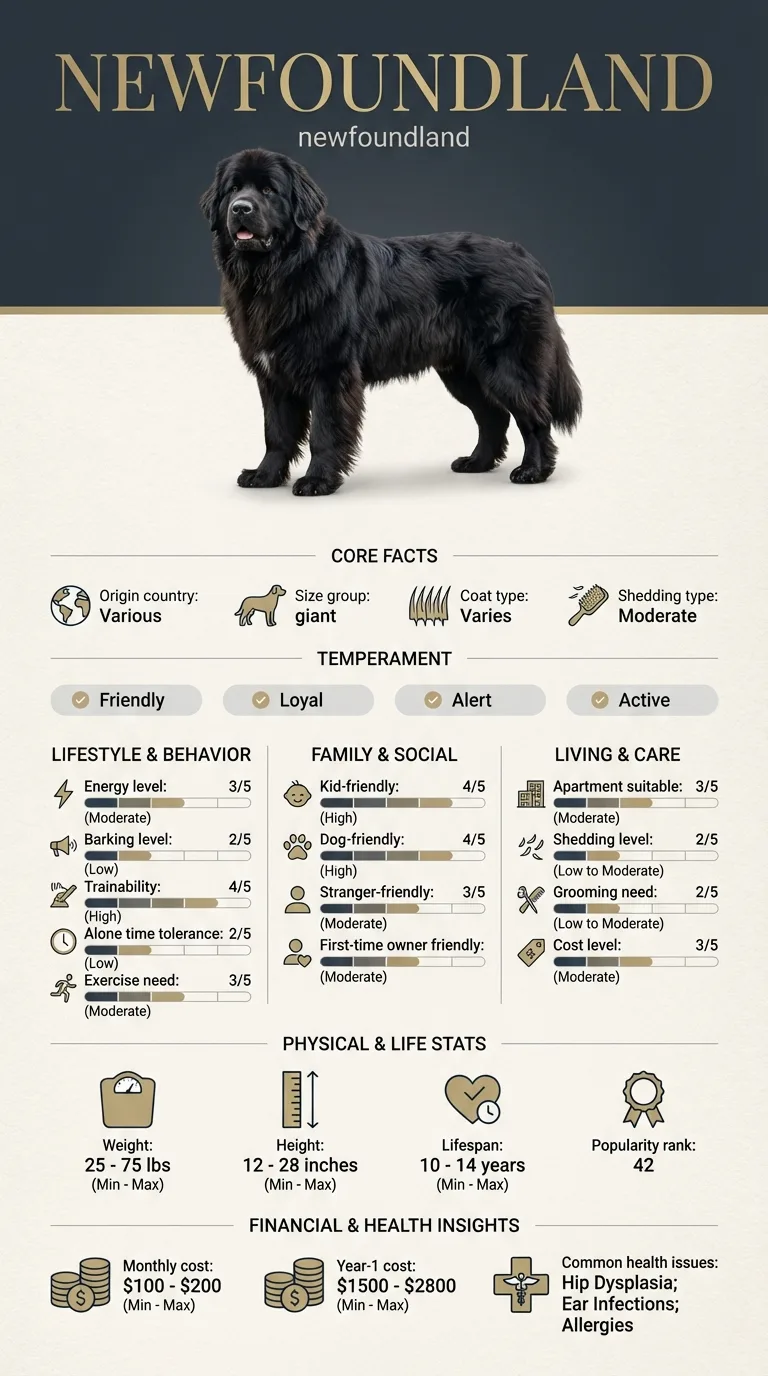
This is for someone already down to German Wirehaired Pointer and Newfoundland and deciding between them. For this pair the decision usually turns on energy level and exercise need, so those are covered first and in most detail. Both rate 1/5 for flats, so housing does not settle this one. The focus throughout is on daily consequences rather than breed background.
Between German Wirehaired Pointer and Newfoundland, energy level is what separates them, and Newfoundland is the lower-effort dog of the two to keep.
Choose German Wirehaired Pointer if you do not want a standing grooming appointment, shedding is a problem in your house and a smaller dog suits your car, your home or your back.
Choose Newfoundland if this is your first dog, your walking routine is modest and the dog will be alone during the working day.
| Feature | german wirehaired pointer | newfoundland | Winner |
|---|---|---|---|
| Size class | large | giant | Equal |
| Weight | 60–70 lbs | 100–150 lbs | Equal |
| Height | 22–26 in | 26–28 in | Equal |
| Lifespan | 12–14 years | 9–10 years | german wirehaired pointer |
| Exercise need | Very high (5/5) | Moderate (3/5) | newfoundland |
| Grooming need | Moderate (3/5) | High (4/5) | german wirehaired pointer |
| Shedding | Moderate (3/5) | Very high (5/5) | german wirehaired pointer |
| Energy level | Very high (5/5) | Low (2/5) | Equal |
| Barking | Moderate (3/5) | Low (2/5) | newfoundland |
| Apartment suitability | Very low (1/5) | Very low (1/5) | Equal |
| Good for first-time owners | Low (2/5) | Moderate (3/5) | newfoundland |
| Tolerates being alone | Low (2/5) | Moderate (3/5) | newfoundland |
| Trainability | High (4/5) | High (4/5) | Equal |
| Good with kids | High (4/5) | Very high (5/5) | newfoundland |
| Good with other dogs | Moderate (3/5) | High (4/5) | newfoundland |
| Friendly to strangers | Moderate (3/5) | High (4/5) | newfoundland |
| Cost level | Moderate (3/5) | Very high (5/5) | german wirehaired pointer |
| Coat | Wiry, weather-resistant | Heavy water-resistant double coat | Equal |
| Origin | Germany | Various | Equal |
| Typical monthly cost | $110–$220 | $150–$310 | Equal |
| Typical first-year cost | $1,700–$3,000 | $2,200–$4,200 | Equal |
Weight alone separates these two dramatically: 60-70 pounds for the German Wirehaired Pointer against 100-150 pounds for the Newfoundland, a giant-breed water dog that can outweigh the GWP by 80 pounds or more. Height gaps are smaller -- 22-26 inches versus 26-28 inches -- because the Newfoundland's bulk comes from sheer mass and bone density rather than extra height. The coats diverge too: the GWP's wiry, weather-resistant coat suits upland fieldwork, while the Newfoundland's heavy, water-resistant double coat was built for cold-water rescue work. Anyone picturing these side by side should expect the Newfoundland to look and feel like an entirely different category of dog despite only a four-inch height difference.
The GWP rates Very high (5/5) for exercise need against the Newfoundland's Moderate (3/5), a notable gap given the Newfoundland's giant size might suggest otherwise -- these are gentle giants built for steady swimming and hauling rather than sustained high-intensity work. Energy level is oddly marked a tie despite Very high versus Low underlying values, worth noting since a GWP's drive to run and point contrasts sharply with a Newfoundland's famously laid-back, patient temperament. In practice, the GWP needs vigorous daily exercise to stay balanced, while the Newfoundland is satisfied with moderate walks and the occasional swim, its calm disposition doing much of the behavioral work exercise would otherwise handle.
Both grooming and shedding favor the GWP here: Moderate (3/5) grooming versus the Newfoundland's High (4/5), and Moderate (3/5) shedding versus the Newfoundland's Very high (5/5). A Newfoundland's heavy double coat is notorious for shedding-season blowouts that can fill a vacuum bag weekly, on top of regular brushing to prevent matting in its dense undercoat. The GWP's wiry coat, by comparison, needs occasional hand-stripping but sheds only moderately year-round. Anyone sensitive to loose hair around the house, or unwilling to commit to frequent brushing sessions, should weigh the Newfoundland's grooming and shedding demands carefully against the GWP's comparatively lower-maintenance wiry coat.
Apartment suitability ties at Very low (1/5) for both breeds -- size and exercise needs aside, neither dog is a natural fit for compact living, the GWP due to its exercise drive and the Newfoundland due to sheer physical bulk needing room to move. Barking favors the Newfoundland, Low (2/5) against the GWP's Moderate (3/5); Newfoundlands are known for a calm, patient demeanor that extends to minimal nuisance barking. Tolerating time alone also favors the Newfoundland, Moderate (3/5) versus the GWP's Low (2/5), consistent with its devoted-but-steady temperament rather than the GWP's more alert, higher-strung disposition.
Trainability ties at High (4/5) for both breeds, but first-time-owner suitability favors the Newfoundland, Moderate (3/5) against the GWP's Low (2/5). That difference tracks with temperament: sweet, patient, devoted and calm for the Newfoundland versus energetic, intelligent, alert and versatile for the GWP -- a working gundog's drive is simply harder for a novice to manage than a giant breed's easygoing nature, size notwithstanding. That said, a Newfoundland's sheer physical size still demands a confident handler for leash work and basic control, so "better for beginners" doesn't mean effortless; it means the temperament curve is gentler even if the size curve isn't.
The Newfoundland outranks the GWP on every family-facing metric here: Very high (5/5) with kids versus High (4/5), High (4/5) with other dogs versus Moderate (3/5), and High (4/5) with strangers versus Moderate (3/5). Newfoundlands have a long-standing reputation as nanny dogs, and their sweet, patient, devoted temperament backs up those scores. The GWP isn't a poor family dog by any means -- High with kids is still a strong rating -- but it's more reserved with strangers and other dogs by comparison. Families prioritizing an easygoing, universally friendly household presence may find the Newfoundland the stronger match, provided they can handle its size and grooming demands.
Lifespan clearly favors the GWP, 12-14 years against the Newfoundland's 9-10 -- a substantial gap even by giant-breed standards. The Newfoundland's health list -- hip dysplasia, subaortic stenosis, dilated cardiomyopathy, cystinuria, and bloat (GDV) -- is shorter but weighted toward serious cardiac conditions, with two of five listed issues being heart-related. The GWP's ten-item list is broader, spanning joints, eyes, thyroid, seizures, bloat, ears, heart and skin. Both breeds carry real bloat risk given deep chests, so slow-feeding and monitored mealtimes matter for either. Prospective Newfoundland owners should budget for cardiac screening given how prominently heart conditions feature on its comparatively short health list.
Cost level rates Moderate (3/5) for the GWP against Very high (5/5) for the Newfoundland, reflected in the numbers: $150-310 monthly and $2,200-4,200 first-year for the Newfoundland versus $110-220 monthly and $1,700-3,000 for the GWP. Food volume alone explains much of the gap for a dog that can weigh 150 pounds, but grooming (High, 4/5) and potential cardiac diagnostics add further expense. The GWP's costs stay comparatively contained thanks to its smaller size and lower grooming burden. Anyone budgeting for a Newfoundland should plan for costs meaningfully above the GWP's across food, grooming, and veterinary care throughout its shorter lifespan.
German Wirehaired Pointer weighs 60–70 lbs and lives 12–14 years; Newfoundland weighs 100–150 lbs and lives 9–10 years. The two diverge most on energy level, exercise need and shedding and 1 other rated axes. They are level on apartment suitability and trainability, so those cannot decide it. The table below marks a winner only where one breed is genuinely easier for a typical owner; size and origin are facts rather than merits and stay level. Ratings come from one source applied to both breeds, so they are meaningful against each other rather than as absolute scores.

The Newfoundland, rated Very high (5/5) with kids versus the GWP's High (4/5), backed by its sweet, patient, devoted temperament and long reputation as a nanny-dog breed.
The Newfoundland, rated Very high (5/5) shedding against the GWP's Moderate (3/5) -- expect heavy seasonal coat blow.
The GWP, at 12-14 years versus the Newfoundland's 9-10 years, a typical giant-breed longevity gap.
Neither -- both rate Very low (1/5) for apartment suitability, the GWP due to exercise drive and the Newfoundland due to its giant size.
The Newfoundland, rated High (4/5) friendly to strangers versus the GWP's Moderate (3/5).
No -- it rates Moderate (3/5) for exercise need versus the GWP's Very high (5/5), being a steadier, less driven breed.
Cardiac conditions feature heavily: subaortic stenosis and dilated cardiomyopathy are both listed, alongside hip dysplasia, cystinuria, and bloat (GDV).
The Newfoundland, which can outweigh the GWP by 80 pounds or more.
The GWP, rated Moderate (3/5) versus the Newfoundland's Very high (5/5).
The GWP, at 12-14 years versus the Newfoundland's 9-10 years.
The Newfoundland, rated Moderate (3/5) versus the GWP's Low (2/5) for first-time owners.
Secure checkout on Stripe. We never see your card.
7-day money-back guarantee. Instant access.
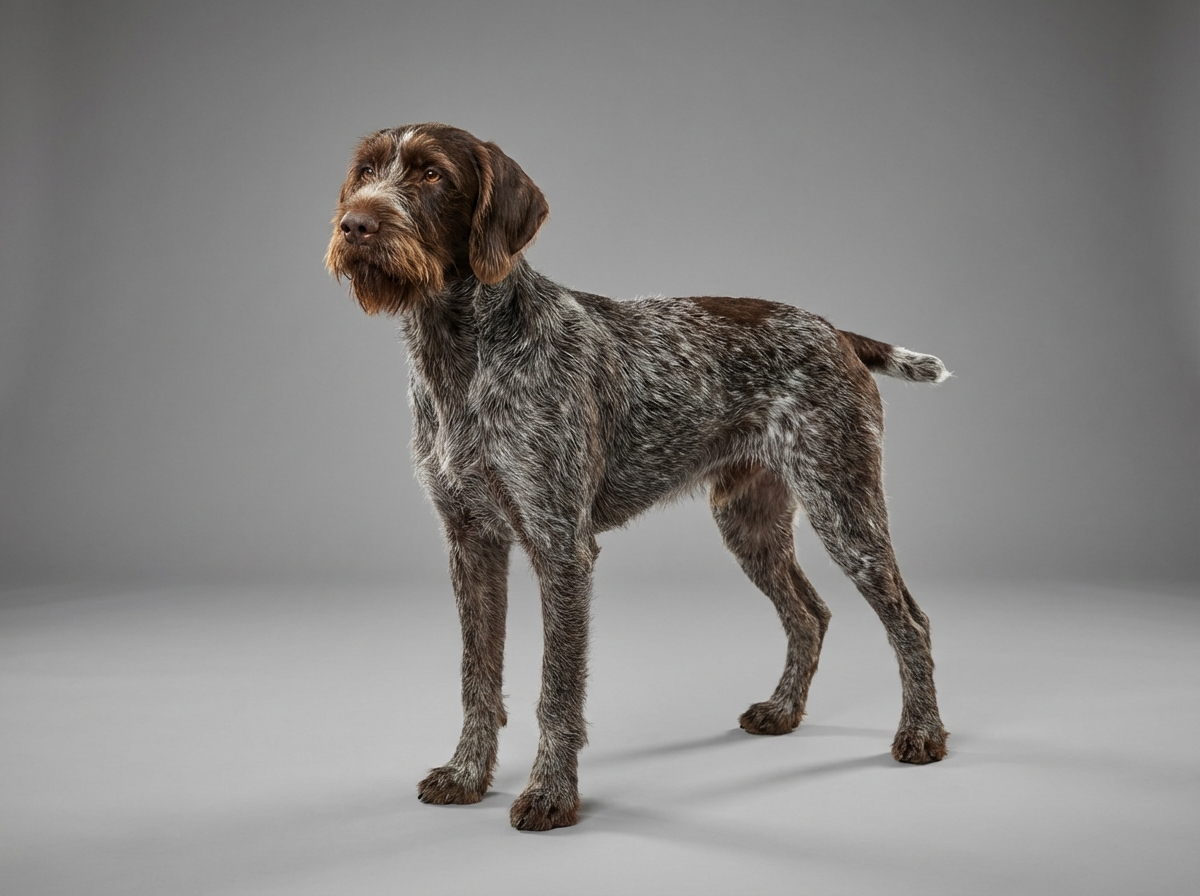
Health information here is general and is not veterinary advice. If your dog shows pain, sudden behaviour change, or worsening symptoms, consult a licensed veterinarian.
Some links on this site are affiliate links. We may earn a commission at no extra cost to you, and we only suggest products we believe are helpful for dog owners.
We research and check what we publish, but we do not warrant that any figure, date, price, or statement is accurate, complete, or current, and we accept no liability for any loss, cost, injury, or other harm arising from the use of this site. Use it as one reference among several. You remain responsible for your own decisions and for your dog's care - confirm anything that matters with a licensed veterinarian or another qualified professional before you act on it. Full disclaimer.
Match your lifestyle to the right dog.
Take quizNot sure which breed is right for you? Take our 2-minute quiz to find out.
Take the quiz