DogBreedCompass
← Back to breed profile

German Wirehaired Pointer Kidney Stones: Causes and Solutions

Kidney stones can be a serious health concern for German Wirehaired Pointers. They can cause pain and complications that may affect your dog's quality of life. (German Wirehaired Pointer kidney stones)

German Wirehaired Pointer Kidney Stones: Causes and Solutions infographic

Owners of German Wirehaired Pointers, especially those who are first-time dog parents or have busy lifestyles, often struggle with managing this health problem. It’s especially challenging for those who may not recognize early signs of discomfort or distress in their dogs.

Important reminder

This guide is not medical advice. If your dog shows pain, sudden behavior change, or worsening symptoms, consult a licensed veterinarian.

Some links may be affiliate links. We may earn a commission at no extra cost to you. We only suggest products we believe are helpful for dog owners.

What this problem looks like

German Wirehaired Pointer kidney stones can be a painful and distressing issue for both dogs and their owners. This problem often manifests as frequent urination, straining to urinate, or blood in urine. If your GWP is showing these symptoms, it’s essential to seek veterinary care promptly.

Common triggers

  • Dehydration from insufficient water intake
  • Diet high in certain minerals like calcium or oxalate
  • Genetic predisposition to kidney issues

Kidney stones are a fairly common health issue in German Wirehaired Pointers, especially in older dogs. While not every GWP will experience this problem, awareness and preventive care can significantly reduce the risk.

Why this happens

Breed factors

German Wirehaired Pointers are prone to certain health issues, including kidney stones. Their size and activity level can contribute to dehydration if they don't drink enough water. Additionally, their diet may not always provide the right balance of nutrients, increasing the risk of stone formation.

Environment factors

Environmental factors like access to fresh water and diet play a significant role. If your GWP is not drinking enough water or is fed low-quality food, it can lead to kidney stones. Stress or changes in routine can also affect their hydration and eating habits.

What you can try

At-home strategies

  • Ensure your German Wirehaired Pointer has constant access to fresh, clean water to encourage hydration.
  • Consider switching to a high-quality diet that is specifically formulated to support urinary health.
  • Monitor your dog's bathroom habits. If you notice changes or signs of discomfort, take action immediately.
  • Incorporate wet food into their diet to increase fluid intake.
  • Regular exercise can help maintain a healthy weight and overall wellbeing, which can reduce the risk of kidney stones.

When to consider a trainer

If your GWP is showing signs of anxiety or stress that may affect their eating and drinking habits, consider consulting a professional trainer. A trainer can help with behavior modification techniques to ease anxiety.

When to talk to your vet

If your dog exhibits symptoms such as frequent urination, straining to urinate, or blood in the urine, it’s crucial to talk to your vet. Early intervention can prevent serious complications from kidney stones.

Realistic expectations

You can expect to see improvements in your German Wirehaired Pointer's condition within 4 to 8 weeks of implementing dietary changes and proper hydration.

Success looks like fewer incidents of kidney stones, improved hydration levels, and your dog feeling more energetic and comfortable.

Mistakes that make this worse – German Wirehaired Pointer kidney stones

Avoid these common mistakes that can worsen kidney stones in your German Wirehaired Pointer.

  • Ignoring hydration needs: Not providing enough water can lead to concentrated urine, increasing the risk of kidney stones. Make sure your dog has constant access to fresh water.
  • Feeding low-quality food: Cheap dog food often lacks essential nutrients. Opt for high-quality, balanced diets specifically formulated for large breeds to help prevent health issues.
  • Overlooking weight management: An overweight German Wirehaired Pointer is more prone to health problems, including kidney stones. Regular exercise and portion control are key.
  • Skipping regular vet check-ups: Neglecting routine vet visits can delay the detection of kidney stones. Schedule annual check-ups for early intervention.
  • Not monitoring urination habits: Changes in urination frequency or behavior can indicate issues. Keep an eye on your dog’s habits and consult a vet if you notice anything unusual.
  • Failing to provide proper exercise: Lack of physical activity can lead to obesity and health problems. Ensure your GWP gets enough exercise to stay healthy.
  • Ignoring symptoms: If your dog shows signs of discomfort, such as straining to urinate or blood in the urine, consult your vet immediately.

When It Is an Emergency

Understanding when German Wirehaired Pointer kidney stones become an emergency is crucial for your dog's health. There are clear signs that you should never ignore. If your dog is experiencing severe pain, is unable to urinate, or shows signs of vomiting, these indicate a serious issue. Other red flags include lethargy, blood in urine, or a swollen abdomen. If you notice any of these symptoms, call your vet immediately.

German Wirehaired Pointer Kidney Stones: Causes and Solutions - When It Is an Emergency

When to Watch and Wait

In less severe cases of German Wirehaired Pointer kidney stones, you might just need to monitor your dog. Symptoms like mild discomfort, frequent urination, or changes in appetite can often be managed with a vet's guidance. Keeping a close eye on your dog’s behavior and adjusting their diet can help prevent worsening conditions. Just ensure you have a plan in place and follow up with your vet regularly to catch any potential issues early.

German Wirehaired Pointer Kidney Stones: Causes and Solutions - When to Watch and Wait

Finding Relief for Max: A Journey with Kidney Stones

When Sarah adopted Max, her German Wirehaired Pointer, she was excited. But soon, Max started experiencing painful kidney stones, leaving him lethargic and in discomfort. After a vet visit, Sarah learned about the importance of a special diet and increased water intake. She committed to changing his food and ensured Max had access to fresh water at all times. Over the next few weeks, Max slowly regained his energy, and after a follow-up, the vet confirmed fewer stones were forming. Sarah felt relieved, knowing she was helping her furry friend live a healthier life.

Key takeaway: With the right dietary changes and hydration habits, it's possible to manage and reduce kidney stones in German Wirehaired Pointers.

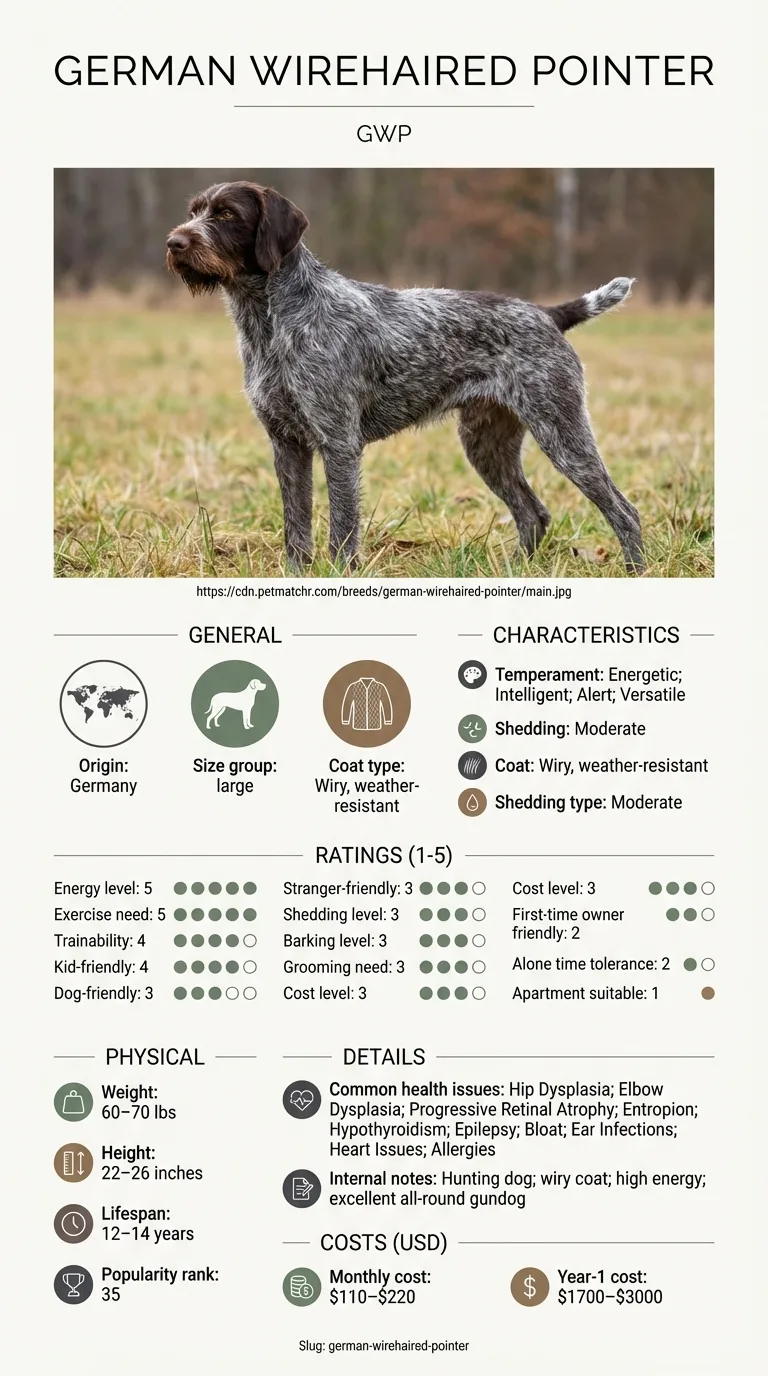
Frequently asked questions

Why does my German Wirehaired Pointer have kidney stones?

German Wirehaired Pointers can develop kidney stones due to various factors, including diet, dehydration, and genetic predisposition. It's important to ensure they drink plenty of water and eat a balanced diet to minimize risks. Regular veterinary check-ups can also help catch any potential issues early.

How can I prevent kidney stones in my German Wirehaired Pointer?

To prevent kidney stones, provide your German Wirehaired Pointer with a high-quality diet rich in moisture, such as wet food. Ensure they have constant access to fresh water and encourage regular exercise. Regular vet visits can help monitor their health and detect any early signs of stones.

What are the symptoms of kidney stones in German Wirehaired Pointers?

Common symptoms of kidney stones include frequent urination, blood in the urine, straining to urinate, and signs of pain. If your dog seems restless, lethargic, or is having difficulty urinating, contact your vet immediately. Early intervention is crucial for their health.

What treatment options are available for kidney stones in German Wirehaired Pointers?

Treatment for kidney stones may involve special diets, increased hydration, and in some cases, surgery. Your veterinarian will recommend the best course of action based on the type and size of the stones. Always follow your vet's advice for the best outcomes.

How to stop German Wirehaired Pointer kidney stones?

To stop kidney stones, focus on a preventive diet, ensure adequate hydration, and maintain regular vet check-ups. Consider discussing specialized dog food with your vet that supports urinary health. Monitoring your dog’s behavior and symptoms can also help in early detection.

Can training help with kidney stones in German Wirehaired Pointers?

While training itself won't prevent kidney stones, it can encourage healthy habits, such as regular bathroom breaks and exercise. Positive reinforcement can help your dog build a routine that includes drinking water and staying active, which are essential for their urinary health.

What are the signs that my German Wirehaired Pointer might have kidney stones?

Common signs include frequent urination, difficulty urinating, blood in the urine, and lethargy. If your dog is showing these symptoms, it's important to consult a vet as soon as possible.

Can diet affect the likelihood of kidney stones in German Wirehaired Pointers?

Yes, diet plays a significant role in kidney health. A diet high in certain minerals can contribute to stone formation, so consider discussing dietary options with your vet to help prevent kidney stones.

Are older German Wirehaired Pointers more prone to kidney stones?

Older dogs can be at a higher risk for kidney stones due to age-related changes in kidney function. Regular check-ups with your vet can help catch potential issues early.

What should I do if I suspect my dog has kidney stones?

If you suspect your German Wirehaired Pointer has kidney stones, contact your vet immediately. They can perform diagnostic tests and recommend the best treatment options.

How can I help prevent kidney stones in my German Wirehaired Pointer?

To help prevent kidney stones, ensure your dog stays well-hydrated and follows a balanced diet. Regular exercise and vet check-ups are also essential for maintaining overall health.

Quick answers

View more answers
Health

What are quick tips for German Wirehaired Pointer kidney stones?

Ensure your German Wirehaired Pointer stays hydrated by providing fresh water daily. Consider a diet that promotes urinary health, and maintain regular vet visits to monitor their kidney function.

Health

How often should I take my German Wirehaired Pointer to the vet for kidney stones?

It's recommended to have a yearly check-up, but if your dog has a history of kidney stones, more frequent visits may be necessary. Always consult your vet for personalized advice.

Behavior

What signs indicate my German Wirehaired Pointer may have kidney stones?

Look for signs such as difficulty urinating, blood in the urine, or excessive licking of the genital area. If you notice any of these symptoms, contact your vet promptly.

Related DogBreedCompass guides

Related guides